Temple Manager Job Mumbai | Siddhivinayak Careers | ₹92k Salary
Deadline: 30 June 2025 Salary: ₹65,000 – ₹92,000/month + allowances — Sacred & Strategic Responsibilities Operational Management: – Oversee 300+ staff…
Deadline: 30 June 2025 Salary: ₹65,000 – ₹92,000/month + allowances — Sacred & Strategic Responsibilities Operational Management: – Oversee 300+ staff…
Deadline: 30 June 2025
Salary: ₹65,000 – ₹92,000/month + allowances
—
Sacred & Strategic Responsibilities
Operational Management:
– Oversee 300+ staff (security, priests, cleaners, admin) across 2550 sq. mt. temple complex
– Manage daily devotee flow (1.5 lakh+ visitors/week) with crowd-tech like QueueBuster
– Implement ISO 9001:2015 systems for ritual supply chain (flowers, coconuts, camphor)
Financial Stewardship:
– Handle annual budget ₹320+ crores (donations, Hundi collections, Prasadam sales)
– Lead donor relations for “Sopaan” patrons (₹10L+ annual contributors)
– Coordinate audits with Charity Commissioner (MH/1029/Mum/2021)
Festival Execution:
– Plan mega-events:
– Ganesh Chaturthi (5 lakh+ devotees)
– Angarki Chaturthi (Special pujas)
– Diwali Akhand Nama Saptah
– VIP management for celebrity/first-class darshans
Devotee Experience:
– Optimize e-pass systems via (https://play.google.com/store/apps/details?id=com.siddhivinayak)
– Resolve seva grievances via “Shraddha Mitra” helpline
—
Non-Negotiable Requirements
| Education | Experience | Skills |
| MBA (Finance/Operations) | 5+ years administration (religious/ hospitality preferred) | Fluent Marathi + Hindi (English for reports) |
| Certified Temple Administrator (CTAP) advantage | Demonstrated crowd management (10k+ scale) | ERP software (SAP/Tally) |
| – | Knowledge of Shukla Yajurveda rituals | Crisis response (MH Police certified) |
—
Performance Metrics
You’ll be measured on:
– Devotee satisfaction ≥ 90% (post-darshan surveys)
– Ritual supply waste reduction ≤ 5%
– Donor retention rate ≥ 85%
—
Salary Breakup & Benefits
– Base Salary: ₹65,000
– Allowances:
– Mumbai hardship: ₹12,000
– Festival bonus: ₹15,000 (quarterly)
– Housing: ₹25,000 (or trust quarters at Dadar)
– Perks:
– Lifetime VIP darshan access for family
– Free medical (Kokilaben Hospital tie-up)
– Study leave for Vedic management courses
—
Why Lead India’s Richest Urban Temple?
> “Steward the temple where Bollywood and bhaktas unite! Your work enables:
> – 24/7 Free Prasadam: 2.5 lakh laddus/month
> – Social Impact: ₹47cr/year donated to hospitals/education
> – Digital Dharma: India’s first AI-based crowd prediction system”
—
Application Process
1. Documents Checklist:
– MBA marksheets + experience certificates
– Marathi language proficiency proof (Mumbai University exam preferred)
– 500-word essay: “Balancing Tradition and Technology in Temple Management”
2. Apply Online:
– Portal: (https://www.siddhivinayak.org/career.aspx)
– Select: “Manager (Operations)”
3. Selection Stages:
– Written test: Temple Administration (Syllabus (https://www.siddhivinayak.org/recruit/Manager_Syllabus.pdf))
– Group discussion: “Managing VIP vs. Common Devotee Darshan Rights”
– Personal interview with Temple Trustees
—
Critical Notes
– Age Limit: 28-40 years (SC/ST relaxation)
– Dress Code: White formal wear during office hours
– Conflict Policy: Must divest from commercial catering/alcohol businesses
Temple Fast Facts
– Annual Footfall: 6+ crore devotees
– Unique Assets:
– Gold-plated doors (donated by Dhirubhai Ambani)
– Automated Hundi counting machines
– Disaster-proof Garbhagriha (flood/earthquake resistant)
– Digital Reach: 8.3M app users
—
`Temple Manager Job Mumbai | Siddhivinayak Careers | ₹92k Salary`
The Sacred Significance of Siddhivinayak Temple and Why Its Management Is Unique
Shree Siddhivinayak Ganapati Mandir in Prabhadevi, Mumbai, consecrated in 1801 CE by Laxman Vithu and Deubai Patil, houses the swayambhu (self-manifested) idol of Lord Ganesha with a trunk turned to the right — a rarity known as Siddhi Vinayaka, believed to grant wishes instantaneously. The Ganesha Purana (Upasana Khanda, Chapter 46) identifies this form as one who fulfils the four purusharthas — Dharma, Artha, Kama, and Moksha — for sincere devotees.
Unlike a privately managed temple, Siddhivinayak operates under the Shree Siddhivinayak Ganapati Temple Trust, a registered public charitable trust accountable to the Charity Commissioner of Maharashtra. This dual identity — a living spiritual institution and a publicly accountable organisation managing over ₹320 crores annually — places its Temple Manager at the intersection of Vedic tradition and modern institutional governance, a combination few management roles in India demand.
What Does Daily Ritual Operations Management Actually Involve at This Scale
The daily ritual schedule at Siddhivinayak follows the Shukla Yajurveda tradition, beginning with Kakad Aarti (dawn aarti) at approximately 5:30 AM and concluding with Shej Aarti (night aarti) after 10:00 PM. Between these, the priests perform Abhisheka (sacred bathing of the idol with panchamrita — milk, curd, honey, ghee, and sugar), Shodashopachara Puja (sixteen-step worship), and multiple Modaka Nivedana (offering of the beloved sweet of Ganesha). The Temple Manager must ensure uninterrupted procurement and quality of ritual materials across all these services.
Managing a ritual supply chain for 1.5 lakh+ weekly devotees means procuring tens of thousands of fresh flowers (particularly red hibiscus — the preferred pushpa of Ganesha), thousands of coconuts, and measured quantities of camphor and sandalwood paste every single day. Implementing ISO 9001:2015 standards in this context means codifying supplier agreements, maintaining cold-chain storage for perishables, and establishing rejection protocols — all without ever compromising the purity standards (shuddhi) that the Agama Shastra prescribes for items offered to the deity.
How Ganesh Chaturthi Transforms the Temple Into One of Mumbai's Largest Civic Events
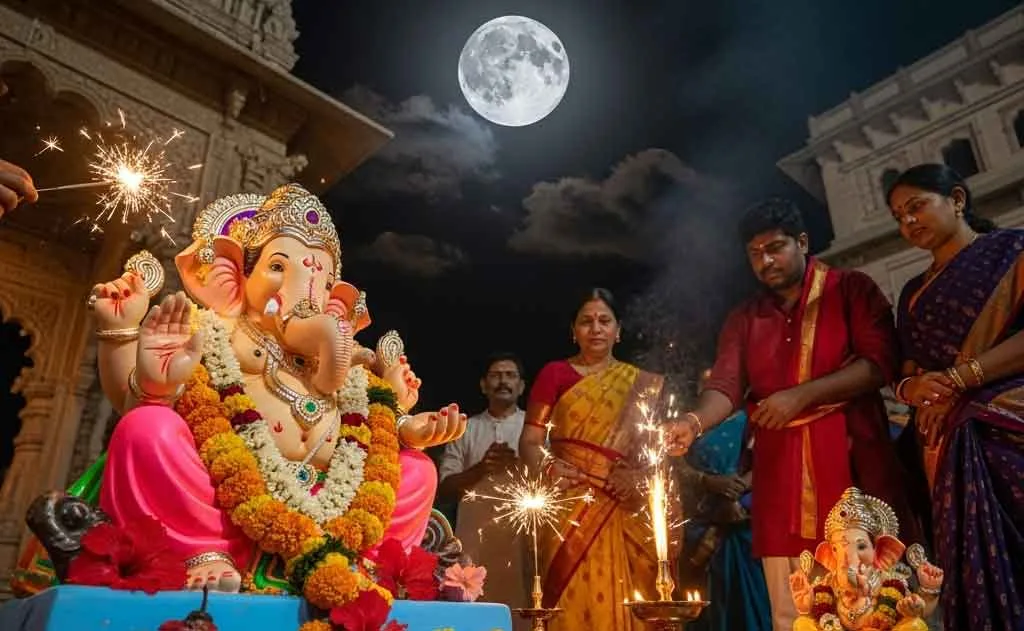
Ganesh Chaturthi, celebrated for ten days beginning on Bhadrapada Shukla Chaturthi (typically August–September), draws upwards of five lakh devotees to Siddhivinayak during the festival period — a figure that rivals the footfall of major international airports. The festival's modern civic character owes much to Lokmanya Bal Gangadhar Tilak, who in 1893 transformed it from a private household celebration into a large public gathering to foster community solidarity. For the Temple Manager, this history is not merely ceremonial; it means coordinating with the Mumbai Police, Brihanmumbai Municipal Corporation (BMC), and local ward offices months in advance.
Angarki Chaturthi — Ganesh Chaturthi falling on a Tuesday (Mangalvar), considered especially auspicious since Tuesday is the day associated with Mars (Mangala) whose energy amplifies Ganesha's Siddhi-granting power — draws disproportionately large crowds for a non-festival day, sometimes exceeding regular festival footfall. Planning for Angarki requires the same level of crowd-management deployment as a full festival, making it a key test of the manager's operational agility. The ability to activate contingency protocols within hours is therefore a non-negotiable skill the job description rightly emphasises.
Understanding the Financial and Ethical Responsibilities of Hundi Management
The Hundi (donation box) at Siddhivinayak is among the highest-revenue Hundis in urban India. Devotees deposit cash, gold ornaments, and foreign currency as voluntary offerings — a practice rooted in the Vedic concept of Dakshina, the grateful offering made to a deity or teacher after receiving a boon. The Temple Manager oversees a structured counting and verification process involving multiple trustees, trust staff, and independent auditors to ensure complete transparency, as mandated by Maharashtra's Public Trusts Act, 1950.
Beyond Hundi collections, the 'Sopaan' donor programme — for patrons contributing ₹10 lakhs or more annually — requires relationship management skills comparable to those of a senior banker or hospital development officer. Donors at this level often fund specific projects such as Prasad distribution infrastructure, devotee welfare facilities, or digital darshan systems. Maintaining an 85% donor retention rate, as specified in the performance metrics, demands both financial reporting rigour and genuine pastoral sensitivity to the devotional motivations that drive such generosity.
Career Pathway and Professional Development in Temple Administration
Temple administration as a formal profession is gaining institutional recognition in India. The Certified Temple Administrator Programme (CTAP), referenced in this job posting, is among a small number of structured credentials that combine knowledge of Agama Shastra, Hindu religious law, and operational management. Candidates who combine an MBA in Finance or Operations with even a foundational knowledge of Sanskrit or Vedic ritual procedure hold a rare advantage in this emerging field.
A tenure as Temple Manager at Siddhivinayak offers exposure that is difficult to replicate elsewhere: multi-crore budget stewardship, large-scale crowd management, interfaith VIP coordination, and the governance of a living sacred institution. Past professionals who have led large temple trusts — such as the Tirumala Tirupati Devasthanams (TTD) in Andhra Pradesh or the Shree Jagannath Temple Administration in Puri, Odisha — have demonstrated that rigorous institutional management and deep spiritual commitment are not in conflict but are mutually reinforcing. This role at Prabhadevi stands squarely within that tradition.
The provision of study leave for Vedic management courses is a significant benefit worth highlighting. Institutions such as the Rashtriya Sanskrit Sansthan and several deemed universities now offer certificate and diploma programmes in temple management, heritage administration, and Agama studies. A manager who continues to deepen their understanding of the Ganesha Purana, the Manava Grihyasutra's prescriptions for Ganapati worship, and contemporary trust law will be better positioned to lead the institution through future challenges including digitisation, pilgrimage tourism policy, and heritage conservation.
Frequently Asked Questions
Where is Temple Manager Job Mumbai located?
Deadline: 30 June 2025 Salary: ₹65,000 – ₹92,000/month + allowances — Sacred & Strategic Responsibilities Operational Management: – Oversee 300+ staff (security, priests, cleaners, admin) across 2550 sq. temple complex – Manage daily devotee flow (1.5 lakh+ visitors/week) with crowd-tech like QueueBuster – Implement ISO 9001:2015 systems for ritual supply ch
Who is the presiding deity of Temple Manager Job Mumbai?
The presiding deity is Lord Ganesha.
What are the timings and how do I reach Temple Manager Job Mumbai?
Temples typically open early morning and evening; confirm current darshan timings before visiting. The nearest airport, railway station and road routes are covered in the guide above.
What is the best time to visit Temple Manager Job Mumbai?
Major festival days and the cooler months are popular, though weekday mornings offer a calmer darshan. Plan around the temple's key festivals for the most vibrant experience.
You might also like
Lord Ganesha: 108 Names, Significance & Mantras — The Complete Spiritual Guide

How to Make Eco-Friendly Ganesha Idol at Home: Complete Step-by-Step Guide (2026)

Ganesh Temple Flushing 2026: Darshan Timings, History & Spiritual Significance