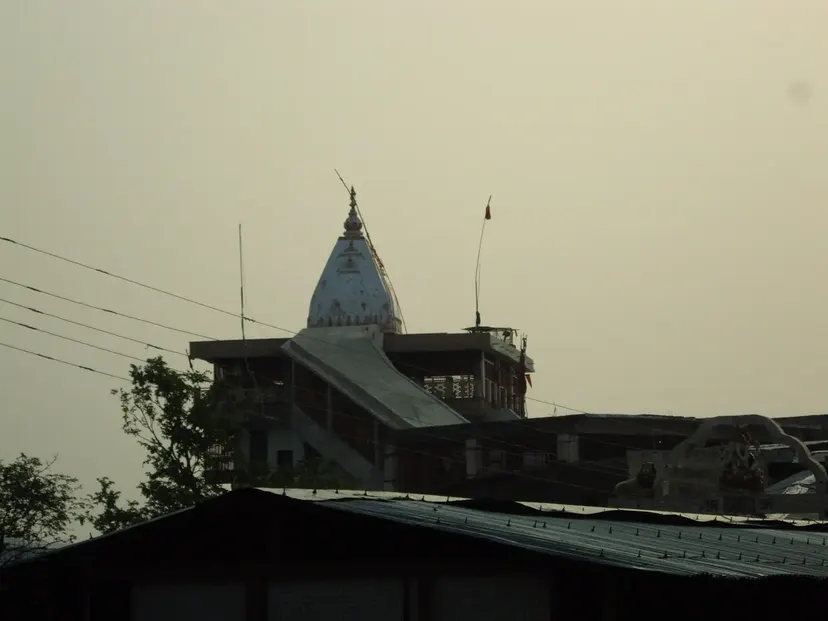
Bhima Devi Temple Complex, Pinjore
Probably Shiva (presumed by Haryana Tourism and the state archaeology department from the Shaiva sculptures); the site is named after the goddess Bhima Devi temple · Pinjore, Panchkula, Haryana, India
The Bhima Devi Temple Complex at Pinjore, in Panchkula district of Haryana, preserves the excavated remains of an early medieval Hindu temple next to the 17th-century Pinjore (Yadavindra) Gardens. The Haryana Directorate of Archaeology and Museums dates the temple to between the 9th and 11th centuries CE and runs the site as the Bhima Devi Temple Complex and Site Museum.
What survives are temple plinths and a large number of carved stones, displayed in the open and in a small gallery. The sources describe it as an archaeological site and museum protected by the Haryana Government; they do not describe active worship at the ruins, so the site is best visited as a heritage temple.
Faith & Tradition
Religious Significance of Bhima Devi Temple Complex, Pinjore
The complex is important as one of the few early medieval temple sites in Haryana with a large body of surviving sculpture. Haryana Tourism notes that several of the carvings closely resemble those at Khajuraho, and the state archaeology department records that the temple was decorated with images of Shiva and Parvati, Agni, Surya, Vishnu and Ganesha, along with chaitya-window motifs, miniature turrets and social, animal and plant designs. Because most of the deities belong to the Shiva cult, Haryana Tourism presumes that the temple was dedicated to Shiva.
The name of the site comes from a later tradition. Haryana Tourism explains that the place came to be called Bhima Nagar after a much revered local temple, and that the name Pinjore is linked both to the ancient name Panchapura and to a legend that the Pandavas stayed here during their exile.
Heritage
History of Bhima Devi Temple Complex, Pinjore
According to Haryana Tourism, Alexander Cunningham found a 27-line inscription of the 10th century during his explorations of 1878–79 that mentions Panchapura, the old name from which Pinjore is derived; the Handi stone inscriptions of 1167 CE appear to refer to the same place. The department concludes that Panchapura, later Bhima Nagar, was a place of considerable importance between the 9th and 12th centuries. Some inscriptions found at the site link the temple to a Raja Rama Deva, possibly a local king who patronised it.
Haryana Tourism states that the temple was demolished repeatedly, possibly by invaders of the period, with the final blow coming in Aurangzeb's reign, and that the adjoining Mughal garden was possibly built using the rubble. Wikipedia records that excavations in 1974 brought the temple back to light, revealing plinths and more than a hundred sculptures, and that the site was then protected under the Punjab Ancient and Historical Monuments and Archaeological Sites and Remains Act, 1964. The finds are now arranged as an open-air museum integrated with the gardens.
Architecture and sacred features
Scientific clearance of the site, Haryana Tourism says, exposed three stone plinths of a large temple; their layout shows that it followed the panchayatana plan, with a main shrine in the centre and four subsidiary shrines placed towards the cardinal directions. Surviving architectural pieces such as chaitya windows, bhadramukha motifs, miniature turrets and figures on pillar brackets indicate the north Indian temple style of the time. The exterior was richly carved with gods and goddesses, musicians, floral and animal motifs and erotic scenes, while the interior is thought to have been comparatively plain.
Wikipedia adds that the sculptures are carved mainly from locally available grey and green sandstone, and that they are now mounted on pedestals laid out in the open-air museum to echo the original panchayatana arrangement.
Plan Your Visit
Darshan and Visitor Information
The complex is a protected archaeological site: do not climb on the plinths, touch or move sculptures, or remove anything from the site. The state archaeology department's website gives museum days and hours. Confirm current timings and any entry charges with the Haryana Directorate of Archaeology and Museums before travelling.
Timings and arrangements change with seasons and festivals. Confirm current details with Haryana Directorate of Archaeology and Museums (official website) before travelling. Last reviewed 1 November 2026.
Location
How to Reach Bhima Devi Temple Complex, Pinjore
Pinjore is on the road from Chandigarh to Shimla. Wikipedia gives the distance from Chandigarh as about 20 km by road and from Kalka as about 5 km. The temple complex adjoins the Yadavindra Gardens, so visitors usually see both together.
Wikipedia notes that Pinjore can be reached by road, rail and air and is well connected with Chandigarh, the nearest large city.
Location: Pinjore, Panchkula, Haryana, India
More in Hindu temples in Haryana · Probably Shiva (presumed by Haryana Tourism and the state archaeology department from the Shaiva sculptures); the site is named after the goddess Bhima Devi temples · Temples in Pinjore (113) · Temples in Kalka Tehsil · Temples in Panchkula District
Questions
Bhima Devi Temple Complex, Pinjore: Frequently Asked Questions
What is the Bhima Devi Temple Complex?
It is the excavated site of a 9th–11th century temple at Pinjore, Haryana, now shown as an open-air museum and site museum next to the Pinjore (Yadavindra) Gardens.
Which deity was the temple dedicated to?
Haryana Tourism presumes it was dedicated to Shiva, because most of the sculptures belong to the Shiva cult. The name Bhima Devi comes from a later, much revered local temple.
When was the temple discovered?
Excavations in 1974 revealed the plinths and more than a hundred sculptures, according to Wikipedia; Alexander Cunningham had already recorded a 10th-century inscription at Pinjore in 1878–79.
Who looks after the site?
It is protected by the Government of Haryana and run by the Haryana Directorate of Archaeology and Museums as the Bhima Devi Temple Complex and Site Museum.
What kind of temple plan did it have?
The surviving plinths show a panchayatana plan: a main shrine in the centre with four subsidiary shrines around it.
How far is Pinjore from Chandigarh?
About 20 km by road, and about 5 km from Kalka, according to Wikipedia.
Sources and attribution
- Haryana Tourism Corporation, Government of Haryana — Bhima Devi Temple
- Haryana Directorate of Archaeology & Museums — Museums listing: Bhima Devi Temple Complex and Site Museum, Pinjore, Panchkula
- Haryana Directorate of Archaeology & Museums — Bhima Devi Workshop (heritage workshop at the site museum, 2019)
- Wikipedia — Bhima Devi Temple Site Museum
Further reading: Bhima Devi Temple Complex, Pinjore on Wikipedia (CC BY-SA 4.0).
Spotted an error? Write to info@hindutone.com — see our editorial policy.