Green Crackers for Diwali 2026: CSIR-NEERI SWAS, STAR and SAFAL Types, QR Check and Buying Guide
What makes green crackers different, the CSIR-NEERI SWAS, STAR and SAFAL formulations, how to verify the QR code, what the Supreme Court allowed, plantable seed crackers and safe, responsible use for Diwali 2026.
Diwali 2026 falls on Sunday, 8 November. In much of urban India the firecracker market has moved to certified "green crackers": lower-emission fireworks developed with CSIR-NEERI (the National Environmental Engineering Research Institute) and made mainly in Sivakasi, Tamil Nadu. This guide explains what is special about them, how to spot genuine ones, plantable alternatives and how to buy and use them responsibly.
What are green crackers?
Green crackers use modified compositions and fewer of certain raw materials. Compared with conventional crackers of the same type, they are designed to:
- Cut particulate matter: about 30% lower PM emissions is the figure most commonly cited.
- Reduce gases: lower sulphur dioxide and nitrogen oxides in many formulations.
- Suppress dust: some release water vapour so that particles settle faster.
- Be traceable: genuine packs carry the CSIR-NEERI green logo and a QR code.
- Keep the experience: sparkle, colour and sound within the legal noise limits.
They are lower-emission, not pollution-free: used in large numbers they still worsen air quality for a while.
The three NEERI formulations
- SWAS (Safe Water Releaser): releases water vapour on bursting to damp down dust; found in flower pots (anar), ground spinners and fountains.
- STAR (Safe Thermite Cracker): a modified composition that lowers particulate emissions while keeping the visual effect.
- SAFAL (Safe Minimal Aluminium): uses much less aluminium, a major source of fine particles; seen in sparklers and chakkars.
Manufacturers use these in familiar forms: anar, phuljhadi (sparklers, including coloured ones), chakkar, pencils and fountains, aerial shots where permitted, and lower-emission sound crackers. How each formulation works, with the emission cuts reported when they were announced, and the story of the Sivakasi industry: Sivakasi firecrackers and SWAS, STAR and SAFAL explained.
What the courts allow
The Supreme Court's 2018 order in Arjun Gopal v. Union of India allowed only "improved" and green crackers in many areas and barred joined (series or ladi) crackers. Delhi-NCR has a year-round ban; for Diwali 2025 the Court allowed NEERI-listed, QR-coded green crackers there for a few days only, from designated outlets and at set hours, with online sales barred, as a test case.
Rules for Diwali 2026 come from the courts, state governments, pollution-control boards and district collectors, and they differ from city to city. Check your area before you buy: Tamil Nadu · Chennai · Telangana · Andhra Pradesh · Bengaluru · Kolkata · Uttar Pradesh · Gujarat · Rajasthan.
How to check a green cracker is genuine
- The CSIR-NEERI green cracker logo on the pack.
- A unique QR code: scan it before you buy to check the product and maker.
- Manufacturer and PESO (Petroleum and Explosives Safety Organisation) licence details.
- A licensed shop or a stall approved by the district administration.
Loosely labelled "eco" products appear every year; the QR scan is the most reliable check.
Plantable seed crackers
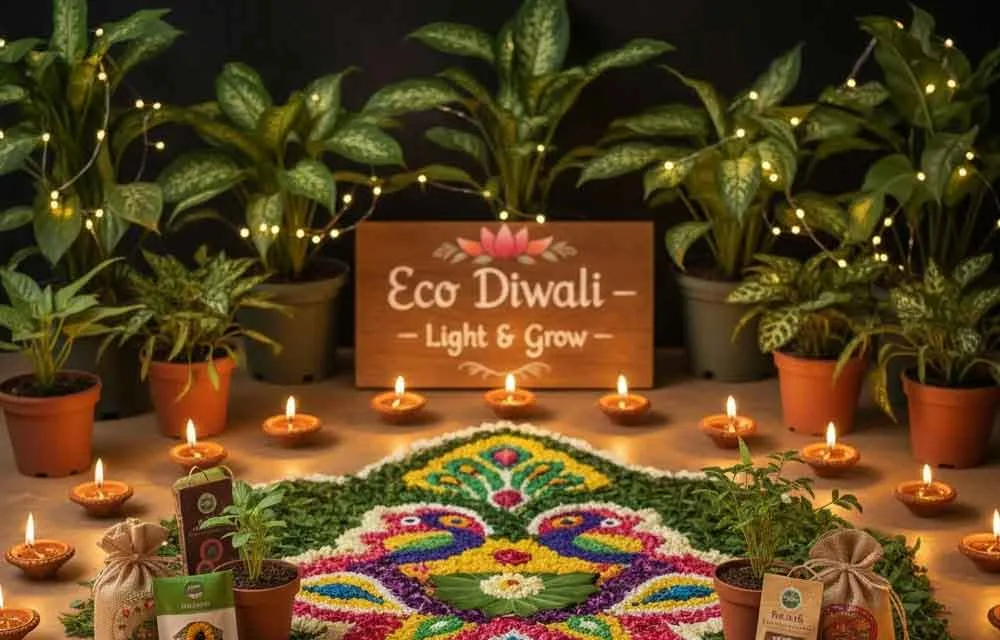
A small but growing niche is plantable "seed crackers": non-explosive seed-paper shapes of chakris, anars and rockets that can be planted afterwards to grow marigold, herbs or vegetables. They make zero emissions and are popular as gifts and children's return gifts.
Buying in 2026: market notes
- Sivakasi remains the main source, and most large makers now have certified green lines.
- Sales are through licensed shops and temporary stalls; online sales are barred in some regions (as in Delhi-NCR in 2025).
- Green crackers often cost a little more than conventional ones; prices vary by type, brand and city.
- Families increasingly prefer visual, quieter products (sparklers, flower pots, fountains) over loud sound crackers.
Safety and responsible use
- Buy certified products with a QR code from licensed sellers.
- Prefer visual, low-noise items when children, elders or pets are near.
- Keep strictly to permitted hours and places.
- Store crackers in a cool, dry place away from children and flames.
- Keep a bucket of water or an extinguisher at hand and supervise every child.
- Clear spent crackers and packaging; don't leave debris on roads or in drains.
- Mix in lamps, rangoli and plantable crackers, or go fully cracker-free. Abroad, see firecracker safety for children.
Frequently asked questions
What are green crackers?
Fireworks made with formulations developed with CSIR-NEERI that cut particulate emissions (by about 30% in the commonly cited figure) compared with conventional crackers of the same type. They are lower-emission, not pollution-free.
What do SWAS, STAR and SAFAL mean?
SWAS is the Safe Water Releaser (releases water vapour to suppress dust), STAR the Safe Thermite Cracker, and SAFAL the Safe Minimal Aluminium formulation.
How do I know a green cracker is genuine?
Look for the CSIR-NEERI green logo and a QR code you can scan to check the product, plus the manufacturer's PESO licence details. Buy only from licensed sellers.
Are green crackers allowed in Delhi-NCR?
Delhi-NCR has a year-round firecracker ban. For Diwali 2025 the Supreme Court allowed only NEERI-listed, QR-coded green crackers for a few days, from designated outlets and at set hours, as a test case. Check the current order before Diwali 2026.
Are joined (ladi or series) crackers allowed?
Joined or series crackers were barred by the Supreme Court in 2018 in Arjun Gopal v. Union of India. Do not assume any redesigned version is permitted where you live without checking local rules.
Why fireworks became part of Diwali, and what the different types mean: Diwali crackers: history, types and meaning. May your Diwali 2026 be bright, joyful and safe.
Share this with family and friends
Send it on WhatsApp, post it, or copy the link.
More from Diwali 2026
- Diwali 2026 in the Bahamas: Dates, Lakshmi Puja Muhurat and Where to Celebrate
- Diwali 2026 in the Dominican Republic: Dates, Lakshmi Puja Muhurat and Where to Celebrate
- Diwali 2026 in Ecuador: Dates, Lakshmi Puja Muhurat and Where to Celebrate
- Diwali 2026 in Costa Rica: Dates, Lakshmi Puja Muhurat and Hindu Temples
- Diwali 2026 in Mongolia: Dates, Lakshmi Puja Muhurat for Ulaanbaatar and Other Cities, and Where to Celebrate
You might also like