

Meenakshi Amman Temple Madurai:
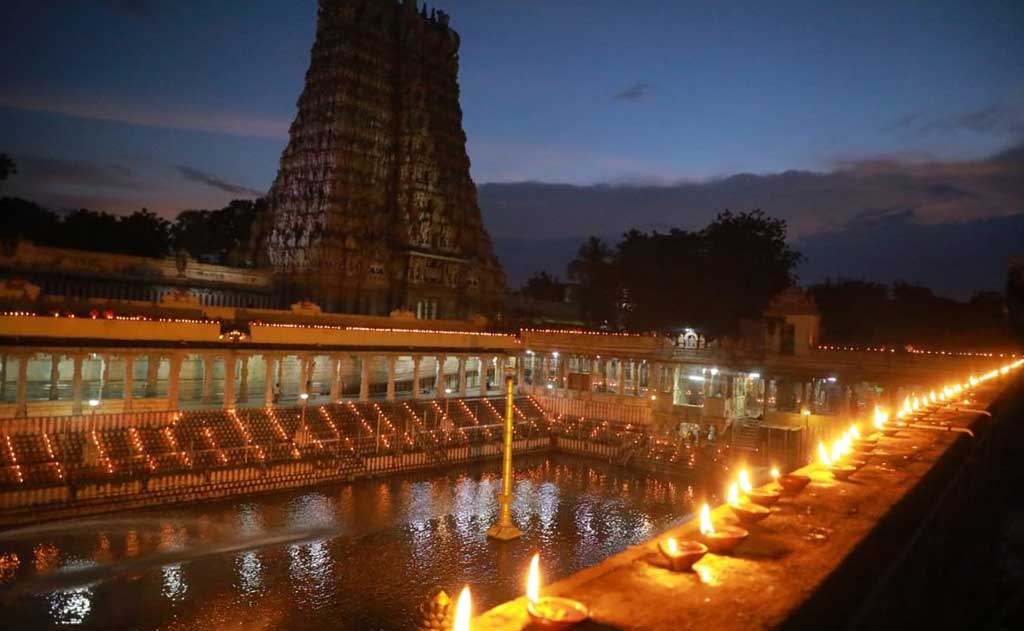
The vibrant heartbeat of Madurai pulses through the towering, multicolored gopurams of the Meenakshi Amman Temple, where every stone seems to sing of divine love and fierce protection. As a spiritual tourist who’s wandered countless sacred sites, nothing quite matches the ecstatic energy here—a living celebration of Shakti-Shiva union, where the air thrums with devotion, temple bells, and the scent of jasmine and camphor. This isn’t just a temple; it’s a cosmic stage for marital bliss, where Goddess Meenakshi (Parvati’s fierce yet loving form) reigns as the ultimate protector and consort, radiating energy that fills devotees with joy, strength, and profound surrender.
Dedicated to Goddess Meenakshi and her consort Lord Sundareswarar (Shiva), the Meenakshi Amman Temple (also called Meenakshi Sundareswarar Temple) stands as one of the most powerful Devi temples in Tamil Nadu—a majestic embodiment of feminine divine power balanced with masculine grace. Millions flock here yearly for darshan, festivals, and the sheer architectural splendor, making it a pinnacle of spiritual tourism in Madurai.
The Legend: Warrior Queen Meets Her Divine Consort
The Meenakshi Temple history weaves myth and devotion seamlessly. According to ancient texts like the Tiruvilaiyadal Puranam, King Malayadhwaja Pandya and Queen Kanchanamalai performed intense penance for a child. From the sacrificial fire emerged a baby girl—three-breasted, destined for greatness. An oracle declared the extra breast would vanish upon meeting her destined husband.
Raised as heir, the princess—named Meenakshi (“fish-eyed,” symbolizing beauty and compassion)—grew into a formidable warrior queen. She embarked on a dig-vijaya (conquest of directions), subduing kingdoms across the land. Her campaign led to Mount Kailash, where she challenged Lord Shiva himself. In the fierce battle, her armies clashed with Shiva’s forces. When Shiva appeared, Meenakshi’s gaze met His—love ignited instantly. Her third breast receded, fulfilling the prophecy. Overwhelmed by devotion, she surrendered, and Shiva agreed to marry her as Sundareswarar (“the beautiful lord”).
Their celestial wedding in Madurai symbolizes the perfect union of Shakti (divine feminine energy) and Shiva (pure consciousness). Meenakshi, born fierce protector, becomes the loving consort—embodying how power finds completion in harmony. This legend infuses the temple with marital bliss energy: devotees pray here for harmonious relationships, strength in femininity, and protection from harm.
Majestic Architecture: A Symphony in Stone
The temple sprawls over 65,000 square meters, a Dravidian masterpiece expanded by Pandya, Nayak, and other rulers from the 7th century onward, with major contributions from the 16th-18th century Nayak kings.
Fourteen towering gopurams (gateway towers) dominate the skyline, the tallest southern one soaring 170 feet, adorned with thousands of vibrant sculptures—deities, mythical beings, dancers, and animals in riotous color. These aren’t mere decorations; each tells stories from Puranas, inviting pilgrims into divine narratives.
Inside, the Ayiram Kaal Mandapam (Hall of a Thousand Pillars) mesmerizes: 985 intricately carved granite pillars (often called 1,000 for poetic license) depict warriors, musicians, animals, and floral motifs. The hall echoes with music during festivals, its acoustic design amplifying chants.
The Potramarai Kulam (Golden Lotus Pond) shimmers, where Meenakshi is said to have worshipped Shiva. Nearby, the golden lotus replica crowns a pedestal in the wedding hall (Kalyana Mandapam), site of annual divine marriage reenactments.
Separate shrines honor Meenakshi (south) and Sundareswarar (center-east), with the Nandi bull facing Shiva. Over 33,000 sculptures adorn ceilings, walls, and corridors—painted vividly, they bring myths to life.
The Ecstatic Chithirai Festival: Miracles of Divine Wedding
The temple vibrates most intensely during Chithirai Thiruvizha (Chithirai Festival), a 10-15 day extravaganza in April-May (e.g., April 19–30, 2026). Lakhs gather for the reenactment of Meenakshi-Sundareswarar wedding—Meenakshi Thirukalyanam—on the central day.
Processions fill streets: Goddess Meenakshi paraded as warrior queen, then bride; Lord Sundareswarar arrives grandly. The celestial marriage, with Vedic rites, gold-ornamented deities, and showers of flowers, evokes overwhelming bliss—devotees report tears of joy, answered prayers, and felt divine presence. Related events include Alagar (Vishnu as Meenakshi’s brother) procession from Alagarkoil, his playful “anger” at missing the wedding resolved at Vaigai River.
Miracles abound: healings, family reconciliations, fulfilled vows. The energy of union—fierce protection meets tender love—transforms hearts, making this one of Tamil Nadu’s most powerful spiritual experiences.
Practical Insights for Your Spiritual Journey
- How to Reach: Fly to Madurai Airport, train to Madurai Junction (well-connected), or bus. Temple in city center—easy auto/taxi access.
- Darshan: Open ~5 AM–12:30 PM & 4 PM–9:30 PM (check for festivals). Free entry; special darshan tickets available. Non-Hindus welcome but restricted in sanctum.
- Best Time: Avoid peak summer; Chithirai Festival for vibrancy (book stays early). Monsoon brings lush beauty but crowds thin.
- Tips: Wear modest clothes; photography limited inside. Explore nearby: Vandiyur Mariamman Teppakulam, Alagar Kovil.
For more on sacred South Indian sites, browse Hindutone’s temples category or Devi-focused guides.
The Meenakshi Amman Temple calls with colors that dazzle the eyes and energy that awakens the soul. Step into this Shakti-Shiva embrace—let the divine wedding energy bless your path with love, power, and eternal harmony.
Related posts:
 Mukteshwara Temple
 Ancient Wisdom in Water Management: The Ingenious Systems of Hindu Temples
 Yulla Kanda: Divine Darshan at the World’s Highest Shri Krishna Temple in Himachal Pradesh
 Vedaranya Swamy Temple, Nagalapuram Krishnadevaraya
 Must-Visit Lord Shiva Temples in Canada: A Spiritual Journey Across the True North
 Vaikuntha Ekadashi in Kerala: Guruvayur, Padmanabhaswamy & Other Key Temples


 ︎
︎

