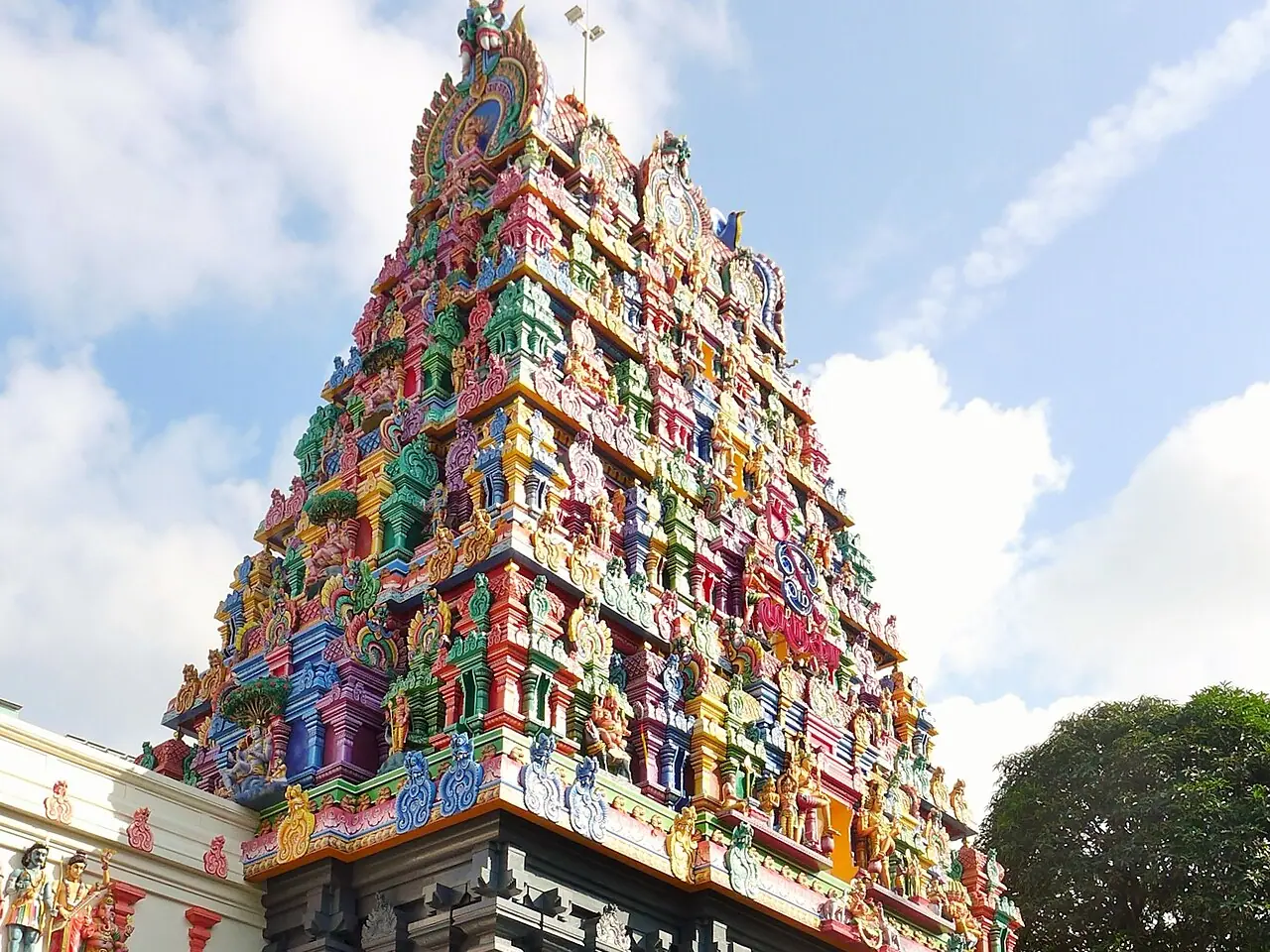
Sri Thendayuthapani Temple, Singapore
Murugan (Sri Thendayuthapani) temple · Singapore, Tank Road, Central Area, Central
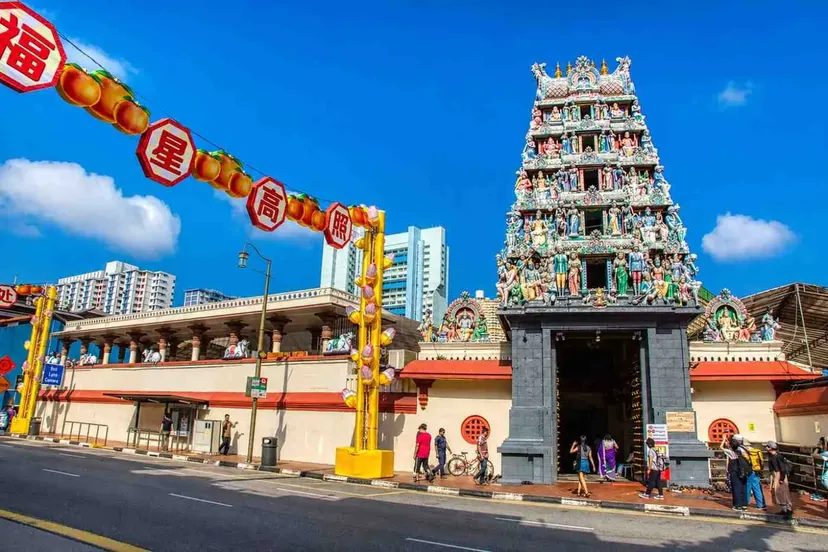
Photo: Bahnfrend · CC BY-SA 4.0 · via Wikimedia Commons
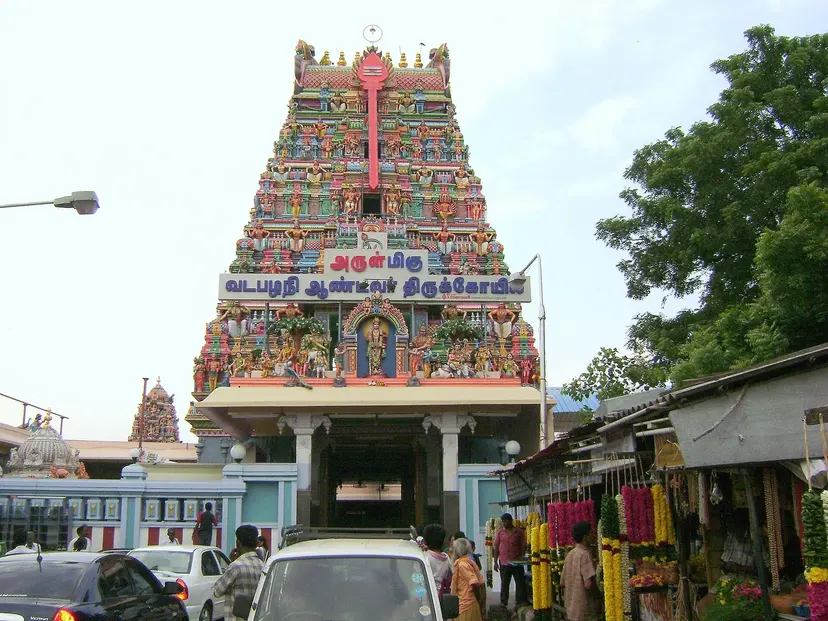
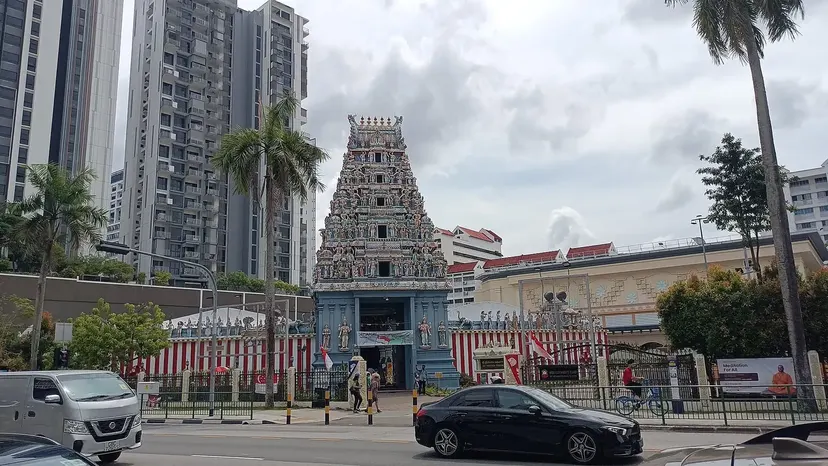
Sri Thendayuthapani Temple is a Hindu temple at 15 Tank Road, Singapore 238065, dedicated to Murugan in the form of Thendayuthapani. It is widely known as the Chettiars' Temple because it was established by the Nattukottai Chettiars, traders and merchant bankers from Chettinad in Tamil Nadu, in 1859 (Roots.gov.sg, National Heritage Board).
The temple is a gazetted National Monument of Singapore (SG101; Roots.gov.sg) and is the end point of the annual Thaipusam procession that starts at Sri Srinivasa Perumal Temple on Serangoon Road (Roots.gov.sg).
Faith & Tradition
Religious Significance of Sri Thendayuthapani Temple, Singapore
The main deity is Thendayuthapani, a form of Murugan. According to Hinduism Today, the Vel (spear) represents Murugan in the main sanctum. Shrines for Shiva as Sundareswarar and Parvati as Meenakshi, as well as the navagrahas, are also present (Hinduism Today; Roots.gov.sg lists Murugan, Shiva, Parvati, Ganesha, Idumban, Nandi and the Navagraha).
Thaipusam is the temple's major festival. Devotees carry kavadis and paal kudams (milk pots) in a procession of about three kilometres, and the temple's own announcements list kavadi offerings through the temple office (Roots.gov.sg; Hinduism Today; Sri Thendayuthapani Temple website). SG101 says Thaipusam draws up to 50,000 devotees to the temple.
Heritage
History of Sri Thendayuthapani Temple, Singapore
The Nattukottai Chettiars founded the temple in 1859 on Tank Road (Roots.gov.sg; SG101). Hinduism Today adds that the Chettiars installed a Vel under a pipal tree in 1858 and that the temple was completed in 1859; the sources agree on 1859 as the founding year. The temple began as a private temple for the Chettiar community and later admitted other Hindus (Roots.gov.sg).
According to Hinduism Today, sanctums for Sundareswarar and Meenakshi were added in 1878. The Nattukottai Chettiars' Chamber of Commerce was set up within the temple grounds in 1928 (Roots.gov.sg; SG101). In 1925 the Chettiars also built Sri Layan Sithi Vinayagar Temple on Keong Saik Road, and both temples are managed by the Chettiars' Temple Society (Roots.gov.sg).
The temple committee decided in the late 1970s to rebuild it, with the Chettiar community funding the S$3.3 million cost; the rebuilt temple was consecrated on 24 November 1983 (Roots.gov.sg). SG101 says the original building was demolished in 1981 and the new temple was consecrated in November 1983. Roots.gov.sg records a re-consecration on 27 November 2009, following the traditional 12-year renewal cycle. It was gazetted as a national monument on 20 October 2014 (SG101).
Architecture and sacred features
The temple is in the South Indian (Dravidian) style with a five-tiered gateway tower, or gopuram (Roots.gov.sg; Hinduism Today). SG101 gives the gopuram height as 23 m, and Hinduism Today gives 75 feet, which are consistent. The two sources describe its standing differently (among the tallest in Southeast Asia versus the tallest in East Asia when built), so no ranking is stated here.
Chettiar features include thinnais (raised platforms) at the threshold and 48 glass panels in the mandapam clerestory showing Nataraja and forms of Ganesha (Roots.gov.sg; SG101).
Plan Your Visit
Darshan and Visitor Information
The temple's website lists office contact details and online archanai booking, but no regular daily opening hours or dress code were found there (checked October 2026). The temple asks devotees to bring their own bags for kaalanchi (the offering collection) to cut plastic use.
For November 2026 the temple's calendar lists, among other events, Pradosham on 6 November and Deepavali special deeparathanai on 8 November (as listed by the temple, checked October 2026; confirm before visiting). Confirm current arrangements with the temple office.
Timings and arrangements change with seasons and festivals. Confirm current details with Chettiars' Temple Society (official website) before travelling. Last reviewed 30 October 2026.
Sacred Calendar
Festivals at Sri Thendayuthapani Temple, Singapore
Thaipusam
The temple is the end point of the Thaipusam procession from Sri Srinivasa Perumal Temple; the evening before, Murugan's silver chariot travels to Sri Layan Sithi Vinayagar Temple and returns (Roots.gov.sg; Hinduism Today).
Deepavali
The temple's calendar lists special deeparathanai on Deepavali morning on 8 November 2026 (checked October 2026).
Pradosham
The temple's calendar lists Pradosham abhisheka, deeparathanai and a procession on Rishaba Vahanam (6 November 2026 listed, checked October 2026).
Location
How to Reach Sri Thendayuthapani Temple, Singapore
The temple is at 15 Tank Road, Singapore 238065, in the Central Region (Sri Thendayuthapani Temple website). Singapore Changi Airport is the main international airport. Check the LTA or SBS Transit and SMRT journey planners for current MRT and bus options to Tank Road.
Location: Singapore, Tank Road, Central Area, Central
Nearest airport: Singapore Changi Airport
Nearest railway station: MRT network; check current station information
More in Hindu temples in Central · Murugan (Sri Thendayuthapani) temples
Questions
Sri Thendayuthapani Temple, Singapore: Frequently Asked Questions
Who is the main deity at Sri Thendayuthapani Temple?
Murugan in the form of Thendayuthapani, with the Vel representing him in the main sanctum (Hinduism Today; Roots.gov.sg).
Who built the temple and when?
The Nattukottai Chettiars established it in 1859 on Tank Road (Roots.gov.sg; SG101). It is commonly called the Chettiars' Temple.
Is it a national monument?
Yes. It was gazetted as a National Monument of Singapore on 20 October 2014 (SG101).
What is its link with Thaipusam?
It is the end point of the Thaipusam procession from Sri Srinivasa Perumal Temple on Serangoon Road, about three kilometres away (Roots.gov.sg).
When was the present building consecrated?
The rebuilt temple was consecrated on 24 November 1983 (Roots.gov.sg; SG101 says November 1983) and re-consecrated on 27 November 2009 (Roots.gov.sg).
Can archanai be booked online?
The temple's website lists online archanai booking (checked October 2026); confirm details with the temple office.
Which other temple does the same society manage?
Sri Layan Sithi Vinayagar Temple on Keong Saik Road, built in 1925 with Ganesha as chief deity (Roots.gov.sg).
Sources and attribution
- Roots.gov.sg, National Heritage Board — Sri Thendayuthapani Temple
- SG101 (Singapore Government) — Heritage: Sri Thendayuthapani Temple
- Hinduism Today — Worship: Singapore's Sri Thendayuthapani Temple
- Chettiars' Temple Society — Sri Thendayuthapani Temple (official site, address, events)
- Wikipedia (coordinates) — Sri Thendayuthapani Temple
- Wikimedia Commons — File:Sri Thendayuthapani Temple, 2023 (01).jpg
Spotted an error? Write to info@hindutone.com — see our editorial policy.