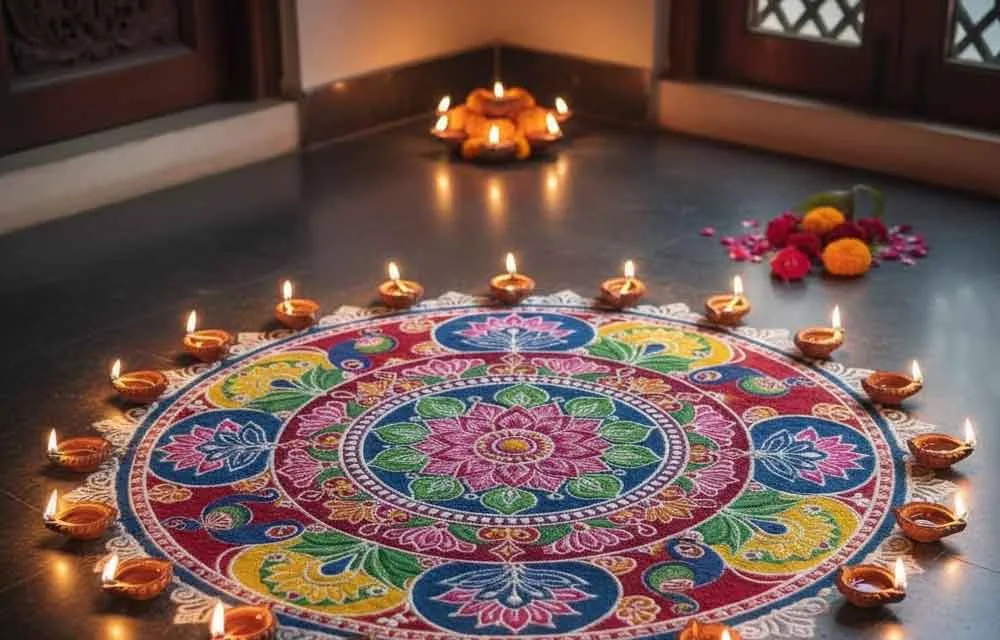
Tihar 2026: Dates, 5 Days, Laxmi Puja & Bhai Tika Guide
Tihar 2026 runs from Kag Tihar on Saturday 7 November to Bhai Tika on Wednesday 11 November, with Kukur Tihar and Laxmi Puja together on Sunday 8 November. Laxmi Puja times for Kathmandu, Pokhara, Janakpur, Butwal and Biratnagar, the official holiday dates and verified temples.
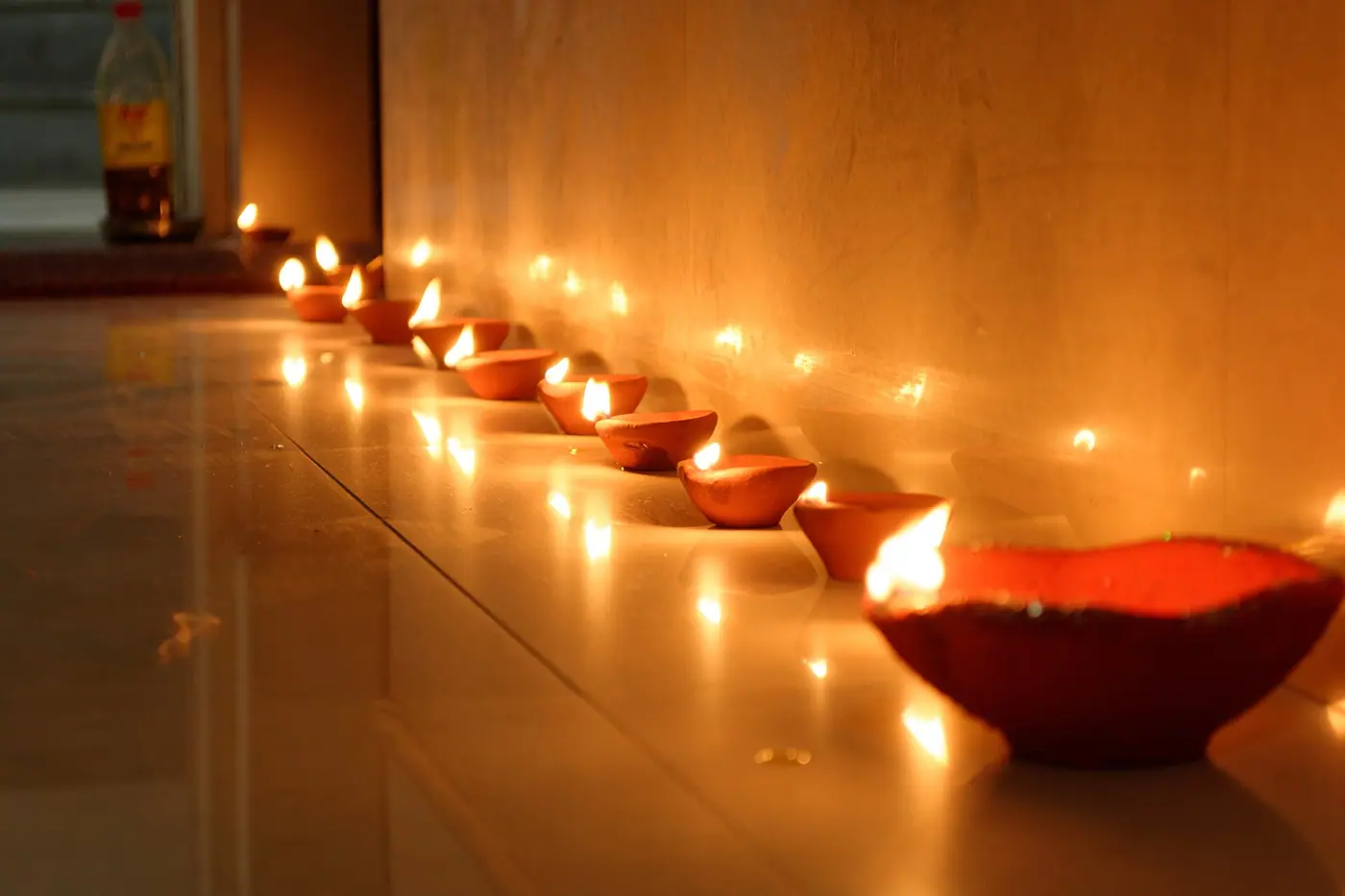
Quick answer: Diwali (Lakshmi Puja) 2026 in Nepal is Sunday 8 November, Kartik 22, the same day as in India. It is celebrated here as Tihar, with Kukur Tihar in the morning and Laxmi Puja in the evening. In Kathmandu the Laxmi Puja window is 5:39 PM – 7:35 PM. Dhanteras is Friday 6 Nov, Kag Tihar is Saturday 7 Nov and Bhai Tika is Wednesday 11 Nov.
Part of Diwali 2026: dates and muhurat for all five days are in our Diwali 2026 guide. See also: Diwali 2026 date and Lakshmi Puja muhurat and the 5 days of Diwali 2026.
Editor's note: this page was updated on 10 October 2026 (holiday status and links re-checked on 25 October 2026). The Laxmi Puja and Dhanteras windows were calculated by HinduTone using the Drik Panchang method (Pradosh Kaal with the Vrishabha lagna); checked against Drik Panchang for major world cities to within one to two minutes; confirm with your temple. They are worked out separately for each city's own sunset in Nepal Time, not converted from India. The Tihar day names and holidays come from the Government of Nepal's gazette notice and a published Nepali calendar, both linked below. We only mention event details that the organisers have announced themselves. Your family purohit, your temple or your own patro has the final word on saait.
Everywhere else in the world, Diwali is a festival of lamps. In Nepal it is also a festival that thanks living creatures. During Tihar, also called Yama Panchak, the crow is fed on the roof, the street dog gets a garland of marigolds and a red tika, the cow is worshipped in the courtyard, and sisters put a seven-coloured tika on their brothers. For Newar families in the Kathmandu Valley the same nights mark the start of a new year. This page is for families celebrating Tihar in Nepal, and for Indian families living here who want to see how the local calendar lines up with their Diwali.
Last updated: 25 October 2026. We re-checked the public holiday status against official government lists and refreshed the links to our other country guides.
Local dates in Nepal (HinduTone calculation, 1 November 2026): Dhanteras Friday 6 November; Naraka Chaturdashi Sunday 8 November; Lakshmi Puja Sunday 8 November; Govardhan Puja Tuesday 10 November; Bhai Dooj Wednesday 11 November. Worked out from Drik Panchang's tithi times at local sunrise and sunset, with the method checked against Drik's own dates for 15 countries. Some local calendars may list Govardhan Puja or Bhai Dooj a day apart; follow your temple. Other countries: Diwali 2026 dates in every country.
Public holiday status in 2026
The Ministry of Home Affairs list of public holidays for 2083 BS gives the Tihar holiday from Kartik 22 to Kartik 26, that is, Sunday 8 to Thursday 12 November 2026. It runs from Laxmi Puja to the day after Bhai Tika. Saturday 7 November (Kag Tihar) is the normal weekly holiday, and Chhath is a separate holiday on Sunday 15 November. We give the Bhai Tika date but not a saait: we only publish one if the Nepal Panchang Nirnayak Bikas Samiti releases it, so ask your family purohit.
Tihar 2026 dates
The dates below follow the Government of Nepal's 2083 holiday notice and the Nepcalendar Tihar listing. In 2026 the tithis fall a little unusually: Kukur Tihar, the cow worship of Gai Tihar and Laxmi Puja all fall on Sunday 8 November, and Monday 9 November has no separate Tihar observance. Some lists circulating online put Gai Tihar on Monday 9 November; the Nepali calendar keeps the cow worship on the morning of Laxmi Puja day, so we follow that.
| Day | Date (2026) | Bikram Sambat 2083 | What is observed |
|---|---|---|---|
| Day 1: Kag Tihar | Sat 7 Nov | Kartik 21 | Crows are fed on rooftops and walls. |
| Day 2: Kukur Tihar | Sun 8 Nov (morning) | Kartik 22 | Dogs get a garland, a tika and a good meal. |
| Day 3: Gai Tihar and Laxmi Puja | Sun 8 Nov (morning and evening) | Kartik 22 | The cow is worshipped in the morning; Laxmi Puja with diyo and rangoli in the evening. |
| Holiday continues | Mon 9 Nov | Kartik 23 | No separate Tihar observance; government offices stay closed. |
| Day 4: Goru Puja, Govardhan Puja and Mha Puja | Tue 10 Nov | Kartik 24 | Oxen are honoured, a Govardhan mound is made, and Newar families begin Nepal Sambat 1147 with Mha Puja. |
| Day 5: Bhai Tika | Wed 11 Nov | Kartik 25 | Sisters give brothers the seven-coloured tika and a makhamali garland. |
For comparison, India's calendar has Dhanteras on Friday 6 November and Diwali on Sunday 8 November, the same evening as Laxmi Puja in Nepal. In India, Govardhan Puja is on Tuesday 10 November and Bhai Dooj on Wednesday 11 November; local temples may announce their own day.
What Tihar is
Tihar, also called Yama Panchak (the five days of Yama) and Swanti in the Newar community, is Nepal's festival of lights. It shares its stories with Diwali in India: Rama's return to Ayodhya, Lakshmi's arrival on the darkest night of the year, Krishna's victory over Narakasura, and Bali and Vamana. What makes Tihar different is the thanks it gives to living beings: the crow, the dog, the cow and the ox each have their day before the festival ends with brothers and sisters. Bhai Tika retells Yamuna's prayer for the long life of her brother Yama. Jain families mark Mahavira's nirvana in the same season, and Sikh families observe Bandi Chhor Divas.
Day-by-day guide to Tihar 2026
Day 1: Kag Tihar, Saturday 7 November
Crows are seen as messengers of Yama, so families put out rice and sweets for them on the roof or a wall early in the morning. It is a quiet start, and the day most families use to finish cleaning the house and buy garlands and lamps.
Day 2: Kukur Tihar, Sunday 8 November
Dogs, the guardians of the home and companions of Yama in the stories, get a marigold garland, a red tika and their favourite food. Many people also feed street dogs in their lane. Be gentle, and never force a tika or food on a nervous animal.
Day 3: Gai Tihar and Laxmi Puja, Sunday 8 November
The cow, honoured as a form of Lakshmi, is worshipped in the morning with a tika, a garland and fresh grass. In the evening the house is lit with diyo and electric lights, Laxmi's footprints are painted from the door to the puja corner, and families worship Laxmi during the evening window in the table below. In 2026 this is a very full Sunday, because Kukur Tihar falls on the same morning.
Day 4: Goru Puja, Govardhan Puja and Mha Puja, Tuesday 10 November
Farming families honour oxen, and many households make a small Govardhan mound from cow dung in memory of Krishna lifting the hill. For Newar families in the Kathmandu Valley this is Mha Puja, the worship of one's own body and life before a mandala, and the first day of Nepal Sambat 1147. Laxmi Puja closes the old Nepal Sambat year.
Day 5: Bhai Tika, Wednesday 11 November
Sisters circle their brothers with oil and water, give them the seven-coloured tika and a makhamali garland, and pray for their long life; brothers give gifts and blessings in return. Sisters without brothers, and brothers without sisters, often exchange tika with cousins. We give the date but not a saait: we publish one only if the Nepal Panchang Nirnayak Bikas Samiti releases it, so ask your family purohit.
Tihar traditions: diyo, Deusi-Bhailo, marigold, rangoli and sel roti
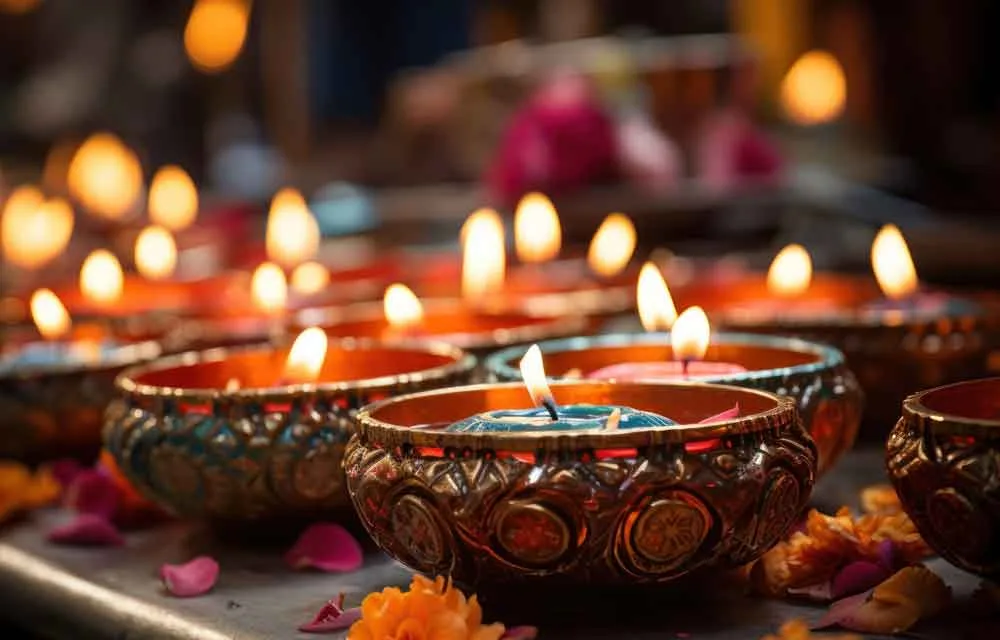
- Diyo and lights: clay oil lamps line windows, steps and rooftops on Laxmi Puja night, now usually alongside strings of electric lights. Many families keep one lamp burning all night.
- Deusi-Bhailo: groups of girls (Bhailo) and boys or mixed groups (Deusi) go house to house singing call-and-response verses and blessing the household, and are given money, sel roti and fruit, often for a local cause. Keep to the hours your District Administration Office allows.
- Marigold and makhamali: marigold (sayapatri) garlands decorate doors, animals and people, and the long-lasting makhamali (globe amaranth) is kept for the Bhai Tika garland.
- Rangoli and Laxmi's footprints: coloured powder patterns at the threshold welcome Laxmi, and red footprints lead her inside to the puja corner.
- Sel roti: the ring-shaped, lightly sweet rice-flour bread fried in ghee or oil is made in almost every home, shared with Deusi-Bhailo groups and placed on the Bhai Tika plate. Markets also sell garlands, tika powders, diyo and candles in the week before.
Lakshmi Puja muhurat 2026, city by city
All of Nepal uses Nepal Time (UTC+5:45) all year, with no daylight saving. The table below was calculated by HinduTone using the Drik Panchang method (Pradosh Kaal with the Vrishabha lagna); checked against Drik Panchang for major world cities to within one to two minutes; confirm with your temple. Biratnagar in the east has the earliest window and Butwal in the west the latest.
| City | Region | Lakshmi Puja (Sun 8 Nov) | Pradosh Kaal | Dhanteras puja (Fri 6 Nov) |
|---|---|---|---|---|
| Kathmandu | Bagmati | 5:39 PM – 7:35 PM | 5:15 PM – 7:52 PM | 5:47 PM – 7:43 PM |
| Pokhara | Gandaki | 5:44 PM – 7:40 PM | 5:20 PM – 7:57 PM | 5:52 PM – 7:47 PM |
| Janakpur | Madhesh | 5:38 PM – 7:35 PM | 5:14 PM – 7:50 PM | 5:46 PM – 7:43 PM |
| Butwal | Lumbini | 5:47 PM – 7:43 PM | 5:23 PM – 7:59 PM | 5:55 PM – 7:51 PM |
| Biratnagar | Koshi | 5:33 PM – 7:30 PM | 5:09 PM – 7:45 PM | 5:41 PM – 7:38 PM |
Sunset on 8 November is at 5:15 PM in Kathmandu, 5:20 PM in Pokhara, 5:14 PM in Janakpur, 5:23 PM in Butwal and 5:09 PM in Biratnagar. Pradosh Kaal is the evening period that starts at sunset and lasts about two and a half hours, and it is the traditional time to worship Lakshmi. Inside it, the most favoured time is when Vrishabha (Taurus) is rising on the eastern horizon. Vrishabha is a 'fixed' sign, so Lakshmi invited then is said to stay in the home. Our window is where the two overlap. The Amavasya runs from 11:27 AM IST on Sunday 8 November to 12:31 PM IST on Monday 9 November, so in Nepal it covers the whole of Sunday evening and Laxmi Puja is clearly on the 8th. Nepali patros also publish their own Laxmi Puja saait, so follow your family priest if the times differ.
The Hindu community in Nepal
Nepal is the only country covered in this series where Hindus are the large majority. The National Statistics Office's 2021 census counted 23.677 million Hindus out of 29.166 million people, or 81.19%, as reported by Onlinekhabar. So Tihar here is not a diaspora celebration in a rented hall. It is a national festival, the government gives a holiday for it, and almost every neighbourhood lights up.
Who celebrates, and how, varies from place to place. In the hills, Tihar is the festival of Deusi-Bhailo, marigold garlands and Bhai Tika in Nepali, which the 2021 census found was the mother tongue of 44.86% of the population. In the Kathmandu Valley, Newar families observe Swanti, their name for Tihar, which includes Mha Puja and the Nepal Sambat new year. Newar Buddhist and Hindu households both take part. In Madhesh and the wider Tarai, Maithili- and Bhojpuri-speaking families celebrate Diwali much as in neighbouring Bihar, and Chhath follows a few days later. Kirat communities in the east have their own festival calendar alongside Tihar. Indian families who work and study in Nepal, Nepali families who have returned from abroad, and grandparents hosting grandchildren back for the holiday all add to the mix. Many Nepali workers and students abroad also try to come home for Bhai Tika.
Where to celebrate: temples and community organisations
Tihar in Nepal is centred on the home, more than Diwali in most countries, but temples are full on Laxmi Puja night and on the days around it. The places below have been confirmed through their own websites or official listings. We give name and area only. Temples and community associations usually announce Diwali programmes from mid-October — check their websites and social pages.
Kathmandu
Kathmandu's Laxmi Puja window is 5:39 PM – 7:35 PM and Dhanteras is 5:47 PM – 7:43 PM. The old city's squares and lanes fill with oil lamps and electric lights on Laxmi Puja night. In Newar areas, families draw mandalas on the floor for Mha Puja two days later.
- Pashupatinath Temple — Gaushala/Pashupati area. The temple area is managed by the Pashupati Area Development Trust, a body under the Ministry of Culture, Tourism and Civil Aviation. Many families visit Lord Pashupati during the festival days.
- ISKCON Budhanilkantha — Budhanilkantha, Kathmandu (ISKCON centre listing). The Hare Krishna temple usually observes Govardhan Puja with an Annakut food offering.
Pokhara
Pokhara's Laxmi Puja window is 5:44 PM – 7:40 PM and Dhanteras is 5:52 PM – 7:47 PM. The temples below appear on Pokhara Metropolitan City's tourism listing.
- Bindhyabasini Temple — Ward 2 (Miruwa), a goddess temple on a small hill.
- Tal Barahi Temple — on the island in Phewa Lake, Ward 6.
- Bhadrakali Temple — on a wooded hilltop in Wards 12–13.
Janakpur
Janakpur's Laxmi Puja window is 5:38 PM – 7:35 PM and Dhanteras is 5:46 PM – 7:43 PM. For Janakpur, the city of Sita, Diwali is a homecoming story: Rama returning to Ayodhya with Janaki. The town's ponds and ghats then fill again for Chhath a week later.
- Janaki Mandir — Janakpur, Dhanusha. The temple is dedicated to Sita (Janaki), as described on the Embassy of Nepal's page.
Butwal
Butwal has the latest window in the country at 5:47 PM – 7:43 PM, and Dhanteras is 5:55 PM – 7:51 PM. We could not confirm temple or organisation listings for Butwal from an official source, so we are not naming any. Ask at your local mandir or ward office.
Biratnagar
Biratnagar has the earliest window at 5:33 PM – 7:30 PM, and Dhanteras is 5:41 PM – 7:38 PM. As with Butwal, we could not verify individual temples from an official listing, so check with your neighbourhood temple committee.
How to celebrate Tihar at home
A simple Laxmi Puja: clean the house, especially the entrance and the place where money and valuables are kept. Paint or draw Lakshmi's footprints in red from the door to the puja corner, and make a rangoli at the threshold. On a clean cloth, place Ganesha and Lakshmi, a kalash of water, rice, coins and new notes. Light a ghee or oil diya. Worship Ganesha first, then offer Lakshmi kumkum, flowers, sweets and fruit while saying her name or the Shri Suktam. Finish with aarti during your city's window. Many families keep one lamp burning through the night. For the full step-by-step vidhi, see our Lakshmi Puja 2026 guide.
For Kukur Tihar, use a little red powder and a garland for your own dog. Approach street dogs gently, and do not force food or a tika on an animal that seems nervous. For Mha Puja and Bhai Tika, families usually prepare sel roti, fruit, dry fruits and the coloured tika powders a day ahead.
Many city families now live in flats or rent rooms in multi-storey houses. Agree with your landlord and neighbours where the rows of lamps will go, and keep diyas off wooden stairs, curtains and shared landings. Battery or electric lights on the balcony are a good alternative. Never leave a lit lamp in an empty room. If your building has smoke alarms, keep them working, and keep a bucket of water or sand near the puja corner. Early November is usually dry and clear in the hills, with cool evenings, so bring a shawl for Deusi-Bhailo visits. In the Tarai the evenings are milder.
Tihar with children and families
The 2026 calendar is kind to working families. The official notice sets the Tihar holiday for government offices and public bodies from Sunday 8 to Thursday 12 November, and Saturday 7 November is the usual weekly holiday, so most will have Kag Tihar to the day after Bhai Tika off. Private employers and schools set their own calendars, so check with them. Chhath on Sunday 15 November is also a public holiday.
Let children give the family dog its garland and tika on Kukur Tihar. Deusi-Bhailo is a good way to keep the Nepali language and songs alive among children who mostly use English at school. Teach them the call-and-response verses before they join a group. Newar children can draw part of the Mha Puja mandala, and families who speak Maithili, Bhojpuri or Hindi at home can tell the Ramayana story in their own language on Laxmi Puja night. If cousins are abroad, ask them to join the Bhai Tika by video call, even if the tika itself has to wait for their next visit.
Fireworks, safety and local rules
We could not find an official 2026 notice on firecrackers or Deusi-Bhailo times for any district at the time of writing. Rules are set nationally by the Ministry of Home Affairs and locally by each District Administration Office and the police, and they are usually issued just before Tihar. Check the official notice for your district and follow it. In past years these notices have restricted Deusi-Bhailo hours. In 2021, for example, the District Administration Offices in the Kathmandu Valley banned Deusi-Bhailo after 9 pm, the Kathmandu Post reported.
- Keep oil lamps away from marigold garlands, which dry out and catch fire easily.
- Loud bangs frighten dogs, cows and birds, so keep pets indoors in the evening.
- Deusi-Bhailo groups should keep to the permitted hours and stay off busy roads.
Celebrating far from family
For many Nepali families, someone working or studying abroad is missing at Tihar. Set the Bhai Tika call for a time that suits both time zones and keep the tika plate, garland and sweets ready on camera. Sisters abroad can post a dry tika and a small gift in good time. Some temples stream aarti on their social pages. Many families give seva, such as food for street dogs on Kukur Tihar or a donation to a temple kitchen or elders' home. Choose a registered organisation and give through its own channels.
Tihar 2026 checklist
- Note the 2026 dates: Kag Tihar Sat 7 Nov; Kukur Tihar, Gai Tihar and Laxmi Puja Sun 8 Nov; Goru Puja and Mha Puja Tue 10 Nov; Bhai Tika Wed 11 Nov.
- Write down your city's Laxmi Puja window from the table above, or the saait from your purohit.
- Plan the morning of Sunday 8 November for the dog and cow, and the evening for Laxmi Puja.
- Clean the house and draw the Laxmi footprints and rangoli on Saturday or Sunday morning.
- Buy marigold and makhamali garlands, tika powders and diyas a day or two early.
- Keep a little rice and sweets ready for the crows on Saturday morning.
- Agree on safe lamp positions with your landlord and neighbours.
- Check your District Administration Office's notice on Deusi-Bhailo and firecrackers.
- Newar households: prepare the Mha Puja mandala materials before Tuesday.
- Book travel home early; buses and flights fill fast.
- Set up video calls for brothers and sisters abroad for Bhai Tika.
Frequently asked questions
When is Tihar 2026 in Nepal?
Tihar 2026 runs from Saturday 7 November (Kag Tihar, Kartik 21) to Wednesday 11 November (Bhai Tika, Kartik 25). Kukur Tihar and Laxmi Puja both fall on Sunday 8 November (Kartik 22), and Govardhan Puja, Goru Puja and Mha Puja fall on Tuesday 10 November (Kartik 24). Laxmi Puja in Nepal is on the same day as Diwali in India this year.
Why are Kukur Tihar and Laxmi Puja on the same day in 2026?
Tihar follows the lunar tithis, not fixed weekdays. On Sunday 8 November the Chaturdashi tithi is still running at sunrise, which is when the dogs are worshipped, and the Amavasya begins later that day (11:27 AM IST), so it is in force by the evening Laxmi Puja. Nepali calendars therefore put both on Kartik 22. Gai Puja, the worship of the cow, is usually done on the morning of Laxmi Puja day, so many households will have a very full Sunday.
What are the Tihar public holidays in 2026?
The Ministry of Home Affairs notice in the Nepal Gazette sets the Tihar holiday from Sunday Kartik 22 to Thursday Kartik 26, that is, 8 to 12 November 2026, running from Laxmi Puja to the day after Bhai Tika. Saturday 7 November is the normal weekly holiday. Chhath is a separate national public holiday on Sunday 15 November (Kartik 29).
What is the Laxmi Puja time in Kathmandu, Pokhara, Janakpur, Butwal and Biratnagar?
HinduTone's calculation for the evening of Sunday 8 November 2026, in Nepal Time: Kathmandu 5:39 PM – 7:35 PM, Pokhara 5:44 PM – 7:40 PM, Janakpur 5:38 PM – 7:35 PM, Butwal 5:47 PM – 7:43 PM and Biratnagar 5:33 PM – 7:30 PM. Your family priest or the Nepali patro may give its own saait, so follow that if it differs.
When is Mha Puja and the Nepal Sambat new year in 2026?
Tuesday 10 November 2026 (Kartik 24). For Newar households, Laxmi Puja closes the old Nepal Sambat year and Mha Puja opens the new one, with each family member worshipping their own body and life before a mandala. The Kathmandu Post noted that Nepal Sambat 1146 began on Mha Puja in 2025, so Mha Puja 2026 opens Nepal Sambat 1147.
शुभ तिहार २०८३
Also read
- Diwali / Deepavali 2026: complete 5-day guide
- Diwali 2026 in South Africa: Durban, Johannesburg and Cape Town
- Divali 2026 in Mauritius: Lakshmi Puja times and the holidays
- Diwali 2026 in Fiji: Suva to Labasa, and the 9 November holiday
- Divali 2026 in Trinidad and Tobago, Guyana and Suriname
- Deepavali 2026 in Sri Lanka: Colombo, Jaffna and Kandy
- The 5 days of Diwali 2026 explained
- Lakshmi Puja 2026: date, muhurat and step-by-step vidhi
- Diwali celebrations in Kathmandu 2026
- Lakshmi Puja muhurat 2026 in India, city by city
- Bhai Dooj 2026: date, story, tika vidhi and significance
Last updated: 25 October 2026
Sources
- Ministry of Home Affairs, Government of Nepal: Government and public holidays in 2083 (Nepal Gazette notice, Falgun 18, 2082)
- Pradhan & Associates: List of Public Holidays, 2083 (2026/27)
- Nepcalendar: Tihar – 2026 dates
- The Kathmandu Post: Mha Puja has adapted, but its essence remains (October 2025)
- The Kathmandu Post: Curtailing of Deusi-Bhailo hours draws criticism (November 2021)
- Onlinekhabar English: National population census 2021: religion
- Nepali Times: Decoding diversity (June 2023)
- Pashupati Area Development Trust: About
- ISKCON Centres: ISKCON Budhanilkantha, Kathmandu
- Pokhara Metropolitan City (tourism): Tourism clusters: temples
- Embassy of Nepal, London: Janaki Mandir, Janakpur, Dhanusha
- Muhurat: HinduTone calculation (Drik Panchang method)
Share this with family and friends
Send it on WhatsApp, post it, or copy the link.
More from Diwali 2026
- Diwali 2026 in Ahmedabad: Chopda Pujan Muhurat, Kali Chaudas, Bestu Varas, Bhai Bij, Labh Pancham and Cracker Rules
- Diwali 2026 in Kolkata: Kali Puja Nishita Time, Bhoot Chaturdashi, Bhai Phonta, Temples and Cracker Rules
- Goa Diwali 2026: Burning Large Effigies of Narakasura Marks Lord Krishna’s Victory Over Evil
- Diwali 2026 in Pune: Laxmi Pujan Muhurat, Padwa, Bhau Beej, Dagdusheth, Diwali Pahat and Cracker Rules
- Diwali 2026 in Delhi: Lakshmi Puja Muhurat, Green Cracker Timings, Temples and Markets
You might also like
Diwali 2026 Dates UK: Complete 5-Day Celebration Guide with Lakshmi Puja Timings, Stories, Rituals & Events at Neasden, Leicester, Wembley & Birmingham
Diwali 2026 Dates Australia: Complete 5-Day Celebration Guide with Stories, Rituals, Lakshmi Puja Timings, Recipes & Major Events in Sydney, Melbourne, Brisbane, Perth & Adelaide
Diwali at the White House 2026: History, Significance & Why It Matters