Eco-Friendly Clay Ganesha vs PoP — How to Choose & Make Your Own
Eco-friendly clay (shadu) Ganesha vs Plaster of Paris — why clay matters, how to choose natural colours, and how to make your own clay Ganesha for Ganesh Chaturthi 2026.
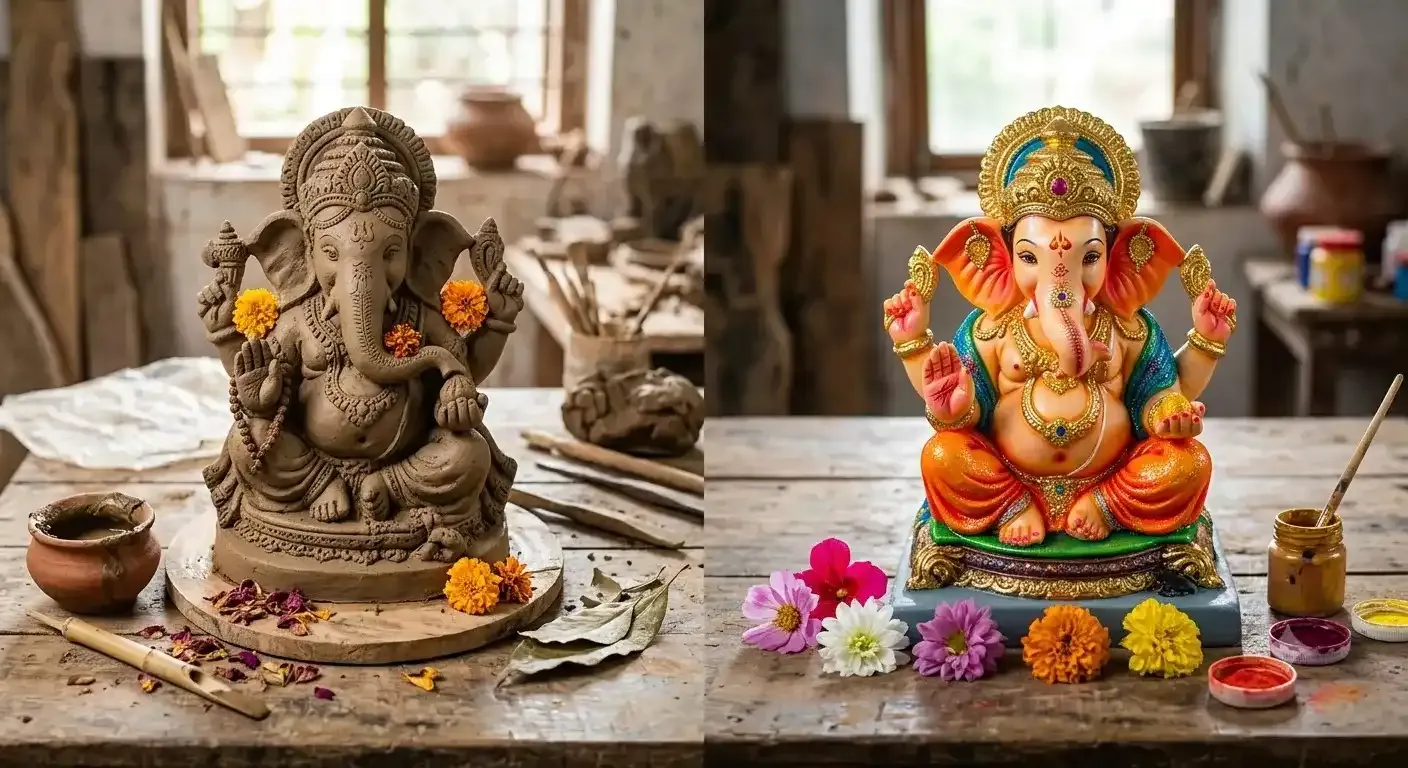
Eco-friendly clay (shadu) Ganesha vs Plaster of Paris — why clay matters, how to choose natural colours, and how to make your own clay Ganesha for Ganesh Chaturthi 2026.
Choosing the right Ganesha idol is both a devotional and an environmental decision. Eco-friendly clay (shadu/mitti) idols dissolve harmlessly in water, while Plaster of Paris (PoP) idols pollute lakes and rivers and are increasingly restricted. This HinduTone guide helps you choose between clay and PoP — and even make your own clay Ganesha — for Ganesh Chaturthi 2026.
The simple rule: choose a clay (shadu) Ganesha with natural colours. It honours the tradition, dissolves cleanly during Visarjan, and is welcome everywhere.
Clay (Shadu) vs Plaster of Paris (PoP)
- Clay / shadu / mitti: natural, biodegradable, dissolves fully in water, immersion-safe, traditional
- Plaster of Paris (PoP): does not dissolve, pollutes water bodies, harms aquatic life, and is banned or restricted in many places
- Colours: prefer natural/water-soluble colours over chemical paints, which release toxins on immersion
Why Eco Idols Matter
Every year, PoP idols and chemical paints damage rivers, lakes and marine life after Visarjan. Clay idols return to the earth and water cleanly — keeping the festival’s spirit of devotion in harmony with nature. Choosing clay is a small act that protects the very waters in which we immerse the Lord.
How to Make Your Own Clay Ganesha
- Get natural clay (shadu mitti) — available at craft and pooja stores, or online
- Knead the clay with a little water until smooth and pliable
- Shape the base (seat), body, head, trunk and ears; attach with a little water
- Add details — the tusk, eyes, and ornaments — with simple tools
- Let it dry in shade; decorate with natural colours if desired
- A small homemade Ganesha is perfect for an eco home-Visarjan in a bucket
Eco Tips for the Whole Festival
- Use a clay idol and natural colours
- Decorate with fresh flowers and biodegradable materials
- Plan an eco home-Visarjan and reuse the soil for a plant
- Avoid plastic decorations and thermocol
Frequently Asked Questions (FAQ)
Why choose a clay Ganesha over PoP?
Clay (shadu) idols are biodegradable and dissolve cleanly in water, while PoP idols pollute water bodies and are restricted in many places.
Can I make a clay Ganesha at home?
Yes — knead natural shadu clay, shape the idol, dry it in shade, and use natural colours. A small homemade idol is ideal for eco home-Visarjan.
How do I know if colours are eco-friendly?
Choose natural, water-soluble colours; avoid chemical/oil paints, which release toxins during immersion.
Final Word
An eco-friendly clay Ganesha keeps Ganesh Chaturthi 2026 both devotional and responsible. Choose clay, use natural colours, and immerse mindfully — honouring Ganesha and the earth alike. Ganpati Bappa Morya!
Explore More on HinduTone
- Ganesh Visarjan / Nimajjanam 2026 — Dates, Vidhi & Eco Immersion
- Vinayaka Chavithi / Ganesh Chaturthi 2026 — Complete Guide
- Ganesh Chaturthi Decoration & Mandap Ideas + Rangoli Designs
- Modak & Undrallu Recipe — Ganesha’s Favourite Prasadam
You might also like
Eco-Friendly Ganesh Idols in the USA: How to Choose, Make and Immerse a Clay Ganesha
Why Is Ganesha Worshipped First? The Stories, Scriptures and Meaning
Why 21 Durva Grass Blades Are Offered to Lord Ganesha