Makaravilakku 2027 at Sabarimala: Expected Date (14 January), Thiruvabharanam, Makara Sankranti and How NRIs Observe It
Makaravilakku 2027 at Sabarimala is expected on Thursday 14 January 2027, Makara Sankranti (confirm with the Travancore Devaswom Board). What the festival is, the Thiruvabharanam arrival from Pandalam, how Makaravilakku differs from Makara Jyothi, and how devotees abroad observe the day at home.
Makaravilakku 2027 at Sabarimala is expected on Thursday 14 January 2027, Makara Sankranti (confirm with the Travancore Devaswom Board). What the festival is, the Thiruvabharanam arrival from Pandalam, how Makaravilakku differs from Makara Jyothi, and how devotees abroad observe the day at home.
Quick answer: Makaravilakku 2027 is expected on Thursday 14 January 2027, the day of Makara Sankranti, at the Sabarimala Ayyappa temple. By HinduTone's calculation the Sankranti itself falls at 8:56 PM IST that day. The temple is expected to reopen for the Makaravilakku period on Wednesday 30 December 2026 and the season is expected to close around Wednesday 20 January 2027. Official 2026-27 dates had not been published when we wrote this, so please confirm with the Travancore Devaswom Board (TDB). The TDB states that Virtual-Q online booking is mandatory for all pilgrims.
Makaravilakku is the crowning festival of the Sabarimala season. After the 41 days of the Mandalam and the Mandala Pooja, devotees from Kerala, Tamil Nadu, Karnataka, Andhra Pradesh, Telangana and far beyond look to Makara Sankranti, when Lord Ayyappa is adorned with his sacred ornaments, the Thiruvabharanam, and the hills echo with Swamiye Saranam Ayyappa. This guide covers the expected 2027 date, what the festival means, the Thiruvabharanam tradition, how Makaravilakku differs from Makara Jyothi, and how devotees abroad can share in the day.
For the whole season, from Mala Dharana to the closing of the temple, see our Sabarimala 2026-27 season guide.
Makaravilakku 2027: expected dates at a glance
All dates are expected, worked out from the Malayalam solar calendar for Kollavarsham 1202 by HinduTone. Confirm every one with the Travancore Devaswom Board before travel.
| Event | Expected date (confirm with TDB) |
|---|---|
| Mandala season begins (Vrischikam 1) | Tuesday 17 November 2026 |
| Mandala Pooja | Sunday 27 December 2026 |
| Temple reopens for Makaravilakku | Wednesday 30 December 2026 |
| Makaravilakku / Makara Sankranti | Thursday 14 January 2027 |
| Season closes | Around Wednesday 20 January 2027 |
We do not list pooja or darshan clock times, fees or crowd figures. Those are announced by the TDB and can change. The Sankranti moment given above is an astronomical calculation for India, not a temple timing.
What is Makaravilakku?
The name joins two words. Makaram is the Malayalam month that begins when the sun enters the sign of Makara (Capricorn), the day celebrated across India as Makara Sankranti, Pongal and Uttarayana. Vilakku means lamp. Makaravilakku is therefore, quite literally, the lamp, or festival of light, of Makaram.
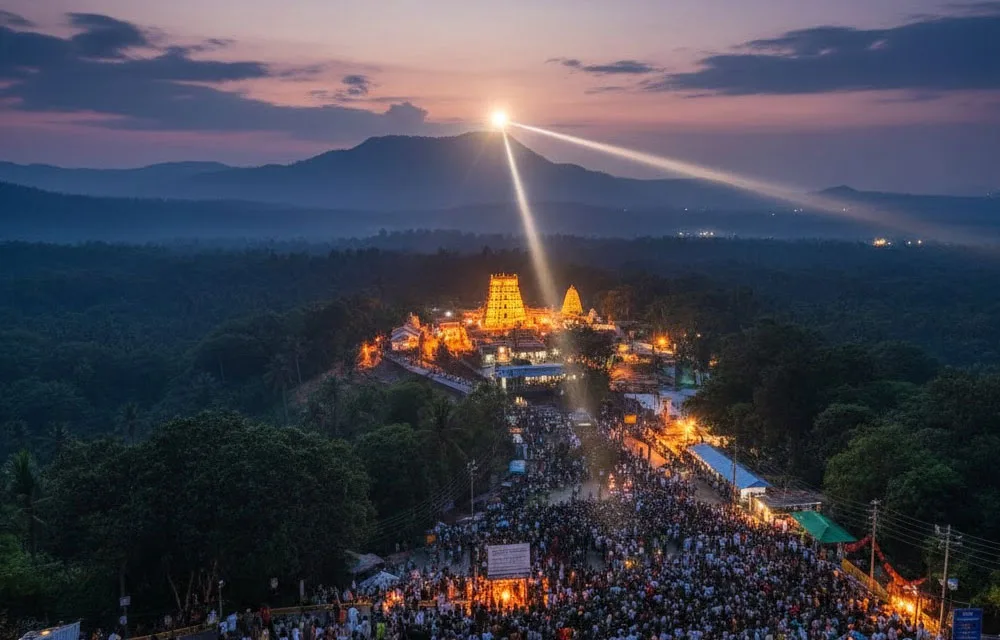
At Sabarimala it is the most celebrated day of the year. Devotees regard darshan of Ayyappa adorned with the Thiruvabharanam on this day as especially blessed. The evening of Makaravilakku is also when devotees behold the sacred light associated with the festival, which they greet with a great roar of the sharanam chant.
Makaravilakku falls on Makara Sankranti, the start of the sun's northward journey (Uttarayana) in the traditional reckoning. That makes it part of a wider festival family. While pilgrims gather at Sabarimala, Tamil families celebrate Pongal and families across India mark Sankranti. Our guides to Makaravilakku and Makara Sankranti and Makara Sankranti's punya kala and significance explore the connection.
The Thiruvabharanam arrival from Pandalam
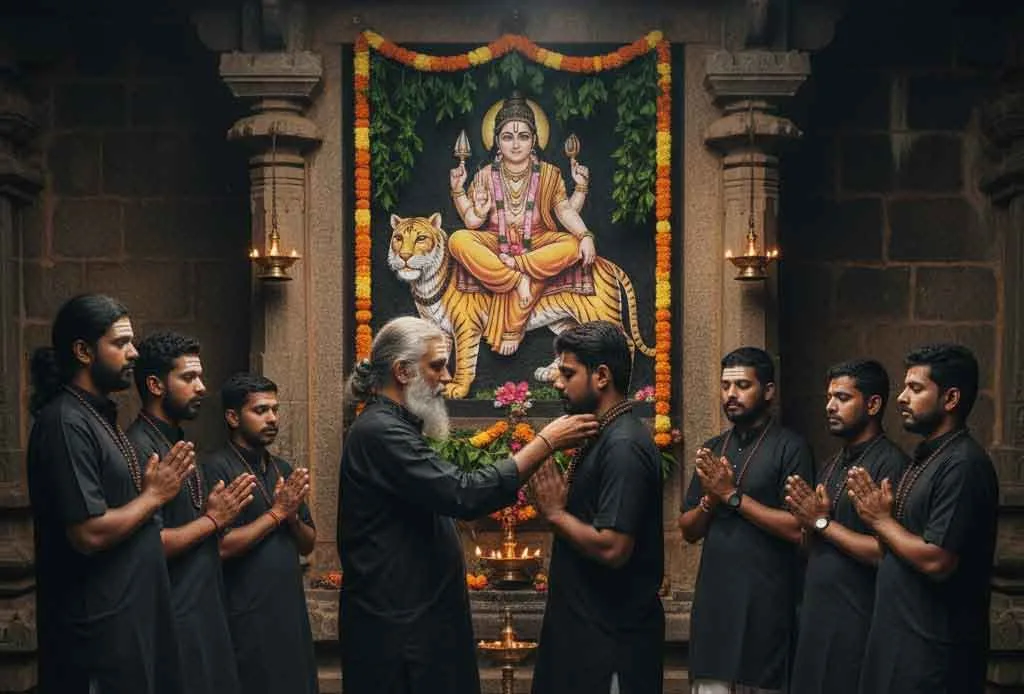
At the heart of Makaravilakku is the Thiruvabharanam, the sacred ornaments of Lord Ayyappa. In the traditional story, Ayyappa, as Manikandan, grew up as the son of the king of Pandalam, and the ornaments are associated with the Pandalam royal family. By tradition, the Thiruvabharanam is carried in a devotional procession from Pandalam to Sabarimala in the days before Makaravilakku, and the deity is adorned with it for the festival.
For devotees along the way, the passing of the Thiruvabharanam is a moment of deep emotion, a sense of the Lord's own family bringing his ornaments home to him. We do not give procession routes or timings, which are arranged by the authorities each year. Our Thiruvabharanam procession guide explains the tradition, and the Ayyappa story from Manikanta's birth tells the Pandalam story in full.
The Thiruvabharanam of Makaravilakku is different from the Thanka Anki, the golden attire used for Mandala Pooja. See our Mandala Pooja 2026 guide for that tradition.
Makaravilakku and Makara Jyothi: two different things
The two names are often used as though they mean the same thing, even in news reports. In devotional usage they are distinct, and it is worth understanding both with care:
- Makaravilakku is the festival on Makara Sankranti and the lamp, or light, associated with it. Devotees behold this light on the evening of the festival from the Sabarimala area and receive it as a sacred sign.
- Makara Jyothi is, as many devotees describe it, the star that appears in the sky on Makara Sankranti evening, a celestial sign of the Lord's blessing.
Both are approached by pilgrims with folded hands and the sharanam chant, and devotees across generations have found the evening profoundly moving. We explain the two in more depth, respectfully and without sensational claims, in our Makara Jyothi 2027 meaning guide. Our older explainer, Makara Jyothi: the divine light of Sabarimala, is also worth reading.
The pilgrimage around Makaravilakku
Pilgrims arriving for Makaravilakku follow the same sacred sequence as in the Mandalam. As commonly practised:
- The 41-day vratham, begun with Mala Dharana under a Guru Swami. Many devotees time their vratham so that it ends in the Makaravilakku period.
- The Irumudi Kettu, prepared in the Kettunirakkal ceremony, with the ghee-filled coconut in the front pouch for Neyyabhishekam.
- For many groups, the Erumeli tradition and prayers at the Vavar shrine, a reminder of the friendship between Ayyappa and Vavar in the traditional story.
- A bath in the holy Pamba river before the climb.
- Climbing the Pathinettam Padi, the 18 sacred steps, which by tradition only pilgrims carrying the Irumudi ascend.
- Neyyabhishekam, darshan, and prayers at the shrine of Malikappuram Devi near the sannidhanam.
Read about each step in our guides to Pamba Snanam, the 18 steps and Neyyabhishekam. If this is your first visit, start with the Kanni Ayyappan and Guru Swami guide.
Makaravilakku is among the busiest days of the year at Sabarimala. Plan with your Guru Swami, follow the instructions of the police and temple authorities, stay with your group, and keep children and elders close. Book Virtual-Q only through the official TDB channel.
After Makaravilakku: the season's close
The temple remains open for some days after Makaravilakku before the season closes, expected around Wednesday 20 January 2027. Harivarasanam, the lullaby sung each night as the sanctum closes, takes on a special poignancy in these final days of the season. Read the Harivarasanam lyrics and meaning in our dedicated post. Confirm the closing date with the TDB.
Observing Makaravilakku at home: a guide for NRIs
For Ayyappa devotees in the USA, the UK, Canada, the Gulf countries, Singapore, Malaysia or Australia, Makaravilakku often arrives in the middle of a working week far from Kerala. You can still mark it with devotion. Many families keep the day like this:
- Keep the festival on 14 January by your own local calendar, in the evening if you can, as a remembrance of Makaravilakku evening at the hill shrine.
- Bathe, wear clean clothes, and if you are keeping the vratham, wear your mala.
- Light a lamp before a picture of Lord Ayyappa. A lamp is the very meaning of vilakku; an electric diya is fine where open flames are not allowed.
- Offer flowers, fruit and a simple naivedyam such as payasam or Pongal, which also honours Sankranti.
- Chant Swamiye Saranam Ayyappa 108 times, or recite the Ayyappa 108 names as a family.
- Close the evening with Harivarasanam.
- Visit an Ayyappa temple in your city if there is one; many hold special Makaravilakku worship. Check the temple's own announcements.
See our guides to Ayyappa temples in the USA, Ayyappa temples in Singapore and how NRIs keep Ayyappa deeksha in the USA and UK.
If you are flying to Kerala for Makaravilakku from the USA or the Gulf, build in a few days of flexibility around the expected dates, since the official calendar may differ, and plan rest after the long flight before the climb.
Frequently asked questions
When is Makaravilakku 2027?
Makaravilakku 2027 is expected on Thursday 14 January 2027, Makara Sankranti, at the Sabarimala Ayyappa temple in Kerala. The Travancore Devaswom Board (TDB) had not published official 2026-27 dates when we wrote this, so please confirm the date with the TDB before travel.
What is Makaravilakku at Sabarimala?
Makaravilakku is the great festival at Sabarimala held on Makara Sankranti, the day the sun enters Makara (Capricorn). By tradition, the Thiruvabharanam, Lord Ayyappa's sacred ornaments, are brought in procession from Pandalam and the deity is adorned with them. The word vilakku means lamp, and the festival is closely associated with the sacred light devotees behold that evening.
Is Makaravilakku the same as Makara Jyothi?
No. The two are closely connected and often used interchangeably, but they are different. Makaravilakku is the festival and the lamp, or light, associated with it; Makara Jyothi is, as many devotees describe it, the star that appears in the sky on Makara Sankranti evening. Our Makara Jyothi 2027 guide explains both in more detail.
When does Sabarimala open for Makaravilakku 2026-27?
After the Mandala Pooja, expected on Sunday 27 December 2026, the temple is expected to reopen for the Makaravilakku period on Wednesday 30 December 2026. The season is expected to close around Wednesday 20 January 2027. Confirm all dates with the TDB.
Makara Sankranti 2027 date and time?
By HinduTone's calculation, the sun enters Makara (Makara Sankranti) at 8:56 PM IST on Thursday 14 January 2027. This is the astronomical moment of the Sankranti in India, not a pooja or darshan time. Temple timings are set by the TDB.
How can NRIs observe Makaravilakku at home?
Light a lamp at evening on 14 January (local date), place a picture of Lord Ayyappa, offer flowers and naivedyam, chant Swamiye Saranam Ayyappa 108 times and end with Harivarasanam. Many Ayyappa temples abroad hold special worship for the day; check your local temple's announcements.
Sources and verification
Dates are HinduTone's expected dates from the Malayalam solar calendar for Kollavarsham 1202, consistent with our Sabarimala 2026-27 season guide. The Makara Sankranti moment is a HinduTone astronomical calculation for India. The Travancore Devaswom Board (TDB) and the official Sabarimala website are the only authorities for the festival date, the temple calendar, pooja schedules and Virtual-Q. As of 7 October 2026 the TDB homepage stated that online booking of Virtual-Q is mandatory for all pilgrims. Please confirm dates and Virtual-Q with the TDB before travel.
Editor's note (7 October 2026)
Written on 7 October 2026, before the Travancore Devaswom Board announced official 2026-27 dates; the official Sabarimala site was temporarily unavailable when we checked. All dates are expected. Traditions are described as they are commonly told, and customs differ between families, regions and Guru Swamis. We will update this page when official dates are announced.
Related guides
You might also like
Makara Jyothi 2027: What It Means, How It Differs from Makaravilakku, and How Devotees Behold It at Sabarimala
Sabarimala Mandala Pooja 2026: Expected Date (27 December), Meaning of the 41-Day Mandalam, Thanka Anki and How to Observe It Abroad
Thiruvabharanam: The Sacred Ornaments of Lord Ayyappa and the Procession from Pandalam to Sabarimala