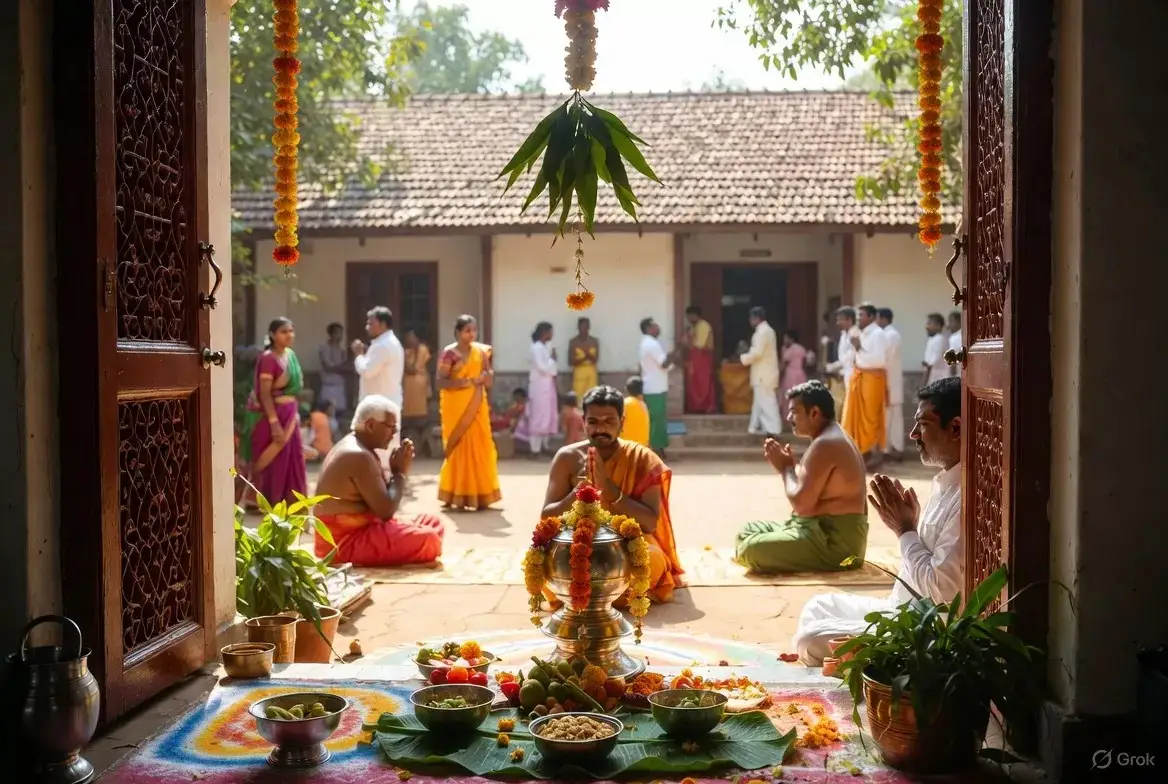
Ugadi 2026 Family Devotions: Building Bonds in Parabhava Hindu Year
Ugadi 2026 arrives on Thursday, March 19, 2026, ushering in Sri Parabhava Nama Samvatsara — the 40th year in the sacred 60-year Vedic cycle.
Ugadi 2026 arrives on Thursday, March 19, 2026, ushering in Sri Parabhava Nama Samvatsara — the 40th year in the sacred 60-year Vedic cycle.
Ugadi 2026 arrives on Thursday, March 19, 2026, ushering in Sri Parabhava Nama Samvatsara — the 40th year in the sacred 60-year Vedic cycle. For Telugu and Kannada families worldwide, this Hindu New Year is more than a date on the calendar; it's an invitation to renew faith, embrace humility, and strengthen family ties through shared devotion. Parabhava, meaning "beyond ego" or "transcendence of self," emphasizes surrendering pride, accepting life's challenges with grace, and turning toward divine guidance. In a busy modern world, this year's theme offers a beautiful opportunity for families — especially with children — to come together in bhakti, fostering unity, gratitude, and spiritual growth.
Ugadi family activities 2026 provide the perfect way to make Parabhava year celebrations meaningful and joyful. From morning rituals to evening storytelling, these traditions help parents pass down cultural values while creating lasting memories. Whether at home in Hyderabad or abroad as NRIs, these activities blend devotion, creativity, and fun, making Hindu New Year with kids an enriching experience.
Why Family Devotions Matter in Parabhava Year
Parabhava encourages humility and surrender — lessons best learned together as a family. When children participate in rituals, they absorb the essence of bhakti: offering actions to the divine rather than seeking personal glory. Group activities build emotional bonds, teach empathy, and instill discipline. In 2026, as families navigate daily stresses, these devotions become anchors of peace, reminding everyone that true strength lies in collective faith and love.
Start the day early with collective prayers, setting an intention: "In Parabhava, we surrender our egos and seek divine blessings for our family." This simple affirmation unites everyone in purpose.
Morning Rituals: Starting with Purity and Togetherness
Begin Ugadi with the traditional abhyanga snan (oil bath). Make it a family event: parents help younger children apply warm sesame or coconut oil, explaining how it purifies body and mind for the New Year. Follow with new clothes and a short family prayer circle — hold hands, chant "Om Namo Narayanaya" three times, and share one thing each person is grateful for from the previous year.
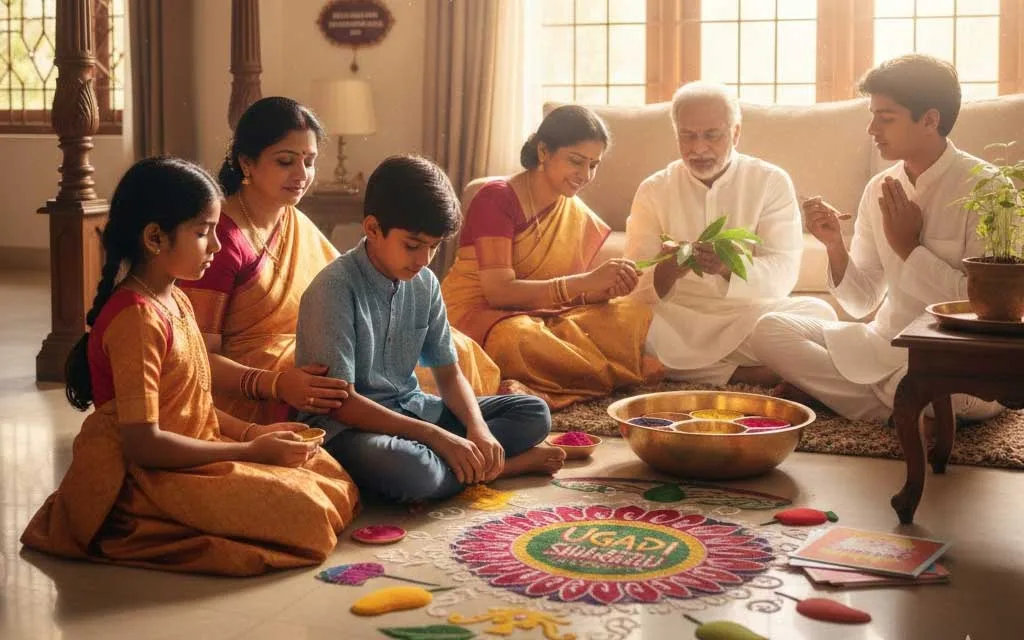
Next, decorate the home together. Crafting toranam (mango leaf garlands) is an ideal Ugadi family activity 2026. Gather mango leaves (fresh or artificial), string them with thread, and tie them across the doorframe. While working, teach kids a simple sloka: "Mangalam bhavatu sarvam" (May all be auspicious). Parents can explain how mango leaves symbolize prosperity and protection, linking it to Parabhava's message of humble acceptance of divine gifts.
Involve children in drawing rangoli at the entrance. Provide colored powders or rice; let them create simple designs like flowers or footprints of Lord Ganesha. Turn it into a mini-competition with prizes like extra sweets — this encourages creativity while teaching patience and teamwork.
Midday Devotions: Sharing Stories and Sacred Foods
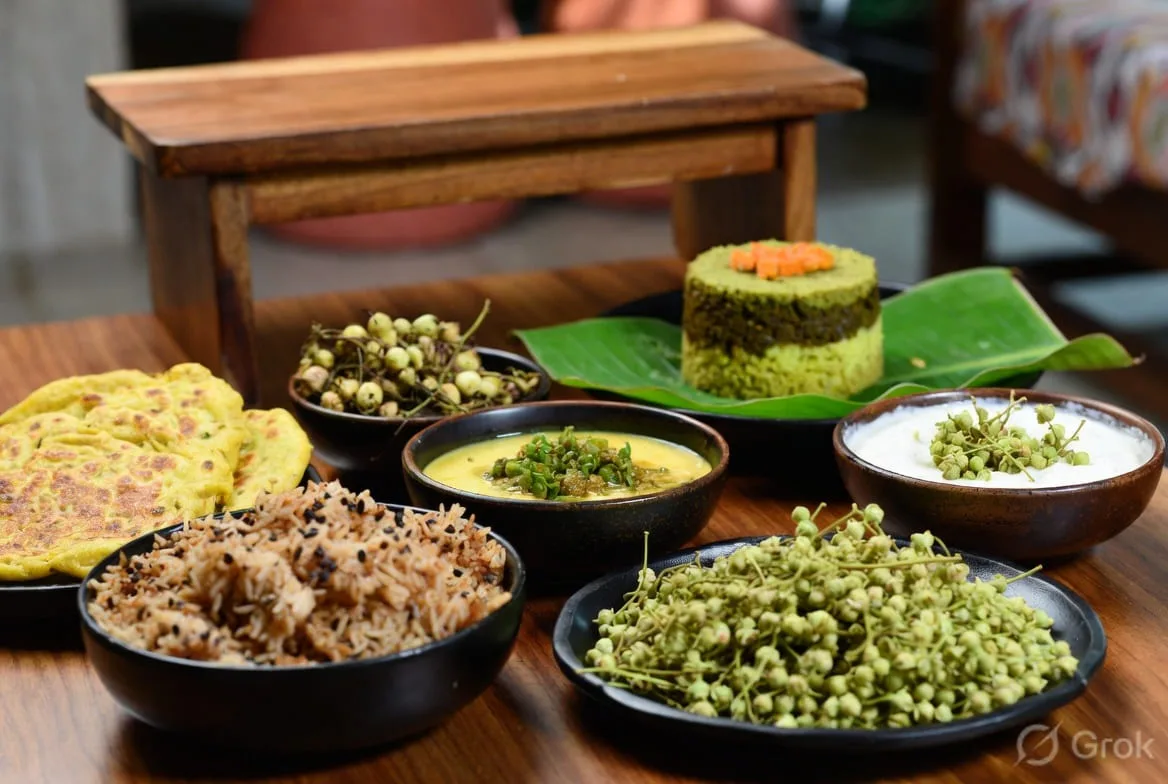
After puja, prepare Ugadi Pachadi as a family. Assign roles: one child chops raw mango, another mixes jaggery, parents handle neem flowers. As you blend the six tastes, narrate their symbolism — sweet for joy, bitter for challenges — and connect to Parabhava: "Just as we accept bitter neem with sweet jaggery, we embrace life's ups and downs with faith in God."
The highlight for kids is group storytelling from the Ramayana. Sit in a circle post-lunch; an elder or parent begins with Rama's exile, emphasizing his humility and surrender during trials. Children take turns adding parts — perhaps Sita's devotion or Hanuman's bhakti. Use picture books or simple puppets for younger ones. This activity teaches moral values, improves listening, and deepens love for Lord Rama, whose life mirrors Parabhava's ego-transcendence theme.
End with sharing devotional songs. Play or sing bhajans like "Raghupati Raghava Raja Ram" or "Jai Sri Ram." Encourage kids to learn one verse: "Rama nama sukhadaayi" (The name of Rama gives happiness). Sing as a family, clapping rhythms — it creates joy and instills bhakti from a young age.
Afternoon Creative & Inclusive Activities
Crafting keeps energy high. Make greeting cards with "Ugadi Subhakankshalu" messages, decorated with neem-jaggery motifs or Rama drawings. Kids can write notes of gratitude to family members, practicing kindness central to Parabhava.
For inclusivity, adapt activities: involve grandparents in storytelling via video calls; for differently-abled children, use audio stories or tactile rangoli with safe materials. If family includes non-Telugu members, explain rituals simply and incorporate universal prayers like "Sarve Bhavantu Sukhinah."
Plant a small tulsi or mango sapling in a pot — a symbolic act of nurturing growth, mirroring family bonds and devotion to nature as divine.
Evening Wind-Down: Virtual Family Pujas & Reflections
As the day closes, host a virtual family puja if relatives are spread out. Use Zoom or WhatsApp for a group call: one household leads aarti, others join with their diyas. Recite Vishnu Sahasranama excerpts together (focus on 108 names if full is long), then share reflections: "What ego can we surrender this year?" This builds emotional connections across distances.
Conclude with a family gratitude jar: each person writes a hope for Parabhava on paper slips and places them in a jar. Read them next Ugadi — a beautiful tradition for continuity.
Tips for Meaningful Ugadi Family Activities 2026
- Keep sessions short for kids' attention (15–30 minutes per activity).
- Use bilingual explanations for mixed-language homes.
- Incorporate play: turn sloka learning into songs or games.
- Focus on bhakti over perfection — intention matters most.
- Document with photos for a family Ugadi album.
These Parabhava year celebrations transform Ugadi into a devotional bonding experience. By teaching children simple slokas, sharing Ramayana tales, and crafting with prayers, families cultivate humility, faith, and love — core to Parabhava's essence.
Ugadi Subhakankshalu! May Sri Parabhava bring your family unity, joy, and divine grace.
Frequently Asked Questions
When is Ugadi 2026 and which year does it begin?
Ugadi 2026 falls on Thursday, March 19, 2026. It ushers in Sri Parabhava Nama Samvatsara, the 40th year in the 60-year Vedic cycle.
What does Parabhava mean and how does it shape Ugadi devotions?
Parabhava means "beyond ego" or "transcendence of self." Families use it as a theme to surrender pride, accept challenges with grace and turn toward divine guidance together.
What morning rituals can families do together on Ugadi?
Begin with an abhyanga snan (oil bath) using warm sesame or coconut oil, then wear new clothes and form a family prayer circle. Chant "Om Namo Narayanaya" three times and decorate the home with a mango-leaf toranam and rangoli.
How can children take part in Ugadi Pachadi preparation?
Assign roles: one child chops raw mango, another mixes jaggery, and parents handle neem flowers. While blending the six tastes, explain that sweet stands for joy and bitter for life's challenges.
How can NRI families celebrate Ugadi 2026 with relatives far away?
Host a virtual family puja on Zoom or WhatsApp, where one household leads aarti and others join with their diyas. Grandparents can join storytelling by video call, and the group can recite Vishnu Sahasranama excerpts together.
How long should Ugadi family activities be for young children?
Keep each activity to 15–30 minutes to hold kids' attention. Use bilingual explanations in mixed-language homes and turn sloka learning into songs or games.
You might also like
Ugadi 2026 Worldwide: Devotional Vibes of Parabhava Hindu Year Across Borders
Ugadi 2026 Puja Vidhi: Step-by-Step Devotional Guide for Parabhava Hindu New Year (NRI Edition)
Ugadi Festival Recipes 2026 Complete Traditional Guide