Gayatri Mantra: Meaning, Benefits & Chanting Guide
Gayatri Mantra meaning, benefits, full Sanskrit & word-by-word translation, how to chant 108 times daily, and modern life benefits for stress & focus.
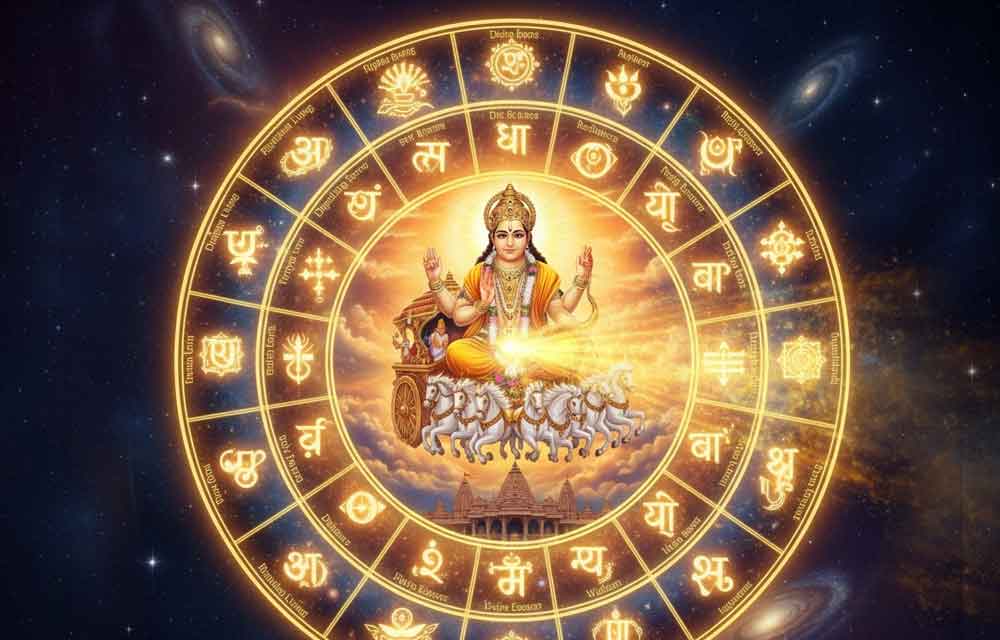
Gayatri Mantra meaning, benefits, full Sanskrit & word-by-word translation, how to chant 108 times daily, and modern life benefits for stress & focus.
Gayatri Mantra benefits have been scientifically and spiritually documented for over 5,000 years. Whether you are an American yoga practitioner looking for a daily anchor against anxiety, a knowledge worker seeking sharper focus, a parent wanting peace at home, or a serious meditator on the path of inner awakening — the Gayatri Mantra (Rig Veda 3.62.10) is the single most powerful Vedic prayer you can take into your morning. Revealed to Brahmarishi Vishwamitra and addressed to the radiant essence of the Sun (Savitr), this 24-syllable mantra is called the Veda-Mata — the mother of all Vedas. This complete Gayatri Mantra meaning and chanting guide covers the full Sanskrit text, word-by-word translation, correct pronunciation, the right way to chant 108 times daily, the best time of day, the science-backed benefits, common mistakes to avoid, and 7 frequently-asked questions for first-time chanters.
Origin and Scriptural Source
The Gayatri Mantra appears in Rig Veda Mandala 3, Sukta 62, Verse 10 (RV 3.62.10) and was revealed to Brahmarishi Vishwamitra. It is composed in the Gayatri meter (24 syllables in three padas of 8 syllables each), addressed to Savitr — the Vedic name for the radiant essence of the Sun.
Why it is called Veda-Mata
All four Vedas are said to be expansions of this single 24-syllable mantra. Its repetition is part of the daily sandhya vandanam of every initiated Hindu, and the mantra is given at the time of upanayana (the sacred-thread ceremony) as the seed of one's lifelong sadhana.
Full Sanskrit Text and Transliteration
In Devanagari:
ॐ भूर् भुवः स्वः । तत् सवितुर्वरेण्यम् । भर्गो देवस्य धीमहि । धियो यो नः प्रचोदयात् ॥
Roman / English transliteration:
Om Bhūr Bhuvaḥ Svaḥ | Tat Savitur Vareṇyam | Bhargo Devasya Dhīmahi | Dhiyo Yo Naḥ Prachodayāt ||
Word-by-Word Meaning
Om — the primordial sound, the cosmic vibration that contains all creation.
AdvertisementBhūr — the physical / earth realm; the body.
Bhuvaḥ — the vital / mid realm; the breath, prana.
Svaḥ — the heavenly / celestial realm; the mind.
Tat — That (the supreme reality, Brahman).
Savituḥ — of Savitr, the radiant essence of the Sun, source of all life.
Vareṇyam — most adorable, supreme, fit to be sought.
AdvertisementBhargo — effulgence, divine light that destroys ignorance.
Devasya — of the divine, the deity.
Dhīmahi — may we meditate upon, may we contemplate.
Dhiyaḥ — our intellect, understanding, faculty of discrimination.
Yo — who, that which.
Naḥ — our, of us.
Prachodayāt — may He inspire, awaken, illumine.
"Om — across the earth, the mid-region, and the heavens — we meditate upon that supreme adorable effulgence of the divine Savitr. May He illumine and awaken our intellect."
Pronunciation Guide for Beginners
Om — a deep "Aaa-uuu-mmm" rising from the navel; let the M-sound resonate in the upper palate.
Bhūr Bhuvaḥ Svaḥ — "Bhoor Bhoo-vahaa Svahaa" — the three vyahritis (utterances).
Bhargo — "Bhar-go" with a soft "g" as in "go".
Dhīmahi — "Dhee-ma-hi" — the "Dh" is aspirated; place tongue against upper teeth.
Prachodayāt — "Pra-cho-da-yaat" — emphasis on the long "aa" at the end.
Amazing Benefits of the Gayatri Mantra for Modern Life
For stress, anxiety and emotional balance
Multiple studies (most notably Bangalore's NIMHANS work and Maharashi University) have measured EEG changes during Gayatri japa: increased alpha-wave coherence, lowered cortisol, slowed heart-rate variability — the same physiological signature as deep meditation. Daily 108 repetitions before bed have been shown to dramatically reduce sleep-onset latency in chronic-stress subjects.
For career, focus and manifestation
The mantra is fundamentally a request for Prachodayāt — divine illumination of the intellect. Practitioners report sharper focus during knowledge-work, clearer decision-making, and what the Vedic tradition calls saraswati-anugraha — the grace of the goddess of learning. Many MBA students, IIT/Stanford grads and tech founders cite the Gayatri as their morning anchor.
For health, immunity and longevity
The slow, rhythmic chanting at ~5-6 breaths/minute is the same rate identified in modern HRV research as optimal for vagal tone, blood-pressure regulation, and immune function. Sandhyavandanam Gayatri at sunrise also synchronises the body's circadian rhythm with daylight — a practice modern chronobiology has only recently caught up with.
For relationships and family harmony
Group chanting at home — even just one round of 108 with the family before dinner — measurably lowers household tension. The shared rhythm and the universal message ("may our intellect be illumined") cuts through ego and small-mindedness in a way no self-help book can.
How to Chant for Maximum Power
Time — ideal: Brahma Muhurta (4:30–5:30 AM, 96 minutes before sunrise). Acceptable: at sunrise (Pratah Sandhya), noon (Madhyahnika), and sunset (Sayam Sandhya). The mantra can be chanted anytime; these are simply the most charged windows.
Posture — sit cross-legged (sukhasana or padmasana) facing east. Spine straight, shoulders relaxed, eyes softly closed.
Direction — face east at sunrise, west at sunset.
Mala — use a 108-bead rudraksha or tulasi mala. Cross the meru bead but do not pass over it.
Count — 108 repetitions = 1 mala = 1 round. Beginners start with 11 or 27 daily and build up over a few weeks.
Pace — roughly one mantra per slow inhalation+exhalation cycle. A full 108 takes 18–22 minutes.
Sankalpa — before starting, set a brief intention: "I chant this mantra for the illumination of my intellect, the welfare of my family, and the welfare of all beings."
Mental focus — either visualise the rising sun behind your closed eyes, or simply listen to the sound of the mantra in your own voice.
Closing — end with three deep "Om Shanti Shanti Shanti" and a few minutes of silent sitting before standing.
Recommended chanting count by goal
Daily maintenance — 108 / day (~20 min)
Sandhya practice — 27 morning + 27 noon + 27 evening = 81/day or 108 each = 324/day for serious sadhakas
40-day mandala — 1008/day for 40 consecutive days for a specific intention or purascharana
Lifetime target — 24 lakh (one purascharana = 24 hundred-thousand) over a lifetime is a traditional goal
Common Mistakes to Avoid
Chanting fast — speed is not the goal. One slow, attentive repetition is worth ten rushed ones.
Chanting after a heavy meal — wait at least 2 hours.
Chanting in a noisy or untidy space — clean the area, light a diya.
Skipping the closing Shanti Mantra — always seal the practice.
Counting on fingers across the index finger — use a mala instead; index finger is reserved for ego/self-indication.
Quotes and References from the Vedas and Sages
"Among all mantras, the Gayatri is supreme. There is no mantra equal to the Gayatri." — Manu Smriti 2.83.
"By the chanting of the Gayatri Mantra, all sins are destroyed and the supreme abode is attained." — Atharva Veda Parishishta.
"The Gayatri is the first mantra of the Vedas. It is the seed of all sound." — Sri Ramana Maharshi.
"Chant the Gayatri three times a day with sincerity, and you will need nothing else for spiritual progress." — Swami Vivekananda.
Lesser-Known Facts
It contains exactly 24 syllables — said to correspond to the 24 ribs of the body.
Each of the 24 syllables has a presiding deity (rishi-devata); the full set is read out at upanayana.
The Gayatri Yajna at Hardwar is the largest annual mantra-yajna in India.
NASA scientists have studied its frequency signature; the dominant harmonic sits in the 110-140 Hz range, near vagal-stimulation frequencies.
Conclusion: Begin Tomorrow Morning
The full Gayatri Mantra meaning and chanting is summed up in a single English sentence: may the divine light awaken our minds. Tomorrow morning, set your alarm for thirty minutes earlier, sit on a clean cushion, and chant the mantra 108 times. You will not feel any difference on day one. By day forty, you will not recognise the person who started.
Share this guide with anyone in your life who needs a stronger morning anchor — and continue with our companion guides on Om Namah Shivaya, Mahamrityunjaya Mantra, Om Gan Ganapataye Namah and Hare Krishna Maha Mantra.
Frequently Asked Questions
How many times should I chant the Gayatri Mantra daily?
108 times (one mala) is the standard daily count. Beginners can start with 11 or 27 and build up over 2-3 weeks. Serious sadhakas chant 324 (three malas at the three sandhyas).
What is the best time to chant the Gayatri Mantra?
Brahma Muhurta — about 96 minutes before sunrise (typically 4:30-5:30 AM in the USA depending on season). The next-best windows are sunrise, solar noon, and sunset (the three sandhyas).
Can women chant the Gayatri Mantra?
Yes. While some traditionalist schools restricted it historically, all major modern teachers — Swami Vivekananda, Sri Aurobindo, Sri Ramana Maharshi, Swami Sivananda, Mata Amritanandamayi — have explicitly affirmed that women can and should chant the Gayatri.
Do I need an initiation to chant the Gayatri Mantra?
Traditional upanayana initiation is the formal route. However, all major contemporary acharyas allow uninitiated chanting with humility and a clean heart. Start where you are.
Can I chant the Gayatri Mantra silently in my mind?
Yes — manasika japa (mental chanting) is considered the highest form, after audible vachika japa and whispered upamshu japa. Beginners benefit most from soft audible chanting first.
How long until I see benefits from chanting the Gayatri Mantra?
Subjective calm: within a few days. Sustained focus and clarity: within 2-3 weeks of daily 108-repetition practice. Deeper transformation: 40-day mandalas mark the classical milestones.
What if I make pronunciation mistakes?
Sincerity outweighs perfect pronunciation. The Bhagavata Purana says even imperfect chanting with devotion bears fruit. Use a recorded audio (search for "Gayatri Mantra by Pandit Jasraj" or "S.P. Balasubrahmanyam") as a daily reference.
Can children chant the Gayatri Mantra?
Absolutely — and the earlier the better. The traditional age for upanayana (formal Gayatri initiation) is 7-9 years. Children pick up the rhythm and meaning very quickly.
Explore HinduTone — May 2026 hub
Continue your reading across HinduTone's May 2026 publishing cluster — every post in this hub is interlinked for a complete devotional and informational journey.
🪔 Festivals & Vrats: Hindu Festivals in May 2026 — Complete Vrats & Puja Guide · Ganga Dussehra 2026 — Story, Muhurat & Home Vidhi · Adhik Maas 2026 — Purushottam Maas Dates & Rules.
🌟 Vedic Horoscopes: May 2026 Monthly Horoscope — All 12 Rashis · Weekly Horoscope May 11–17, 2026 · Weekly Horoscope May 18–24, 2026.
👤 Famous Hindus — Biographies: Narendra Modi Biography · Swami Vivekananda Biography · Sadhguru Biography — Jaggi Vasudev · Mata Amritanandamayi (Amma) Biography.
🕉️ Powerful Mantras: Om Namah Shivaya — Meaning & Power · Mahamrityunjaya Mantra — Healing Mantra · Hare Krishna Maha Mantra.