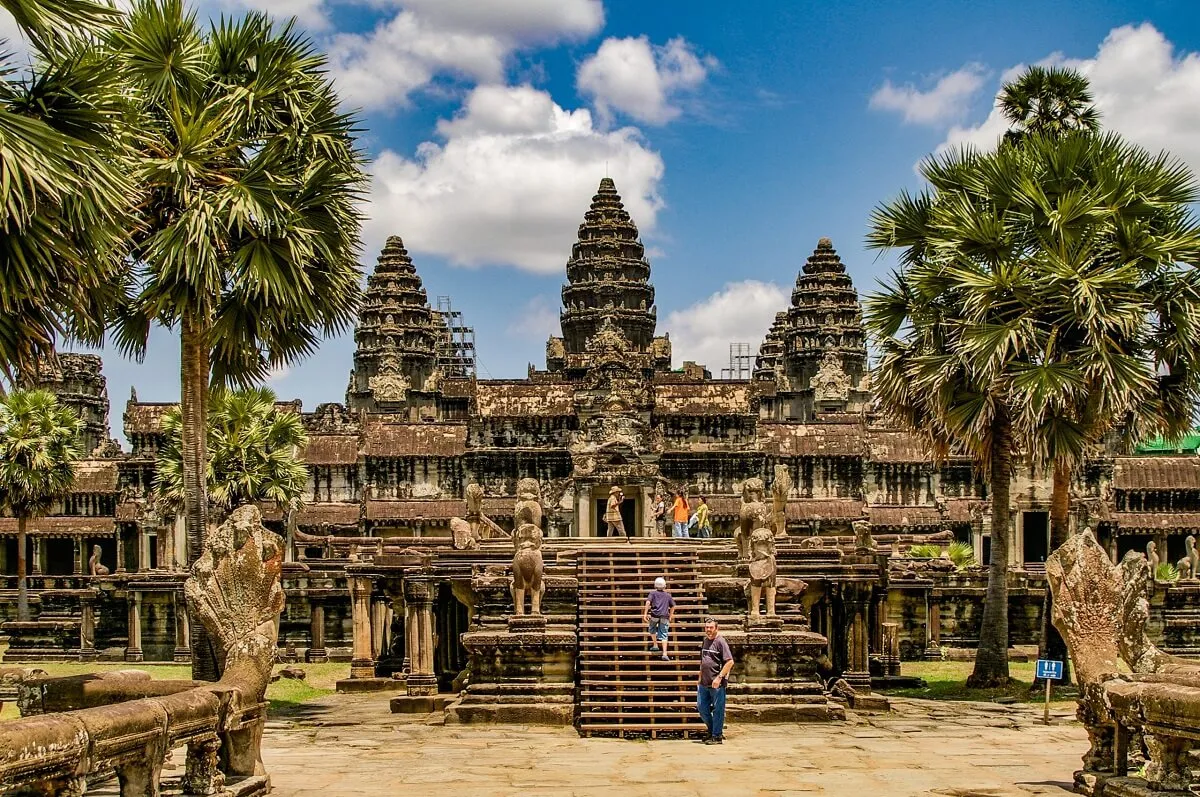
ॐ Vishnu Sahasranama — 1000 Names of Lord Vishnu
श्री विष्णु सहस्रनाम HinduTone.com · Sacred Texts & DevotionSource: Mahabharata, Anushasana Parva · Narrated by Bhishma to Yudhishthira ॐ नमो भगवते वासुदेवाय…
श्री विष्णु सहस्रनाम HinduTone.com · Sacred Texts & DevotionSource: Mahabharata, Anushasana Parva · Narrated by Bhishma to Yudhishthira ॐ नमो भगवते वासुदेवाय…
श्री विष्णु सहस्रनाम
HinduTone.com · Sacred Texts & Devotion
Source: Mahabharata, Anushasana Parva · Narrated by Bhishma to Yudhishthira
ॐ नमो भगवते वासुदेवाय
The Vishnu Sahasranama (विष्णु सहस्रनाम) is one of the most sacred hymns of Hinduism — a garland of one thousand divine names of Lord Vishnu, the Preserver and Protector of the Universe. It is found in the Mahabharata (Anushasana Parva, Chapter 149), where the dying Bhishma reveals these names to Yudhishthira on the battlefield of Kurukshetra. Each name is a jewel-like expression of one of Vishnu's infinite divine qualities, forms, and cosmic functions. Regular recitation is believed to bestow liberation, peace, and the highest grace.
Invocation · मंगलाचरण
Yasya smaraṇamātreṇa janma-saṁsāra-bandhanāt
Vimucyate namas tasmai Viṣṇave prabha-viṣṇave
By the mere remembrance of whose name, one is freed from the bondage of birth and the cycle of existence — salutations to that all-pervading Vishnu.
The 1000 Sacred Names · सहस्र नाम
Phala Shruti · फलश्रुति
The Benefits of Recitation
"Yāni nāmāni gauṇāni vikhyātāni mahātmanaḥ,
ṛṣibhiḥ parigītāni tāni vakṣyāmi bhūtaye."
He who recites these Thousand Names of Vishnu with devotion shall be freed from all sins, attain long life, health, prosperity, fame, and ultimately the supreme state of liberation (Moksha). These names, declared by the great sage Bhishma, are the most potent of all prayers.
Benefits of daily recitation:
- Removes all sins accumulated over lifetimes
- Grants health, wealth, wisdom and progeny
- Protects from all evil and calamity
- Fulfills all righteous desires
- Leads to liberation (Moksha) from the cycle of birth and death
- Makes the devotee dear to Lord Vishnu
Concluding Prayer · समापन श्लोक
ॐ नमो भगवते वासुदेवाय नमः
Om Namo Bhagavate Vasudevaya Namah
श्री कृष्ण गोविन्द हरे मुरारे। हे नाथ नारायण वासुदेव।।
Shri Krishna Govinda Hare Murare | He Natha Narayana Vasudeva
Sarve Jana Sukhino Bhavantu — May All Beings Be Happy
HinduTone.com | Sacred Texts, Stotras & Devotional Resources
Dedicated to the preservation and sharing of Sanatana Dharma
[image: 🌐] www.hindutone.com
Compiled with devotion · ॐ तत् सत्
The Mahabharata Context: Why Bhishma Chose This Moment to Reveal the Names
The Vishnu Sahasranama was not delivered in a temple or an ashram — it was spoken on the arrows of Kurukshetra. Bhishma Pitamaha, pierced by countless shafts and lying on his bed of arrows (shara-shayyā), awaited the auspicious moment of Uttarayana to depart his body. This setting is deliberate: the Anushasana Parva (Book of Instructions) positions the dying grandsire as the ultimate teacher, distilling a lifetime of dharmic learning into final, irreversible wisdom.
Yudhishthira, overwhelmed by grief and the weight of kingship after the war, asked Bhishma the single most important question a human being can ask — 'Who is the one Being by whose worship a person attains peace, liberation, and prosperity?' Bhishma's answer, drawn directly from a teaching he had received from the sage Narada, who in turn had heard it from Brahma himself, forms the Sahasranama. This unbroken chain — Brahma, Narada, Bhishma, Yudhishthira, and through the text to every subsequent reciter — is itself described as a paramparā of grace.
The choice of Bhishma as narrator also carries theological weight. Bhishma was born as Dyau, one of the Ashta Vasus, and bore a unique boon of icchā-mṛtyu (death at will). His suffering on the arrow-bed is interpreted by commentators such as Adi Shankaracharya as the working out of karmic residue, and his final act of transmitting the Sahasranama is understood as the merit that completes his liberation.
Structure and Classification of the Thousand Names
The Sahasranama is not a random list; it is organized in clusters that reflect Vishnu's cosmic roles. Names like Vishvam (the Universe itself), Vishnuh (the all-pervading one), and Vashatkāra (the lord of Vedic sacrificial utterances) open the hymn by establishing Vishnu's identity with the totality of existence. Later clusters concentrate on his incarnations — names such as Matsyah, Kūrmah, and Varahah directly invoke the Dashavataras described in the Bhagavata Purana and the Vishnu Purana.
Sanskrit grammatical tradition classifies the names into three categories: those denoting Vishnu's essential nature (svarūpa-vācaka), those denoting his attributes (guṇa-vācaka), and those denoting his deeds (kriyā-vācaka). For example, Achyutah (the infallible one) is a svarūpa name, while Dātā (the giver) is a guṇa name, and Govindah (the rescuer of cows, the earth, and the Vedas) is primarily a kriyā name. This classification is elaborated upon in the commentary of the 12th-century Vaishnava philosopher Parasara Bhattar.
Many names appear to overlap or repeat with slight variation — this is intentional. The Nirukta tradition of Vedic interpretation holds that each phonetic variation reveals a different facet of the same divine reality. The name Hari, for instance, appears multiple times and is explained variously as 'one who removes sins', 'one whose complexion is golden-green like new grass', and 'one who carries away the mind of the devotee'.
The Four Principal Commentaries and What Each Reveals
The Vishnu Sahasranama has attracted some of the most distinguished philosophical minds in Hinduism. Adi Shankaracharya's Bhāṣya, written from an Advaita Vedanta perspective, interprets every name as pointing to the attributeless, non-dual Brahman. His commentary on the very first name, Vishvam, reads: 'He who is the universe, who has become the universe, and in whom the universe dissolves — that is Vishnu.' This Advaitic reading has made the Sahasranama acceptable across all schools of Vedanta.
By contrast, Parasara Bhattar's Bhagavat-guṇa-darpaṇa (Mirror of Divine Qualities) reflects the Vishishtadvaita school of Ramanuja. Bhattar arranges the names into narrative arcs corresponding to the Pancharatra theology, showing how Vishnu's qualities of jñāna (omniscience), bala (strength), aishvarya (sovereignty), vīrya (heroism), shakti (power), and tejas (splendour) are systematically revealed. His work remains the authoritative Vaishnava commentary and is studied in Srivaishnava institutions to this day.
Two other important commentaries are those of Madhvacharya (Dvaita school, 13th century) and the 16th-century scholar Appayya Dikshita, whose Shaiva-oriented reading attempts to reconcile references to Vishnu with the supremacy of Shiva — itself a testimony to the hymn's cross-sectarian prestige. Reading even one commentary alongside the text transforms recitation into a meditative study of Hindu philosophy.
Recitation Methods: How the Sahasranama is Practiced Across Traditions
At the Srirangam Sri Ranganathaswamy Temple, the largest functioning temple complex in India, the Vishnu Sahasranama is chanted daily during the morning abhisheka of the deity. At Tirupati Tirumala Venkateswara Temple, it forms a core part of the Suprabhatam sequence and is recited by the archakas (priests) trained in the Pancharatra Agama tradition. These institutional settings preserve the correct svaras (tonal accents) passed down through guru-shishya lineages.
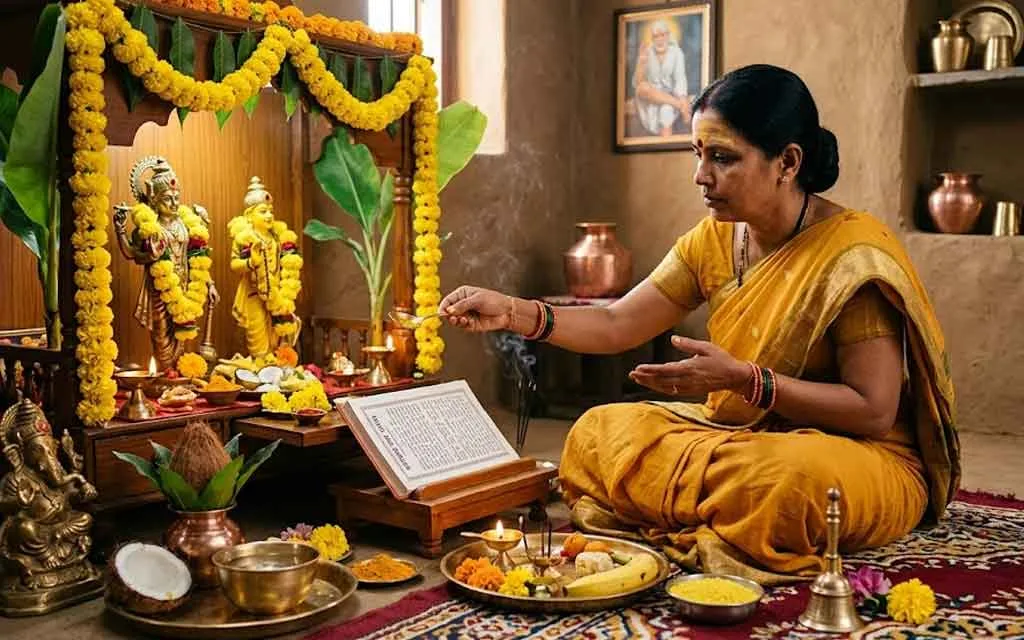
For household practice, the classical method recommends reciting the text after a bath, facing east, with a lamp lit before an image of Vishnu or Shaligrama (the sacred ammonite stone recognized as a natural form of Vishnu). The Phala Shruti itself specifies that a devotee may substitute the Sahasranama with repeated chanting of the single name 'Rama' — a tradition attributed to Lord Shiva, who is said to have told Goddess Parvati, 'Rama Rāma Rāmeti rame Rāme manorame; sahasranāma tat-tulyaṁ Rāma-nāma varānane' — one thousand names equal to repeating Rama thrice.
Certain Vaishnava communities perform Sahasranama Archana, in which a single flower or tulasī leaf is offered to the deity for each of the thousand names. At temples such as the Vadapalani Murugan Temple in Chennai and numerous Vishnu temples throughout Kerala and Tamil Nadu, this elaborate pūjā takes around ninety minutes to complete and is considered one of the most meritorious forms of worship.
Key Names and Their Deeper Meanings: A Devotee's Guide
Among the thousand names, several have entered the living vocabulary of daily Hindu devotion. Nārāyaṇa — 'the abode of all beings and one who dwells in all beings' — derives from the root nāra (waters, or primal beings) and ayana (abode or goal). The Narayana Sukta of the Taittiriya Aranyaka of the Krishna Yajurveda is dedicated entirely to this name and is considered equal in sanctity to the Purusha Sukta of the Rigveda.
Achyutah means 'the one who never falls' or 'the infallible' — a name that directly consoles the devotee by affirming that divine protection never lapses. Anantah means 'the infinite', a reminder that Vishnu transcends all spatial and temporal limitation; this name is also attributed to the cosmic serpent Ananta Shesha upon whom Vishnu reclines in the primordial ocean (Kshirasagara). Janārdana means 'one who is sought by all for liberation and prosperity', and Govinda — perhaps the name most beloved in popular bhakti — simultaneously evokes the cowherd of Vrindavan and the cosmic principle that sustains the Vedas and the earth itself.
Meditating on each name individually, rather than rushing through all thousand, is an approach endorsed in several Puranic passages. The Padma Purana records the sage Narada advising that a single name heard with full attention and bhāvana (contemplative feeling) plants a seed of liberation that no subsequent karma can destroy.
The Sahasranama in the Broader Landscape of Sahasranama Literature
While the Vishnu Sahasranama is the most universally recited, it belongs to a larger Sanskrit literary genre called sahasranāma-stotra, in which the thousand names of a deity are compiled as a hymn. The Lalita Sahasranama, found in the Brahmanda Purana, performs the same function for the Goddess Lalita Tripurasundari and is equally central to Shakta worship. The Shiva Sahasranama appears in multiple Puranic sources including the Linga Purana and the Anushasana Parva itself — indicating that even within the Mahabharata, Bhishma later taught Yudhishthira the thousand names of Shiva as well.
The Vishnu Sahasranama's prestige rests on several unique factors: its location within the Mahabharata (an Itihasa, carrying scriptural authority equal to the Puranas), its narrator (Bhishma, who embodies dharma), and the direct Phala Shruti that enumerates precise fruits of recitation. Scholars of Sanskrit poetics have noted that the metre, primarily the Anushtubh (eight syllables per quarter), is the same metre used in the Bhagavad Gita — a metre considered especially suited for carrying eternal truths accessibly to all.
In the modern period, the Sahasranama has crossed linguistic boundaries. It has been translated into Tamil, Telugu, Kannada, Malayalam, Bengali, and Marathi with accompanying commentaries, and devotional recordings by artists such as M.S. Subbulakshmi — whose 1967 rendition for All India Radio remains one of the most recognised recordings in Indian devotional music — have brought the hymn into millions of homes worldwide.
Frequently Asked Questions
What is the ॐ Vishnu Sahasranama?
श्री विष्णु सहस्रनाम HinduTone.com · Sacred Texts & Devotion Source: Mahabharata, Anushasana Parva · Narrated by Bhishma to Yudhishthira ॐ नमो भगवते वासुदेवाय The Vishnu Sahasranama (विष्णु सहस्रनाम) is one of the most sacred hymns of Hinduism — a garland of one thousand divine names of Lord Vishnu , the Preserver and Protector of the Universe. It is found i
How many times should the ॐ Vishnu Sahasranama be chanted?
It is traditionally chanted 108 times using a rudraksha or tulsi mala. Even 11 or 21 sincere repetitions daily are considered beneficial — steady, focused practice matters more than the count.
What is the best time to chant the ॐ Vishnu Sahasranama?
Dawn (Brahma Muhurta) after a bath is considered ideal, though it may be chanted any time with a calm, focused mind. Many devotees keep a fixed daily time to build consistency.
Who can chant the ॐ Vishnu Sahasranama?
Anyone may chant it with faith and a pure mind, regardless of age, gender or background. Beginners benefit from first hearing the correct pronunciation and understanding its meaning.
What are the benefits of chanting the ॐ Vishnu Sahasranama?
Devotees chant it to invoke Lord Vishnu's grace — for inner peace, protection, focus and spiritual progress.
You might also like
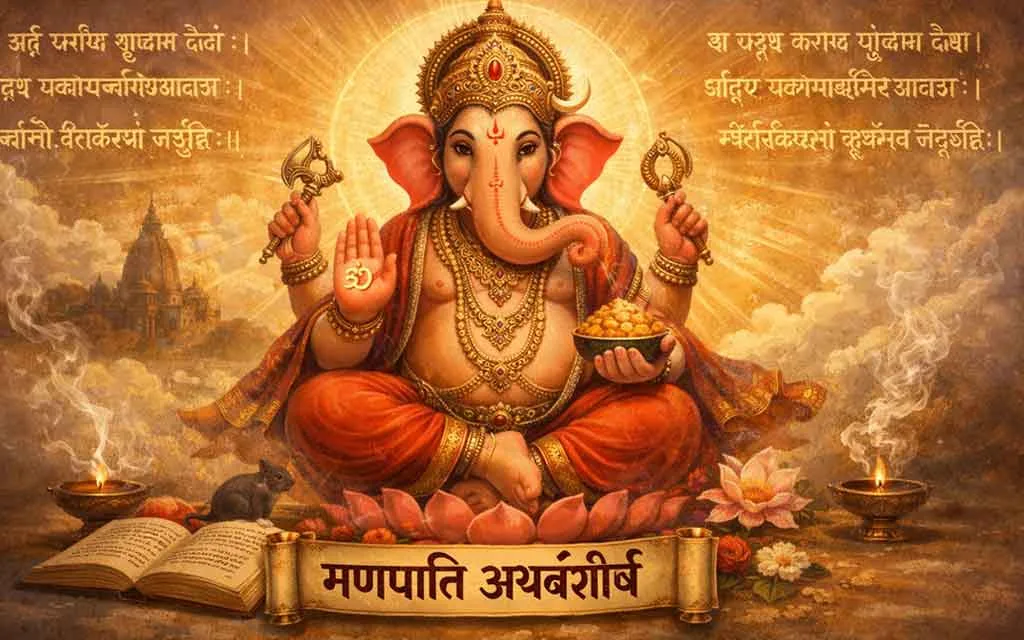
Ganapati Atharvashirsha: Meaning, Benefits & Full Text — Complete Guide
Vaikuntha Ekadashi 2026 at Tirumala: Sorgavasal Darshan Complete Guide, Fasting, Mantras & NRI Planning
Importance of Thursday in Hinduism: Guruvar Vrat, Lord Vishnu & Brihaspati Worship, Sai Baba & Rituals