Importance of Thursday in Hinduism: Guruvar Vrat, Lord Vishnu & Brihaspati Worship, Sai Baba & Rituals
Complete guide to the importance of Thursday (Guruvar) in Hinduism — Lord Vishnu worship, Brihaspati Dev (Jupiter), Sai Baba Thursday tradition, 16-Thursday vrat, Vishnu Sahasranama, banana tree puja, fasting rules, NRI guide, FAQs.
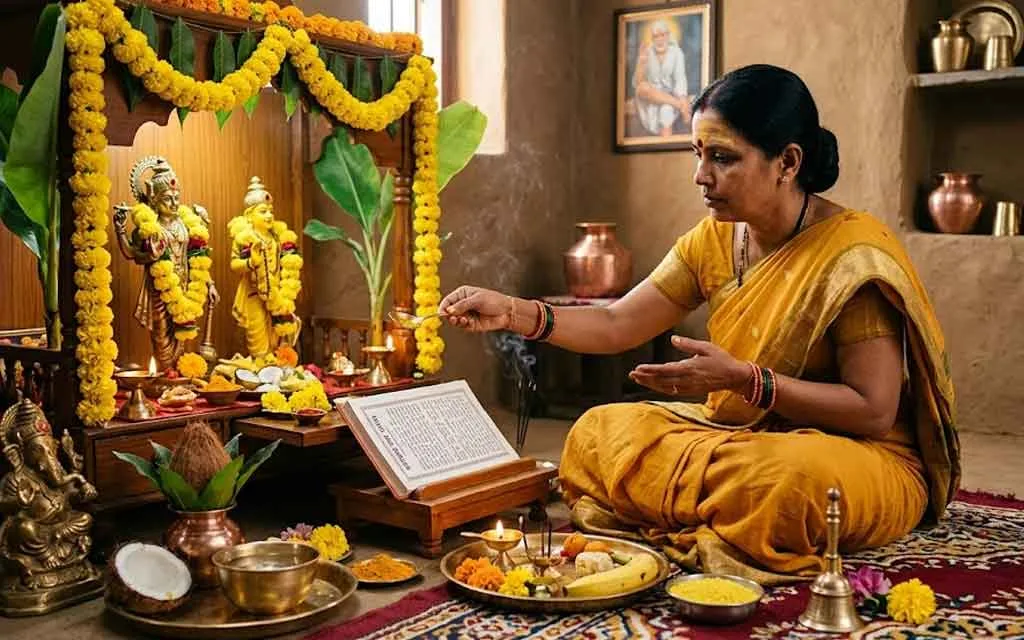
Complete guide to the importance of Thursday (Guruvar) in Hinduism — Lord Vishnu worship, Brihaspati Dev (Jupiter), Sai Baba Thursday tradition, 16-Thursday vrat, Vishnu Sahasranama, banana tree puja, fasting rules, NRI guide, FAQs.
Of all the seven days of the Hindu week, Thursday is the day of wisdom, devotion to the Lord, and reverence for the spiritual guru. Where Monday brings contemplation, Tuesday brings courage, Wednesday brings intellect, Friday brings prosperity, and Saturday brings karmic accountability — Thursday brings the cosmic principle of divine guidance, scriptural wisdom, and the protective grace of Lord Vishnu. The importance of Thursday in Hinduism rests on two profound divine connections: Lord Vishnu — the cosmic preserver and the supreme guide in Hindu cosmology — and Brihaspati Dev (the planet Jupiter), the divine guru of the gods and the celestial ruler of wisdom, knowledge, dharma, and expansion. Known as Guruvar in Hindi and Brihaspativar in Sanskrit, Thursday is when devotees seek divine knowledge, spiritual guidance, marital harmony, and the blessings of the cosmic teacher.
For millions of Hindu families across India and the global diaspora — particularly students preparing for major examinations, professionals seeking career advancement, married couples praying for marital harmony, unmarried women seeking ideal partners, parents praying for their children's educational success, and devotees of Sai Baba (whose primary day is Thursday in modern practice) — Thursday is the most cherished day of the week for seeking divine wisdom and guru's grace. In this complete guide, we explore why Thursday holds such profound spiritual weight, how to observe the Guruvar Vrat, the rituals and mantras that please Lord Vishnu and Brihaspati, and the timeless stories that demonstrate the power of Thursday devotion.
Religious Significance of Thursday in Hinduism
The Sanskrit name for Thursday is Brihaspativar or Vyasavar — derived from Brihaspati (Jupiter, the guru of the gods) and from Veda Vyasa (the great sage who compiled the Vedas). The Hindi name Guruvar comes from Guru — meaning "the one who removes darkness with light" — referencing both planetary Jupiter and the spiritual teacher. Both names point to the same essence: a day of cosmic wisdom, divine guidance, and the reverence for those who teach.
Thursday is traditionally dedicated to Lord Vishnu — the cosmic preserver and the supreme divine in Vaishnava tradition. As the second deity of the Hindu trinity (Brahma, Vishnu, Shiva), Vishnu is the principle of cosmic order, dharma, and the protective grace that sustains all creation. Each of His ten avatars (Matsya, Kurma, Varaha, Narasimha, Vamana, Parashurama, Rama, Krishna, Buddha, Kalki) represents Vishnu descending to Earth to restore dharma during periods of crisis. Thursday is the day when devotees acknowledge Vishnu as the cosmic preserver and seek His protective wisdom.
In some traditions, Thursday is also associated with Sai Baba of Shirdi — particularly in modern Hindu practice. Sai Baba's special day was Thursday, and devotees worldwide observe Thursday Sai Baba puja, especially the famous Sai Baba Vrat and recitation of Sai Satcharita. The Thursday Sai practice is now one of the most widespread devotional observances in modern Hinduism.
Devotees also honor Goddess Saraswati on Thursdays in some Bengali and east Indian traditions — connecting wisdom (Saraswati) with the cosmic guru (Brihaspati). Most importantly, every devotee's spiritual guru receives reverence on Thursday — the day specifically meant to honor those who guide our spiritual path.
Astrological Significance of Thursday — The Power of Brihaspati
In Vedic astrology (Jyotish), Thursday is ruled by Brihaspati Dev (Jupiter) — the planet that governs wisdom, knowledge, dharma, scripture, spiritual growth, expansion, prosperity, marriage, children, and the role of the guru. A strong, well-placed Jupiter in one's horoscope brings sharp intelligence, deep wisdom, dharmic instinct, marriage, children, financial growth, and the ability to teach and lead with grace. A weak or afflicted Jupiter manifests as poor decision-making, lack of focus, delayed marriage, infertility, lack of spiritual depth, financial sluggishness, and disconnection from the dharmic path.
Brihaspati holds a unique position among the navagrahas — he is the celestial preceptor of the devas (gods), having attained mastery of the Vedas, Upanishads, and all spiritual sciences. His role is to guide gods, sages, and devotees through cosmic challenges. In Hindu mythology, Brihaspati is the divine wisdom-keeper, the one whose advice the gods seek when faced with cosmic dilemmas.
Astrologers across India and NRI communities recommend the Guruvar Vrat to those experiencing:
- Marriage delays — unmarried women and men seeking suitable life partners
- Marital disharmony — couples facing conflict or estrangement
- Fertility concerns — couples praying for children
- Career stagnation — particularly in dharmic or educational professions
- Academic difficulties — students preparing for major examinations
- Spiritual confusion — lack of clarity on dharmic path
- Financial slowdown — chronic delays in financial growth
- Disrespect to guru/teachers — apologetic restoration of guru-shishya bond
- Loss of faith — restoration of devotional bhakti
- Children's education challenges
- Late retirement disputes — Jupiter rules retirement and elder wisdom
Jupiter rules the colors yellow and gold — which is why devotees wear yellow on Thursday, light yellow-flame diyas (turmeric-tinted), offer banana, chana dal (Brihaspati's sacred grain), turmeric, sandalwood, and yellow flowers. Yellow is the color of expansion, wisdom, dharmic warmth, and the sun-like radiance of divine knowledge.
The Deities Associated with Thursday: Vishnu and Brihaspati
At the center of all Thursday worship stands Lord Vishnu — the eternal preserver, the cosmic guide, the supreme deity in Vaishnava tradition. Vishnu is depicted as four-armed, holding the Sudarshana Chakra (discus), Panchajanya Shankha (conch), Kaumodaki Gada (mace), and Padma (lotus). He is the cosmic protector who descends in different avatars to restore dharma during cosmic crises.
Alongside Vishnu, devotees on Thursday also honor Brihaspati Dev — the planetary deity of Jupiter. Brihaspati is depicted as a golden-bodied, dignified sage holding a danda (staff of authority), kamandalu (water pot), and akshamala (rudraksha mala), riding a swan or chariot. He represents the cosmic principle of wisdom-as-guidance — the knowledge that protects, expands, and teaches.
In modern Hindu practice, Sai Baba of Shirdi receives special Thursday reverence. Sai Baba's philosophy ("Sabka Malik Ek" — One God for All), his miracles, and his Sai Satcharita have made him one of the most beloved modern Hindu saints. Thursday is his day; Sai temples worldwide hold special Thursday programs.
In Bengali and east Indian traditions, Goddess Saraswati (the goddess of wisdom) also receives Thursday worship. The connection: Saraswati embodies the wisdom that Brihaspati and Vishnu transmit to devotees. Together, they form a complete trinity of divine knowledge on Thursday.
Guruvar Vrat: Fasting Rules, Dos and Don'ts
The Guruvar Vrat (Thursday fast) is among the most beloved Hindu observances — particularly among women, students, and seekers of divine wisdom. The vrat is gentle but powerful, reflecting Jupiter's nature: expansive, generous, dignified.
Types of Thursday Fasts
There are four popular forms of the Thursday fast:
- Weekly Guruvar Vrat — the regular Thursday fast observed every week. Most common form for ongoing spiritual growth.
- 16-Thursday Vrat — a vow to fast for 16 consecutive Thursdays, traditionally undertaken before major life passages (marriage, education, career change).
- 21-Thursday Vrat — deeper commitment for chronic challenges, particularly marital disharmony or career stagnation.
- Vasudeva Vrat (Annual) — observed on specific Thursdays of the Hindu year for sustained Vishnu devotion.
Dos on Thursday
- Wake up early; take a full bath with turmeric water if traditional preference
- Wear yellow, gold, or pale yellow clothing — Brihaspati's favored colors
- Visit a Vishnu temple, Sai Baba temple, or Brihaspati temple; set up a home altar with Vishnu image
- Light a ghee diya with extra wick — Brihaspati prefers steady, bright flames
- Apply turmeric tilak with sandalwood paste
- Offer yellow flowers (especially marigold), turmeric root, chana dal, jaggery, banana fruits
- Recite the Vishnu Sahasranama (1,000 names of Vishnu) — the foundational Thursday recitation
- Recite the Sri Hanuman Chalisa as a companion practice
- Recite the Brihaspati Beej Mantra 108 times
- Donate yellow items — turmeric, books, scriptures, chana dal — to teachers, priests, or students
- Honor your spiritual guru — speak respectfully of teachers throughout the day
- Eat one sattvic meal in the evening — wheat or rice based with yellow ingredients (turmeric, mustard, banana, jaggery)
- Read scripture for at least 30 minutes — the Bhagavad Gita, Vishnu Sahasranama, or Sai Satcharita are most recommended
Don'ts on Thursday
- Avoid consuming non-vegetarian food, onion, garlic, alcohol, and tobacco
- Avoid haircuts, shaving, nail-cutting on Thursdays (traditional belief)
- Do not borrow or lend money on Thursdays — increases financial entanglements
- Avoid major arguments with elders, teachers, or those in authority — Brihaspati punishes disrespect to wisdom-keepers
- Do not engage in disputes with parents — they represent guru-equivalent authority
- Avoid wearing black on Thursday — Jupiter prefers warm, expansive colors
- Do not begin negative activities or sinful actions — Thursday's expansive energy amplifies the karmic consequences
- Avoid washing hair on Thursday in some traditional families (varies by region)
- Do not skip evening puja once the vrat is taken — Brihaspati respects commitment
- Avoid excessive luxury or sensual indulgence — Brihaspati prefers refined wisdom
Rituals and Mantras for Thursday
Performing the Thursday puja with sincerity is the heart of the observance. Brihaspati responds particularly to depth of devotion combined with scriptural study.
Step-by-Step Thursday Puja
- Bathe and purify — start with a fresh bath, ideally with turmeric or sandalwood water
- Invoke Lord Vishnu — place a Vishnu image, Sri Lakshmi-Narayana murti, or Sai Baba image at your altar
- Light the ghee diya — use a fresh wick; the steady flame represents the steady wisdom Brihaspati bestows
- Apply turmeric and sandalwood tilak to your forehead and to the deity's image
- Offer yellow flowers — marigold, lotus, or yellow daisies. 7, 21, or 108 flowers traditional
- Offer chana dal — soak overnight, offer in a small bowl
- Offer banana — preferably a small bunch (5 fingers is traditional)
- Take a sankalp — fold your hands and silently state your prayer or wish for wisdom, marriage, children, education, or career
- Recite the Vishnu Sahasranama — the most powerful Thursday recitation (1,008 names, ~60-90 minutes)
- Recite the Brihaspati Beej Mantra 108 times — for direct planetary blessing
- Read the Guruvar Vrat Katha — the traditional Thursday fast story
- Perform Vishnu Aarti — "Om Jai Jagdish Hare" is the universal Vishnu aarti
- Distribute prasad — yellow sweets, banana, jaggery preparations. Share with family and at least one teacher or scholar
Powerful Thursday Mantras
Chanting these mantras on Thursday is believed to invoke divine wisdom and Brihaspati's direct grace:
- Vishnu Beej Mantra: Om Namo Bhagavate Vasudevaya — the 12-syllable Vaishnava mantra; recite 108 times daily
- Vishnu Mahamantra: Om Namo Narayana — the 8-syllable mantra; recite 108 or 1008 times
- Vishnu Sahasranama — the 1,008 names of Vishnu, the most powerful Thursday recitation
- Brihaspati Beej Mantra: Om Brim Brihaspataye Namah — strengthens Jupiter; recite 16, 108, or 1008 times
- Brihaspati Gayatri: Om Angirasaaya Vidmahe, Divyadehaaya Dheemahi, Tanno Jeeva Prachodayat — Vedic form
- Hanuman Chalisa — essential Thursday companion (Hanuman is a great Vishnu-bhakta)
- Sai Mantra: Om Sai Ram — for Sai Baba devotion, recited continuously
- Bhagavad Gita Recitation: Particularly Chapter 11 (Vishvarupa Darshan) on Thursdays
Reciting these mantras 108 times using a tulsi or rudraksha mala on Thursday is considered especially auspicious. Many devotees combine the Vishnu Beej Mantra with the Brihaspati Beej Mantra for a complete dual-deity Thursday sadhana.
The Banana Tree Worship — Unique Thursday Ritual
A unique Thursday tradition in many Hindu households is the banana tree puja (Kadali Vriksha Puja). The banana tree is sacred to Lord Vishnu, and Thursday is the ideal day to worship it. The ritual:
- Identify a healthy banana tree in your garden or community
- Bathe the trunk with water (some traditions add turmeric water)
- Apply turmeric paste and kumkum to the trunk
- Tie a yellow thread around the trunk while reciting Vishnu mantras
- Offer flowers, fruits, and a small ghee diya at the base
- Pray for marriage (for unmarried), children (for couples), or wisdom (for students)
- Distribute the banana leaves to needy families — never cut the tree itself
- Continue weekly for 16 Thursdays for major life passages
The banana tree is considered uniquely auspicious because every part of it is useful (flower, fruit, leaves, trunk) — symbolizing dharmic generosity. Worship of the banana tree on Thursday is particularly powerful for those without access to a temple.
Benefits of Observing Guruvar Vrat
The rewards of honoring Thursday extend across the wisdom, marital, prosperity, and spiritual dimensions of life. Devotees who observe the Guruvar Vrat with sincere faith consistently report:
- Sharp wisdom and discernment — Brihaspati's signature blessing
- Marital harmony and timely marriage — particularly powerful for unmarried devotees
- Fertility blessings — couples praying for children find Thursday devotion particularly effective
- Children's educational success — students preparing for major exams (board exams, JEE, NEET, UPSC, USMLE, MCAT)
- Career advancement, particularly in teaching, scholarship, or dharmic professions
- Improved relationship with teachers, mentors, gurus
- Financial growth — Jupiter rules wealth expansion
- Removal of negative influences from one's life
- Deeper devotion and bhakti
- Children's welfare and protection
- Spiritual guidance during difficult life choices
- Restoration of dharmic conduct
Beyond these specific benefits, the weekly discipline of pausing each Thursday for Vishnu and Brihaspati puja creates a wisdom-cultivating spiritual rhythm — the home becomes a vessel of dharmic learning, week after week.
Stories and Beliefs Associated with Thursday Worship
The Guruvar Vrat Katha
A poor brahmin's wife, struggling to maintain her family, was given a sacred instruction by an elderly sage: "Observe the Guruvar Vrat for 16 consecutive Thursdays. Eat only one meal each Thursday, recite the Vishnu Sahasranama, and donate one yellow item to a needy person." The wife, with deep faith, undertook the vow.
On the 16th Thursday, after completing her vow, she fell asleep in front of the Vishnu altar. In her dream, Lord Vishnu appeared as a golden being and blessed her: "Daughter, your devotion has reached me. Your husband's lost wealth will be restored. Your son will receive admission to the highest school. Your daughter will marry a noble husband." Within months, all three blessings unfolded.
The katha — recited every Thursday across Hindu homes — captures the essential teaching: Lord Vishnu rewards consistent, sincere devotion, particularly the dharmic discipline of giving while receiving.
Brihaspati and Indra
In Hindu cosmology, Brihaspati serves as the celestial guru of the gods. When Indra (king of the gods) once disrespected him, Brihaspati withdrew his counsel. Without divine wisdom, the gods lost their battles against the demons. Eventually, Indra apologized and reinstated Brihaspati. The teaching: even gods need a guru; even the king of gods must respect the divine wisdom-keeper.
This story is the cosmic template for the Hindu reverence of teachers. Thursday is the day every devotee acknowledges that wisdom comes through teachers — and that disrespecting wisdom-keepers is a cosmic error.
Sai Baba and Thursday Devotion
Sai Baba of Shirdi (1838-1918) was a saint who lived in the village of Shirdi, Maharashtra. His simple teaching, "Sabka Malik Ek" (One God for All), and his miracles attracted devotees from all Hindu, Muslim, and other backgrounds. Thursday was his special day — when devotees would visit Shirdi for darshan.
After Sai Baba's mahasamadhi in 1918, the Thursday Sai practice spread globally. Today, hundreds of Sai temples worldwide hold Thursday programs. The Sai Baba Vrat (typically a 9-Thursday observance) is among the most-practiced modern Hindu vrats. Sai Satcharita recitation on Thursdays is a universal NRI practice.
Famous Thursday Temples and Sites
Several major temples are particularly sacred for Thursday worship:
- Tirumala Tirupati Sri Venkateswara Temple, Andhra Pradesh — Lord Vishnu's primary abode
- Padmanabhaswamy Temple, Thiruvananthapuram, Kerala — Vishnu in reclining pose
- Ranganathaswamy Temple, Srirangam, Tamil Nadu — Sri Vaishnava authority
- Sai Baba Mandir, Shirdi, Maharashtra — pilgrimage center for global Sai devotees
- Sai Baba temples worldwide — Atlanta, Toronto, London, Sydney, Dubai
- Vishnu temples in NRI cities — BAPS, ISKCON, Sri Venkateswara temples
- Banana groves and home banana trees — for those without temple access
- Navagraha temples (with Brihaspati section) — Tirunallar, Kuchanur (Tamil Nadu) and major Vaishnava temples
Thursday Worship for NRI Hindus
Thursday devotion is particularly powerful for NRI Hindus and modern practitioners:
- Time-zone friendly — Thursdays exist worldwide; the practice fits any schedule
- Sai Baba global movement — NRI Sai temples hold Thursday programs in every major NRI city
- Family-friendly — Thursday's gentle energy and yellow colors are particularly accessible
- Educational focus — NRI families with school-going children specifically observe Thursday for academic blessing
- Marriage matters — NRI families with marriageable children take 16-Thursday vrats together
- Career advancement — IT professionals, doctors, teachers find Thursday's wisdom-energy directly supportive
- Children's practice — many NRI parents teach the Vishnu Beej Mantra to children on Thursdays
- Group bhajan — NRI Vishnu and Sai temples organize Thursday community programs
- Spiritual study circles — many NRI families dedicate Thursday evenings to family scripture reading
- Online satsang — Vishnu/Sai/Brihaspati online satsangs are widely attended on Thursdays
Frequently Asked Questions (FAQ)
1. What is the most important practice on Thursday?
The Vishnu Sahasranama recitation is the foundational Thursday practice. Even reciting it once on Thursdays is considered immensely meritorious. Combined with the Brihaspati Beej Mantra, this is the complete Thursday sadhana.
2. Can I observe Thursday at home if I cannot visit a temple?
Yes, absolutely. The home altar with Vishnu image, ghee diya, yellow flowers, and Vishnu Sahasranama recitation carries the full Thursday blessing. Temple visit is preferred but not required.
3. Why are Sai Baba and Vishnu both worshipped on Thursday?
Both deities embody divine wisdom and protection. Sai Baba's teaching "Sabka Malik Ek" reflects Vishnu's cosmic principle. Many devotees worship them together; many traditional families worship Vishnu primarily.
4. Can students fast on Thursday?
Yes, particularly students preparing for major exams. Light eating throughout the day, plus Vishnu Sahasranama and Brihaspati Beej Mantra recitation, has been found particularly powerful for academic clarity.
5. What is the best Thursday vrat for marriage?
The 16-Thursday Guruvar Vrat. Recite Vishnu Sahasranama, observe one sattvic meal, donate yellow items. This is the traditional Hindu practice for unmarried women and men seeking suitable life partners.
6. Can I do the banana tree puja in my apartment?
Yes — even a small banana plant in a pot on your balcony serves the same purpose. The intention and devotion matter more than the size of the tree.
7. Are pregnant women allowed to observe Guruvar Vrat?
Yes — the gentle, wisdom-oriented energy of Thursday is particularly auspicious during pregnancy. Light eating only; emphasis on Vishnu Sahasranama recitation for blessing the unborn child.
8. What is the difference between Brihaspati and Jupiter?
Brihaspati IS Jupiter — the cosmic deity who governs the planet Jupiter. Hindu astrology and Western astrology recognize the same planetary body; Hindu astrology treats Brihaspati as the personified divine deity who governs it.
9. Should I worship my spiritual guru on Thursday?
Yes — Thursday is specifically the day to honor your spiritual guru. Visit them if possible, offer guru-dakshina (gift), speak respectfully of teachers throughout the day. Honor of the human guru is honor of the divine.
10. What if I miss a Thursday in the 16-Thursday vrat?
If missed early in the cycle, restart from Thursday 1. If missed late in the cycle, complete a 17-Thursday or 18-Thursday extension instead. Better to complete fully than abandon midway.
Conclusion
The importance of Thursday in Hinduism is the beautiful intersection of divine wisdom, cosmic guidance, and the reverence for those who teach. Dedicated to Lord Vishnu — the cosmic preserver — and aligned with the planetary energy of Brihaspati Dev, Thursday offers every seeker a weekly opportunity to invite knowledge, dharmic clarity, marital harmony, and the protective grace of the cosmic guru into life. Whether you observe the full Guruvar Vrat, recite the Vishnu Sahasranama, undertake the 16-Thursday vow, or simply light a ghee diya every Thursday morning — the wisdom-grace of Brihaspati and Lord Vishnu is always available to the sincere devotee.
In a world that increasingly chases information without wisdom, Thursday is the day Hindu tradition has trusted for centuries to remind us of the gentle, dignified, expansive side of existence — the wisdom that protects, the dharma that guides, the marriage that lasts, the children that learn, the careers that grow, and the spiritual journey that deepens through faithful weekly observance.
May Lord Vishnu bless you with wisdom, marital harmony, prosperity, children's success, and the eternal residence in dharma on every sacred Thursday. May Brihaspati Dev illuminate your path. 🙏 Om Namo Bhagavate Vasudevaya! Om Brim Brihaspataye Namah!
Did you find this guide helpful? Share your Thursday rituals and experiences in the comments below. If this article touched your heart, share it with family and friends. Subscribe to hindutone.com for more devotional guides. 🙏 Jai Sri Vishnu! Jai Sai!
Related Reading on HinduTone
- Importance of Monday in Hinduism: Somvar Vrat & Lord Shiva
- Importance of Tuesday in Hinduism: Mangalwar Vrat & Hanuman
- Importance of Wednesday in Hinduism: Budhwar Vrat & Ganesh
- Importance of Friday in Hinduism: Shukravar Vrat & Lakshmi
- Importance of Saturday in Hinduism: Shanivar Vrat & Shani Dev
- Vaikuntha Ekadashi 2026 at Tirumala: Sorgavasal Darshan
- Tirumala Brahmotsavam 2026: 9-Day Vahana Seva Schedule
- Sri Padmavathi Temple Tiruchanur Complete Guide 2026
- Hanuman Chalisa: Complete 40 Verses with Meaning
You might also like
Thursday Rituals in Hinduism: Complete Guide to Guruvar Pooja, Temples & Sacred Foods
Importance of Wednesday in Hinduism: Budhwar Vrat, Lord Ganesh & Budh Worship, Rituals & Benefits
Importance of Friday in Hinduism: Shukravar Vrat, Mahalakshmi Worship, Solah Shukravar & Rituals