Importance of Saturday in Hinduism: Shanivar Vrat, Shani Dev Worship, Sade Sati Remedies & Hanuman Connection
Complete guide to the importance of Saturday (Shanivar) in Hinduism — Lord Shani Dev worship, Hanuman-Shani connection, Sade Sati remedies (7.5-year Saturn transit), Ashtama Shani, Dasaratha Krita Shani Stotra, fasting rules, NRI guide, FAQs.
Complete guide to the importance of Saturday (Shanivar) in Hinduism — Lord Shani Dev worship, Hanuman-Shani connection, Sade Sati remedies (7.
Of all the seven days of the Hindu week, Saturday is the day most charged with karmic seriousness. Where Monday brings peace, Tuesday brings courage, Wednesday brings wisdom, Friday brings prosperity — Saturday brings the cosmic principle of justice. The importance of Saturday in Hinduism rests on two profound divine connections: Lord Shani Dev — the planet Saturn personified, the cosmic dispenser of karmic fruits — and Lord Hanuman — who, alongside his Tuesday rule, also protects devotees from the malefic effects of Shani on Saturdays. Known as Shanivar in Hindi and Shanaishchara in Sanskrit, Saturday is when devotees observe restraint, seek Shani's mercy, and pay homage to the planet whose lessons shape every soul's destiny.
For millions of Hindu families across India and the global diaspora — particularly those affected by Sade Sati (Saturn's 7.5-year transit through three lunar signs), those facing chronic delays, those in conflict with authority, those grieving losses, or those whose horoscopes show afflicted Saturn — Saturday is the day to make peace with the cosmic master of karma. In this complete guide, we explore why Saturday holds such weight in Hindu tradition, how to observe the Shanivar Vrat, the rituals and mantras that please Lord Shani, the powerful Sade Sati remedies, and the timeless stories that demonstrate Shani's justice and mercy.
Religious Significance of Saturday in Hinduism
The Sanskrit name for Saturday is Shanaishchara — meaning "the slow-moving one" (a literal description of Saturn's orbit, the slowest of the planets). The Hindi name Shanivar derives from Shani, the divine name of both the planet Saturn and the deity who governs it.
Saturday is traditionally dedicated to Lord Shani Dev — the dispenser of karmic justice. Hindu cosmology positions Shani as one of the navagrahas (nine planets) but with a unique role: while other planets bestow blessings or impose obstacles based on their nature, Shani functions specifically as the cosmic judge — examining every soul's actions, weighing them against dharmic principles, and bestowing either rewards or corrections.
In some traditions, Saturday is also associated with Lord Hanuman (his secondary day, after Tuesday). The Hanuman-Shani connection runs deep: tradition holds that Hanuman is the only deity who can ask Shani for mercy on behalf of a devotee — making Hanuman the natural intermediary between devotee and Saturn. This is why many Hindu families maintain a Saturday practice of both Shani worship AND Hanuman recitation.
Hindu families approach Saturday with reverence and a quiet discipline. Many wear black or dark blue (Shani's colors). Most avoid major new beginnings (Shani rules slow processes, not impulsive starts). Most light a sesame-oil diya to Shani in the evening. The home itself observes a slightly more austere day — less laughter, less rich food, more reflection. This is not because Saturday is unhappy, but because it is the day of karmic seriousness — the day when one quietly acknowledges that all actions have consequences.
Astrological Significance of Saturday — The Power of Shani
In Vedic astrology (Jyotish), Saturday is ruled by Shani Dev (Saturn) — the planet that governs karma, justice, time, patience, discipline, longevity, structure, hard work, and the consequences of past actions. A strong, well-placed Saturn in one's horoscope brings wisdom, patience, leadership, longevity, and the ability to handle responsibility with grace. A weak or afflicted Saturn manifests as chronic delays, financial poverty, joint diseases, depression, isolation, conflicts with authority, criminal entanglements, and Sade Sati (the 7.5-year tribulation period).
Shani is uniquely terrifying among the navagrahas because he is the only planet that strictly enforces karmic consequences without exception or favoritism. While Jupiter (Guru) might soften misfortune, Mars (Mangal) might bestow strength to overcome it, and Venus (Shukra) might offer compensatory beauty — Shani is the planet that says: "Your actions led to this; learn from it."
Astrologers across India and NRI communities recommend the Shanivar Vrat to those experiencing:
- Sade Sati — the 7.5-year transit of Saturn through three lunar signs (the most-feared astrological period)
- Ashtama Shani — Saturn transit through the 8th house (financial and health stresses)
- Dhaiya Shani — 2.5-year Saturn transit (more focused but still difficult)
- Career stagnation and prolonged unemployment
- Chronic legal issues, court cases, government disputes
- Joint diseases (arthritis, rheumatism, knee/hip issues)
- Chronic depression, isolation, or melancholy
- Conflicts with elders, bosses, or authority figures
- Persistent financial losses or business failures
- Loss of loved ones, prolonged grief
- Sudden changes in career, relationships, or location
Saturn rules the colors black, dark blue, and indigo — which is why devotees wear these colors on Saturday, light a sesame-oil diya (Shani's favorite), offer black sesame seeds, black gram (urad dal), and Indian gooseberry (amla). Black is the color of restriction, discipline, and the cosmic acceptance of karmic boundaries.
The Deities Associated with Saturday: Shani Dev and Hanuman
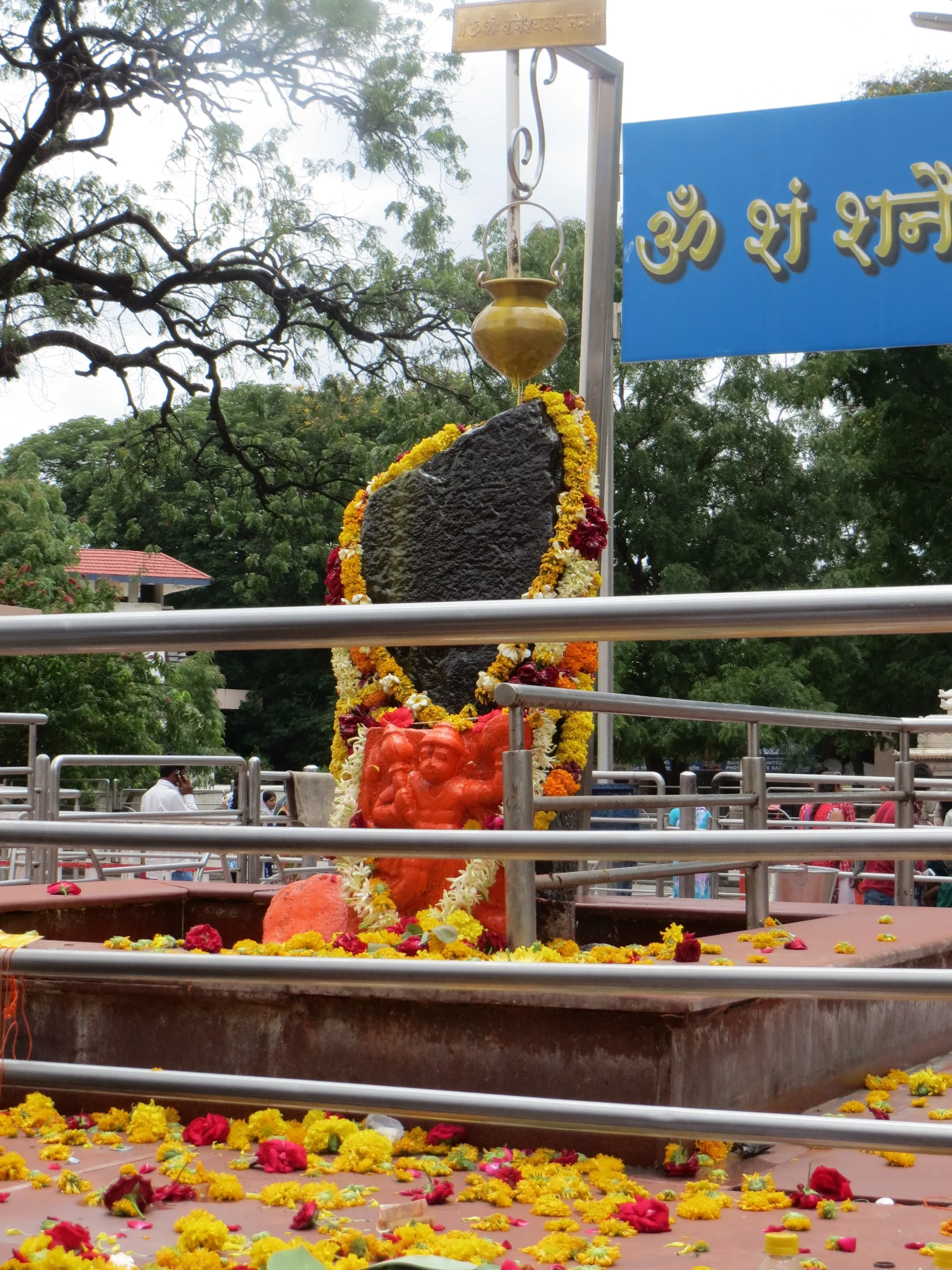
At the center of all Saturday worship stands Lord Shani Dev — the personification of Saturn, the cosmic dispenser of karmic justice. According to Hindu lineage, Shani is the son of Surya Dev (the Sun) and Chaya Devi (Surya's shadow consort). He is often depicted as a dark, austere, slightly fearsome deity riding a crow or a buffalo (his vehicle), holding a danda (staff of justice), and bearing the weight of cosmic accountability.
Shani's gaze is famously feared in Hindu mythology. According to legend, Lord Shiva once warned even the celestial deities to avoid Shani's direct gaze — for it carries the weight of past karmic accumulation. This is why Saturday is often a day of more austere worship: devotees seek to honor Shani while ensuring his attention is benevolently focused.
Alongside Shani, devotees on Saturday also honor Lord Hanuman — and the connection between these two deities is one of the most powerful narratives in Hindu tradition. According to the Ramayana, when Hanuman saved Shani from being trapped by Ravana, Shani vowed that he would never trouble devotees who worshipped Hanuman. This is why Saturdays in Hindu households almost always include both Shani worship AND Hanuman recitation — Hanuman is the divine intercessor who can ask Shani for mercy.
"Shani enforces the cosmic law of karma. Hanuman embodies the cosmic law of bhakti. Together, they form the most powerful Saturday pair: Hanuman intercedes with Shani on behalf of the sincere devotee."
Advertisement
Sade Sati — The 7.5-Year Saturn Transit
Among all Vedic astrological concepts, Sade Sati (literally "7.5") is the most commonly discussed Saturn transit. It refers to the 7.5-year period during which Saturn transits through three consecutive lunar signs (rashis) — the 12th, 1st, and 2nd houses from one's natal Moon sign.
The three phases of Sade Sati are:
- First 2.5 years (Saturn in 12th from Moon): Mental stress, isolation, foreign travel, hidden expenses, sleep disturbances, family separation. Emotional preparation phase.
- Middle 2.5 years (Saturn in Moon sign — the most intense): Physical health challenges, financial pressure, career upheaval, deep introspection. Greatest karmic learning phase.
- Last 2.5 years (Saturn in 2nd from Moon): Family conflict, financial restructuring, gradual recovery, lessons consolidating into wisdom. Reintegration phase.
Sade Sati affects everyone — it is not a punishment but a karmic teaching. Some Sade Sati periods are deeply transformative; others bring breakthroughs. The Saturday Shanivar Vrat is the traditional remedy to navigate Sade Sati with grace.
Shanivar Vrat: Fasting Rules, Dos and Don'ts
The Shanivar Vrat (Saturday fast) is among the most disciplined Hindu vrats — reflecting Shani's own nature. Unlike the festive Shukravar Vrat or the joyful Somavar Vrat, the Shanivar Vrat is observed with reverent austerity. It is the day to acknowledge karma, to honor Shani's justice, and to seek his mercy through sincere devotion.
Types of Saturday Fasts
There are four popular forms of the Saturday fast:
- Weekly Shanivar Vrat — the regular Saturday fast observed every week. Particularly recommended for those in Sade Sati or Ashtama Shani.
- Saade Sati Vrat (7.5-year sustained observance) — the most committed form, undertaken by those navigating the full Sade Sati period.
- Shani Jayanti Vrat — annual observance on Shani's birthday (Vaishakha Amavasya, May-June).
- 19-Saturday Vrat — a 19-Saturday commitment (one cycle of Saturn's shifting positions), particularly for major life challenges.
Dos on Saturday
- Wake up before sunrise; take a bath, ideally with sesame oil applied first (cleanses Shani-related impurities)
- Wear black, dark blue, or dark gray clothing — Shani's colors
- Visit a Shani temple, Hanuman temple, or Navagraha temple. Set up a home Shani altar with a black stone or murti.
- Offer mustard oil or sesame oil to Shani's image (the most pleasing offering)
- Apply black sesame seeds on Shani's feet/around the image
- Light a sesame-oil diya (Shani's preferred fuel)
- Offer black gram dal (urad dal), black sesame seeds, or jaggery to the deity
- Recite the Shani Stotra (especially the Shani Vajrapanjara Kavacham) and the Hanuman Chalisa
- Donate black items, sesame seeds, mustard oil, iron tools, or food to elderly, disabled, or marginalized people — especially powerful for Shani grace
- Visit a peepal tree (sacred to Shani) and offer a prayer and water
- Maintain restraint in speech and action — Shani punishes harsh words and impulsive actions
- If observing the fast, eat one simple sattvic meal in the evening — black sesame, urad dal, jaggery preparations are traditional
Don'ts on Saturday
- Avoid consuming non-vegetarian food, onion, garlic, and alcohol
- Do not engage in disputes or harsh speech — Shani amplifies the karmic consequences of these
- Avoid haircuts, shaving, nail-cutting on Saturdays (some traditions)
- Do not start major new ventures on Saturday — Shani prefers established, slow processes
- Avoid buying or selling iron (some traditions consider this inauspicious on Saturday)
- Do not lend money on Saturday — increases the karmic complexity of the transaction
- Avoid wearing white or extremely bright colors (Shani prefers dark, restrained colors)
- Do not deny food to elderly, disabled, or homeless people who come to your door — Shani specifically watches this
- Avoid excessive luxury or indulgence — Shani is the planet of restraint
- Do not anger or disrespect elders on Saturday — they represent Shani's authority
Rituals and Mantras for Saturday
Performing the Saturday puja with sincerity is the heart of the observance. Shani is famously honest about reciprocity: He accepts the sincerest, simplest worship while rejecting the most elaborate insincere offerings.
Step-by-Step Saturday Puja
- Bathe and purify — start with applying sesame oil to your body, then bathe. Wear black or dark blue.
- Invoke Shani Dev — place a Shani image, a small black stone (representing Saturn), or a Shani yantra at your altar.
- Light the sesame-oil diya — use a small earthen lamp filled with til (sesame) oil. The flame should be steady.
- Apply black sesame seeds — sprinkle them around the image and on Shani's feet.
- Offer mustard oil — pour a small amount into a separate bowl as offering.
- Offer black gram dal — place a handful in front of the image.
- Make a sankalp — fold your hands and silently acknowledge: "I am paying homage to the cosmic master of karma."
- Recite the Shani Stotra — the most powerful is the Shani Vajrapanjara Kavacham; Dasaratha Krita Shani Stotra is also recommended.
- Recite Hanuman Chalisa — Hanuman intercedes with Shani; this is the essential Saturday companion practice.
- Read the Shanivar Vrat Katha — traditional stories of Shani's mercy. The Vikramaditya story is most famous.
- Perform aarti — Shani Aarti is brief but powerful. Use a camphor flame.
- Visit a Shani temple if possible — most Hindu cities have one. Major Shani shrines: Shani Shingnapur (Maharashtra), Tirunallar (Tamil Nadu), Shani Mandir Delhi.
Powerful Saturday Mantras
Chanting these mantras on Saturday is believed to soften Shani's severity and invoke his mercy:
- Shani Beej Mantra: Om Sham Shanaishcharaaya Namah — the foundational Shani mantra; recite 108 times daily during Sade Sati.
- Shani Mahamantra: Om Praang Preeng Praung Sah Shanaye Namah — more elaborate; for serious Sade Sati periods.
- Shani Gayatri Mantra: Om Kakadwajaya Vidmahe, Khadgahastaaya Dheemahi, Tanno Shaneeshchara Prachodayat — Vedic Gayatri form for Shani.
- Dasaratha Krita Shani Stotra: Composed by King Dasaratha (Lord Rama's father) — particularly powerful, especially during Sade Sati.
- Shani Vajrapanjara Kavacham: The "diamond armor" prayer — protective stotra invoking Shani's mercy.
- Navagraha Stotra: Honors all nine planets including Shani — for holistic planetary balance.
- Hanuman Chalisa: The essential Saturday companion — Hanuman intercedes with Shani on behalf of the sincere devotee.
Reciting the Shani Beej Mantra 108 times using a black-stone or rudraksha mala on Saturday is considered the most powerful single practice for navigating Sade Sati or Ashtama Shani. Many devotees combine the Shani Beej Mantra with the Hanuman Chalisa for a complete Saturday morning sadhana.
Sade Sati Remedies for 2026
For those experiencing Sade Sati, the Saturday observance is the foundational remedy. But several other practices can be undertaken alongside the weekly vrat:
- Daily Shani Beej Mantra: 108 times every morning, especially Saturdays
- Daily Hanuman Chalisa: Once daily, with extra emphasis on Saturday
- Weekly Sade Sati Vrat: Full Shanivar Vrat for entire 7.5 years
- Donation of sesame seeds, mustard oil, urad dal — to elderly or marginalized people, every Saturday
- Visit major Shani shrines — Shani Shingnapur, Tirunallar, or local temples on Shani Jayanti or Saturdays
- Worship Lord Hanuman regularly — Tuesday and Saturday
- Recite the Dasaratha Krita Shani Stotra — King Dasaratha received Shani's blessing through this; particularly effective
- Patience and acceptance — Sade Sati is a learning period, not a punishment. Surrender to its lessons accelerates recovery.
- Wear a Shani yantra — small yantras can be worn as protective amulets
- Limit major purchases or commitments — Sade Sati is not the time for impulsive decisions
- Maintain dharmic conduct — truthfulness, ahimsa, charity, restraint — these directly soften Shani's judgment
Famous Stories — Shani's Justice and Mercy
The Shani-Hanuman Friendship
When Ravana imprisoned all the navagrahas (nine planets) under the throne of his palace, Hanuman — during his exploration of Lanka — discovered them in captivity. He freed each planet, but Shani was particularly grateful. In gratitude, Shani vowed: "Hanuman, for your sake, I will never trouble those who worship you with sincere devotion."
This is the cosmic foundation of every Saturday Hanuman-Shani pairing. If Sade Sati is troubling you, the most effective single practice is daily Hanuman Chalisa recitation. The vow that Shani made to Hanuman remains binding in cosmic law.
King Vikramaditya and Shani
The legendary King Vikramaditya was once boasting about his greatness. Shani, the planet of restraint, decided to teach the king humility. Shani caused Vikramaditya to lose his kingdom, his family, his name — descending into homelessness and slavery. During this 7.5-year period, the king underwent immense suffering.
Eventually, after fulfilling all his karmic debts, the king regained his throne. The teaching: Shani is not malicious — he is precise. He calibrates exactly what each soul needs to learn. King Vikramaditya, after his Sade Sati period, became the greatest king in Indian history — wiser, kinder, more compassionate.
Shani and Lord Rama
Even Lord Rama, during his earthly avatar, faced the period of Sade Sati. The cosmic consequence: King Dasaratha was forced to send Rama to exile, Sita was kidnapped, the war with Ravana was waged. These were the karmic consequences of past actions — even for the avatar of Vishnu.
King Dasaratha, recognizing what was happening, composed the famous Dasaratha Krita Shani Stotra — a hymn pleading for Shani's mercy on behalf of his family. The stotra is recited even today by those navigating Sade Sati. Dasaratha's teaching: Shani must be respected, never trifled with, but his mercy is available to the sincere devotee.
Famous Shani Temples in India
Several major Shani temples are worth visiting if you are in Sade Sati or Ashtama Shani:
- Shani Shingnapur, Maharashtra: Most famous; unique because the village has no doors (Shani is believed to protect every household). Major destination.
- Tirunallar Saneeswaran Temple, Tamil Nadu: One of the nine Navagraha temples; particularly powerful for Tamil-speaking devotees.
- Shani Dham, Delhi: Modern Shani temple in Chhatarpur, Delhi.
- Shani Mandir, Kokilavan, Uttar Pradesh: Lord Krishna-Shani connection; major devotee gathering on Saturdays.
- Shani Galta, Rajasthan: Hill-top Shani temple near Jaipur; pilgrimage destination.
- Local Navagraha temples worldwide: Most major Hindu temples have a Navagraha section with Shani. NRI temples (BAPS, ISKCON, Sri Venkateswara temples) all have this.
Saturday Worship for NRI Hindus
Saturday devotion is particularly powerful for NRI Hindus, especially those experiencing Sade Sati while abroad:
- Time-zone friendly — Saturdays exist worldwide; the practice fits any schedule
- Critical during NRI Sade Sati — being away from family during Sade Sati can amplify isolation; Saturday Shani worship provides emotional grounding
- Most NRI Hindu temples conduct Shani aartis on Saturdays
- Many NRI families specifically maintain a Saturday tradition — daily Shani worship at home, plus monthly temple visit
- Hanuman Chalisa recitation is essential for NRI Saturday practice — easily memorable in Awadhi/Hindi
- Donate to elderly community members, food banks, or hospice care on Saturdays — Shani specifically blesses charity to the vulnerable
- Visit local Navagraha temple sections in NRI Hindu temples on Saturdays
- Mark Sade Sati start dates carefully (calculate via Vedic astrology) and commit to weekly observance for full 7.5 years
- Family Saturday traditions — many NRI families pass Shani-respect from grandparents to grandchildren
Frequently Asked Questions (FAQ)
1. Is Sade Sati really bad?
Sade Sati is a karmic teaching period, not a punishment. It is universal — everyone experiences it. The intensity and lessons depend on your past karma. Approached with surrender and dharmic conduct, Sade Sati becomes a transformative wisdom period.
2. When does Sade Sati occur?
Sade Sati occurs when Saturn transits through the 12th, 1st, and 2nd lunar signs from your natal Moon. To know your Sade Sati period, consult a Vedic astrologer with your birth chart, or use a reliable online calculator with your accurate birth time.
3. Can Sade Sati be avoided?
No — it is a cosmic law that everyone experiences. However, its severity can be softened through sincere observance: Shanivar Vrat, Hanuman Chalisa, daanam (charity), dharmic conduct, and acceptance.
4. Why do NRI families worship both Shani and Hanuman on Saturday?
Because of the cosmic vow Shani made to Hanuman: "I will not trouble those who worship Hanuman." For NRI families, the Hanuman Chalisa is the protective shield that softens Shani's severity.
5. What if I cannot fast on Saturday?
Devotion matters more than strict fasting. Light a sesame-oil diya, recite the Shani Beej Mantra, donate sesame seeds or food, recite the Hanuman Chalisa — these are full Saturday observance.
6. Can pregnant women observe Shanivar Vrat?
Yes, with adjustments. Skip the full fast; observe lighter sattvic eating. The mantra-chanting and donation aspects are particularly powerful for blessing the unborn child.
7. What is the best Shani Stotra?
The Dasaratha Krita Shani Stotra is most powerful for those in Sade Sati. The Shani Vajrapanjara Kavacham is the protective version. Beginners can start with the simple Shani Beej Mantra.
8. Should I be afraid of Shani Dev?
No. Shani is the cosmic judge, not the cosmic destroyer. He calibrates each soul's lessons precisely. Approach him with respect (not fear), acknowledge your karmic responsibilities, and seek his mercy through devotion and dharmic conduct.
9. Can children participate in Saturday worship?
Yes. Many traditional families teach children the Shani Beej Mantra and Hanuman Chalisa together. This builds early Saturday-Shani-Hanuman connection that lasts a lifetime.
10. What if I miss Saturday worship one week?
Resume the next Saturday without guilt. Shani is patient. The discipline of weekly practice matters more than perfect attendance.
Conclusion
The importance of Saturday in Hinduism is the somber, dignified, transformative day of cosmic karma. Dedicated to Lord Shani Dev — the dispenser of karmic justice — and accompanied by Lord Hanuman as the divine intercessor, Saturday offers every devotee a weekly opportunity to acknowledge accountability, accept karmic teaching, and seek the mercy that the cosmic master of time bestows upon those who approach with sincerity.
Whether you are navigating Sade Sati, observing the Shanivar Vrat for prosperity and longevity, or simply maintaining the Hindu weekly rhythm — Saturday is the day to slow down, reflect, and pay homage to the principle that all actions have consequences. In this acknowledgment, mercy follows.
In a world that increasingly chases convenience and ignores karmic consequences, Saturday is the day Hindu tradition has trusted for centuries to remind us of the gentle but firm hand of cosmic justice — and the protective grace of Lord Hanuman whose worship softens Shani's severity.
May Lord Shani Dev bestow upon you the wisdom of patience, the discipline of dharma, and the mercy that flows from sincere devotion on every sacred Saturday. May Lord Hanuman protect you from all karmic difficulties. 🙏 Om Sham Shanaishcharaaya Namah! Jai Bajrangbali!
Did you find this guide helpful? Share your Saturday rituals and Sade Sati experiences in the comments below. If this article touched your heart, share it with family and friends navigating their own karmic passages. Subscribe to hindutone.com for more devotional guides. 🙏 Jai Shani Dev! Jai Hanuman!
Related Reading on HinduTone
- Importance of Monday in Hinduism: Somvar Vrat & Lord Shiva
- Importance of Tuesday in Hinduism: Mangalwar Vrat & Hanuman
- Importance of Wednesday in Hinduism: Budhwar Vrat & Ganesh
- Importance of Friday in Hinduism: Shukravar Vrat & Lakshmi
- Hanuman Chalisa: Complete 40 Verses with Meaning
- Sundar Kand: Complete Guide & 7-Day Saptaha Paath
- Bajrang Ban on Tuesday for Protection & Victory
- Sri Padmavathi Temple Tiruchanur Complete Guide 2026
You might also like
Shani Deva Is Not Evil — He Is the Cosmic Judge of Karma

Importance of Tuesday in Hinduism: Mangalwar Vrat, Hanuman & Mangal Worship, Rituals & Benefits
Importance of Friday in Hinduism: Shukravar Vrat, Mahalakshmi Worship, Solah Shukravar & Rituals