The 19 Avatars of Lord Shiva Across Different Yugas - Complete Guide from Shiva Maha Purana
Lord Shiva, the supreme deity and the destroyer of evil, has manifested in various forms throughout different cosmic ages (Yugas) to restore dharma and guide…
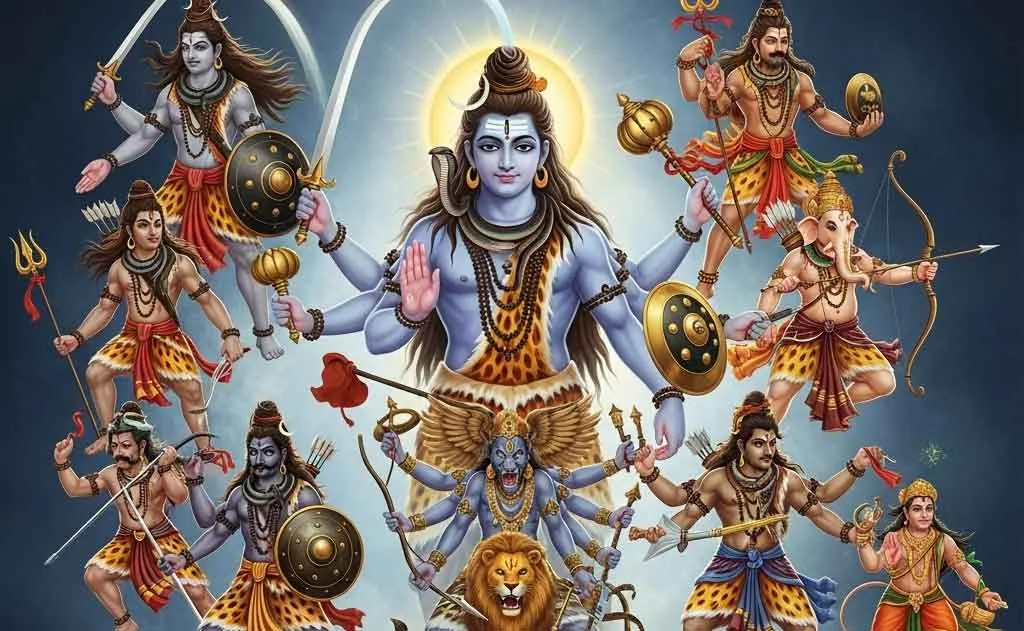
Lord Shiva, the supreme deity and the destroyer of evil, has manifested in various forms throughout different cosmic ages (Yugas) to restore dharma and guide…
Lord Shiva, the supreme deity and the destroyer of evil, has manifested in various forms throughout different cosmic ages (Yugas) to restore dharma and guide humanity. According to the sacred Shiva Maha Purana, Lord Shiva has taken 19 distinct avatars, each serving a specific divine purpose. These incarnations demonstrate Shiva's omnipresence and his compassionate nature in addressing the varied needs of devotees across time.
Understanding Shiva's Avatars
Unlike Vishnu's avatars which are more commonly known, Shiva's incarnations are equally significant but less discussed. Each avatar represents a specific aspect of Shiva's divine power and appears during times of cosmic imbalance or to fulfill particular divine missions. These manifestations occur across the four Yugas: Satya Yuga, Treta Yuga, Dvapara Yuga, and Kali Yuga.
The 19 Sacred Avatars of Lord Shiva
1. Piplaad Avatar
Yuga: Treta Yuga
Purpose: Liberation from Shani Dosha (Saturn's negative influence)
Sage Piplaad was born when his father abandoned his pregnant mother due to fear of Saturn's malefic effects. Through intense penance, Piplaad gained the power to control Saturn's influence. This avatar helps devotees overcome the adverse effects of Saturn and grants relief from chronic suffering and delays in life.
Worship Benefits: Removes Shani dosha, grants patience, provides relief from chronic problems
2. Nandi Avatar
Yuga: Satya Yuga
Purpose: Devotion and righteousness
As Nandi, Shiva appeared as the perfect devotee and gatekeeper. This avatar teaches unwavering devotion, loyalty, and the importance of serving the divine with complete surrender. Nandi represents the ideal devotee who guards the path to spiritual realization.
Worship Benefits: Enhances devotion, grants spiritual strength, removes obstacles in spiritual practice
3. Veerabhadra Avatar
Yuga: Satya Yuga
Purpose: Destruction of ego and falsehood
Created from Shiva's anger during Daksha's yajna, Veerabhadra destroyed Daksha's sacrifice to avenge Sati's death. This fierce avatar represents divine justice and the destruction of arrogance and disrespect toward the divine.
Worship Benefits: Removes enemies, grants courage, destroys ego and pride
4. Bhairav Avatar
Yuga: All Yugas
Purpose: Time management and spiritual discipline
Bhairav, the fierce manifestation of time, teaches the importance of utilizing time wisely for spiritual growth. This avatar helps devotees overcome laziness, procrastination, and guides them toward disciplined spiritual practice.
Worship Benefits: Improves time management, grants discipline, removes fear of death
5. Ashwatthama Avatar
Yuga: Dvapara Yuga
Purpose: Lesson on anger and its consequences
Born as the son of Dronacharya, Ashwatthama's immortal curse teaches about the destructive nature of uncontrolled anger. This avatar serves as a reminder of the karmic consequences of our actions.
Worship Benefits: Controls anger, teaches patience, provides wisdom about karma
6. Sharabha Avatar
Yuga: Satya Yuga
Purpose: Calming divine fury
When Vishnu's Narasimha avatar's anger couldn't be controlled, Shiva appeared as Sharabha - a part-lion, part-bird creature - to calm the situation. This avatar demonstrates the power of peace over fury.
Worship Benefits: Calms anger, brings peace, resolves conflicts
7. Grihapati Avatar
Yuga: Satya Yuga
Purpose: Householder dharma
In this form, Shiva demonstrates the perfect balance between spiritual life and worldly responsibilities, teaching devotees how to lead a spiritual life while fulfilling family duties.
Worship Benefits: Harmonizes family life, balances spiritual and material pursuits
8. Durvasa Avatar
Yuga: Treta/Dvapara Yuga
Purpose: Teaching respect and humility
The sage Durvasa, known for his quick temper, taught the importance of respecting saints and sages. His curses often led to significant events that restored cosmic balance.
Worship Benefits: Teaches humility, grants spiritual insights, removes disrespect toward holy beings
9. Hanuman Avatar
Yuga: Treta Yuga
Purpose: Devotion and service
According to some traditions, Hanuman is considered an avatar of Shiva. This form exemplifies perfect devotion, celibacy, and selfless service to the divine.
Worship Benefits: Enhances devotion, grants strength, promotes celibacy and self-control
10. Rishabha Avatar
Yuga: Treta Yuga
Purpose: Non-violence and truth
As Rishabhanatha, the first Jain Tirthankara, this avatar taught the principles of non-violence, truth, and spiritual liberation through righteous conduct.
Worship Benefits: Promotes non-violence, grants spiritual wisdom, teaches dharma
11. Yatinatha Avatar
Yuga: Treta Yuga
Purpose: Renunciation and spiritual teaching
In this form, Shiva appeared as a great ascetic teacher, guiding souls toward renunciation and spiritual enlightenment.
Worship Benefits: Inspires renunciation, grants spiritual knowledge, guides toward moksha
12. Krishna Darshan Avatar
Yuga: Dvapara Yuga
Purpose: Divine play and spiritual instruction
This avatar appeared to guide devotees through divine play (leela) and provided spiritual instructions during the Dvapara Yuga.
Worship Benefits: Grants divine vision, enhances understanding of spiritual play
13. Avdhuta Avatar
Yuga: Kali Yuga
Purpose: Detachment and spiritual freedom
The Avdhuta represents the highest state of spiritual realization - complete detachment from worldly affairs while remaining compassionate toward all beings.
Worship Benefits: Develops detachment, grants spiritual freedom, removes material bondage
14. Bhikshuvarya Avatar
Yuga: Kali Yuga
Purpose: Teaching through renunciation
As a supreme mendicant, this avatar teaches the value of simplicity, contentment, and dependence on divine grace alone.
Worship Benefits: Promotes simplicity, grants contentment, removes attachment to wealth
15. Sureshwar Avatar
Yuga: Satya Yuga
Purpose: Divine rulership and justice
This avatar demonstrates how to rule with dharma, showing the balance between power and righteousness.
Worship Benefits: Grants leadership qualities, promotes justice, enhances administrative abilities
16. Kirata Avatar
Yuga: Dvapara Yuga
Purpose: Testing devotion and granting boons
Shiva appeared as a hunter (Kirata) to test Arjuna's devotion and eventually blessed him with the Pashupatastra.
Worship Benefits: Tests and strengthens devotion, grants divine weapons (metaphorically - spiritual strength)
17. Suntantaka Avatar
Yuga: Satya Yuga
Purpose: Destruction of excessive desires
This avatar helps devotees overcome excessive material desires and attachments that hinder spiritual progress.
Worship Benefits: Reduces material desires, promotes spiritual seeking, grants inner peace
18. Brahmachari Avatar
Yuga: All Yugas
Purpose: Celibacy and spiritual discipline
As the eternal celibate, this avatar teaches the power of brahmacharya (celibacy) and its role in spiritual advancement.
Worship Benefits: Strengthens celibacy, enhances spiritual power, grants self-control
19. Yaksheshwar Avatar
Yuga: Kali Yuga
Purpose: Protection and prosperity
In this form, Shiva protects devotees and grants both spiritual and material prosperity when approached with pure intentions.
Worship Benefits: Provides protection, grants prosperity, fulfills righteous desires
Worship Methods for Shiva's Avatars
General Worship Guidelines
- Monday Observance: Dedicate Mondays to Shiva worship
- Fasting: Observe fasting on Shivaratri and Mondays
- Mantras: Chant specific mantras for each avatar
- Offerings: Offer Bilva leaves, milk, honey, and flowers
- Meditation: Contemplate on the qualities of each avatar
Specific Avatar Worship
For Piplaad Avatar:
- Chant: "Om Pipalaadaya Namaha"
- Offer: Black sesame seeds and mustard oil
- Day: Saturday
For Veerabhadra Avatar:
- Chant: "Om Veerabhadraya Namaha"
- Offer: Red flowers and vermillion
- Day: Tuesday
For Bhairav Avatar:
- Chant: "Om Batukaya Namaha"
- Offer: Black flowers and alcohol (as per tradition)
- Time: Midnight or early morning
Benefits of Worshipping Shiva's Avatars
Spiritual Benefits
- Liberation (Moksha): Ultimate spiritual freedom
- Self-Realization: Understanding of true nature
- Divine Grace: Blessings of Lord Shiva
- Karma Cleansing: Purification of past actions
Material Benefits
- Protection: From negative influences and enemies
- Prosperity: Righteous wealth and success
- Health: Physical and mental well-being
- Relationships: Harmonious family life
Mental Benefits
- Peace: Inner tranquility and calm
- Wisdom: Spiritual insight and understanding
- Courage: Strength to face life's challenges
- Discipline: Self-control and focus
Avatar Worship in Different Yugas
Satya Yuga Avatars
Focus on establishing dharma and cosmic order. These avatars teach fundamental spiritual principles and divine justice.
Treta Yuga Avatars
Emphasize devotion, service, and the balance between spiritual and worldly duties.
Dvapara Yuga Avatars
Address the decline in dharma and provide guidance through testing times while teaching important life lessons.
Kali Yuga Avatars
Offer protection and guidance for souls struggling with increased materialism and spiritual ignorance.
Significance in Modern Times
In today's Kali Yuga, understanding and worshipping Shiva's avatars becomes especially relevant:
- Piplaad Avatar helps with modern stress and planetary influences
- Bhairav Avatar assists with time management in busy lifestyles
- Avdhuta Avatar teaches detachment in a materialistic world
- Durvasa Avatar reminds us to respect spiritual teachers and traditions
Conclusion
The 19 avatars of Lord Shiva represent the complete spectrum of divine intervention across cosmic time. Each incarnation addresses specific human needs and cosmic requirements, demonstrating Shiva's infinite compassion and omnipresence. By understanding and worshipping these avatars, devotees can access different aspects of Shiva's grace and power.
Whether seeking relief from planetary afflictions through Piplaad Avatar, courage through Veerabhadra, or spiritual wisdom through Yatinatha, each avatar offers a unique path to divine connection. In our current age of Kali Yuga, these teachings become even more precious as they provide guidance through increasingly challenging times.
Regular worship and meditation on these divine forms can transform one's life, providing both material relief and spiritual advancement. The key lies in approaching these avatars with genuine devotion, understanding their significance, and applying their teachings in daily life.
Note: The worship methods and benefits mentioned are based on traditional beliefs and practices. Devotees should approach qualified spiritual teachers for detailed guidance on specific worship procedures.
Frequently Asked Questions
Who is The 19 Avatars of Lord Shiva Across Different Yugas?
Lord Shiva, the supreme deity and the destroyer of evil, has manifested in various forms throughout different cosmic ages (Yugas) to restore dharma and guide humanity. According to the sacred Shiva Maha Purana, Lord Shiva has taken 19 distinct avatars, each serving a specific divine purpose.
How is The 19 Avatars of Lord Shiva Across Different Yugas worshipped?
Through daily puja, mantra chanting, aarti and offerings of flowers, lamps and prasad — on dedicated days and festivals associated with the deity.
What are the benefits of worshipping The 19 Avatars of Lord Shiva Across Different Yugas?
Devotees seek blessings for protection, prosperity, health, wisdom and inner peace, and a deeper connection with the divine.
Which day is dedicated to The 19 Avatars of Lord Shiva Across Different Yugas?
Each deity has an associated day and festivals; worshipping on that day, with fasting and mantra, is considered especially auspicious (see the guide above).
You might also like
Om Namah Shivaya: 108 Times Chanting Benefits & Method — Complete Panchakshara Mantra Guide

The Twelve Jyotirlingas of Lord Shiva: A Complete Pilgrim's Guide Across India

Kashi Vishwanath: Divine Mysteries & Soul-Stirring Miracles of Lord Shiva in Varanasi