

Dussehra: The Significance of 9 Days in Hinduism – Significance to Hindus
Dussehra, also known as Vijayadashami, is a major Hindu festival celebrated over 9 days, known as Navaratri.
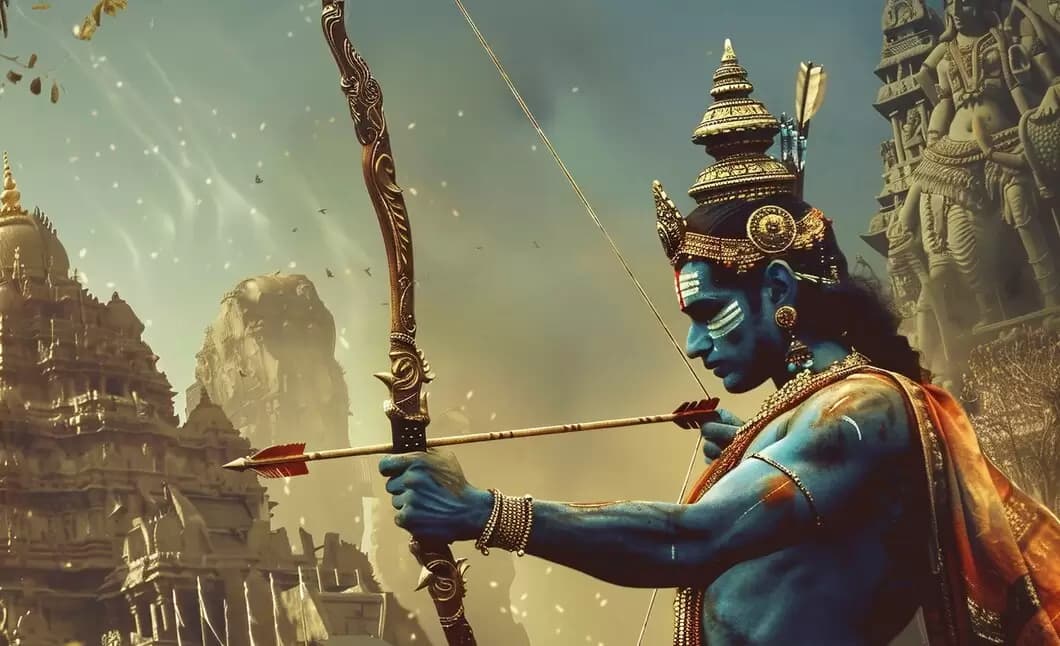
Dussehra, also known as Vijayadashami, is a major Hindu festival celebrated over 9 days, known as Navaratri.
Dussehra, also known as Vijayadashami, is a major Hindu festival celebrated over 9 days, known as Navaratri. Each day holds deep spiritual meaning and cultural significance, marking the victory of good over evil. Here’s why Dussehra is celebrated over 9 days and its importance to Hindus:
- Navaratri – Nine Nights of Worship Navaratri, meaning “nine nights,” is dedicated to the worship of Goddess Durga and her nine divine forms. Each of these forms symbolizes different virtues such as strength, wisdom, wealth, courage, and compassion. Hindus believe that by worshiping these nine forms, they are invoking the goddess to destroy negativity and evil forces in their lives.
- Victory of Goddess Durga over Mahishasura One of the central stories associated with Dussehra is the battle between Goddess Durga and the buffalo demon Mahishasura. The nine days symbolize the fierce battle that took place, culminating in Durga’s victory on the tenth day, Dussehra. This triumph signifies the destruction of evil and the establishment of righteousness.
- Ramayana – Lord Rama’s Victory Another important legend connected with Dussehra is the victory of Lord Rama over the demon king Ravana. The 9 days are believed to symbolize Rama’s preparation for battle, and Dussehra marks the day when Lord Rama finally defeated Ravana, restoring peace and dharma (righteousness).
- Spiritual Cleansing and Growth Hindus view these nine days as a time for spiritual cleansing, meditation, and devotion. By fasting, praying, and performing rituals, devotees aim to purify their minds and rid themselves of negative tendencies. The festival encourages self- discipline, focus, and personal growth, allowing individuals to emerge stronger and more virtuous.
- Celebration of Feminine Power Navaratri is dedicated to honoring the divine feminine, celebrating the Shakti(power) of the goddess in various forms such as Durga, Lakshmi, and Saraswati. These nine days celebrate the empowerment of women and the divine energy they bring to the world.
- Social and Cultural Importance Dussehra and Navaratri are also occasions for community gatherings, dances like Garba and Dandiya, and the enactment of Ramlila (plays depicting the Ramayana). It’s a time for families and communities to come together, offering prayers, sharing meals, and celebrating shared cultural values.
The Nine Forms of Durga: Who Are the Navadurga?
The Devi Bhagavata Purana and Markandeya Purana detail the nine distinct manifestations of the Goddess worshipped across the nine nights, collectively called the Navadurga. They are, in order: Shailaputri, Brahmacharini, Chandraghanta, Kushmanda, Skandamata, Katyayani, Kalaratri, Mahagauri, and Siddhidatri. Each form is associated with a specific planet (navagraha), a colour, a bija mantra, and a particular quality of the divine feminine.
Shailaputri, daughter of the Himalayas, is worshipped on the first day and governs the moon, representing the mind's stability. Kushmanda, worshipped on the fourth day, is credited in the Devi Bhagavata with creating the universe through her cosmic smile, and her name literally means 'the one who created the egg of the cosmos.' Understanding each form transforms daily worship from repetition into a structured spiritual curriculum.
How Are the Nine Days Divided Between Durga, Lakshmi, and Saraswati?
While all nine nights honour Durga's forms, Navaratri is traditionally divided into three triads of three nights each. The first three nights are dedicated to Durga in her fierce, destructive aspect — the force that uproots tamas (inertia and ignorance). The middle three nights honour Goddess Lakshmi, who bestows rajas — the active energy needed to rebuild and sustain after destruction. The final three nights are consecrated to Goddess Saraswati, the embodiment of sattva, pure knowledge and discernment.
This triadic structure is explicitly followed in South India, particularly in Tamil Nadu and Andhra Pradesh, where Golu (kolu) — the display of dolls on stepped platforms — is arranged to reflect this progression. On the ninth day, Saraswati Puja is performed, and books, musical instruments, and tools of one's trade are placed before the Goddess for her blessing, a practice rooted in the Vedic concept that all skill (vidya) belongs ultimately to the divine.
What Is the Scriptural Basis for the Ten-Day Observance?
The Devi Mahatmya, a 700-verse scripture embedded within the Markandeya Purana, is the primary sacred text recited during Navaratri. It narrates three distinct battles fought by the Goddess — against Madhu-Kaitabha, against Mahishasura, and against Shumbha-Nishumbha — symbolising the destruction of ego, desire, and pride respectively. Traditionally, the complete text is chanted over the nine days in a specific pattern called the Saptashati Parayana.
The Ramayana connection is further anchored in the Krittivasi Ramayana and the Adbhuta Ramayana tradition, where Rama performs Chandi Puja — worship of the Goddess — before marching against Lanka, receiving her blessings for victory. The Devi is thus presented as the energizing shakti behind Rama's own strength, reinforcing the theological unity between Vaishnava and Shakta traditions during this festival.
Regional Celebrations: How Does Dussehra Look Across India?
The Mysuru Dasara, celebrated in the city of Mysuru, Karnataka, has been held continuously for over four centuries and was institutionalised by the Wadiyar kings of the Vijayanagara Empire. The famous Jambu Savari procession on Vijayadashami carries the idol of Goddess Chamundeshwari atop a caparisoned elephant through the city, drawing hundreds of thousands of pilgrims. The Mysuru Palace is illuminated with nearly one hundred thousand lights throughout the festivities.
In West Bengal, the festival is celebrated as Durga Puja, with elaborately crafted clay idols of the Goddess installed in pandals (temporary sanctuaries) across cities and villages. On the tenth day, Vijayadashami, the idols are ceremonially immersed in rivers and ponds in a ritual called Visarjana, symbolising the Goddess's return to Mount Kailasha. In Himachal Pradesh's Kullu valley, the Kullu Dussehra begins precisely when the rest of India ends its celebrations, gathering over two hundred regional deities (devatas) in a week-long procession considered unique in all of India.
The Practice of Shastra Puja and Aparajita Puja on Vijayadashami
Vijayadashami carries specific ritual observances beyond the burning of Ravana's effigy. One ancient practice is Shastra Puja — the worship of one's tools, weapons, or instruments of livelihood. Rooted in the Kshatriya tradition described in texts like the Agni Purana, warriors consecrated their arms on this day before setting out on new campaigns. Today, craftsmen, farmers, surgeons, and musicians continue the practice by placing their tools before the deity, acknowledging that skill and success flow from a higher power.
The Aparajita Puja is another distinct rite performed on Vijayadashami. 'Aparajita' means 'the undefeated one,' an epithet of the Goddess. Families traditionally perform this puja in the north-east direction of their courtyard, under a shami tree or bilva tree, reciting hymns from the Devi Upanishad. The shami tree holds additional significance because, according to the Mahabharata, the Pandavas concealed their divine weapons — including Arjuna's Gandiva bow — within a shami tree during their year of incognito exile, retrieving them on Vijayadashami to begin their campaign.
Why Is Vijayadashami Considered the Most Auspicious Day to Begin New Ventures?
Vijayadashami falls on the tenth lunar day (dashami tithi) of the bright fortnight of the month of Ashwin, a period described in the Muhurta Chintamani — a classical text on auspicious timing — as one of the three-and-a-half most auspicious moments (sade-teen muhurtas) in the entire Hindu calendar year. Because of this inherent auspiciousness, no separate electional horoscope (muhurta) is required for starting new activities on this day.
Across India, children traditionally receive their first formal lesson in writing on Vijayadashami in a ceremony called Vidyarambham, where a teacher or elder guides the child's hand to trace the first letters in a tray of rice or sand — an invocation of Saraswati's grace at the very threshold of learning. Similarly, new businesses are launched, construction is commenced, and long-planned journeys are undertaken on this day, reflecting the shared belief that the Goddess's victorious energy on Vijayadashami lends momentum and divine sanction to all fresh beginnings.
Frequently Asked Questions
What is Dussehra?
Dussehra, also known as Vijayadashami, is a major Hindu festival celebrated over 9 days, known as Navaratri . Each day holds deep spiritual meaning and cultural significance, marking the victory of good over evil.
What are the key points about Dussehra?
Here’s why Dussehra is celebrated over 9 days and its importance to Hindus: Navaratri – Nine Nights of Worship Navaratri, meaning “nine nights,” is dedicated to the worship of Goddess Durga and her nine divine forms. Each of these forms symbolizes different virtues such as strength, wisdom, wealth, courage, and compassion.
Why does Dussehra matter in Hinduism?
It reflects core values of Sanatana Dharma and offers practical and spiritual guidance that remains relevant across generations.
How can devotees apply Dussehra in daily life?
By reflecting on its teaching, incorporating the related practices or observances into daily routine, and approaching it with sincere devotion and understanding.
You might also like
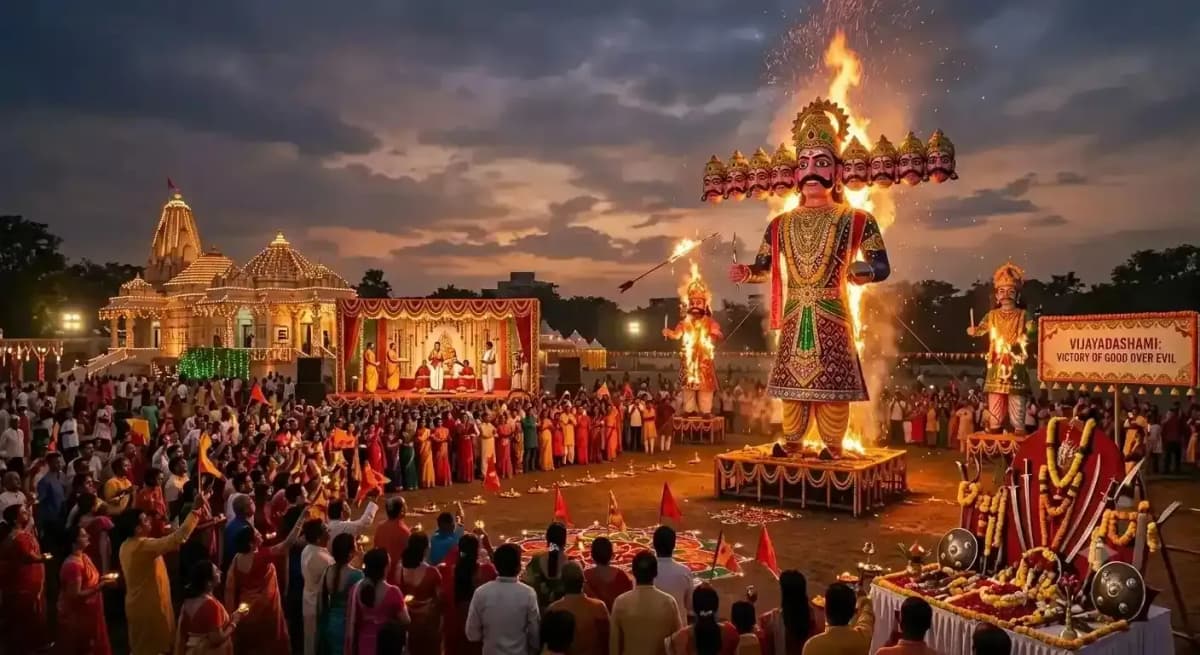
Dussehra / Vijayadashami 2026: Complete Guide — Date, Muhurat, Rituals & Meaning
Hindu Festival Calendar 2026 — Complete Guide for NRIs (Dates, Tithis, Puja)
Gayatri Jayanti 2026: Date, Gayatri Mantra, Puja Vidhi & Significance
