Buddhism vs Hinduism vs Christianity – Compassion & Truth
A Devotional & Spiritual Exploration of Three Timeless Paths to Truth, Compassion, and Liberation Introduction: One Humanity, Many Spiritual Paths Human…
A Devotional & Spiritual Exploration of Three Timeless Paths to Truth, Compassion, and Liberation Introduction: One Humanity, Many Spiritual Paths Human…
A Devotional & Spiritual Exploration of Three Timeless Paths to Truth, Compassion, and Liberation
Introduction: One Humanity, Many Spiritual Paths
Human civilization has always searched for answers to the same eternal questions:
- Who am I?
- Why do I suffer?
- What is the purpose of life?
- Is there liberation beyond death?
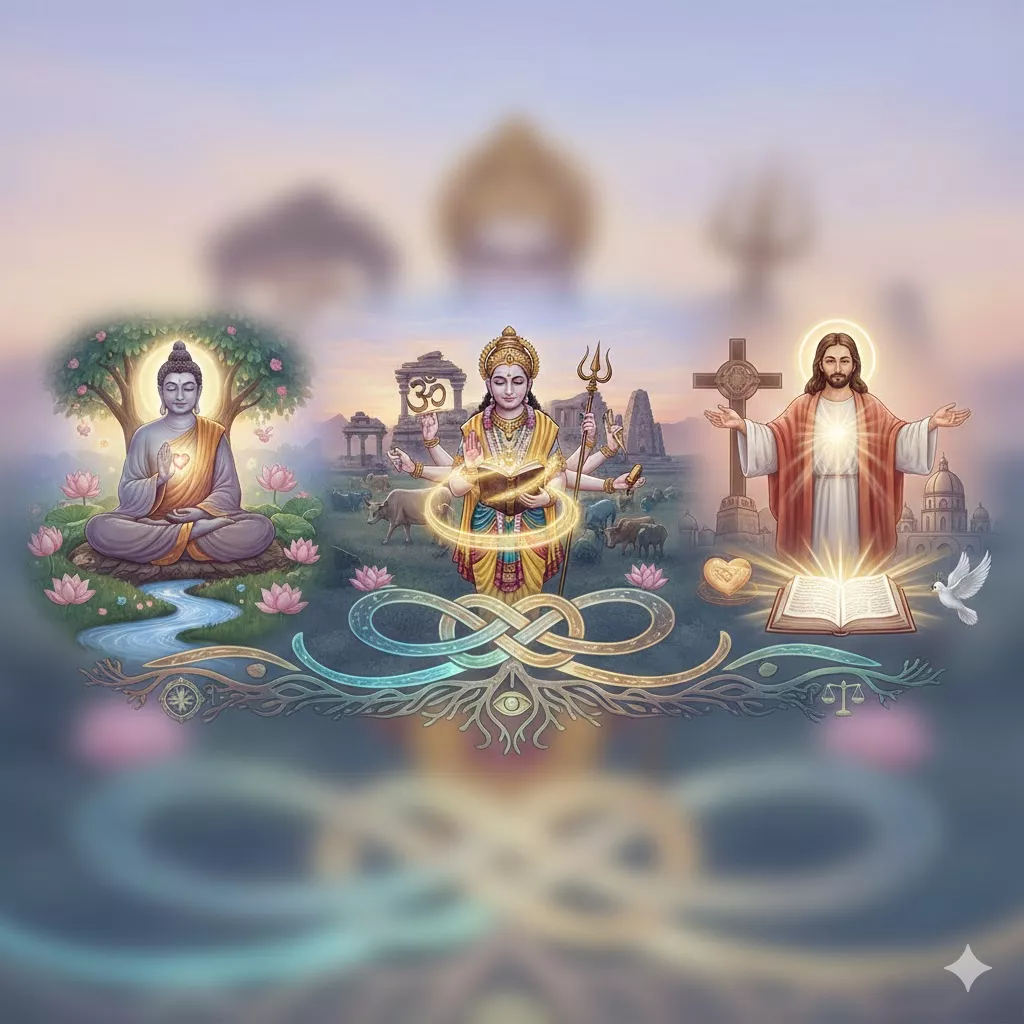
From this sacred inquiry arose Hinduism (Sanātana Dharma), Buddhism, and Christianity—three profound traditions that shaped billions of lives across continents and centuries.
This article does not aim to judge or convert, but to understand, reflect, and spiritually compare—especially from a Hindu devotional perspective, while honoring the sanctity of all paths.
Hinduism (Sanātana Dharma): The Eternal Way [image: 🌺]
Core Essence
Hinduism is not founded by a single prophet or confined to one book. It is Sanātana Dharma—the eternal cosmic law governing existence.
Key Beliefs:
- Brahman – the infinite, formless supreme reality
- Ātman – the divine soul within every being
- Karma – law of cause and effect
- Rebirth (Saṁsāra)
- Moksha – liberation from the cycle of birth and death
“Ekam sat viprā bahudhā vadanti”
Truth is One, the wise speak of it in many ways – Rig Veda
Devotional Beauty
Hinduism allows personal devotion (Bhakti) to chosen forms:
- Shiva, Vishnu, Devi, Rama, Krishna
- Temple worship, mantras, yajnas, vratas
It embraces diversity of spiritual temperaments—knowledge, devotion, service, and meditation.
Buddhism: The Path of Compassion & Inner Awakening [image: ☸️]
Origin within Hindu Civilization
Buddhism emerged from Vedic India when Prince Siddhartha Gautama, deeply influenced by Upanishadic thought, sought a solution to suffering.
Core Teachings
- Four Noble Truths
- Eightfold Path
- Impermanence (Anicca)
- Non-self (Anatta)
- Suffering (Dukkha)
Unlike Hinduism, Buddhism:
- Does not focus on a creator God
- Emphasizes self-realization through mindfulness
- Aims for Nirvana (cessation of suffering)
Spiritual Strength
Buddhism’s heart lies in:
- Compassion (Karuna)
- Loving-kindness (Metta)
- Meditation and ethical living
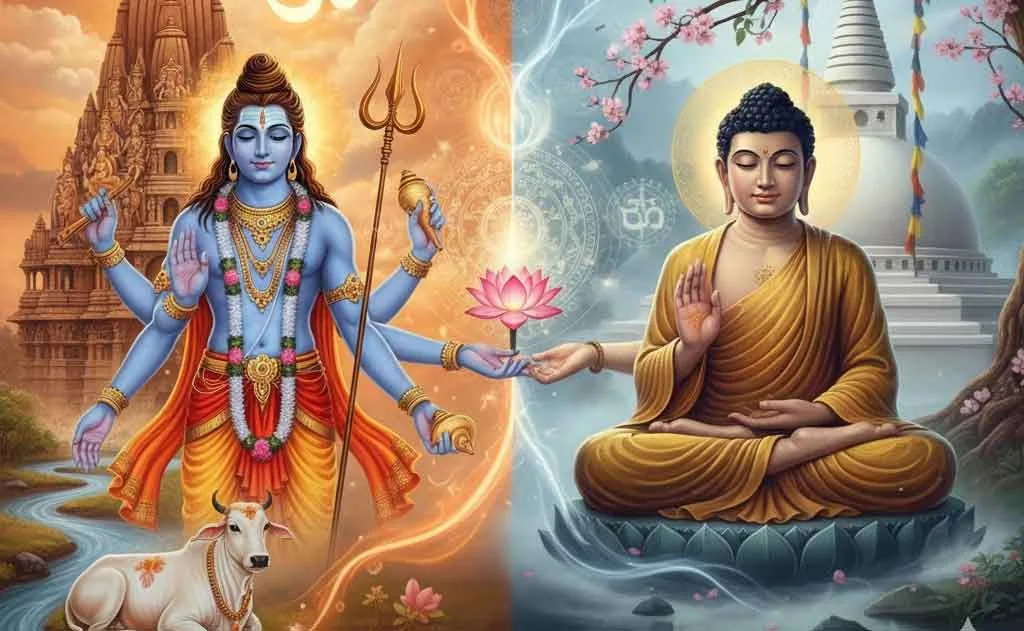
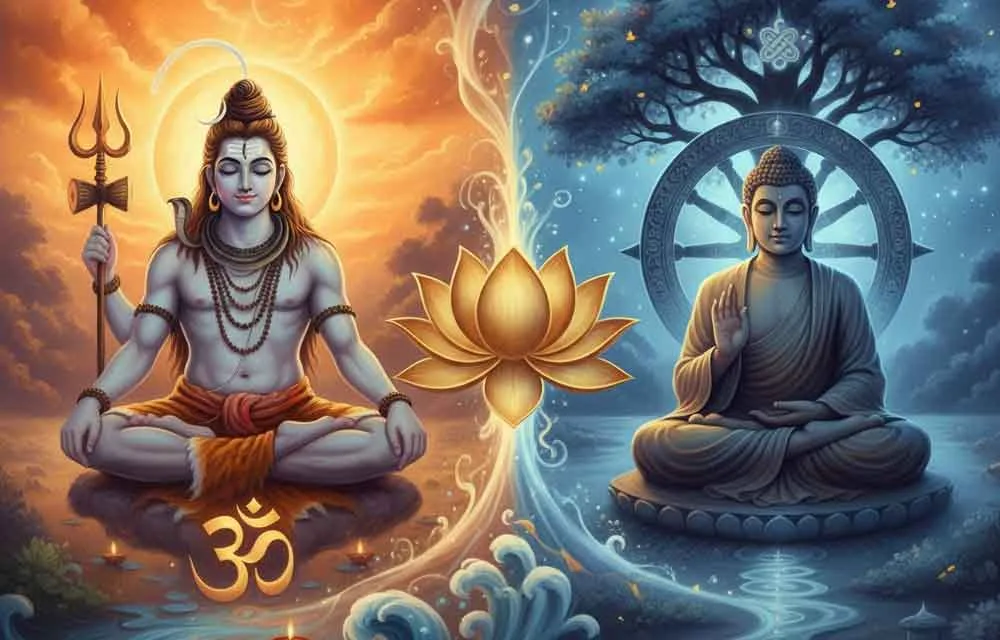
From a Hindu lens, Buddha is revered as:
An avatar of Vishnu (Bhagavata Purana)
Thus, Buddhism is often seen as a reformative spiritual movement, not a rejection of Dharma.
Christianity: Faith, Love & Salvation [image: ✝️]
Central Belief
Christianity centers on Jesus Christ, believed to be the Son of God and Savior.
Key Concepts:
- One personal God
- Original sin
- Salvation through faith
- Heaven and Hell
- Love, forgiveness, sacrifice
“Love thy neighbor as thyself.” – Jesus Christ
Devotional Focus
- Prayer and surrender
- Church worship
- Moral living
- Compassionate service
Christianity places faith in divine grace above philosophical inquiry or rebirth cycles.
Key Philosophical Differences (Simplified View)
Where All Three Meet: Universal Spiritual Truths [image: 🤍]
Despite differences, all three traditions agree on:
- Compassion is sacred
- Ego causes suffering
- Moral life is essential
- Love heals humanity
- Inner transformation matters more than rituals alone
Hinduism uniquely says:
All sincere paths, when walked with truth, lead to the Divine.
Hindu Perspective: Inclusiveness, Not Exclusiveness
One of the greatest spiritual strengths of Hinduism is pluralism.
- It does not claim monopoly over truth
- It honors Buddha without rejecting the Vedas
- It respects Christ as a realized soul (Mahapurusha)
Hindu Dharma teaches Vasudhaiva Kutumbakam—the world is one family.
Modern Relevance: Why This Comparison Matters Today
In an era of:
- Religious conflict
- Identity wars
- Spiritual confusion
Understanding these paths with respect and depth helps:
- Reduce hatred
- Encourage dialogue
- Deepen one’s own faith without insecurity
True spirituality does not fear comparison—it thrives on understanding.
Devotional Reflection for the Seeker [image: 🕉️]
If you seek:
- Structure and devotion → Hinduism
- Mindfulness and detachment → Buddhism
- Faith and surrender → Christianity
Yet remember:
The destination is inner peace, not labels.
Call to Action: Let’s Discuss, Not Debate [image: 🙏]
At Hindutone.com, we believe spiritual wisdom grows through respectful discussion, not arguments.
[image: 💬] We invite you to share in the comments:
- Which spiritual path resonates with you and why?
- Can different religions coexist without conflict?
- Is devotion or self-realization more important?
[image: 📌] Share this article with friends who believe in unity beyond religion.
[image: 🕉️] Dharma protects those who protect Dharma.
Frequently Asked Questions
What is the main difference between Hinduism and Buddhism?
Hinduism holds that Brahman is the supreme reality and Atman the soul within every being. Buddhism does not focus on a creator God, stresses non-self (Anatta) and mindfulness, and aims for Nirvana.
How do Hinduism and Christianity differ on liberation?
Hinduism teaches rebirth and Moksha, liberation from the cycle of birth and death. Christianity centers on salvation through faith in Jesus Christ and places divine grace above rebirth cycles.
How do Hindus view Buddha?
Hindus revere Buddha as an avatar of Vishnu, as mentioned in the Bhagavata Purana. Buddhism is often seen as a reformative movement that emerged from Vedic India, not a rejection of Dharma.
How does Hinduism view Jesus Christ?
Hinduism is pluralistic and respects Christ as a realized soul (Mahapurusha). It teaches that all sincere paths walked with truth lead to the Divine.
What do Buddhism, Hinduism and Christianity have in common?
All three hold compassion sacred, teach that ego causes suffering, and stress moral living, healing love and inner transformation over ritual alone.
What does Ekam sat viprā bahudhā vadanti mean?
It is a Rig Veda verse meaning Truth is One, the wise speak of it in many ways. It expresses the Hindu view that different paths can point to the same truth.