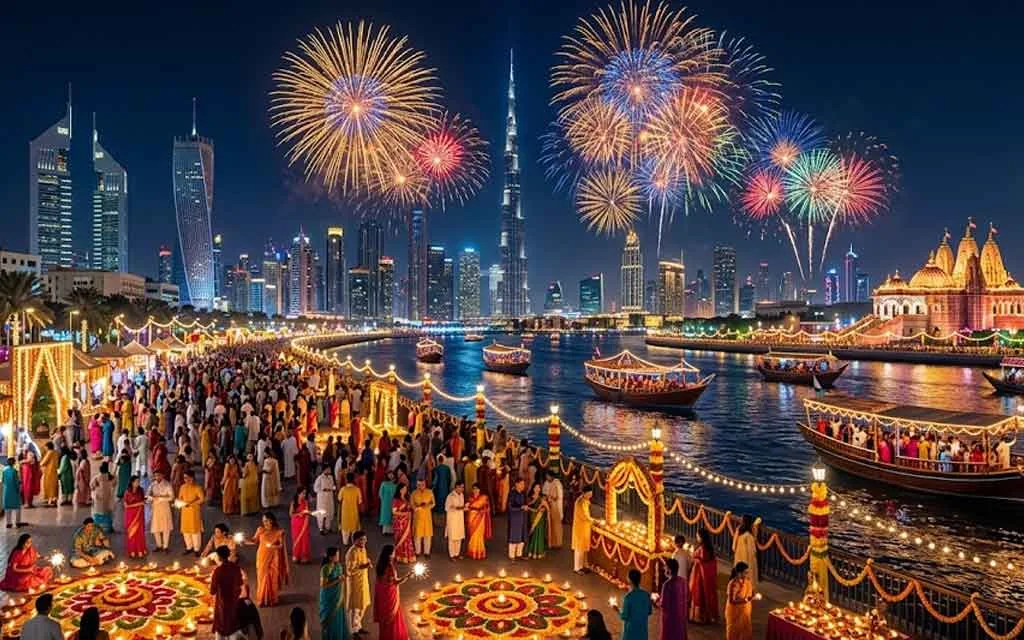
The Impact of VIP Culture at Mahakumbh Mela: A Threat to Public Safety and Equality
The Mahakumbh Mela, one of the world's largest religious gatherings, attracts millions of devotees seeking spiritual solace and divine blessings.
The Mahakumbh Mela, one of the world's largest religious gatherings, attracts millions of devotees seeking spiritual solace and divine blessings.
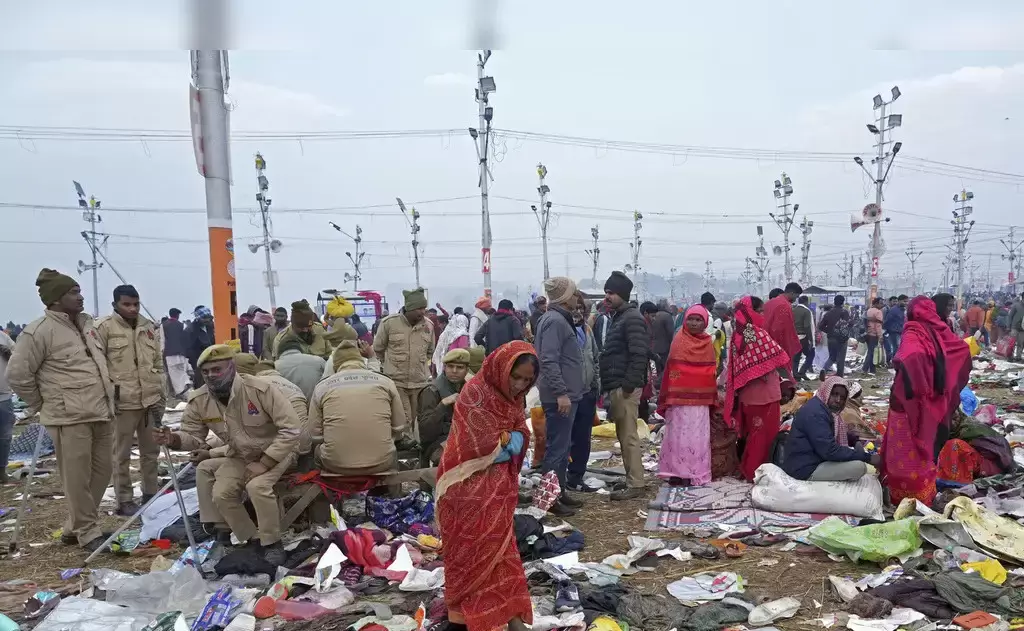
The Mahakumbh Mela, one of the world's largest religious gatherings, attracts millions of devotees seeking spiritual solace and divine blessings. However, amidst the reverence and devotion, the growing influence of VIP culture has raised significant concerns, particularly when it comes to public safety. Stampedes have become a recurring issue, with many pointing fingers at the preferential treatment given to VIPs as a major cause. The unfortunate victims of this system are often the poor and common people, who suffer from the lack of proper crowd management and equal access to the event.
The Rise of VIP Culture: VIP culture at the Mahakumbh Mela is characterized by special arrangements made for political figures, celebrities, and affluent individuals. From separate bathing ghats to dedicated security personnel and transportation, VIPs enjoy privileges that are inaccessible to the average devotee. While some may argue that these arrangements are necessary for the safety of important individuals, they inadvertently create chaos and tension among the larger crowd.
Stampede Risks and Public Safety: One of the most alarming consequences of this VIP culture is the increased risk of stampedes. With a large number of attendees being directed toward a limited space, the sudden arrival of VIPs can cause disruption in the crowd flow. Security personnel, in their efforts to clear paths for the VIPs, often forcefully push back common pilgrims, creating panic and leading to deadly stampedes. The 2013 Allahabad stampede, which claimed the lives of over 30 people, is a tragic example of how mismanagement, coupled with VIP privileges, can have fatal outcomes.
Discrimination Against the Poor: The poorer sections of society, who attend the Mahakumbh Mela in the hope of spiritual fulfillment, are the most affected by the VIP culture. Lacking the resources to access safe and secure spaces, they are often left to fend for themselves in overcrowded areas. In times of emergencies, VIPs are given priority for evacuation, leaving the common people vulnerable to harm. This discrimination not only undermines the spiritual ethos of the event but also raises questions about the fairness of such arrangements.
Need for Equal Access and Better Crowd Management: To prevent further tragedies and ensure that the Mahakumbh Mela remains a safe and inclusive event for all, it is essential to rethink the current VIP culture. Authorities must implement stricter crowd management measures, ensuring that VIPs do not disrupt the natural flow of pilgrims. Equal access to facilities, including bathing ghats, transportation, and emergency services, must be provided to everyone, regardless of their social or financial status.
Conclusion: The Mahakumbh Mela is a symbol of faith, unity, and spirituality. However, the growing influence of VIP culture threatens to overshadow its true purpose. By prioritizing public safety, ensuring equal access, and fostering a sense of community, we can prevent future stampedes and make the Mahakumbh Mela a truly inclusive event for all devotees. It is time to reclaim the spiritual essence of this sacred gathering and ensure that no life is lost due to mismanagement or inequality.
What do Hindu scriptures say about equality in sacred pilgrimage spaces?
The Rigveda's principle of 'samāna' — equality among all seekers of the divine — forms a theological bedrock for how tirtha-yatra, or sacred pilgrimage, ought to be conducted. The Skanda Purana, which dedicates extensive passages to the sanctity of Prayagraj (ancient Prayaga), describes the Triveni Sangam as a space where caste, wealth, and social rank dissolve before the waters of the Ganga, Yamuna, and the invisible Saraswati. The text does not enumerate hierarchical access to the snana ghats; it envisions every soul as an equal supplicant before the divine.
The Mahabharata's Vana Parva, in its detailed account of pilgrimage sites across Bharatvarsha, repeatedly emphasizes that the spiritual merit of a tirtha is accessible to all — 'daridra' (the poor) and 'raja' (the king) alike — through sincere devotion rather than material advantage. When modern VIP arrangements contradict this scriptural vision by physically separating devotees based on social status, they undermine the very theological premise that gives the Kumbh Mela its transformative power.
How did the 2013 Prayagraj stampede expose systemic failures in crowd management?
The February 10, 2013 stampede at Prayagraj Junction railway station during the Mahakumbh Mela remains one of the most documented crowd disasters in modern Indian history. Investigations revealed that the tragedy was triggered not by a single event but by a convergence of failures: delayed train announcements, the sudden movement of security motorcades escorting VIP convoys near the station approach roads, and the resulting compression of hundreds of thousands of pilgrims into bottleneck passages.
A subsequent judicial inquiry noted that crowd-flow modeling had not been applied to key transit nodes and that communication between state police, railway authorities, and private security teams was fragmented. The common pilgrims — many of them elderly men and women traveling from rural Uttar Pradesh, Madhya Pradesh, and Bihar — bore the full cost of these institutional failures. No senior official was held criminally liable, a pattern critics argue reflects how the administrative culture that produces VIP privilege also insulates its architects from accountability.
Urban disaster management experts who studied the event pointed out that the effective crowd capacity of the Sangam ghats is routinely exceeded precisely because VIP bathing windows — timed around the auspicious 'Shahi Snan' dates of Mauni Amavasya, Basant Panchami, and Maghi Purnima — compress ordinary pilgrims into narrower time slots and spatial corridors, amplifying crush risk exponentially.
Who bears the human cost — and why are marginalised pilgrims most vulnerable?
The demographic most exposed to stampede risk at the Mahakumbh Mela includes daily-wage workers, small farmers, and urban poor who travel in large groups without access to pre-booked accommodation inside the official 'Mela Nagar' tent city. Lacking resources to hire private vehicles or pay for ghats managed by influential akharas or ashrams with political connections, they depend entirely on state-managed access corridors — corridors that are routinely disrupted when VIP motorcades require clearance.
Women, particularly older women travelling without male family members, face compounded vulnerability. In a crush scenario, their physical disadvantage in pushing back against crowd pressure is statistically significant. Several survivor testimonies collected after the 2013 incident, published by Prayagraj-based civil society groups, describe how security personnel prioritized the movement of VIP guests even as injured pilgrims lay on the ground nearby, illustrating how the hierarchy of care in an emergency mirrors the hierarchy of access in normal operations.
Children brought to the Mela for their first sacred bath — a practice of deep religious importance for many Hindu families across Uttar Pradesh and Bihar — are also at acute risk. The Atharva Veda's concept of 'abhaya' (freedom from fear) as a fundamental spiritual right stands in stark moral contrast to the documented reality that the poorest attendees of the world's largest religious gathering cannot move freely through the sacred site without risk of injury or death.
What administrative and technological reforms have been proposed or piloted?
Following the 2013 disaster, the Uttar Pradesh government introduced a 'Integrated Command and Control Centre' model for the 2019 Ardh Kumbh Mela at Prayagraj, deploying real-time CCTV surveillance across more than 1,000 cameras and AI-assisted crowd density monitoring at key ghats and transit nodes. While these measures represented a genuine improvement, observers noted that the system's alerts were calibrated to manage general crowd flow and did not specifically flag the disruption caused by VIP motorcade movements.
Civil liberties organizations and urban planners have proposed a tiered reform package: first, eliminating dedicated VIP bathing windows during peak Shahi Snan dates and replacing them with time-staggered public access zones managed through a free digital token system; second, requiring all security convoys — regardless of the protectee's status — to halt and hold position whenever crowd density in adjacent zones exceeds a defined threshold; and third, establishing an independent, statutory Mela Safety Authority with the power to penalize administrators, not merely rank-and-file officers, for crowd management failures.
International precedents from the Hajj pilgrimage management in Mecca — particularly Saudi Arabia's post-2015 reforms involving RFID wristbands, predictive crowd simulation software, and the strict elimination of unauthorized movement corridors — have been cited as a model. However, direct transfer of these frameworks requires adaptation to the Kumbh Mela's far more decentralized religious authority structure, where dozens of akharas, state agencies, and private operators share overlapping jurisdictions.
How does VIP culture at Kumbh conflict with the egalitarian spirit of the Akhara tradition?
The thirteen principal akharas — including the Juna Akhara, Niranjani Akhara, and Mahanirvani Akhara — that lead the Shahi Snan processions have historically embodied a form of institutional equality rooted in the Dashanami Sannyasa tradition codified by Adi Shankaracharya in the 8th century CE. Within the akhara system, a newly initiated 'nagas' (ash-smeared renunciant) and a senior Mahamandaleshwar both enter the Sangam waters in the same procession, their spiritual rank acknowledged but their access to the sacred river undifferentiated.
The introduction of modern political VIP culture — where elected officials, film celebrities, and corporate figures receive dedicated ghats and police escorts that physically displace common pilgrims — represents a structural value imported from secular power hierarchies into a space whose own indigenous institutions once resisted precisely those hierarchies. Several senior Mahamandaleshwars have publicly stated in recent years that the commercialization and politicization of Kumbh arrangements violate the 'nirveda' (detachment from worldly status) that pilgrimage is meant to cultivate.
Restoring the Mahakumbh Mela's egalitarian character does not require dismantling reasonable security protocols; it requires that security protocols serve all pilgrims equally rather than functioning as an extension of the same social stratification the pilgrims have traveled hundreds of kilometers to, symbolically at least, transcend.
Frequently Asked Questions
What is The Impact of VIP Culture at Mahakumbh Mela?
The Mahakumbh Mela, one of the world's largest religious gatherings, attracts millions of devotees seeking spiritual solace and divine blessings. However, amidst the reverence and devotion, the growing influence of VIP culture has raised significant concerns, particularly when it comes to public safety.
What are the key points about The Impact of VIP Culture at Mahakumbh Mela?
Stampedes have become a recurring issue, with many pointing fingers at the preferential treatment given to VIPs as a major cause. The unfortunate victims of this system are often the poor and common people, who suffer from the lack of proper crowd management and equal access to the event.
Why does The Impact of VIP Culture at Mahakumbh Mela matter in Hinduism?
It reflects core values of Sanatana Dharma and offers practical and spiritual guidance that remains relevant across generations.
How can devotees apply The Impact of VIP Culture at Mahakumbh Mela in daily life?
By reflecting on its teaching, incorporating the related practices or observances into daily routine, and approaching it with sincere devotion and understanding.
You might also like
Maha Kumbh 2025 Legacy — 13 Months Later: Records, Spiritual Impact, NRI Pilgrim Stories & Next Ardh Kumbh 2027 Preview
Hindu Dharma Worldwide: Complete NRI Diaspora Guide to Festivals, Temples, Mantras & Traditions (USA, UK, Canada, Australia, UAE & Europe — 2026)
Hindu Temples & Festivals in Europe — Complete NRI Guide to Sanatana Dharma Across the Continent (2026)