Rama Avatar — The Seventh Incarnation of Vishnu: Ramayana, Ayodhya, the Ideal Man & Eternal Dharma Lessons for 2026
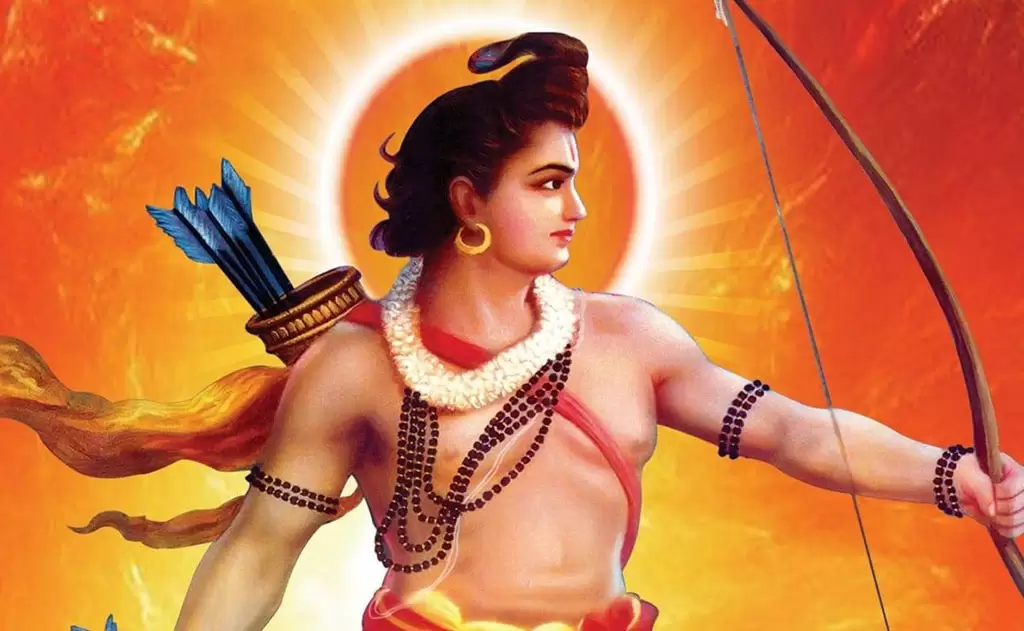
Rama Avatar — Vishnu's seventh incarnation, the ideal man (Maryada Purushottama). Ramayana, exile, Sita's abduction, Ravana's defeat, Ayodhya, Rama Rajya.
Rama Avatar — Vishnu's seventh incarnation, the ideal man (Maryada Purushottama). Ramayana, exile, Sita's abduction, Ravana's defeat, Ayodhya, Rama Rajya.
Quick Answer: Rama — born in Ayodhya as the eldest son of King Dasaratha and Queen Kausalya — is the seventh of Vishnu's ten avatars and the foundational figure of the Ramayana epic. Known as Maryada Purushottama ("the perfect upholder of dharma") and the Adi Purusha (original ideal person), Rama lived a human life that became the eternal model for ethical conduct in Hindu civilisation. His 14-year exile, the abduction of his wife Sita by Ravana of Lanka, the alliance with Hanuman and the Vanara army, the defeat of Ravana, the return to Ayodhya, and his Rama Rajya (perfect rule) define the central narrative of Hindu ethics. The Ramayana by Valmiki and the Ramcharitmanas by Tulsidas are foundational texts. The Ayodhya Ram Mandir (consecrated January 22, 2024) marks a generational moment in modern Hindu civilisation. Major festivals include Rama Navami (Rama's birthday — March 27, 2026) and Diwali (commemorating his return to Ayodhya).
1. Birth and Childhood — The Prince of Ayodhya
In the Treta Yuga, King Dasaratha ruled Ayodhya with his three queens: Kausalya, Sumitra, and Kaikeyi. Through the Putrakameshti Yajna (a fire ritual for begetting a son), Dasaratha received divine prasada (offering) which his three queens consumed. Four sons were born:
- Rama — to Kausalya (eldest)
- Bharata — to Kaikeyi
- Lakshmana and Shatrughna — to Sumitra (twins)
The four princes were trained by Vasishtha in scripture and Vishvamitra in weapons. As young men, Rama and Lakshmana accompanied Vishvamitra to defend his yajna from demons; Rama killed Tataka (his first major demonic combat).
2. Sita's Swayamvara and Marriage
At King Janaka's swayamvara (the ceremony where a princess chooses her husband) in Mithila, the test was lifting and stringing the great Shiva Dhanush (bow of Shiva) — an impossible feat. Princes from across Bharatavarsha tried and failed. Rama, then in his late teens, lifted the bow effortlessly. As he strung it, the bow broke with a sound that shook the heavens.
Sita (Janaka's adopted daughter, found in a furrow during ploughing) garlanded Rama as her husband. The marriage of Rama-Sita is among the most foundational unions in Hindu mythology — the ideal of mutual devotion, mutual sacrifice, mutual support.
3. The 14-Year Exile
Years later, as Dasaratha prepared to install Rama as crown prince (yuvaraja), Queen Kaikeyi — manipulated by her maid Manthara — invoked two old boons Dasaratha had granted her. She demanded:
- Bharata (her son) become king
- Rama be exiled to the forest for 14 years
Dasaratha was bound by his word. Rama accepted the exile without question — his father's promise must be honoured even at personal cost. Sita and Lakshmana insisted on accompanying him. The three left Ayodhya. Dasaratha died of grief soon after.
The 14-year exile took them through the forests of central and southern India — Chitrakoot, Panchavati, the Dandaka forest. Many of the present-day pilgrimage sites along the Rama-vana-yatra route in Madhya Pradesh, Maharashtra, Telangana, and Andhra Pradesh trace to this period.
4. Sita's Abduction by Ravana
The decisive turning point of the Ramayana came at Panchavati (near present-day Nashik, Maharashtra). The demon king Ravana of Lanka — younger brother of Vibhishana, Surpanakha, and Kumbhakarna — became enraged after his sister Surpanakha was rejected and disfigured for attempting to seduce Rama and Lakshmana.
Ravana, learning of Sita's beauty and Rama's prowess, devised a deceit. He sent the demon Maricha in the form of a golden deer; Sita asked Rama to capture it. With Rama and then Lakshmana away from the hermitage, Ravana came in the disguise of a sannyasi and abducted Sita by force, carrying her in his Pushpaka Vimana (flying vehicle) to Lanka.
Jatayu, the divine eagle, fought Ravana valiantly but was mortally wounded. His dying words to Rama gave the direction of Sita's capture.
5. Alliance with Hanuman and Sugriva
Rama and Lakshmana, searching for Sita, reached Kishkindha (Vanara kingdom). There they met Hanuman, the great Vanara devotee whose loyalty to Rama would become the supreme model of bhakti.
Rama allied with Sugriva, the rightful Vanara king (exiled by his brother Vali). After Rama killed Vali in combat, Sugriva was restored. The Vanara army was assembled to search for Sita.
Hanuman's leap to Lanka — flying across the ocean, surveying Ravana's kingdom, finding Sita in Ashok Vatika (the garden where she was held), delivering Rama's ring, returning with proof of Sita's whereabouts — is among the Ramayana's most beloved sequences. Hanuman's Sundara Kanda (the fifth book) is recited by millions daily.
6. The War in Lanka
Rama, Lakshmana, Hanuman, Sugriva, Vibhishana (Ravana's righteous brother who joined Rama), and the entire Vanara army built the Rama Setu (bridge) to Lanka — stones inscribed with Rama's name that miraculously floated.
The war that followed lasted multiple days and contained legendary combats:
- Lakshmana versus Indrajit (Ravana's son) — Lakshmana was mortally wounded; Hanuman flew to the Himalayas and returned with the Sanjeevani booti (life-restoring herb) carrying the entire mountain when he couldn't identify the specific herb
- Hanuman versus Kumbhakarna (Ravana's giant brother)
- Rama versus Ravana — the climactic single combat. Ravana's ten heads regenerated each time Rama severed them; Rama eventually shot a divine arrow into Ravana's navel (where his life-essence resided), ending him.
Sita was freed. Lanka was given to Vibhishana. The war concluded.
7. Return to Ayodhya and Rama Rajya
Rama, Sita, Lakshmana, and the Vanara contingent returned to Ayodhya at the conclusion of the 14-year exile. The citizens of Ayodhya lit lamps to welcome them — this is the origin of Diwali, the festival of lights.
Rama was coronated king of Ayodhya. His reign — Rama Rajya — is described in Hindu tradition as the ideal political order: perfect justice, no poverty, no crime, dharmic governance, total welfare. The phrase "Rama Rajya" has become the Hindu civilisational shorthand for the perfect society.
However, the Ramayana does not end happily. The Uttara Kanda (the seventh book) describes how, after Sita's return to Ayodhya, public doubt about her purity during captivity led Rama to send her into exile — a deeply painful chapter that has generated millennia of theological and ethical interpretation. Sita gave birth to Lava and Kusha in Valmiki's hermitage. Years later, when the family was reunited, Sita asked Mother Earth (Bhudevi) to receive her — and was absorbed back into the earth, ending her embodiment.
Rama ruled Ayodhya for thousands of years, eventually entering the Sarayu river to return to Vaikuntha (Vishnu's abode). The Treta Yuga continued.
8. The Ayodhya Ram Mandir (Consecrated 2024)
After centuries of conflict over the Babri Masjid site that had been built on the believed birthplace of Rama, the Supreme Court of India ruled in 2019 that the site belonged to Rama's birthplace and could be used for a Hindu temple. Construction began. On January 22, 2024 (Pran Pratishtha), the consecration ceremony installed the deity of Ram Lalla in the new temple.
The Ayodhya Ram Mandir is now among the most-visited Hindu temples globally — estimated 1-2 lakh daily visitors. Major NRI Hindu communities worldwide held parallel celebrations on January 22, 2024.
For modern Hindu civilisation, the Ayodhya Ram Mandir consecration represents a generational milestone — the completion of a multi-generational community project that began with court cases in the early 20th century and culminated in 2024.
9. Modern Lessons — Rama in 2026
Lesson 1: Honour your word, even at extreme cost
Rama accepted 14 years of forest exile because his father had promised it. The teaching: integrity of word is foundational dharma. For NRI Hindus in business, family, and professional commitments — the model is direct.
Lesson 2: Marriage as mutual sacrifice
Rama and Sita's mutual sacrifices for each other define the Hindu ideal of marriage. The teaching is not domestic perfection but mutual prioritisation. NRI marriages strained by cross-cultural pressures, career demands, and family separations can find in Rama-Sita a model of unwavering commitment.
Lesson 3: Younger brothers can be Bharata
When Rama was exiled, Bharata refused to accept the throne and instead placed Rama's sandals on the throne, ruling as regent in Rama's name. The teaching: when leadership rightfully belongs to another, true greatness lies in dharmic refusal of the position even when it is offered.
Lesson 4: Hanuman — the model of bhakti
Hanuman is the supreme model of devotional service. Skill, intelligence, strength, loyalty — all directed toward Rama's mission with no claim on the fruits. For NRI Hindus contributing to community, family, organisations — the Hanuman model is the gold standard.
Lesson 5: Dharma sometimes demands tragic choices
The Sita-Lava-Kusha episode is the most painful chapter of the Ramayana. Rama's choice to send Sita into exile after her return — driven by public concern about a queen's purity — has been interpreted in many ways across Hindu tradition. The teaching: dharma is not always comfortable; sometimes the right action by one standard wounds by another. Hindu ethics does not pretend otherwise.
Lesson 6: Rama Rajya is the political ideal
Hindu political philosophy aspires to Rama Rajya — a society where dharma is the governing principle, where rulers serve subjects, where no one suffers needlessly. For NRI Hindus engaging in political and civic life worldwide, this remains the standard against which actual political systems are measured.
Lesson 7: Diwali lights have a deep historical anchor
The diyas we light at Diwali are not arbitrary celebration — they connect to the lights Ayodhya's citizens lit when Rama returned. The teaching: cultural practices carry historical depth; honouring them honours the lineage.
10. Mantras, Festivals, FAQs
Mantras
Rama bija mantra:
Om Sri Ramaaya Namah
Rama Taraka Mantra (most-chanted Rama mantra):
Sri Rama Jaya Rama Jaya Jaya Rama
Rama Raksha Stotram opening:
Charitam Raghunathasya, shata-koti pravistaram
Ekaikam aksharam pumsam, maha pataka nashanam
Dasavatara Stotra verse for Rama (Jayadeva):
Vitarasi dikshu rane Dik-pati kamaniyam
Dasha-mukha mauli-bali-mati bhayadam asahyam
Kesava dhrita Rama sharira Jaya Jagadisha Hare
Major festivals
- Rama Navami — Rama's birthday — Chaitra Shukla Navami. 2026: Friday, March 27.
- Vijayadashami / Dussehra — Ravana's defeat — Ashwin Shukla Dashami. 2026: Sunday, October 11.
- Diwali — Rama's return to Ayodhya. 2026: Sunday, November 8.
- Hanuman Jayanti — devotee Hanuman's birth.
FAQs
Q: Is Rama a historical figure?
A: Hindu tradition holds Rama as a historical king who lived in the Treta Yuga. Some recent archaeological work at Ayodhya and other Rama-related sites has lent weight to historical claims. Western academic scholarship treats the Ramayana as a foundational epic with mixed historical-mythological elements.
Q: Where is Ram Setu?
A: The chain of limestone shoals between India (Rameshwaram) and Sri Lanka (Mannar Island) is traditionally identified as the Rama-built bridge. Satellite imagery shows the structure; scientific debate continues about its origin.
Q: Why is Hanuman so important in modern Hindu practice?
A: Hanuman represents the ideal bhakta — strength, intelligence, loyalty, humility all directed in service. The Hanuman Chalisa is among the most-recited Hindu prayers globally. For Tuesday and Saturday worship traditions, Hanuman is the focal deity.
Q: When can NRIs visit Ayodhya Ram Mandir?
A: The temple is open to all visitors. Online booking systems facilitate visits. NRIs typically combine Ayodhya with Varanasi, Allahabad/Prayagraj, and Mathura/Vrindavan in a single yatra.
Q: What's the relationship between Rama and Krishna avatars?
A: Both are Vishnu avatars — Rama in Treta Yuga, Krishna in Dvapara Yuga. They represent different aspects of Vishnu's engagement with the world.
Final Words
Rama Avatar represents Hindu civilisation's foundational model of what a human life can be. Not perfect happiness — the Ramayana is full of grief, separation, exile, and tragic choices. But perfect dharma — the unwavering commitment to right action even at extreme personal cost. Rama is called Maryada Purushottama not because his life was easy but because every choice was dharmic.
For NRI Hindus in 2026 — building families, navigating workplaces, raising children across cultures, holding the relationship with parents in India — Rama is the avatar of how to live as a human. The Ramayana is not entertainment; it is the moral curriculum. The Ayodhya Ram Mandir's consecration in 2024 marks the recovery of a sacred space that millions of Hindus had carried in their hearts for centuries; visiting it is the journey of a generation.
Sri Rama Jaya Rama Jaya Jaya Rama. Jaya Jagadisha Hare!
Jai Sri Ram! Jai Sita Ram! Jai Hanuman! Jai Vishnu Avatar 7 of 10!
HinduTone Editorial Team · Tags: Rama Avatar, Maryada Purushottama, Ramayana Valmiki, Sita Devi, Hanuman, Ravana, Ayodhya Ram Mandir 2024, Rama Rajya, Rama Navami, Dasavataram
Frequently Asked Questions
What is Rama Avatar?
Rama — born in Ayodhya as the eldest son of King Dasaratha and Queen Kausalya — is the seventh of Vishnu's ten avatars and the foundational figure of the Ramayana epic. Known as Maryada Purushottama ("the perfect upholder of dharma") and the Adi Purusha (original ideal person), Rama lived a human life that became the eternal model for ethical conduct in Hind
What are the key points about Rama Avatar?
His 14-year exile, the abduction of his wife Sita by Ravana of Lanka, the alliance with Hanuman and the Vanara army, the defeat of Ravana, the return to Ayodhya, and his Rama Rajya (perfect rule) define the central narrative of Hindu ethics. The Ramayana by Valmiki and the Ramcharitmanas by Tulsidas are foundational texts.
Why does Rama Avatar matter in Hinduism?
It deepens a devotee's connection with Lord Rama and with the values of Sanatana Dharma — clarity, devotion and dharmic living.
How can devotees apply Rama Avatar in daily life?
By reflecting on its teaching, incorporating the related practices or observances into daily routine, and approaching it with sincere devotion and understanding.
You might also like
Matsya Avatar — The First Incarnation of Vishnu: Story, Significance, Sacred Geography & Lessons for 2026
Krishna Avatar — The Eighth Incarnation of Vishnu: Bhagavad Gita, Mahabharata, Vrindavan Leelas & Eternal Wisdom for 2026
Buddha Avatar — The Ninth Incarnation of Vishnu: Hindu Perspective on Siddhartha Gautama & Bridge Between Sanatana Dharma and Buddhism