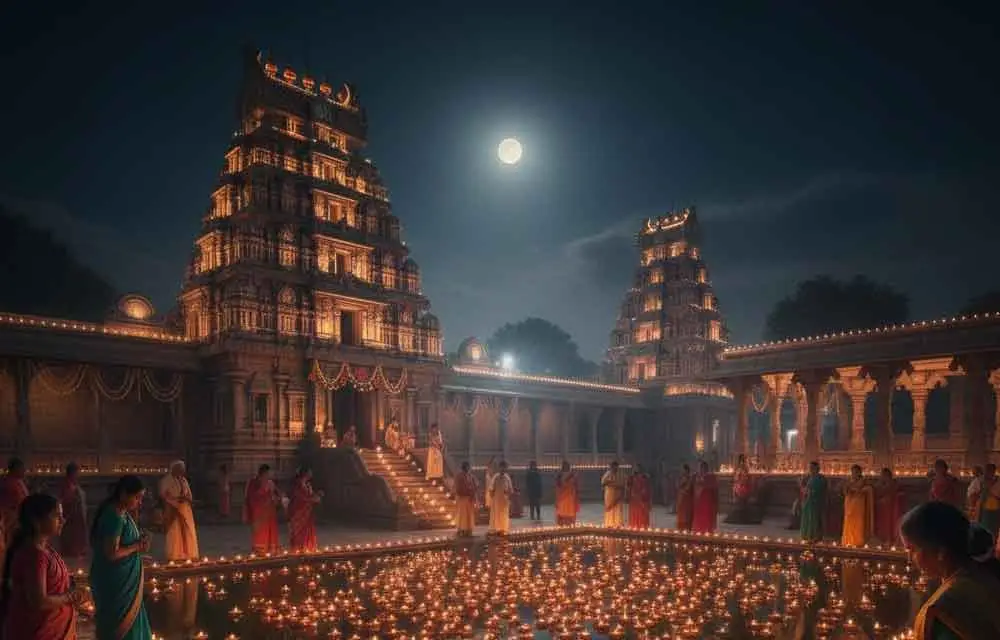
Varahi Navaratri Miracle: How a Devoted Sadhaka Escaped Sudden Death by Divine Grace of Boar-Faced Goddess
Location: Andhra PradeshOccasion: Ashadha Navaratri 2014 The Fierce Protector — Varahi Devi Varahi Devi, the boar-faced manifestation of the Divine Mother, is…
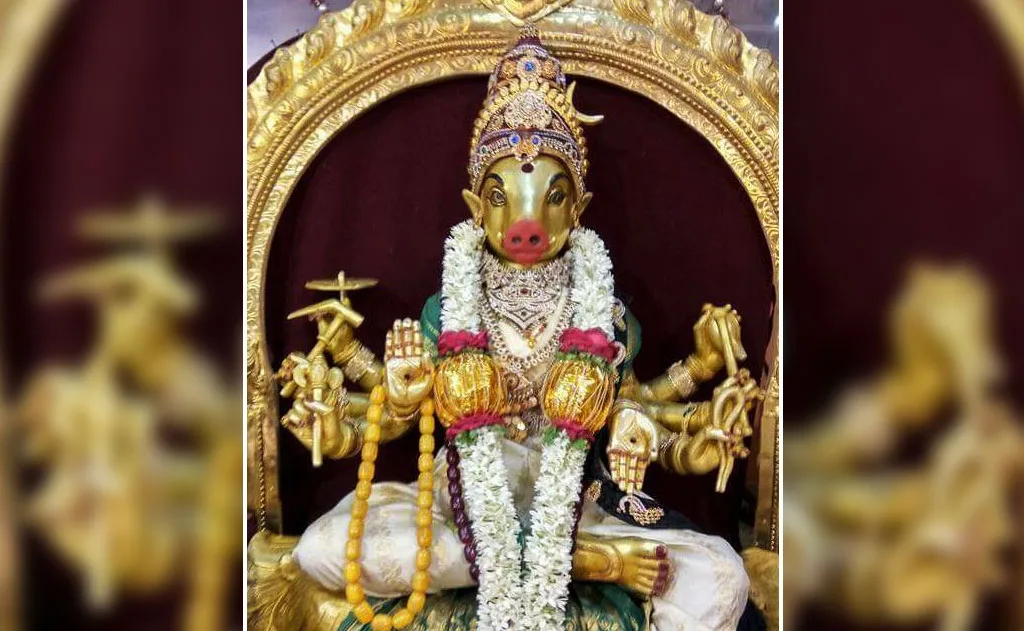
Location: Andhra PradeshOccasion: Ashadha Navaratri 2014 The Fierce Protector — Varahi Devi Varahi Devi, the boar-faced manifestation of the Divine Mother, is…
Location: Andhra Pradesh
Occasion: Ashadha Navaratri 2014
The Fierce Protector — Varahi Devi
Varahi Devi, the boar-faced manifestation of the Divine Mother, is worshipped during Ashadha Navaratri (Varahi Navaratri). Known for Her fierce protection and motherly grace, Varahi stands as the guardian of truth and dharma.
This is the true account of a sadhaka from Andhra Pradesh who was miraculously saved from death by Varahi Devi’s divine intervention.
The Sadhaka’s Background — Discipline & Devotion
The sadhaka, a middle-aged legal advisor dealing with land disputes, was introduced to Varahi sadhana by a Tantric guru from Simhachalam.
Every Ashadha Navaratri, he observed a strict 9-day vratam:
- Navarna Mantra Japa
- Varahi Gayatri chanting
- Homa with red rice and ghee
- Offerings of sesame oil lamps and red hibiscus flowers
The Divine Warning — Varahi Appears in a Dream
On the 5th night, Varahi Devi appeared in his dream — boar-faced, draped in red, radiating power.
She warned:
“Stop all external journeys until Ekadashi. Someone is trying to drag you into adharma.”
Shaken, the sadhaka consulted his guru, who confirmed it was a genuine message from the Devi.
The Orchestrated Attack — Ignoring the Warning
On the 7th day, despite the warning, he travelled to a remote village near the Andhra-Karnataka border.
Returning at night, his vehicle was blocked. Four land mafia men ambushed him, assaulting with iron rods, dragging him out, and striking him mercilessly.
Divine Intervention — Varahi Devi Saves Her Devotee
As he slipped towards unconsciousness, a blinding golden light burst forth.
There stood Varahi Devi, boar-faced, eyes like fire.
The attackers froze, their rods falling.
One cried:
“Amma, forgive me! Don’t pull my tongue! I didn’t know he was your devotee!”
Terrified, they fled. One broke his ankle while running. Another soon lost his sanity.
The Aftermath — Protection & Justice
Villagers found him unconscious, but:
- No fractures
- No internal injuries
- No head trauma
Doctors called it miraculous.
The next day:
- One attacker died in an accident
- Another became mentally unstable, muttering:
“Boar-faced Amma with fire-eyes… fire-eyes…”
The Final Homa — The Boar-Snouted Flame
On the 9th day, he completed his vratam with a grand Varahi Homa.
During the avahana, the flames rose in the form of a boar snout — a rare spiritual sign, witnessed by all present.
Conclusion — Varahi Navaratri: A Time of Power & Protection
Ashadha Navaratri is not just ritual — it is a shield of spiritual power, a pathway to divine justice, and proof of Varahi Devi’s unconditional protection for true devotees.
For more real devotional stories and Hindu spiritual insights, visit:
🌺 www.hindutone.com – Connecting the Hindu World Spiritually
Who Is Varahi Devi? Scriptural Roots of the Boar-Faced Shakti
Varahi is one of the Sapta Matrikas — the seven divine mothers listed in the Devi Mahatmya (Markandeya Purana, chapters 87–91) and elaborated in the Devi Bhagavata Purana. She emerges from the power of Varaha, the boar avatar of Vishnu, and thus carries the combined force of both Shaiva and Vaishnava traditions. Her iconography is distinctive: a human body with the head of a sow, carrying a danda (staff of authority), a hala (plough), and a chakra, riding a buffalo or a corpse-throne.
In Tantric literature, particularly the Varahi Tantra and the Yogini Hridaya, Varahi is elevated beyond the Matrika cluster and identified as the commander-in-chief (senapati) of the Devi's armies. She governs the north-western direction and is associated with the Ajna chakra — the seat of inner vision and psychic protection. Devotees believe her intervention works precisely through this faculty: she pierces illusion (maya) and reveals hidden threats before they fully materialise, exactly as she did for this sadhaka through the dream-vision on the fifth night.
Ashadha Navaratri and the Special Significance of Varahi Worship in This Season
While Sharada Navaratri (Ashwin month) receives wider public attention, Ashadha Navaratri — observed in the Shukla Paksha of Ashadha masa (June–July) — holds particular importance in the Shakta-Tantric tradition of coastal Andhra Pradesh and Odisha. This is considered Varahi's own Navaratri, a time when her Shakti is believed to be at peak intensity, much as Sivaratri is the peak night of Shiva's grace.
Traditional practitioners in the Simhachalam–Vizianagaram belt maintain that Ashadha is a month when the veil between the material and the subtle world thins, making mantra sadhana unusually potent — but also demanding unusually strict discipline. The injunction against external travel during certain days of Varahi Navaratri is well-documented in guru-shishya instructions passed down in the Tantric lineages of this region. The Devi's warning to 'stop all external journeys until Ekadashi' in this account is consistent with precisely such traditional prescriptions.
The Navarna Mantra and Varahi Gayatri: What the Sadhaka Was Chanting and Why It Matters
The Navarna Mantra — 'Aim Hrim Klim Chamundayai Vicche' — is the nine-syllable (nava-akshara) seed mantra found in the Devi Mahatmya and considered the prana, or life-breath, of all Shakta worship. Each syllable is a bija: Aim is the bija of Saraswati (divine knowledge), Hrim of Bhuvaneshvari (cosmic space), Klim of Kama-Shakti (attraction and creation), while Chamundayai Vicche invokes the combined form that vanquished Chanda and Munda. During Navaratri, a minimum of 108 repetitions per day is customary, though serious sadhakas often complete one or more rounds of a full mala (1,008 repetitions).
The Varahi Gayatri — 'Om Varahamukhyai Vidmahe, Dandanathayai Dhimahi, Tanno Varahi Prachodayat' — specifically addresses Varahi as Dandanatha, the one who wields the staff of cosmic law. Regular chanting of this Gayatri is said to establish a protective kavach (armour) around the devotee, particularly guarding against enemies who operate through deception and legal manipulation. The fact that this sadhaka was a legal advisor dealing with land disputes — a domain rife with exactly such deceptive adversaries — makes his specific sadhana appear, to the devout eye, almost perfectly calibrated to his life's dangers.
Simhachalam's Tantric Tradition: The Guru Lineage Behind This Sadhana
Simhachalam, the hill temple town near Visakhapatnam in Andhra Pradesh, is primarily known for its Narasimha Swamy temple, one of the 108 Divya Desams in the Vaishnava tradition. However, the same region has long sustained a parallel Shakta-Tantric tradition. The forests and hermitages around Simhachalam and the Ananthagiri hills have historically been home to Tantric lineages that blend the Vaishnava Shakti of Lakshmi-Narasimha with the fierce Matrika worship including Varahi. The guru mentioned in this account belongs to this syncretic living tradition.
In such lineages, initiation into Varahi sadhana is not given casually. The guru first assesses the disciple's temperament, as Varahi's energies are classified under the Tamasic-Rajasic mode of Shakti — powerful, fast-acting, and demanding moral clarity from the practitioner. A guru who can confirm, as happened in this account, that a dream-appearance is 'a genuine message from the Devi' is one who has himself undergone years of siddhi in that specific devata's upasana. The guidance to heed the warning and the subsequent validation of the miracle both reflect the guru-shishya framework without which Tantric sadhana carries considerable risk.
The Theology of Divine Intervention: Why Varahi Saves Even When Her Devotee Disobeys
A theologically rich dimension of this account is that the sadhaka ignored the Devi's direct warning and still received her protection. This aligns with a recurring teaching across the Puranas: the bond of upasana (devoted worship) creates what is called a Raksha Sambandha — a protective relationship — that does not dissolve simply because the devotee errs. In the Devi Bhagavata Purana (Book 7), the Devi herself declares that she protects her devotees 'as a mother protects even a wayward child.' The protection is an expression of maternal grace (vatsalya), not a contractual reward for perfect obedience.
At the same time, the tradition is clear that the disobedience does carry a consequence — the devotee was still physically assaulted and nearly killed. The Devi intervened at the threshold of death, not before the suffering began. Many Tantric acharyas interpret such accounts as illustrative of the principle of karma-lekha: even divine grace does not always cancel the karmic script entirely; it may alter its most extreme outcome. The attackers' fates — one breaking his ankle, another losing his sanity — are understood not as the Devi's vindictive punishment, but as the natural rebound of adharmic intent upon those who tried to violate a protected devotee.
Practical Lessons for Varahi Upasana: What This Account Teaches Sadhakas
The foremost lesson is the sanctity of the guru's instruction during any active Navaratri vrata. In Tantric practice, the period of sadhana is not merely a time of worship but a window of heightened subtle vulnerability as much as heightened grace. Moving through physically dangerous or morally compromised environments while in the midst of intensive mantra japa can — according to the tradition — attract precisely the hostile forces that the sadhana is meant to neutralise. The injunction to remain in a state of inward restraint (antaranga shuddhi) during such periods is therefore both spiritual and practical.
Secondly, this account underscores the role of dream-communication (svapna-sandesha) as a valid mode of divine guidance in the Shakta tradition. The Devi Mahatmya itself, in the Uttara-charitra section, describes the Devi appearing in dreams to bless and warn her devotees. A sadhaka who has built consistent practice — daily japa, Homa, lamp-offerings — creates the inner receptivity (antahkarana shuddhi) through which such subtle communication becomes possible. This is not superstition but a documented dimension of upasana that serious practitioners across generations have consistently reported.
Frequently Asked Questions
What is Varahi Navaratri Miracle?
Location: Andhra Pradesh Occasion: Ashadha Navaratri 2014 The Fierce Protector — Varahi Devi Varahi Devi, the boar-faced manifestation of the Divine Mother, is worshipped during Ashadha Navaratri (Varahi Navaratri). Known for Her fierce protection and motherly grace, Varahi stands as the guardian of truth and dharma.
What are the key points about Varahi Navaratri Miracle?
This is the true account of a sadhaka from Andhra Pradesh who was miraculously saved from death by Varahi Devi’s divine intervention. The Sadhaka’s Background — Discipline & Devotion The sadhaka, a middle-aged legal advisor dealing with land disputes, was introduced to Varahi sadhana by a Tantric guru from Simhachalam.
Why does Varahi Navaratri Miracle matter in Hinduism?
It reflects core values of Sanatana Dharma and offers practical and spiritual guidance that remains relevant across generations.
How can devotees apply Varahi Navaratri Miracle in daily life?
By reflecting on its teaching, incorporating the related practices or observances into daily routine, and approaching it with sincere devotion and understanding.
You might also like
Gita Jayanti 2026 Prasad Recipes — Tulsi-Honoring Sweets, Krishna's Favourites & December 10 Bhog Plate
Maha Shivratri 2026 Vrat Recipes — Sabudana Khichdi, Singhada Halwa, Phalahara Foods Complete Fasting Guide
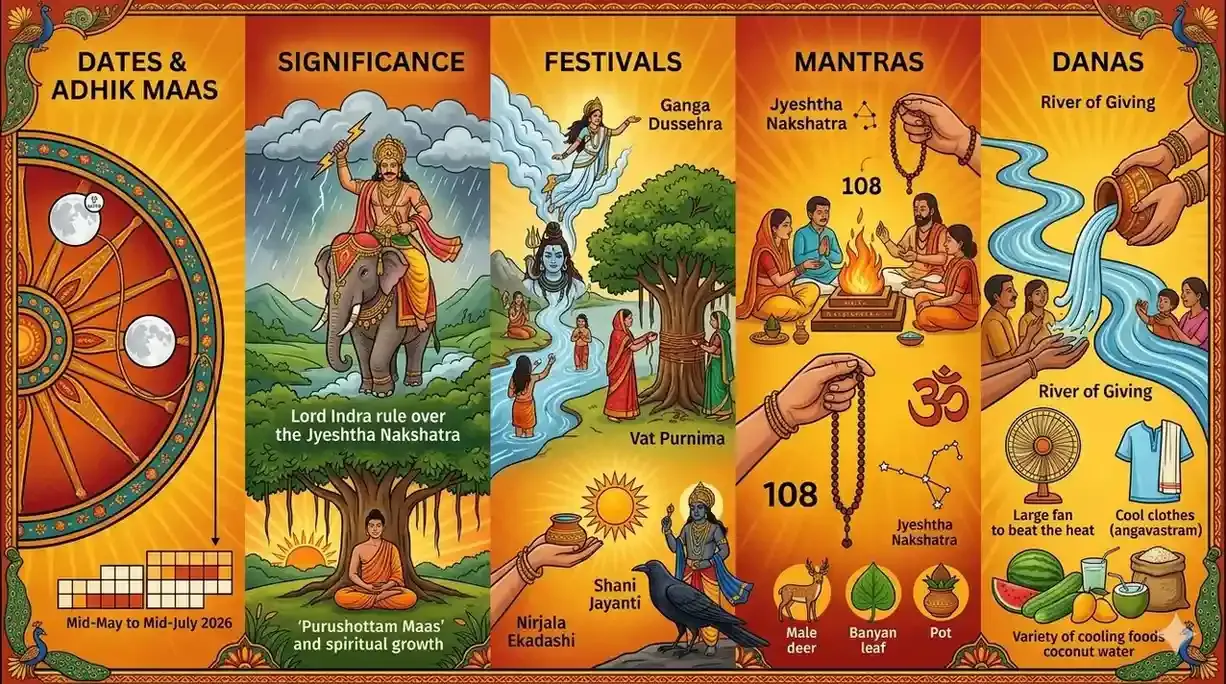
June 2026 Hindu Festivals: Complete Guide with Dates, Rituals, Mythological Stories, Spiritual Importance & Celebration Tips