Kanipakam Vinayaka Temple
Kanipakam Vinayaka Temple history and facts. The mysterious temple of Kanipakam Vinayaka was built in the early 11th century by King “Chola Kulothunga Chola I”…
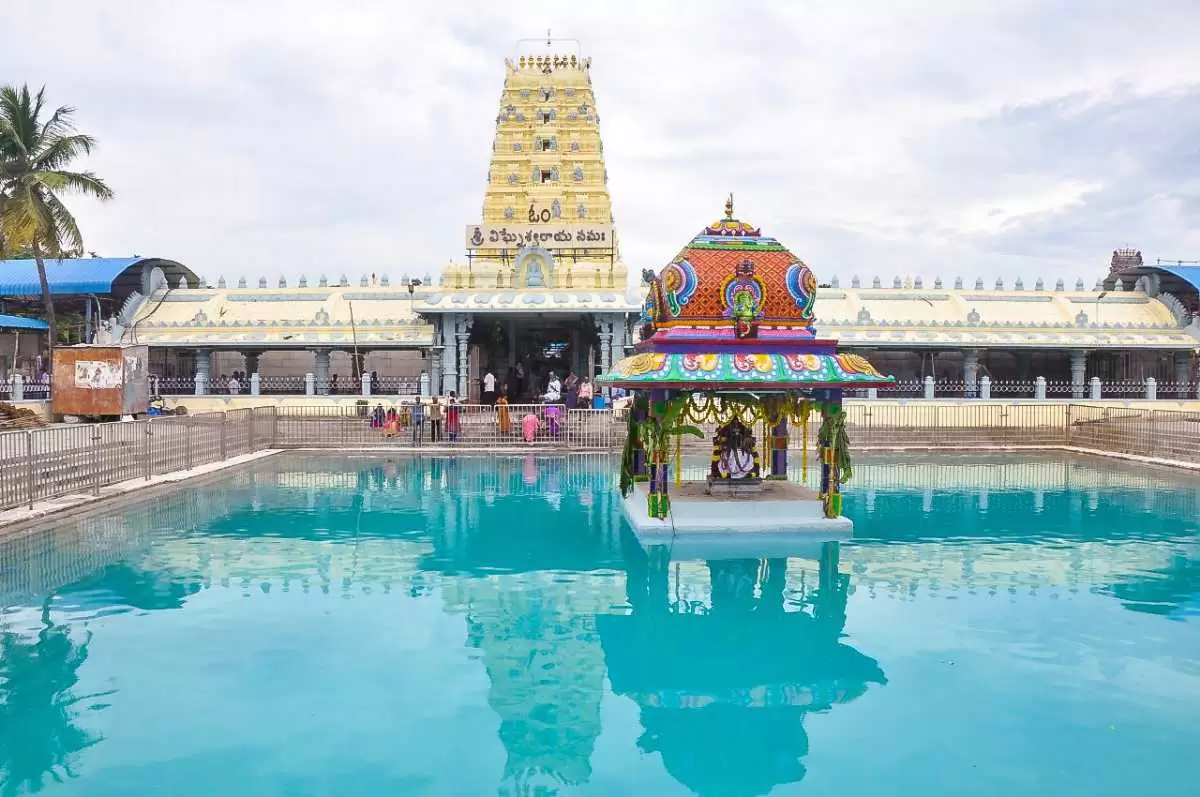
Kanipakam Vinayaka Temple history and facts.
Kanipakam Vinayaka Temple history and facts.
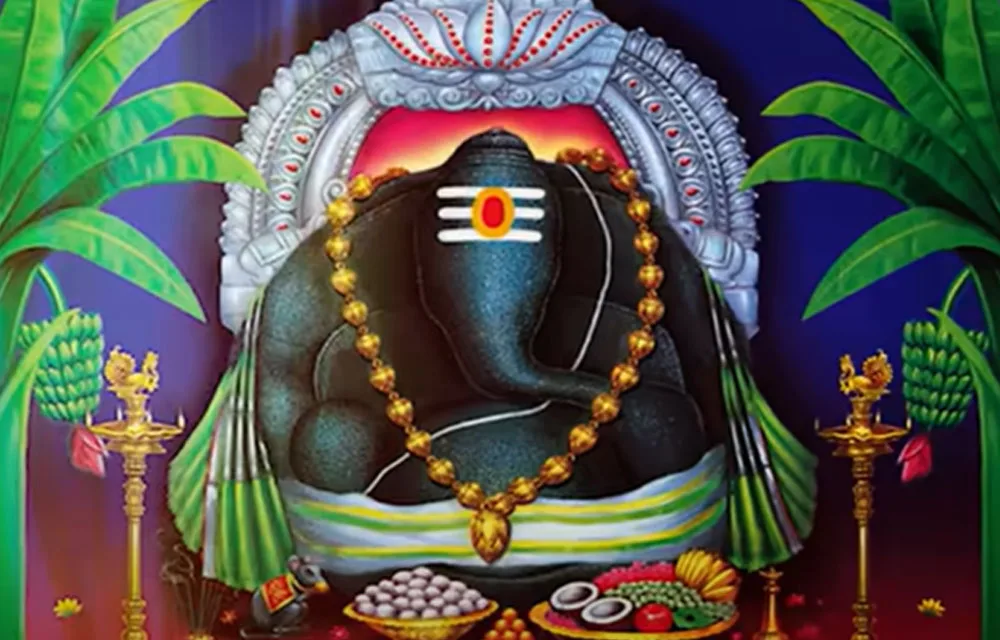
The mysterious temple of Kanipakam Vinayaka was built in the early 11th century by King “Chola Kulothunga Chola I” and the temple was expanded in 1336 by the emperors of the Vijayanagara dynasty who ruled Andhra. There is a belief that the idol of Kanipakam Vinayaka continues to grow in size. Currently, we can see the knees and the abdomen of the god. A loyal devotee had offered Lord Ganesha a Silver Kavacham around 50 years ago, but now it is out of size and does not fit the idol.
The temple’s history is depicted in the form of a story.
Once upon a time, there were three farmers suffering from physical malformations and they were dumb, deaf, and blind by birth itself. In ancient times, water was extracted from the well through a system called Picotta. One among them used to irrigate the field through the waters and the two others played in the piccota. During this, they found that well water had dried out and that they could no longer draw water from the well for irrigation purposes.
One of them entered the well and started digging it up for water. He was astonished to see the iron tool hit a stone. Later this farmer was surprised to see blood coming out of him out of the wound. After some time he found that all the water in the well-turned red. Therefore, surprised by this sacred experience, the three people became normal by getting rid of their malformations.
As soon as the villagers get to know this miracle, they gathered into the well and tried to go further into the well. In this attempt, they saw Lord Vinayaka’s idol Swayambhu emerge from the rough waters of the well.
After this wonder coconuts were offered and thirtham coconut covered the whole area. This led to a variation in the use of the word “Kaniparakam” and was later said as “Kanipakam”.
Even today, the idol of Vinayaka is in the original well and the good sources are eternal. During the rainy season, this holy water of the well still overflows. The holy water of the well is offered to devotees like Tirtham or holy water.
This holy temple in Andhra Pradesh stands in the first place to be visited by devotees across India. Make sure you all witness the spiritual beauty of this temple along with your family.
What is the significance of the Swayambhu form of Kanipakam Vinayaka?
The Kanipakam Vinayaka is revered as a Swayambhu murti — a self-manifested deity not fashioned by human hands. In Hindu theology, Swayambhu idols are considered especially potent because they are believed to carry the full, unmediated divine energy (shakti) of the deity, undiluted by the limitations of human craft. Unlike installed (pratishthita) images, a Swayambhu form is held to be eternally self-sustaining, drawing cosmic vitality directly from the earth.
The Mudgala Purana and the Ganesha Purana both describe Ganesha as Adi Deva — the primordial deity who is present before creation — and Swayambhu manifestations are understood within this framework as spontaneous eruptions of that primordial presence into the visible world. The well at Kanipakam, from which the idol emerged, is therefore treated as a tirtha — a sacred crossing-point between human and divine realms — and its waters are distributed to devotees as prasadam.
How does the growing idol phenomenon connect to Hindu beliefs about living deities?
The belief that the Kanipakam Vinayaka idol grows continuously is one of the most documented and debated features of the temple. Devotees and temple priests maintain that the murti, which is submerged partially in the original well water, has been expanding measurably over the centuries. The silver kavacham (protective armour) donated roughly fifty years ago no longer fits the idol, which is cited locally as physical evidence of this ongoing growth.
In Agamic temple theology, a consecrated idol is not considered mere stone but a living vessel (chaitanya vigraha) into which divine consciousness has been invoked through prana pratishtha rituals. The concept of a growing idol, while unusual even within this tradition, is interpreted by scholars of the Shaiva-Vaishnava Agamas as an extreme expression of the deity's sthiti shakti — the sustaining power that actively inhabits and transforms the physical form. Tirupati Tirumala Devasthanams records analogous traditions of subtle transformations in celebrated murtis across Andhra Pradesh.
Pilgrims who visit specifically to witness this phenomenon are encouraged by priests to observe the boundary marks carved on the surrounding stone at different historical periods, which visually indicate how the visible portion of the idol has changed over generations.
What role did the Vijayanagara Empire play in shaping the temple's present architecture?
The 1336 expansion by the Vijayanagara emperors introduced the distinctive Dravidian gopuram and mandapa structures that define the temple's present silhouette. Vijayanagara rulers were prolific temple-builders across the Deccan, and their architectural imprint — characterised by intricately carved granite pillars, multi-tiered gateway towers, and large outer enclosures (prakaras) — is visible at major shrines from Hampi to Tirupati.
The temple is located in Kanipakam village in the Chittoor district of Andhra Pradesh, approximately 11 kilometres from Chittoor town. Under Vijayanagara patronage, the region became part of a wider network of sacred sites connected by pilgrimage routes, and the Kanipakam shrine was elevated from a local well-shrine to a formally administered temple with hereditary archakas (priests), daily rituals (nitya puja), and festival calendars aligned with the broader Shaiva-Ganapatya liturgical year.
Inscriptions in Telugu and Sanskrit found on the temple walls record land grants (devadana) made by Vijayanagara nobles to sustain the temple's upkeep and anna prasadam (food offering) for pilgrims, continuing a tradition of royal endowment that later passed to the Endowments Department of the Government of Andhra Pradesh.
What are the major festivals celebrated at Kanipakam and what rituals mark them?
The most important annual festival at Kanipakam is the Brahmotsavam, a multi-day celebration held during the Telugu month of Bhadrapada (August–September), which coincides with the wider observance of Vinayaka Chavithi across Andhra Pradesh and Telangana. During Brahmotsavam, the presiding deity is taken out in procession on vahanas (divine vehicles) such as the Hamsa (swan), Kalpavruksha, and the grand Ashtadala Pada Padmavasanam, drawing hundreds of thousands of devotees.
Sankashti Chaturthi, observed on the fourth day of the Krishna Paksha (waning moon fortnight) each month, draws particularly large gatherings at Kanipakam. Devotees fast through the day, offer modaka (a sweet dumpling considered Ganesha's favourite food as mentioned in the Ganesha Purana), and break the fast only after sighting the moon and offering prayers. The temple's well-water is considered especially auspicious during these monthly observances.
The annual Rathotsavam (chariot festival) is another significant event in which a large wooden rath carrying the utsava murti (processional image) is pulled by thousands of devotees through the streets surrounding the temple, replicating a practice that dates to at least the Vijayanagara period according to temple records.
How can devotees plan a pilgrimage to Kanipakam Vinayaka Temple?
Kanipakam village is situated in Irala mandal of Chittoor district, Andhra Pradesh, and is accessible by road from Chittoor (approximately 11 km), Tirupati (approximately 75 km), and Chennai (approximately 185 km). State Road Transport Corporation (APSRTC) buses operate regular services from Chittoor town to Kanipakam, and private vehicles can park in the designated lots maintained by the temple trust.
The temple is administered by the Andhra Pradesh Endowments Department, which oversees darshan queues, special entry tickets, and the distribution of prasadam. Devotees seeking archana (personalised ritual offering) in their name and gotram (lineage) can register at the temple counter before entering the sanctum sanctorum. The temple opens early in the morning for Suprabhatam seva and remains open until late evening, with a brief midday closure during the Madhyahna (noon) puja.
Visitors are advised to dress in traditional attire consistent with temple norms — sarees or churidars for women, and dhotis or trousers with an upper cloth for men — and to remove footwear before entering the inner precincts. Nearby towns of Chittoor and Tirupati offer accommodation for pilgrims who wish to combine the Kanipakam visit with darshan at Sri Venkateswara Temple on Tirumala.
Frequently Asked Questions
Where is Kanipakam Vinayaka Temple located?
Kanipakam Vinayaka Temple history and facts. The mysterious temple of Kanipakam Vinayaka was built in the early 11th century by King “Chola Kulothunga Chola I” and the temple was expanded in 1336 by the emperors of the Vijayanagara dynasty who ruled Andhra.
Who is the presiding deity of Kanipakam Vinayaka Temple?
The presiding deity is Lord Ganesha.
What are the timings and how do I reach Kanipakam Vinayaka Temple?
Temples typically open early morning and evening; confirm current darshan timings before visiting. The nearest airport, railway station and road routes are covered in the guide above.
What is the best time to visit Kanipakam Vinayaka Temple?
Major festival days and the cooler months are popular, though weekday mornings offer a calmer darshan. Plan around the temple's key festivals for the most vibrant experience.
You might also like
Kanipakam Varasiddi Vinayaka Temple: The Self-Growing Ganesha Shrine
Ganesh Temple Flushing 2026: Darshan Timings, History & Spiritual Significance
Lord Ganesha: 108 Names, Significance & Mantras — The Complete Spiritual Guide