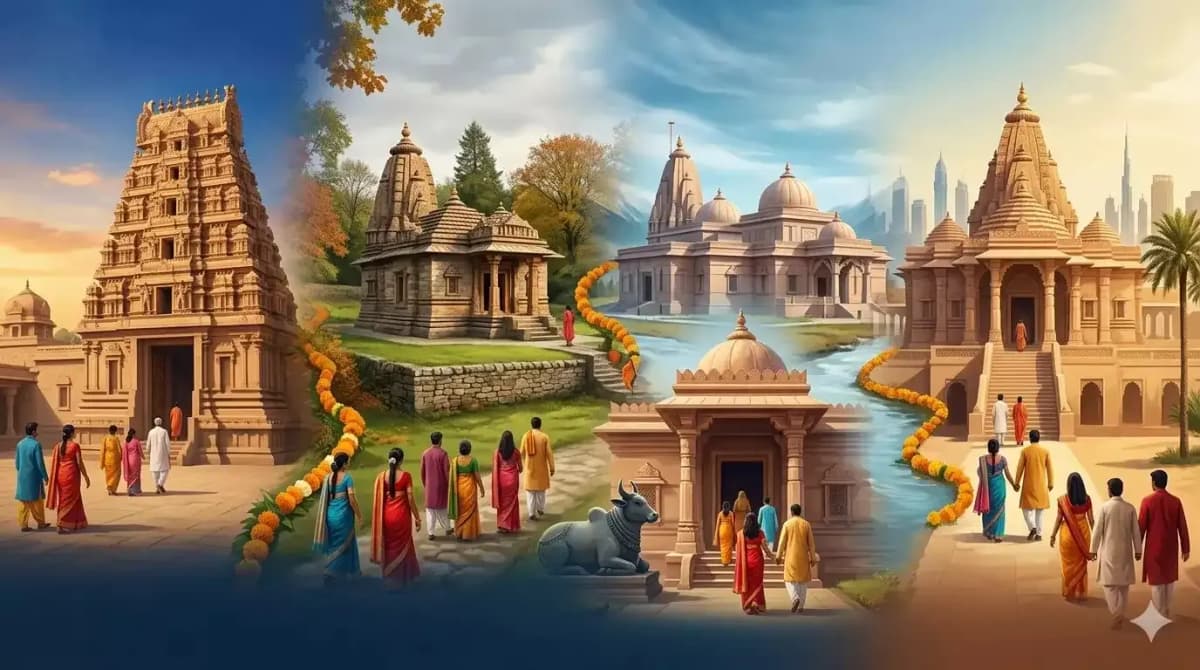
Rudram Chamakam: The Complete Guide to the Supreme Shiva Hymn
Sri Rudram Chamakam — The Oldest Living Prayer to the Divine Long before the pyramids of Egypt were built.
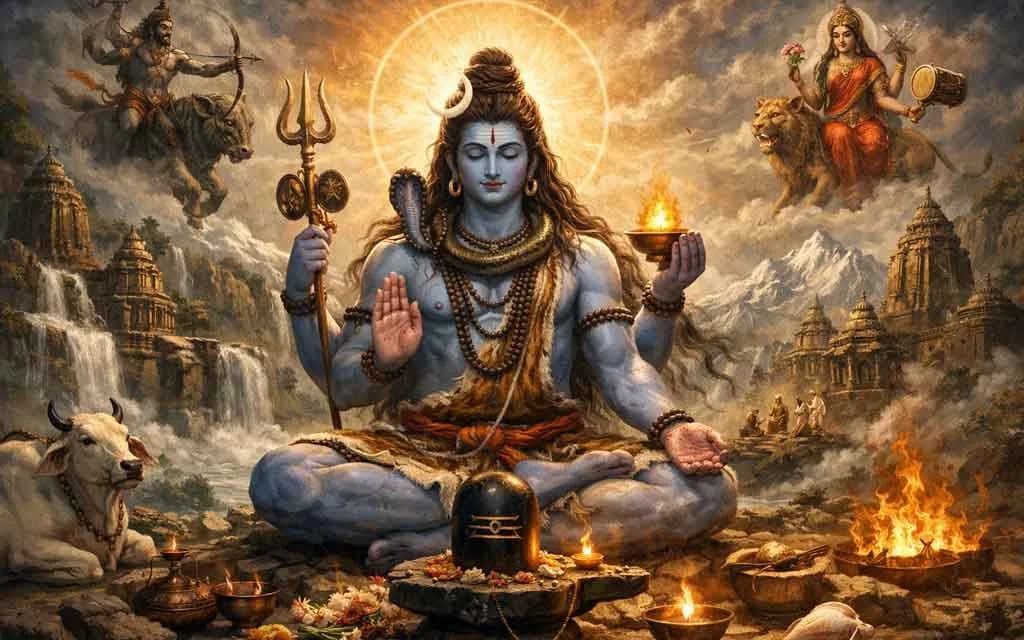
Sri Rudram Chamakam — The Oldest Living Prayer to the Divine Long before the pyramids of Egypt were built.
Sri Rudram Chamakam — The Oldest Living Prayer to the Divine
Long before the pyramids of Egypt were built. Long before the earliest Greek philosophers were born. Long before civilization had developed its first writing systems — somewhere in the vast sacred forests of ancient India, a group of enlightened seers sat in the silence before dawn and composed the greatest prayer ever offered to the Divine in its fierce and compassionate form.
That prayer was Sri Rudram.
It was not composed for a comfortable occasion. It was not offered as routine worship in a peaceful temple. It was composed at the very frontier of human experience — at the place where raw, unmediated reality meets the human capacity for understanding it. At the place where the terrifying face of the universe — the storms, the death, the disease, the destruction that no comfortable theology can explain away — was not denied or avoided but looked at directly and worshipped.
The sages who composed the Sri Rudram had seen Rudra — the howling storm deity, the fierce red archer who sits in the mountains and sends arrows of disease and death through creation — and they had done something extraordinary: they did not run. They stayed. They looked. And in looking with the full clarity of their enlightened consciousness, they saw something that transformed terror into reverence:
The very force that destroys is also the very force that liberates. The destroyer of limited forms is the bestower of unlimited grace. The one who causes suffering is also the supreme physician. Rudra and Shankara — the terrible and the auspicious — are the same being. The same being.
This recognition — held in the precise mathematical architecture of 132 Sanskrit verses organized across eleven anuvaka (sections) and accompanied by the profound wish-list of Chamakam — is the Sri Rudram and Chamakam: the supreme hymn to Lord Shiva, the heart of the Krishna Yajurveda, the oldest continuously chanted prayer in human history.
At HinduTone, we offer you the most complete, most spiritually rich guide to the Sri Rudram Chamakam — its extraordinary origins, its structure, its verse-by-verse significance, its hidden theology, the complete chanting guide, the extraordinary Ekadasha Rudra practice, and the transformative benefits that three thousand five hundred years of devoted chanting have established beyond any reasonable doubt.
[image: 📅] Sri Rudram Chamakam — Sacred Facts at a Glance
[image: 📖] Understanding the Structure — Namakam and Chamakam
The Sri Rudram consists of two distinct but inseparable texts that together form a complete spiritual dialogue between humanity and the Divine:
Sri Rudram (Namakam) — The Prayer of Names and Salutations
"Namakam" — so named because of the repeated use of the word "Namas" (salutation/reverence) throughout its verses.
The Namakam is the acknowledgment section — the part of the prayer that:
- Identifies and names every aspect, form, and manifestation of Lord Rudra
- Acknowledges Rudra's presence in every dimension of reality — from the highest heaven to the deepest ocean, from the cosmic to the microscopic
- Offers reverence (namas) to each aspect — seeking to convert Rudra's fierce energy from threatening to protective
- Begs forgiveness for any offense given to the Lord, knowingly or unknowingly
- Establishes the devotee's complete surrender before the most powerful force in creation
The Namakam contains eleven anuvakas — eleven sections of steadily intensifying prayer that progressively expand the understanding of Rudra from a local storm deity to the universal consciousness that pervades and constitutes all of existence.
Chamakam — The Prayer of Wishes and Gifts
"Chamakam" — so named because of the repeated refrain "Cha me" (and give me this) — "cha" meaning "and" and "me" meaning "to me/for me."
The Chamakam is the petition section — the part of the prayer that:
- Lists every possible blessing that a human being could desire — from the most basic material needs to the highest spiritual attainments
- Asks Rudra, now pleased by the Namakam, to bestow these blessings
- Moves systematically through all dimensions of human wellbeing — physical, social, emotional, intellectual, and spiritual
- Culminates in the request for Brahman — the ultimate reality itself
If the Namakam is the act of making the Lord favorable — of converting the fearsome into the benevolent — then the Chamakam is the act of receiving from that now-favorable Lord every possible form of grace and nourishment.
Together, Namakam + Chamakam = the complete theology of the relationship between a human being and the Divine: first acknowledge the Lord in all his terrible, comprehensive reality; then, from that place of complete acknowledgment, ask for everything you need.
[image: 🌟] The Origin Story — How Sri Rudram Entered the World
Rudra Before Shiva — The Ancient Pre-Vedic Being
To understand the Sri Rudram, we must understand who Rudra is — and Rudra is considerably more ancient, more primal, and more mysterious than the Shiva of the Puranas and popular devotion.
Rudra appears in the Rigveda — the oldest of the four Vedas — as a figure of overwhelming, untameable power. He is described with a complexity that no other deity in the Rigveda quite matches:
- His body is red (Rudhira) — the color of blood, of Mars, of raw life force
- His hair is braided and matted — the mark of the ascetic who stands outside civilized convention
- He carries a bow with arrows that bring disease — but he is also the supreme physician whose arrows, rightly offered, bring healing
- He dwells in the mountains — at the edge of the known world, at the boundary between civilization and the wild
- He is the lord of animals (Pasupati) — all wild creatures are under his domain
- He is called Shiva as an epithet — "the auspicious one" — almost ironically at first, as if naming him thus might persuade him to be what the name suggests
Rudra is the Vedic tradition's most honest encounter with the raw, amoral power of existence itself — the force that creates equally without preference and destroys equally without sentiment. He is not evil — he is simply primordial. He existed before the categories of good and evil were established. He is the fire before it learned to warm. He is the river before it learned to nourish. He is existence before it learned to be gentle.
The Sri Rudram is humanity's most complete attempt to enter into relationship with this primordial force — to know it, to address it, to reverence it, and ultimately to receive its blessing.
The Cosmic Context — When Was It Composed?
The Sri Rudram belongs to the Krishna Yajurveda — the Black Yajurveda — which is considered older than the more organized White Yajurveda (Shukla Yajurveda). The Krishna Yajurveda preserves a more ancient, more direct, less systematized relationship with the sacred.
The Sri Rudram is found in the Taittiriya Samhita — one of the oldest portions of the Krishna Yajurveda — and scholars of Vedic literature estimate its composition at between 1,500 BCE and 1,200 BCE, though the oral tradition from which it was drawn is certainly older still.
It has been chanted continuously — without interruption — for at least 3,500 years. In every generation, in every century, in every era of Indian history — regardless of invasion, religious upheaval, political change, or cultural transformation — there have been priests and devotees who have preserved this hymn in living sound, handing it from teacher to student in the unbroken oral transmission that is the Vedic tradition's supreme gift to human civilization.
[image: 🔮] The Structure of Sri Rudram — Eleven Sections of Ascending Prayer
The eleven anuvakas of the Sri Rudram (Namakam) are not randomly organized. They follow a deliberate theological progression — a journey of recognition that begins with the terrifying face of Rudra and ends with the recognition of his presence in the deepest core of one's own being.
Anuvaka 1 — The Opening Invocation: Appeasing the Fierce One
The first anuvaka is the most famous — the section most commonly heard at Shiva temples across India, the verses that open every traditional Shiva puja.
It opens with the most urgent, most direct request in all of Vedic literature:
नमस्ते रुद्र मन्यव उतो त उत इषवे नमः।
नमस्ते अस्तु धन्वने बाहुभ्यां उत ते नमः ॥
Namaste Rudra manyava uto ta uta ishave namah
Namaste astu dhanvane bahubhyam uta te namah
Meaning: Salutations to your anger, O Rudra. Salutations to your arrows too. Salutations to your bow. And salutations to your two arms.
This opening is extraordinary in its directness and its courage. The prayer does not begin by asking Rudra to put down his weapons. It begins by saluting the weapons themselves — acknowledging that Rudra's anger and his capacity for destruction are real, are divine, and are worthy of reverence.
This is the theological genius of the Sri Rudram: it does not try to make the Divine safe before worshipping it. It worships the Divine as it actually is — including in its most fierce and terrifying aspects — and by that act of complete, non-selective reverence, transforms the relationship.
The first anuvaka then continues with an urgent request:
या ते रुद्र शिवा तनूः अघोरा पापकाशिनी।
तया नस्तनुवा शंतमया गिरिशंताभिचाकशीहि ॥
Ya te Rudra shiva tanuh aghora papakashini
Taya nas tanvam shantamaya girishan tabhi chakashihi
Meaning: O Rudra who dwells in the mountains — with that auspicious form of yours, which is not fierce, which does not afflict with sin, with that most beneficent form, shine upon us.
Here, the prayer reveals the secret it has always known: Rudra has two faces. The fierce face (Ghora) — and the gentle, auspicious face (Shiva, Aghora). Both are real. Both are the same being. The prayer asks Rudra to show the gentle face — not because the fierce face doesn't exist but because the relationship between the devotee and Rudra has now been established through the honest reverence of the first verses.
Shiva Panchakshara Context: The first anuvaka also contains the famous "Namah Shivaya" — the Panchakshara Mantra embedded within the Rudram:
नमः शिवाय च शिवतराय च ॥
Namah Shivaya cha Shivataray cha
Salutations to Shiva and to the more auspicious one.
This is the original context of the Panchakshara — not a mantra created separately but embedded in the heart of the world's oldest Shiva hymn.
Anuvaka 2 — Rudra in the Forest and Mountains
The second anuvaka expands the vision of Rudra into the natural world — particularly into the wildest, most untamed dimensions of nature:
नमो रुद्राय च शर्वाय च।
नमः पशुपतये च नीलग्रीवाय च ॥
Namo Rudraya cha Sharvaya cha
Namah Pashupataye cha Nilagrivaya cha
Meaning: Salutations to Rudra and to Sharva. Salutations to Pashupati (lord of animals) and to Nilagriva (the blue-throated one).
The blue throat (Nilagriva) is the mark of Neelakantha — the Shiva who drank the Halahala poison (the world-destroying venom that arose during the churning of the cosmic ocean) and held it in his throat rather than swallowing it, thereby saving all creation from annihilation. His throat turned blue from the poison, and he has been Neelakantha ever since.
This anuvaka also introduces the extraordinary list of Rudra's forms in the natural world:
- Rudra in the trees (Vanaspati — lord of forests)
- Rudra in rivers and streams
- Rudra in the mountains
- Rudra in cultivated and uncultivated land
- Rudra in agricultural implements — the plough that breaks the earth is Rudra's act
The theology here is both simple and revolutionary: there is nowhere in the natural world that Rudra is not. The distinction between the sacred and the secular — between the temple and the field, between the holy and the ordinary — dissolves in the face of this omnipresent divine.
Anuvaka 3 — Rudra in Human Society
The third anuvaka makes the recognition even more radical — Rudra is not only in nature but in human society, in every profession, in every class of person:
नमो हेतये च हेतिमते च।
नमः पांसवे च रजसे च ॥
Salutations to the arrow-maker and to the archer.
Salutations to dust and to particles.
The anuvaka lists an extraordinary range of human occupations and social categories — each receiving its own salutation as a form of Rudra's presence:
- The merchants and traders (Vanijebhyo)
- The workers and laborers (Karmakrtebhyo)
- The craftsmen
- The soldiers and warriors
- The thieves and robbers — yes, even these
- The herdsmen and cattle-keepers
- The forest-dwellers and hunters
This inclusivity is theological dynamite. The Sri Rudram includes even thieves and robbers in its catalogue of Rudra's forms — because Rudra is the total reality, not the sanitized, comfortable portions of reality. He is the complete truth. And the complete truth includes every class of human being, every profession, every moral category.
Anuvaka 4 — Rudra in the Waters
The fourth anuvaka focuses on Rudra's presence in water — rivers, rain, floods, and the ocean:
नमो वर्षाय चावर्षाय च।
नमो मेघाय च विद्युते च ॥
Salutations to rain and to no-rain.
Salutations to clouds and to lightning.
Notice: salutations to rain AND to no-rain. Salutations to the blessing AND its withdrawal. This is the Sri Rudram's radical non-dualism — Rudra is the cause of both the blessing and its absence, and both deserve reverence.
This teaching is a complete cure for the most common human spiritual error: worshipping the Divine when life is going well and doubting or abandoning the Divine when it goes badly. The Sri Rudram says: Rudra is present in both. The rain is his gift. The drought is also his presence. Both deserve the same reverence.
Anuvaka 5 — Rudra as the Military Force
The fifth anuvaka addresses Rudra in his aspect as the supreme military force — the divine warrior:
नमः सेनाभ्यः सेनानिभ्यश्च वो नमः।
नमः क्षत्तृभ्यः संगृहीतृभ्यश्च वो नमः ॥
Salutations to armies and to generals.
Salutations to tax collectors and to those who seize.
This anuvaka connects Rudra to the organized use of force in human society — armies, warriors, military commanders. The Sri Rudram does not present a purely pacifist theology. It acknowledges that force is sometimes the form in which the divine operates in the world — and it asks that this force be directed toward protection rather than destruction.
Anuvaka 6 — The Central Anuvaka: The Mahanyasa
The sixth anuvaka is considered the most sacred section of the entire Sri Rudram — the section called Mahanyasa (the great laying on) in which Rudra's presence is mapped onto every part of the worshipper's own body.
इदं विष्णुर्विचक्रमे त्रेधा निदधे पदम्।
समूळ्हमस्य पांसुरे ॥
The Mahanyasa establishes that Rudra is not merely outside in the cosmos — he is inside the devotee's own body, at every anatomical location, governing every physiological function.
This is the shift from cosmological worship to somatic worship — the recognition that the body itself is a temple, and every cell, every organ, every breath is a form of Rudra's presence.
The sixth anuvaka also contains the Namah Shivaya in its full panchakshara form — embedded here at the structural midpoint of the hymn as the pivot around which all of Rudra's forms — outer and inner, cosmological and somatic — revolve.
Anuvaka 7 — Rudra in Sacred Fire and Cosmic Space
The seventh anuvaka addresses Rudra in his aspect as Agni — sacred fire — and as the pervader of cosmic space:
नमो ज्येष्ठाय च कनिष्ठाय च।
नमः पूर्वजाय चापरजाय च ॥
Salutations to the eldest and to the youngest.
Salutations to the first-born and to the last-born.
This verse is a masterpiece of philosophical inclusivity — Rudra is both the eldest (the most ancient, before all things) and the youngest (newly appearing in every new form). He is both the first-born and the last — the alpha and the omega of all existence.
Anuvaka 8 — Rudra in All Directions
The eighth anuvaka systematically addresses Rudra in all eight directions (Ashta Disha) and in all levels of the cosmos — above, below, and all around:
नमस्ते अस्तु भगवन् विश्वेश्वराय महादेवाय।
त्र्यम्बकाय त्रिपुरांतकाय त्रिकालाग्निकालाय ॥
Salutations to you, O Bhagavan — Vishveshvara (lord of all), Mahadeva (the great God), Tryambaka (three-eyed), Tripurantaka (destroyer of the three cities), Trikalagnikalaya (the fire that consumes the three times).
This anuvaka introduces Shiva as Tripurantaka — the destroyer of the three cities of the demons (Tripura) — one of the most iconic myths of Shiva's cosmic function as the destroyer of demonic strongholds.
Anuvaka 9 — The Healing Aspect: Rudra as the Supreme Physician
The ninth anuvaka is perhaps the most beloved for everyday devotional use — it addresses Rudra in his healing aspect and asks for his medicinal grace:
असौ यस्ताम्रो अरुण उत बभ्रुः सुमंगलः।
ये चेमां रुद्रा अभितो दिक्षु श्रिताः सहस्रशोऽवैषां हेड ईमहे ॥
And most importantly:
त्र्यम्बकं यजामहे सुगन्धिं पुष्टिवर्धनम्।
उर्वारुकमिव बन्धनान् मृत्योर्मुक्षीय माऽमृतात् ॥
The Maha Mrityunjaya Mantra appears here — in its natural home — embedded within the ninth anuvaka of the Sri Rudram.
This placement is not accidental. The Maha Mrityunjaya Mantra is not a standalone text composed separately. It is the concentrated essence of the Sri Rudram's ninth anuvaka — the specific moment in the broader hymn when Rudra's healing aspect comes to the fore, and the prayer for liberation from death crystallizes into its most potent form.
Knowing this contextualizes the Maha Mrityunjaya completely: it is the mantra extracted from the heart of the greatest Shiva hymn, carrying the concentrated power of everything that precedes it in the Sri Rudram.
Anuvaka 10 — The Inner Rudra: The Self as Shiva
The tenth anuvaka takes the recognition of Rudra's omnipresence to its most radical conclusion — the recognition that the very consciousness within the worshipper is itself a form of Rudra:
नमो भवाय च रुद्राय च।
नमः शर्वाय च पशुपतये च ॥
नमो नीलग्रीवाय च शितिकंठाय च ॥
As the anuvaka progresses, the theological movement is unmistakable: from Rudra-out-there to Rudra-in-here. From worship of the distant deity to recognition of the inner reality.
This is the Sri Rudram's Vedantic moment — the point where the devotional hymn becomes a contemplative teaching, where the prayer becomes an inquiry, where "Namas to Rudra" becomes "I am Rudra" — not as arrogance but as the recognition of the deepest truth.
Anuvaka 11 — The Closing: Complete Surrender
The eleventh and final anuvaka of the Namakam is the section of complete surrender — the culmination of the entire journey of the previous ten sections:
नमः सोमाय च रुद्राय च।
नमस्ताम्राय चारुणाय च ॥
The eleventh anuvaka contains the famous "Namah Shivaya Namas te Astu Bhagavan Vishveshvara Mahadeva" — the complete salutation that closes the Namakam.
But the most significant element of the eleventh anuvaka is its final verse — the Upasamhara (concluding salutation) — which offers reverence to all the forms of Shiva simultaneously, in a single comprehensive bow:
नमस्ते अस्तु भगवन्।
Namaste astu Bhagavan — Salutations to you, O Blessed Lord.
After 132 verses of careful, systematic, comprehensive prayer — after naming every form, every manifestation, every cosmic and domestic and wild and cultivated and fierce and gentle aspect of Rudra — the prayer returns to the simplest possible statement:
Salutations to you, O Blessed Lord.
Everything has been said. Everything is contained in this one final bow.
[image: 🌺] The Chamakam — The Complete Petition: Everything Is Asked
If the Namakam is the recognition of who Rudra is, the Chamakam is the recognition of what human beings need. It is the most comprehensive petition in the history of human prayer — a systematic list of every possible blessing that a complete, flourishing human life requires.
The Philosophy of the Chamakam
The Chamakam rests on a profound theological premise: because Rudra is the source of all reality — including all the blessings that human beings desire — it is entirely appropriate to ask him for all of them.
There is no spiritual bypassing in the Chamakam. It does not say, "I only want liberation — worldly blessings are beneath a true devotee." It asks for everything — physical health, long life, children, cattle, food, strength, victory, wealth, beauty, intelligence, wisdom, liberation — without apology or embarrassment.
This reflects the Vedic understanding that all four Purusharthas (aims of human life) are legitimate and sacred:
- Dharma (righteousness) — asked for in the Chamakam
- Artha (prosperity) — asked for in the Chamakam
- Kama (desire and love) — asked for in the Chamakam
- Moksha (liberation) — asked for in the Chamakam
All four, to the Vedic mind, are gifts from Rudra. None is more spiritual than the others. All are aspects of the same divine grace.
The Refrain — "Cha Me"
Every blessing in the Chamakam is asked with the same refrain:
च मे — "Cha me" — "And this to me."
The repetition of this refrain across 59 verses creates an extraordinary cumulative effect — like a child who has finally found the courage to ask for everything, and is asking for it all at once, each "cha me" building on the previous one into a prayer of breathtaking comprehensiveness.
The First Anuvaka of Chamakam — The Physical Blessings
The first anuvaka of the Chamakam asks for the most basic physical blessings:
अग्निश्च मे इन्द्रश्च मे सोमश्च मे इन्द्रश्च मे।
विश्वे च मे देवाश्च मे प्रजापतिश्च मे।
धाता च मे विधाता च मे विष्णुश्च मे।
Agnishcha me Indrashcha me Somashcha me Indrashcha me
Vishve cha me devashcha me Prajapatishcha me
Dhata cha me Vidhata cha me Vishnushcha me
Meaning: May Agni be mine, may Indra be mine, may Soma be mine, may all the gods be mine, may Prajapati be mine, may Dhata, Vidhata and Vishnu be mine.
The first anuvaka is asking for the grace of every deity — recognizing that all the divine powers, in all their specific functions, are needed for a complete human life.
The Middle Anuvakas — The Comprehensive Wish List
The middle sections of the Chamakam ask for an extraordinary range of blessings:
Physical wellbeing:
"May there be vitality for me, strength for me, victory for me, sovereignty for me, wealth for me, prosperity for me, food for me..."
Social and relational wellbeing:
"May there be fame for me, glory for me, beauty for me, sons for me, cattle for me, horses for me, gold for me..."
Mental and intellectual wellbeing:
"May there be wisdom for me, understanding for me, memory for me, knowledge for me, intellect for me..."
Spiritual wellbeing:
"May there be devotion for me, faith for me, liberation for me, Brahman for me..."
The Final Anuvaka of Chamakam — The Ultimate Request
The eleventh and final anuvaka of the Chamakam is the most extraordinary — it asks for the recognition of the twelve Adityas (monthly solar forms), the eight Vasus (elemental gods), the eleven Rudras (fierce forms), the twelve Adityas again — and then, at the very end, asks for the ultimate:
यजुश्च मे यज्ञश्च मे सत्यं च मे श्रद्धा च मे।
ब्रह्म च मे सत्यं च मे ॥
"May the Yajus (Yajurveda) be mine. May sacrifice be mine. May truth be mine. May faith be mine. May Brahman be mine. May Truth be mine."
The petition that began with asking for fire and food ends by asking for Brahman itself — the ultimate reality, the ground of all existence, the final answer to every question and the fulfillment of every need.
This movement — from fire to Brahman, from the most basic to the most ultimate — is the Chamakam's spiritual arc. It is saying: all of this is the same grace. The grace that gives food and the grace that gives liberation — both come from the same source. Both are aspects of the same divine generosity.
[image: 🕉️] The Key Verses — The Theological Highlights
"Namas te Rudra Manyave" — The Opening Courage
नमस्ते रुद्र मन्यव उतो त उत इषवे नमः।
Namaste Rudra manyave uto ta uta ishave namah
This opening verse demonstrates the supreme courage of genuine devotion: worshipping not the comfortable face of the divine but the fierce one. Not asking the Lord to become pleasant before offering reverence but offering reverence to the Lord exactly as the Lord is.
This is the key that unlocks the Sri Rudram's extraordinary power. Every spiritual tradition warns against worshipping only the pleasant face of God. The Sri Rudram makes facing the fierce face its opening act.
"Ya te Rudra Shiva Tanuh" — The Two Faces
या ते रुद्र शिवा तनूः अघोरापापकाशिनी।
तया नस्तनुवा शंतमया गिरिशंताभिचाकशीहि ॥
This verse reveals the fundamental insight that structures the entire Sri Rudram: Rudra has a Ghora (terrible) form and an Aghora (non-terrible) form. Both are real. Both are Rudra. The prayer is not a denial of the fierce form — it is an invitation for the auspicious form to be shown.
"Namah Shivaya" — Embedded in the Rudram
नमः शिवाय च शिवतराय च ॥
Namah Shivaya cha Shivataray cha
The discovery that the Panchakshara Mantra — the most universally chanted Shiva mantra — is embedded in the eighth anuvaka of the Sri Rudram reveals that the Panchakshara is not a separate, later creation. It is the concentrated essence of the Sri Rudram's teaching, appearing like a pearl in the middle of the oyster of the full hymn.
When you chant "Om Namah Shivaya" — you are chanting the Sri Rudram's heart. When you chant the Sri Rudram — you are expanding the Panchakshara into its full Vedic context.
"Tryambakam Yajamahe" — The Maha Mrityunjaya in Context
त्र्यम्बकं यजामहे सुगन्धिं पुष्टिवर्धनम्।
उर्वारुकमिव बन्धनान् मृत्योर्मुक्षीय माऽमृतात् ॥
Appearing in the ninth anuvaka — the healing anuvaka — the Maha Mrityunjaya Mantra is the crystallized essence of the Sri Rudram's most compassionate dimension. Its presence here shows that the great healing mantra is not separate from the Sri Rudram but arises from it, carries its energy, and should ideally be understood in its context.
[image: 🏛️] The Ekadasha Rudra — Eleven Times is the Supreme Practice
The most powerful and most traditional form of Sri Rudram practice is the Ekadasha Rudra — the chanting of the complete Sri Rudram eleven times in a single session, traditionally followed by a single chanting of the Chamakam.
Why Eleven?
The Number Eleven in Rudra Theology:
The Puranas describe eleven Rudras — eleven specific manifestations of Rudra's cosmic power. These eleven Rudras are the divine forces that govern the eleven openings of the human body (two eyes, two ears, two nostrils, one mouth, one navel, one anus, one urethra, and the brahmarandhra/crown), and correspondingly, the eleven vital forces (Pranas) that flow through these openings.
The eleven Rudras are:
When the Sri Rudram is chanted eleven times — one for each Rudra — the chanting aligns the eleven vital forces of the chanter's body with the eleven cosmic Rudras, creating a complete resonance between the microcosm (the human body) and the macrocosm (the Rudra-pervaded universe).
The Ekadasha Rudra Process
Preparation:
- The chanting is traditionally performed by eleven priests simultaneously — one for each Rudra — though solo chanting of eleven rounds is equally valid
- Each round begins with the Ganapati invocation and a fresh Sankalpa
- Abhishek (ritual bathing) of the Shivalinga is performed simultaneously — water, milk, honey, curd, ghee, sugarcane juice poured in a continuous stream as the mantras are chanted
- The complete session lasts approximately 4 to 5 hours
- It is preceded by the Mahanyasa — an elaborate preparatory ritual of body-purification through nyasa (touching specific body points while chanting specific mantras)
The Sequence:
- Ganapati Puja and Sankalpa
- Mahanyasa (preparatory body purification)
- Laghunyasa (abbreviated body purification)
- Eleven complete rounds of Sri Rudram with Chamakam after each (or one Chamakam after all eleven)
- Maha Mrityunjaya Japa — 108 times
- Om Namah Shivaya Japa — 108 times
- Shiva Ashtottara Shatanamavali
- Shiva Mangalashtakam
- Final Arati and Prasad
The Maharudra and Atirudra
Beyond the Ekadasha Rudra, there are two even more elaborate practices:
Maharudra: The Sri Rudram chanted eleven times eleven = 121 times, over the course of eleven days (eleven Ekadasha Rudras performed on consecutive days). This is one of the most powerful Vedic rituals in existence and is performed for major communal purposes — ending droughts, ending epidemics, protection of cities, national healing.
Atirudra: The Sri Rudram chanted eleven times eleven times eleven = 1,331 times. This supreme ritual requires 121 priests chanting simultaneously for eleven days. The Atirudra is among the rarest and most powerful rituals in all of Hinduism — performed once in a generation, at sacred sites like Kashi, Tirupati, or major Shiva temples, for the welfare of the entire world.
In modern times, Atirudra Mahotsavas have been performed at Tirupati (2006), Kashi (multiple times), and Ujjain — drawing thousands of priests and hundreds of thousands of devotees.
[image: 🛕] Where Sri Rudram is Chanted — The Great Temples
The Sri Rudram is the daily liturgical prayer of every major Shiva temple in India. Wherever Shiva is worshipped with proper Vedic rites — the Sri Rudram is chanted, every morning, every evening, in the pre-dawn darkness and in the late evening lamps. These are the most important sites:
Ramanathaswamy Temple — Rameswaram, Tamil Nadu
One of the twelve Jyotirlingas and one of the four Char Dhams — the Ramanathaswamy Temple is known for its extraordinary 22-corridor pillared hall and its tradition of daily Sri Rudram chanting by teams of priests. The 64 ritual wells (tirtha kunds) within the temple complex are used for the abhishek waters during Rudram chanting.
Kashi Vishwanath Temple — Varanasi
The supreme Shiva temple of India — where Shiva himself is said to live permanently — maintains the most elaborate Sri Rudram tradition. The Nityapuja (daily worship) includes multiple Sri Rudram chantings at specific times, and during Maha Shivaratri, continuous Ekadasha Rudra is performed through the entire night.
Somnath Temple — Gujarat
The first of the twelve Jyotirlingas — Somnath has been destroyed and rebuilt multiple times across history, and its Sri Rudram tradition has been maintained without interruption through every rebuilding. The current temple, rebuilt in 1951 after independence, continues the ancient Vedic chanting tradition.
Tirupati (Tirumala Venkateswara Temple) — Andhra Pradesh
Though primarily a Vaishnava temple, Tirupati is the site of the most famous modern Atirudra Mahotsavas — when Sri Rudram is chanted by over a hundred priests simultaneously for eleven days. The scale of these events — attended by lakhs of devotees — makes them among the most extraordinary public expressions of Vedic tradition in the modern world.
Brihadeeswara Temple — Thanjavur, Tamil Nadu
The great Chola-era Shiva temple of Thanjavur — a UNESCO World Heritage Site — maintains one of the most elaborate and preserved Vedic chanting traditions. The daily recitation of Sri Rudram has been unbroken since the temple's consecration over a thousand years ago.
Kedarnath Temple — Uttarakhand
At 3,583 meters in the Himalayas — the site of Shiva's divine hump — the priests of Kedarnath chant the Sri Rudram in the pre-dawn darkness every morning, in temperatures that challenge human endurance, in the presence of the snow-covered peaks that surround Shiva's most ancient abode.
[image: 🙏] How to Learn and Chant Sri Rudram — The Complete Guide
The Three Levels of Practice
Level 1 — Listening (Shravana): The Sri Rudram has extraordinary power simply when heard with attention and reverence. Before learning to chant, spend time listening to authentic recordings of accomplished chanters — allowing the sound to enter the consciousness without the mental effort of following words. Even pure listening practice creates significant spiritual benefit.
Level 2 — Recitation with Text: Learn to recite the Sri Rudram using the traditional split-verse format — one verse at a time, repeated until the pronunciation is correct, before moving to the next. Use Devanagari script or transliteration with accurate accent marks.
Level 3 — Memorization and Internalization: The traditional goal is complete memorization — so that the Sri Rudram can be chanted from memory without any text, allowing full attention to the meaning and the energy of the verses rather than the mechanical task of reading.
The Svara System — Vedic Chanting Tones
One of the most important and most distinctive features of Sri Rudram chanting is its use of Vedic svaras — the three traditional tones of Vedic chanting:
These three tones are not mere decorative variation — they are the precise acoustic prescription of the Vedic tradition. The svaras were preserved with extraordinary care across thousands of years because the ancient rishis understood that the tones are as essential to the mantra's power as the syllables themselves. Chanting with incorrect svaras is like playing the right notes on a piano but in the wrong rhythm — the melody is lost.
Learning the Svaras: The svaras of Sri Rudram can only be correctly learned from a qualified teacher in the guru-shishya (teacher-student) tradition. No written text or recording can fully substitute for direct transmission. Finding a teacher in the Taittiriya Shakha tradition is essential for those who wish to learn to chant with authentic svaras.
The Daily Practice Ritual
Minimum Daily Practice: For those who cannot chant the complete Sri Rudram daily, the following minimum practice is recommended:
- Chant the Namakam Anuvaka 1 (the opening anuvaka) once
- Chant the Maha Mrityunjaya Mantra 108 times
- Chant Om Namah Shivaya 108 times
- Conclude with the Shanti Patha
Complete Daily Practice:
- Perform Laghunyasa (abbreviated body purification)
- Chant the complete Sri Rudram once
- Chant the complete Chamakam once
- Chant the Maha Mrityunjaya Mantra 108 times
Time Required:
- Anuvaka 1 alone: approximately 5–7 minutes
- Complete Sri Rudram: approximately 25–30 minutes
- Complete Chamakam: approximately 15–20 minutes
- Complete session (Rudram + Chamakam + Mrityunjaya): approximately 1 hour
The Nyasa — Preparing the Body as a Temple
Before chanting the Sri Rudram, the traditional practice includes Nyasa — the systematic touching of specific body points while chanting specific mantras, thereby "installing" the deity's presence in the body of the chanter.
Laghu Nyasa (Short Nyasa) — The Essential Preparation:
अंगुष्ठाभ्यां नमः — Touch thumbs together
तर्जनीभ्यां नमः — Touch index fingers
मध्यमाभ्यां नमः — Touch middle fingers
अनामिकाभ्यां नमः — Touch ring fingers
कनिष्ठिकाभ्यां नमः — Touch little fingers
करतलकरपृष्ठाभ्यां नमः — Bring palms together
Then touch:
- Hridayam (heart center)
- Shirah (head/crown)
- Shikha (tuft of hair at crown)
- Kavacham (both sides of chest — armor)
- Netratrayam (three eyes — both eyes and third eye)
- Astraya Phat (strike the left palm with right hand — releasing all obstacles)
The Nyasa transforms the chanter's body into a sacred vessel — a living temple in which Rudra will be invoked during the chanting.
The Abhishek — Bathing the Shivalinga During Rudram
The most complete form of Sri Rudram practice combines chanting with the simultaneous Rudrabhishek — the ritual bathing of the Shivalinga. As each verse of the Rudram is chanted, specific substances are poured over the Shivalinga:
The Rudrabhishek with simultaneous Sri Rudram chanting is the most complete Shiva worship available within the temple tradition — engaging all five senses in devotion while the sacred sound vibration permeates the entire sacred space.
[image: 🔬] The Science of Sri Rudram — Why It Works
Acoustic Resonance
The Sri Rudram's 132 verses create, when chanted together in a single session, a complete acoustic environment — a sound landscape that covers the full spectrum of Sanskrit phonemes (vowels, consonants, sibilants, nasals, stops) in specific proportional relationships.
Modern ethnomusicologists who have studied Vedic chanting have found that the frequency spectrum generated by large groups of priests chanting the Sri Rudram simultaneously creates measurable standing waves in the physical space — nodes and antinodes of sound pressure that can be felt physically by those within the sound field, particularly at certain frequencies associated with the body's own resonant chambers (the chest cavity, the skull, the nasal sinuses).
The Autonomic Nervous System
The rhythmic, precisely metered repetition of the Sri Rudram's verses — with their specific pattern of short and long syllables, their rising and falling tones — has effects on the autonomic nervous system comparable to advanced biofeedback meditation practices:
- Heart rate slows and regularizes with the chanting rhythm
- Respiratory rate decreases — the extended phrases require slow, controlled breathing
- Cortisol levels drop — the stress hormone decreases with sustained rhythmic chanting
- Serotonin levels rise — the well-being neurochemical increases
- The prefrontal cortex (associated with rational thought and planning) shows increased activity — the chanting engages the highest cognitive functions rather than suppressing them
Prana and the Nadis
In the yogic understanding, the Sri Rudram's 132 verses correspond to the 132 primary nadis (energy channels) of the subtle body — each verse purifying and activating a specific energetic pathway. The complete Sri Rudram, chanted with correct svaras, is therefore a complete subtle-body purification — clearing every energetic channel of accumulated blockages.
The Ekadasha Rudra (eleven repetitions) extends this to a complete restructuring of the subtle body's energetic architecture — aligning all eleven Rudra-forces within the chanter with their cosmic counterparts.
[image: ✨] The Extraordinary Benefits of Sri Rudram Chamakam
Benefits of the Namakam (Sri Rudram)
Benefits of the Chamakam
Benefits of the Ekadasha Rudra
The Ekadasha Rudra — the supreme practice — is described in the Shiva Purana as conferring:
- The merit of all Vedic yajnas combined
- The merit of visiting all 108 sacred pilgrimage sites
- The dissolution of karma accumulated across seven past lifetimes
- The awakening of Kundalini Shakti through the eleven Rudra-forces
- The direct vision (darshan) of Lord Shiva — not necessarily in a external form but as the recognition of Shiva-consciousness within one's own awareness
Benefits of the Rudrabhishek
Traditional texts promise that performing a Rudrabhishek with Sri Rudram chanting brings:
- Rain during drought conditions (the water anuvakas specifically address this)
- Freedom from epidemic disease (the ninth anuvaka — Maha Mrityunjaya)
- Restoration of ecological balance after natural disasters
- Protection for the chanter's city and region from natural and human-made disasters
- Success in righteous endeavors for the sponsor of the abhishek
[image: 🌙] Sri Rudram and Maha Shivaratri 2026
Maha Shivaratri 2026 — February 18, 2026 — is the supreme occasion in the year for Sri Rudram chanting.
The traditional Shivaratri practice includes four praharas (three-hour night watches) in which different Abhishek substances are offered while the Sri Rudram is chanted:
Many Shiva temples perform the Ekadasha Rudra continuously through Maha Shivaratri night — a practice of extraordinary power in which the entire sacred night vibrates with the ancient sound of the world's oldest continuous prayer.
[image: 📿] Learning Resources for Sri Rudram
Finding a Teacher
The most important resource for learning Sri Rudram is a qualified teacher in the Taittiriya Shakha tradition. Traditional Vedic schools (Veda Patashalas) in the following locations have established lineages:
- Kanchipuram, Tamil Nadu — Kanchi Kamakoti Pitha tradition
- Sringeri, Karnataka — Sringeri Sharada Pitha tradition
- Varanasi, Uttar Pradesh — Multiple Vedic schools in the oldest sacred city
- Tirupati, Andhra Pradesh — Tirumala Tirupati Devasthanams Vedic school
- Udupi, Karnataka — Udupi Math tradition
The Maharudra and Atirudra Schedule
For devotees who wish to participate in (rather than lead) Ekadasha Rudra or Atirudra events:
- Major temples post their Rudra Mahotsava schedules annually
- Tirupati TTD website announces Atirudra dates
- Kashi Vishwanath Temple (Varanasi) conducts Ekadasha Rudra on major occasions
- Srisailam temple conducts Maharudra during important festivals
[image: 🌺] Sri Rudram — The Eternal Living Prayer
After all the analysis — after tracing every theological thread, mapping every structural element, understanding every verse's meaning and significance — what remains is the most basic, most irreducible truth about the Sri Rudram:
It is alive.
Not in the metaphorical sense that a beautiful poem is alive, or that a great symphony is alive. Literally alive — as a vibration, as a presence, as a force that has been continuously sustained in human sound for three and a half millennia and that carries, in its specific patterns of syllable and tone, the direct transmission of the ancient rishis' deepest encounter with the divine.
When the Sri Rudram is chanted correctly — by a priest who has learned it from a teacher who learned it from a teacher, in an unbroken chain going back to the seer Vasishtha in the Vedic age — what you are hearing is not merely beautiful Sanskrit poetry. You are hearing the living voice of the tradition itself — the sound that has connected every generation of worshippers to the same Rudra, the same divine force, the same cosmic reality that the ancient sages first encountered and encoded in these extraordinary verses.
You are hearing the prayer that has been offered at every sunrise and every sunset, at every birth and every death, in every generation of human civilization that has kept faith with this tradition.
You are hearing the prayer that the mother offers when her child is ill and there is nothing else she can do. The prayer that the priest offers in the pre-dawn darkness, alone before the lamp, when the world is still asleep. The prayer that the dying person hears — carried through the walls of the room where they lie — as the sound that accompanies the soul's departure.
You are hearing the prayer that Markandeya held in his arms along with the Shivalinga as Yama's noose fell around his neck. The prayer that the Moon chanted in Shiva's matted locks as the curse of Daksha slowly transformed into a rhythm of life. The prayer that Vasishtha encoded in the Rigveda and handed to all of humanity as the supreme gift of the Vedic age.
Sri Rudram is the most ancient living prayer on earth.
To hear it is a blessing. To learn it is a gift beyond price. To chant it — to let your voice carry these syllables, to let your breath give life to these ancient patterns of sound — is to become, for the duration of the chanting, a link in the most extraordinary chain of human devotion that has ever existed.
ॐ नमः शिवाय ॥
ॐ त्र्यम्बकं यजामहे सुगन्धिं पुष्टिवर्धनम् ॥
नमस्ते रुद्र मन्यवे ॥
Har Har Mahadev | Om Namah Shivaya | Jai Neelakantha
[image: 📖] Frequently Asked Questions
Q1. What is the difference between Sri Rudram and Rudra Ashtadhyayi?
A: Sri Rudram (also called Satarudriya) is the specific hymn from the Krishna Yajurveda's Taittiriya Samhita — 132 verses in the Namakam section plus the Chamakam. The Rudrashtadhyayi is a collection from the Shukla Yajurveda (White Yajurveda) containing eight chapters of Shiva-related mantras. Both are important Vedic texts for Shiva worship but belong to different Vedic schools — the Taittiriya Shakha (Sri Rudram) and the Vajasaneyi Shakha (Rudrashtadhyayi).
Q2. Can women chant the Sri Rudram?
A: This has been debated across different regional and sampradaya (traditional) perspectives. The strict orthodox view restricts Vedic mantra chanting, including Sri Rudram, to males who have received Upanayana (sacred thread ceremony). However, many modern Shankaracharyas and spiritual masters have clarified that the divine Rudra consciousness has no gender restriction, and sincere women devotees who learn the Sri Rudram with proper guidance can and do chant it with spiritual benefit. Many prominent female Sanskrit scholars and spiritual teachers chant the Sri Rudram. The question of formal ritual leadership versus personal devotional practice carries different considerations in different sampradayas.
Q3. How long does it take to learn the Sri Rudram?
A: Learning to recite the Sri Rudram with reasonable accuracy takes approximately three to six months of daily practice for an adult learner — longer if learning with correct Vedic svaras (tones). Complete memorization with perfect svaras typically requires one to two years of dedicated study with a teacher. Traditional Vedic students at pathashalas learn the Sri Rudram over one to two years as part of a broader Vedic curriculum. For those learning as adults alongside other life commitments, patient, consistent practice over one to three years is the realistic expectation.
Q4. What is the Rudrabhishek and how is it different from the Sri Rudram?
A: Sri Rudram is the Vedic hymn — the text of the prayer. Rudrabhishek is the ritual action performed simultaneously — the bathing of the Shivalinga with various sacred substances (water, milk, honey, ghee, etc.) while the Sri Rudram is chanted. You can chant Sri Rudram without performing a Rudrabhishek (as in home practice or in a temple without a Shivalinga present). But the most complete form of Shiva worship combines both — the sound of the Sri Rudram and the physical offering of the Rudrabhishek simultaneously. Most temples offer Rudrabhishek as a special puja service for devotees on specific occasions.
Q5. What is the Mahanyasa and is it necessary before Sri Rudram?
A: The Mahanyasa is an elaborate preparatory ritual — a comprehensive nyasa (touching specific body points while chanting specific mantras) that purifies the chanter's body, mind, and subtle body before the Sri Rudram begins. In the full traditional practice, the Mahanyasa takes approximately 45 minutes before the Sri Rudram itself. For daily home practice, the abbreviated Laghunyasa (five to ten minutes) is the standard preparation. The Mahanyasa is most important before the Ekadasha Rudra and other major ritual contexts. For personal devotional practice, even a simple three-minute preparation with silence, sankalpa, and achamana is sufficient.
Q6. Can the Sri Rudram be chanted for specific purposes like healing or protection?
A: Yes — and specific anuvakas of the Sri Rudram are traditionally associated with specific purposes. The ninth anuvaka (containing the Maha Mrityunjaya Mantra) is chanted for healing and liberation from disease. The first anuvaka is chanted for protection from harm. Anuvakas three through five are associated with protection and victory over adversaries. The Chamakam's middle anuvakas are associated with prosperity and wellbeing. When sponsoring a Rudrabhishek for a specific purpose, traditional priests will adjust the emphasis in the chanting to address that purpose.
Q7. Is there a connection between the Sri Rudram and the Pashupatastra (Arjuna's divine weapon)?
A: Yes — a beautiful connection. In the Mahabharata, when Arjuna performs tapasya to obtain the Pashupatastra (Shiva's supreme weapon, the Pashupata), the prayer he offers to Shiva includes elements from the Sri Rudram tradition. The Pashupata is the weapon of Pashupati — "lord of all bound souls" — one of Rudra's most important names (appearing in the Sri Rudram's second anuvaka). Arjuna's obtaining of the Pashupatastra through devotion to Shiva is seen as a historical instance of the Sri Rudram's promise fulfilled: the chanter of Rudra's praises receives from Rudra his ultimate protection and his most powerful gift.
© 2026 HinduTone.com | All Rights Reserved
www.hindutone.com — Your Trusted Guide to Hindu Spirituality, Mantras, and Sacred Traditions
Related Posts You May Like:
- Maha Mrityunjaya Mantra: Complete Meaning, Power & How to Chant
- Om Namah Shivaya: The Five-Syllable Mantra That Contains the Universe
- Maha Shivaratri 2026: Complete Guide to the Great Night of Shiva
- Adi Shankaracharya: The Saint Who Walked All of India for Dharma
- Kedarnath Temple 2026: The Complete Spiritual and Travel Guide
- Gayatri Mantra: Complete Meaning, Power & How to Chant
- Aditya Hridayam: The Heart of the Sun — Complete Text, Meaning & Benefits
You might also like
Om Namah Shivaya: 108 Times Chanting Benefits & Method — Complete Panchakshara Mantra Guide
The Twelve Jyotirlingas of Lord Shiva: A Complete Pilgrim's Guide Across India
Shiva Vrats of June 2026: Kalashtami (June 8) & Masik Shivaratri (June 13)