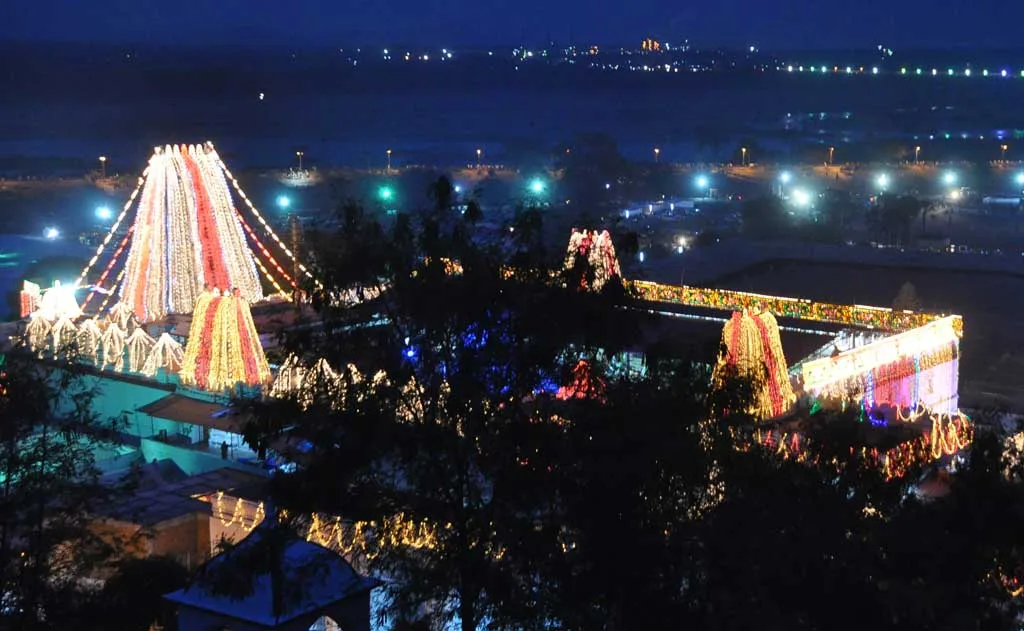
Vaikuntha Ekadashi in Ancient Indian Inscriptions & Temple Records
Vaikuntha Ekadashi in Ancient Indian Inscriptions & Temple Records Historical Depth, Devotional Narration & Spiritual Insight Introduction: The Mystic Dawn of…
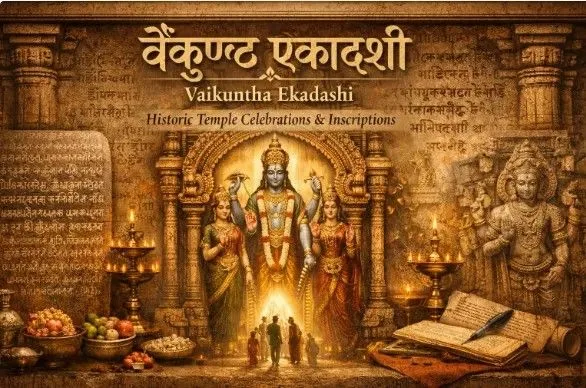
Update (October 2026): Vaikuntha Ekadashi 2026 falls on Sunday, 20 December (Saturday, 19 December for Smarta households in the USA and Canada). This article describes an earlier observance — for current dates and guidance, see our Vaikuntha Ekadashi 2026 guide.
Vaikuntha Ekadashi in Ancient Indian Inscriptions & Temple Records
Historical Depth, Devotional Narration & Spiritual Insight
Introduction: The Mystic Dawn of Vaikuntha Ekadashi
Every year, as the moon wanes into the bright Ekadashi of Dhanurmasa, a divine hour unfolds across Bharat — Vaikuntha Ekadashi. On this sacred day, the threshold between the mortal and the eternal — the Vaikuntha Dwar — is believed to open, inviting devotees into divine grace. According to revered scriptures like the Padma Purana, this Ekadashi began when Lord Vishnu’s yogic energy, Ekadashi Devi, destroyed the demon Mura and received Lord Vishnu’s blessing, setting in motion a tradition that lasts ages. Wikipedia
But what happens when we look beyond Puranic legends and delve into ancient inscriptions and temple records? What do the granite walls of Bharat’s sacred spaces — from the Dravidian sanctums of Tamil Nadu to the Nagara spires of Odisha — whisper about this eternal celebration?
In this article, we journey through history, exploring epigraphical echoes, temple records, state-wise temple guides, and devotional lore that together map the timeless pilgrimage of Vaikuntha Ekadashi.
1. Pristine Temples & Ancient Inscriptions: Stones That Speak of Ekadashi
1.1 Temple Inscriptions: Living History in Stone
Ancient Indian temple inscriptions are far more than age-old carvings — they are living archives of religious thought, ritual practices, and devotional fervour. Across centuries, kings, devotees, and temple builders commissioned inscriptions that recorded rituals, festivals, and Ekadashi observances — linking community life with spiritual discipline. Scribd
At many Vaishnava temples — particularly those dedicated to Lord Vishnu or His avatars — festival entries and ritual schedules were meticulously chiseled onto stone. Some inscriptions describe the annual celebration of Vaikuntha Ekadashi, grants given for Ekadashi rituals (Ekadashi daana), and even references to special pujas offered on this day. Facebook
While inscriptions explicitly mentioning “Vaikuntha Ekadashi” are rare (largely because ancient epigraphy usually lists ceremonies without naming specific tithis), several temple inscriptions *contextually list rites in the Dhanurmasa Ekadashi period that align with the festival we know today.
These inscriptions include:
- Debts and land grants given to priests specifically for Ekadashi rites
- Donations for the lighting of Deepa and night prayers
- Records from the Chola and Pallava eras elaborating on temple festivals tied to Vishnu’s worship
Such documentary rituals offer strong historical evidence that Ekadashi observances were not only a spiritual practice but a community and institutional affair in ancient Bharat.
Explore related: Temple Architecture Inspired by Vishnu, Shiva, and Devi
1.2 Epigraphical Echoes: Vaishnava Presence in Ancient Records
Although many ancient inscriptions focus on construction, grants, and royal patronage, some inscriptions indirectly assert the ritual prominence of Vishnu festivals:
- Inscriptions at Sri Rama temple complexes reference Ekadashi fasts and festivals. Facebook
- South Indian temple wall writings celebrate annual Vishnu observances that scholars correlate to Vaikuntha Ekadashi rituals (though the celestial tithi may not be named explicitly). Facebook
- Later medieval inscriptions include festival allocations for night vigils (jagaran) that align with Vaikuntha Ekadashi traditions.
These suggest that as early as the palaeolithic temple tradition matured into medieval temple culture, devotees recognized and ritualized the Ekadashi tithi connected with Vaikuntha, the Lord’s eternal abode.
2. Scriptural & Legendary Foundations of Vaikuntha Ekadashi
Beyond inscriptions, the mythic tapestry of Vaikuntha Ekadashi is rich and profound.
2.1 The Legend of Ekadashi Devi
According to the Padma Purana, Lord Vishnu battled a demon named Mura. When mortal combat seemed endless, Vishnu’s divine shakti manifested from Him and slew Mura. The Lord blessed this shakti as Ekadashi Devi, decreeing that those who observed this Ekadashi with devotion would be freed from the cycle of birth and death and reach His abode Vaikuntha. Wikipedia
Thus, Vaikuntha Ekadashi became not just a festival but a spiritual aspiration — the doorway to eternal bliss.
2.2 What Is Vaikuntha Dwara Darshan?
Temples across Bharat commemorate Vaikuntha Ekadashi by ceremonially opening Vaikuntha Dwar, symbolic gateways representing the entrance to Vaikuntha itself. Walking through this gateway with devotion is believed to secure the blessings of Lord Vishnu and moksha — liberation from samsara.
This tradition is especially prominent in Tirumala Tirupati, where the Vaikuntha Dwaram is ceremoniously opened once a year for devotees seeking darshan and divine grace. Times Now Navbharat
3. Devotional Narration: The Sacred Practice of Vaikuntha Ekadashi
3.1 The Spiritual Pulse of the Festival
On Vaikuntha Ekadashi:
- Devotees wake before sunrise, cleanse body and spirit, and undertake fasting or phalahar upavasa
- Tulsi leaves, Vishnu sahasranama, and Om Namo Bhagavate Vasudevaya help sanctify the day
- Special pujas, bells, and deepa aradhana mark devotional intensity
- Temples open the Vaikuntha Gates for collective darshan
The day is a cosmic milestone — believed to absolve sins, uplift the soul, and bestow the ultimate gift of liberation. Wikipedia
3.2 Vaikuntha Ekadashi in Devotional Life
For a devotee, this day is both an inner pilgrimage and an outer celebration. The heart chants mantras, the tongue sings hymns, and the feet seek temple thresholds — especially the Vaikuntha Dwar.
Such active worship reflects not only ritual piety but also a living historical continuity — a link between ancient temple inscriptions and modern devotion.
4. India State-Wise Guide: Vaikuntha Ekadashi Temples & Pilgrimage Centres
Here’s a state-wise guide to temples where Vaikuntha Ekadashi is celebrated with deep devotion, grandeur, and historical significance. Each entry includes devotional highlights and pilgrimage notes for Hindutone readers.
Andhra Pradesh & Telangana
1. Tirumala Tirupati Venkateswara Temple – Andhra Pradesh
- One of the most revered Vaishnava shrines in Bharat
- The annual Vaikuntha Dwaram Darshan draws millions
- Believed to grant spiritual elevation and divine grace
2. Sri Ranganayaka Swamy Temple, Bhadrachalam – Telangana
- Celebrated for Vaikuntha Ekadashi pujas and jagaran
- Devotees throng from across the Deccan
- Temple tradition emphasizes ancient Vishnu worship
3. Sri Venkateswara Swamy Temple, Hyderabad – Telangana
- A major centre of devotion with Ekadashi special rituals
- Engaging vishnu sahasranama and special aartis
Internal link: See also Telangana Temple Guide: Spiritual Sites & Ritual Highlights
Tamil Nadu
1. Sri Ranganathaswamy Temple, Srirangam – Tamil Nadu
- Known for its 21-day Vaikuntha Ekadasi Utsavam
- Celebrated with paramapada vasal procession and sacred chants
- Temple epigraphy and records reflect centuries of Vaishnava festivals Amrit Vichar
2. Aadhi Varaha Perumal Temple, Kanchipuram – Tamil Nadu
- A Divya Desam where Vaikuntha Ekadashi is reverently observed
- Historical inscriptions and temple records emphasize Vishnu rites Wikipedia
Internal link: Explore Historical Telugu Temples and Their Architecture
Karnataka
1. Udupi Sri Krishna Matha – Karnataka
- Famous for bhakti, Ekadashi vrats, and Krishna kirtans
- One of the key Vaishnavite centres in South India
2. Guruvayur Vishnu Temple – Kerala
- Although technically in Kerala, celebrated by Kannada bhakts too
- A centre for mass chanting, prasadam, and night vigils
Kerala
1. Padmanabhaswamy Temple, Thiruvananthapuram – Kerala
- Ancient Vishnu temple under historic records
- Celebrates Vaikuntha Ekadashi with Abhishekam and Vaikuntha Dwar* rituals
West & North India
Across Maharashtra, Gujarat, Rajasthan, Uttar Pradesh, Madhya Pradesh, and North India, Vaikuntha Ekadashi sees devotional fasts, community prayers, and temple festivals. Temples dedicated to Vishnu and Krishna — including popular ISKCON centres — organize spiritual gatherings, kirtans, and group chanting. YouTube
Internal link: Read more in Telugu Temple Festivals & Spiritual Celebrations Guide
5. Common Rituals & Fasting Practices
5.1 Fasting for Moksha
Devotees observe upavasa — either complete fasting or phalahar. The day is spent in prayer, devotion, and listening to Vishnu Sahasranama or Bhagavad Gita passages. Wikipedia
5.2 Vaikuntha Dwar Openings
Temples with a Vaikuntha Dwar open this celestial gate for devotees — symbolizing spiritual liberation.
6. Historical Continuity & Community Memory
While inscriptions mentioning Vaikuntha Ekadashi by name are rare in ancient epigraphy, ritual traces and festival allocations in ancient temple records demonstrate that the spirit of Vaikuntha Ekadashi was embedded in worship practices long ago. Temples dedicated to Vishnu, Krishna, and their manifestations consistently celebrated Ekadashi rites and Dhanurmasa festivals — forming an uninterrupted devotional thread from ancient times through the medieval period and into the modern age. Facebook
Conclusion: A Living Tradition Etched in Stone and Spirit
Vaikuntha Ekadashi — with its mythic origins, devotional fervour, and temple grandeur — continues to be one of the most spiritually transformative days in the Hindu calendar. From the ancient inscriptions etched on temple walls to the thronging devotees at Vaikuntha Dwar, this festival bridges time, geography, and devotion.
As you observe Vaikuntha Ekadashi this year — be it through fasting, prayers, or temple darshan — remember that you are participating in a tradition that spans millennia, engraved in stone, preserved in lore, and lived in the hearts of devotees across Bharat.
Har Vaikunth Hari!
For More Devotional Journey, Follow
- Temples
/temples/ - Tirumala Updates
/tirumala/ - Sabarimala Yatra
/category/sabarimala-yatra/ - Pooja, Slokas & Mantras
/pooja-slokas-and-mantras/ - Hindu Gods
/hindu-gods/
Frequently Asked Questions
Where is Vaikuntha Ekadashi in Ancient Indian Inscriptions located?
Vaikuntha Ekadashi in Ancient Indian Inscriptions & Temple Records Historical Depth, Devotional Narration & Spiritual Insight Introduction: The Mystic Dawn of Vaikuntha Ekadashi Every year, as the moon wanes into the bright Ekadashi of Dhanurmasa , a divine hour unfolds across Bharat — Vaikuntha Ekadashi . On this sacred day, the threshold between the mortal
Who is the presiding deity of Vaikuntha Ekadashi in Ancient Indian Inscriptions?
The temple's presiding deity and its significance are described in the guide above.
What are the timings and how do I reach Vaikuntha Ekadashi in Ancient Indian Inscriptions?
Temples typically open early morning and evening; confirm current darshan timings before visiting. The nearest airport, railway station and road routes are covered in the guide above.
What is the best time to visit Vaikuntha Ekadashi in Ancient Indian Inscriptions?
Major festival days and the cooler months are popular, though weekday mornings offer a calmer darshan. Plan around the temple's key festivals for the most vibrant experience.
Share this with family and friends
Send it on WhatsApp, post it, or copy the link.
More from Temples
- Famous Temples in Uttarakhand: A Source-Checked Guide to Kedarnath, Badrinath, Tungnath, Haridwar, Almora and More
- Famous Temples in Odisha: A Source-Checked Guide to Puri, Bhubaneswar, Biraja, Tara Tarini and Western Odisha
- Famous Temples in West Bengal: A Source-Checked Guide to Kalighat, Dakshineswar, Tarapith, Bansberia, Bishnupur and More
- Famous Temples in Uttar Pradesh: A Source-Checked Guide to Kashi, Ayodhya, Mathura-Vrindavan, Gorakhpur and Kanpur
- Famous Temples in Gujarat: A Source-Checked Guide to Somnath, Dwarka, Dakor, Ambaji, Modhera and More