Stories of Lord Shiva for NRI Kids: Teaching Faith Through Tales
Growing up far from India doesn't mean growing apart from our roots.
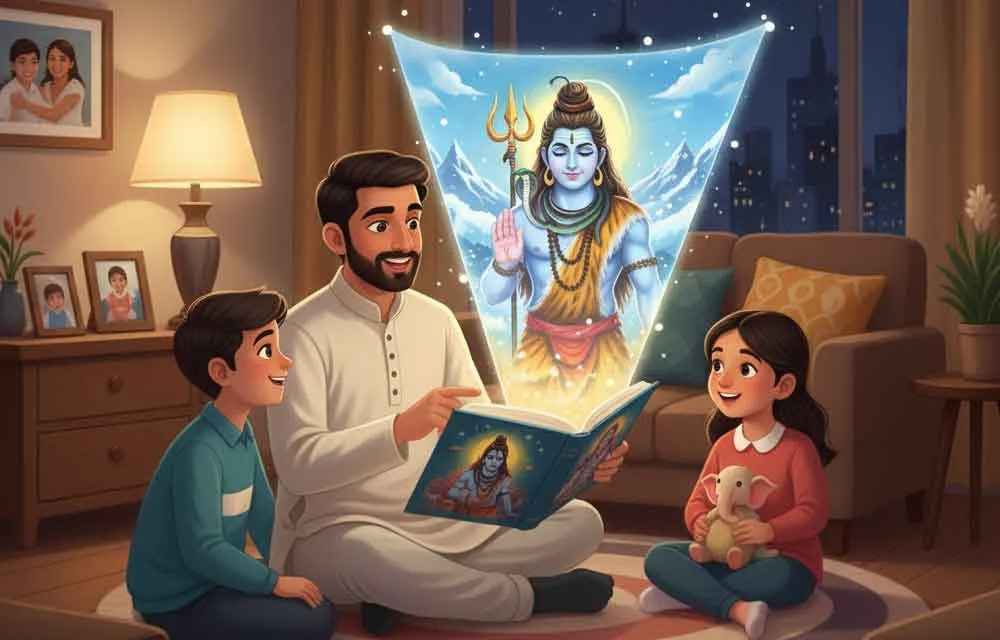
Growing up far from India doesn't mean growing apart from our roots.
Growing up far from India doesn't mean growing apart from our roots. For NRI parents, sharing stories of Lord Shiva with children becomes a beautiful bridge between two worlds—helping them understand their heritage while navigating life abroad.
Why Shiva Stories Resonate with Modern Kids
Lord Shiva's tales aren't just ancient mythology; they're timeless lessons wrapped in adventure, magic, and wonder. Children naturally gravitate toward stories of cosmic dancers, mighty mountains, and transformative powers. Shiva's approachability as the "simple god" who wears tiger skin and meditates in caves makes him relatable even to kids growing up in Western suburbs.
Simple Stories to Start With
The River from the Sky When Ganga descended from heaven to earth, her force was so powerful it could have destroyed the world. Shiva caught the mighty river in his matted locks, releasing it gently as streams. Lesson: True strength lies in gentleness and protecting others.
The Blue-Throated Protector During the churning of the cosmic ocean, poison emerged that threatened all creation. Shiva drank it to save everyone, holding it in his throat, which turned blue. Lesson: Selfless sacrifice and taking responsibility for others' wellbeing.
The Cosmic Dance Shiva performs the Tandava, the dance of creation and destruction, reminding us that endings are also beginnings. Lesson: Change is natural, and every ending brings new possibilities.
The Half-Moon Crown Shiva wears a crescent moon on his head and the Ganga in his hair, showing he embraces all elements of nature. Lesson: Harmony with nature and balance in life.
Making Stories Stick for NRI Kids
Use Visual Aids: Show them pictures of Nataraja statues in museums, or point out when you see Shiva's imagery in everyday life—from yoga studios to restaurant art.
Connect to Their World: "Remember how superheroes have origin stories? Our gods have amazing tales too!" Compare Shiva's third eye to a superpower that sees beyond the obvious.
Storytime Rituals: Monday evenings (Shiva's day) can become story nights. Light a small diya, show them a picture, and share one tale in 5-10 minutes.
Ask Questions: "What would you have done if you were Shiva?" "Why do you think he helped?" Let them interpret and connect personally.
Festival Connections: During Maha Shivaratri, Shravan month, or even when you pass a Hindu temple, reference the stories. Real-world connections help memory and meaning.
Age-Appropriate Approaches
Ages 3-6: Focus on the visual—Shiva's blue throat, his snake, the moon, the river in his hair. Keep stories under 5 minutes with lots of "and then... and then!"
Ages 7-10: Introduce moral lessons explicitly. Discuss choices characters made and why. They can handle slightly longer narratives.
Ages 11+: Explore deeper philosophical concepts like destruction as transformation, meditation, and the symbolism behind Shiva's attributes. Encourage discussion about how these apply to their lives.
Common Challenges for NRI Parents
"My kids think it's all make-believe": Frame it as "these are stories our ancestors told to teach important lessons." Compare to how different cultures use stories—Greek myths, Native American tales, etc.
"They're more interested in screen time": There are excellent animated versions of Shiva stories and kid-friendly books. Use these as starting points, then discuss together.
"I don't remember all the details myself": That's okay! The essence matters more than perfection. Share what you know, and explore together. Your learning journey becomes their learning journey.
Resources for NRI Families
- Books: Look for illustrated versions like "Stories of Shiva" by various publishers in English
- Apps: Hindu mythology apps with kid-friendly interfaces
- YouTube: Animated story channels (always preview first)
- Local temples: Many have children's programs during festivals
- Community: Connect with other NRI Hindu families for shared storytelling sessions
The Bigger Picture
When you share Shiva's stories, you're not just teaching religion—you're passing down values of compassion, courage, balance, and understanding the cycles of life. You're giving your children a cultural anchor, a sense of identity that enriches rather than conflicts with their life abroad.
Start small. One story, one evening. Watch as these ancient tales spark imagination, questions, and connections to a heritage that spans oceans and generations.
What's your favorite Shiva story from childhood? How do you share your faith with your children? Share in the comments!
Frequently Asked Questions
Which Lord Shiva stories are best to start with for kids?
Start with simple tales: Shiva catching the river Ganga in his matted locks, drinking the poison to save creation (giving him a blue throat), the Tandava dance and the half-moon crown. Each carries an easy lesson such as gentleness, sacrifice or balance.
How can NRI parents make Shiva stories interesting for children abroad?
Use visuals like Nataraja statues, compare Shiva's third eye to a superpower, and ask questions such as what the child would have done in Shiva's place. A short story night with a diya works well.
What is a good routine for telling Shiva stories at home?
Make Monday evenings, Shiva's day, a story night. Light a small diya, show a picture and share one tale in 5-10 minutes.
How should Shiva stories be adjusted for different ages?
For ages 3-6, focus on visual details and keep stories under 5 minutes. For ages 7-10, discuss moral lessons and choices, and for ages 11+, explore ideas like destruction as transformation and the symbolism of Shiva's attributes.
What if my child thinks the stories are make-believe?
Frame them as stories ancestors told to teach important lessons, and compare them to Greek myths or Native American tales. You can also use animated versions and kid-friendly books, previewing videos first.
Which festivals help connect kids with Shiva stories?
Maha Shivaratri and Shravan month are good moments to retell the stories, and so is passing a Hindu temple. Many local temples also run children's programs during festivals.
You might also like
Lord Shiva: The Three Faces NRI Devotees Should Know in 2026

The Twelve Jyotirlingas of Lord Shiva: A Complete Pilgrim's Guide Across India
Shiva Vrats of June 2026: Kalashtami (June 8) & Masik Shivaratri (June 13)