Amavasya Pitru Puja: Honoring Our Ancestors for Peace and Prosperity
Introduction to Pitru Puja and Amavasya In the vast tapestry of Hindu spiritual practices, few rituals hold as much emotional and karmic significance as Pitru…
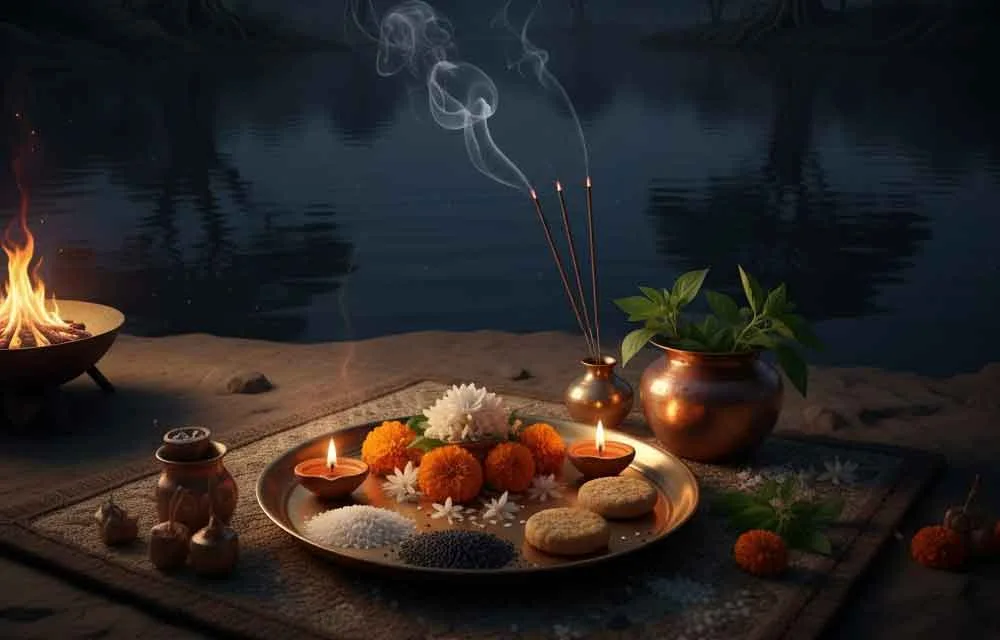
Introduction to Pitru Puja and Amavasya In the vast tapestry of Hindu spiritual practices, few rituals hold as much emotional and karmic significance as Pitru…
Introduction to Pitru Puja and Amavasya
In the vast tapestry of Hindu spiritual practices, few rituals hold as much emotional and karmic significance as Pitru Puja—the worship and honoring of our ancestors. The word "Pitru" means forefathers or ancestors, and Amavasya (the new moon day) is considered the most auspicious time to connect with departed souls and seek their blessings.
According to Hindu philosophy, death is not the end but a transition. Our ancestors, though departed from the physical realm, continue to exist in the Pitru Loka (realm of ancestors) and their blessings or dissatisfaction can directly influence the lives of their descendants. Performing Pitru Puja, especially on Amavasya, is believed to bring peace to departed souls while ensuring prosperity, health, and harmony for the living family members.
Understanding Amavasya: The Sacred New Moon Day
What is Amavasya?
Amavasya occurs when the moon is completely dark, positioned between the Earth and the Sun. In the Hindu lunar calendar, this happens once every month, typically lasting for approximately 24 hours. The absence of moonlight creates a unique spiritual atmosphere considered ideal for ancestral worship.
Why Amavasya is Sacred for Pitru Worship
According to ancient scriptures like the Garuda Purana, Brahma Purana, and Matsya Purana, Amavasya holds special significance for several reasons:
1. Spiritual Gateway: The darkness of Amavasya is believed to thin the veil between the physical world and the spiritual realms, making it easier for ancestors to receive offerings and blessings to reach them.
2. Pitru Loka Connection: On Amavasya, ancestors descend from Pitru Loka to accept offerings from their descendants. Failing to perform rituals on this day may leave them disappointed and hungry.
3. Karmic Balance: Hindu scriptures state that we carry three types of debts (Rinas):
- Deva Rina: Debt to the gods
- Rishi Rina: Debt to the sages
- Pitru Rina: Debt to our ancestors
Pitru Tarpanam on Amavasya helps repay our debt to ancestors who gave us life, nurtured us, and made our existence possible.
4. Removing Pitru Dosha: Astrologically, Pitru Dosha occurs when ancestors are not at peace or rituals have been neglected. This can manifest as obstacles in marriage, childbirth, career, and prosperity. Amavasya rituals help alleviate these doshas.
Types of Amavasya Throughout the Year
While all Amavasyas are significant, some hold special importance:
- Mahalaya Amavasya (Pitru Paksha Amavasya): The most important day, falling in September/October, marks the end of the 15-day Pitru Paksha period
- Kartik Amavasya (Diwali Amavasya): Associated with prosperity and Lakshmi worship
- Ashada Amavasya: Considered highly auspicious in South India
- Magha Amavasya: Important for performing rituals at holy rivers
- Regular Monthly Amavasya: Each monthly new moon is suitable for ancestral worship
The Legend Behind Pitru Puja
The Story of Karna and His Ancestors
One of the most touching stories illustrating the importance of Pitru Tarpanam comes from the Mahabharata:
When the great warrior Karna died and reached heaven, he was offered gold and jewels as food. Confused and hungry, he asked Lord Indra why he wasn't given real food. Indra replied, "You donated abundantly during your lifetime but never offered food to your ancestors. Therefore, they can only give you gold, not food."
Karna explained that he was unaware of his lineage and couldn't perform the rituals. Moved by his plea, Yama (the God of Death) allowed Karna to return to Earth for 16 days to perform Shraddha and feed Brahmins in the name of his ancestors. This 16-day period became known as Pitru Paksha (fortnight of ancestors), with the final day being Mahalaya Amavasya.
The Story from Garuda Purana
The Garuda Purana describes how Lord Yama informed Yudhishthira about the importance of Pitru Tarpanam. According to this sacred text, ancestors who don't receive proper offerings suffer in the afterlife. However, those whose descendants perform regular Shraddha and Tarpanam rituals are satisfied, blessed, and able to progress spiritually in their journey.
King Nimi's Vision
Ancient texts describe how King Nimi once had a divine vision of Pitru Loka. He saw countless souls suffering from hunger and thirst because their descendants had forgotten them. Deeply moved, he returned to Earth and established the tradition of Pitru Tarpanam, especially on Amavasya, to ensure no ancestor remains neglected.
Understanding Pitru Tarpanam
What is Tarpanam?
Tarpanam (Sanskrit: तर्पणम्) literally means "to satisfy" or "to please." It is a ritual of offering water mixed with black sesame seeds, rice, and barley to departed ancestors while chanting specific mantras. The water offerings are believed to provide nourishment and satisfaction to the souls of the departed.
Who Should Perform Pitru Tarpanam?
- Sons of the family traditionally have the primary responsibility
- In the absence of sons, daughters can and should perform the rituals
- Grandsons perform for their grandparents
- Married women can perform for their natal family ancestors with their husband's consent
- Widows should definitely perform for their departed husbands
For Whom is Tarpanam Performed?
Tarpanam is offered to:
- Father (Pitru)
- Grandfather (Pitamaha)
- Great-grandfather (Prapitamaha)
- Mother (Matru)
- Grandmother (Pitamahi)
- Great-grandmother (Prapitamahi)
- Mother's father (Maternal grandfather - Maataamaha)
- Mother's mother (Maternal grandmother - Maataamahi)
- Paternal aunt (Pitru swasa)
- Maternal uncle (Maatula)
- Father-in-law and Mother-in-law
- Departed spouse
- Departed siblings
- Departed teachers (Guru)
- All ancestors whose names may be forgotten
Complete Amavasya Pitru Puja Procedure
Preparation (One Day Before)
1. Mental and Physical Purification
- Observe simple food (avoid onion, garlic, non-vegetarian food)
- Maintain celibacy
- Avoid negative thoughts and anger
- Keep a peaceful mind focused on ancestors
2. Gather Required Items
- Black sesame seeds (til)
- Raw rice (akshata)
- Barley (yava)
- White cloth (for sitting)
- Sacred thread (janeu/yajnopavita)
- Kusha grass (darbha)
- Silver, copper, or brass vessel
- Fresh water (preferably from holy river or well water)
- Sandalwood paste
- Incense sticks
- Diya (lamp)
- Flowers (white or yellow preferred)
- Food items for offering (cooked rice, dal, vegetables, sweet)
- Banana leaf or plate
- Dakshina (money for Brahmin/donation)
Best Time for Pitru Tarpanam
Most Auspicious Time:
- Kutup Kaal: The midday period (11:30 AM - 12:30 PM) is considered most effective
- Aparahna Kaal: Afternoon time (12:00 PM - 3:00 PM)
- Morning: Can be performed in the morning after bath and before eating
Important: Never perform Pitru rituals during Brahma Muhurta (pre-dawn) or late evening, as these times are reserved for deity worship.
Step-by-Step Pitru Tarpanam Procedure
Step 1: Purification and Setup (Snana and Achamana)
Morning Bath
- Take a complete bath before the ritual
- Wear fresh, clean clothes (white or traditional attire preferred)
- Men should wear sacred thread over the right shoulder (Apasavya mode for Pitru rituals)
Setting Up the Space
- Choose a clean, quiet place (preferably near a water body, terrace, or garden)
- Face South (direction of Yama, the God of Death and ancestors)
- Spread a white cloth or sit on kusha grass
- Keep all materials ready on your right side
Achamana (Sipping Water for Purification)
Sip water three times while chanting:
ॐ केशवाय स्वाहा | ॐ नारायणाय स्वाहा | ॐ माधवाय स्वाहा
Om Keshavaya Swaha | Om Narayanaya Swaha | Om Madhavaya Swaha
Step 2: Sankalpa (Taking Sacred Vow)
Hold water, sesame seeds, and rice in your right palm and declare your intention:
ॐ विष्णुः ॐ विष्णुः ॐ विष्णुः
अद्य [date, tithi, month, year] शुभ दिने अमावस्यां
[your gotram] गोत्रस्य [your name] अहं मम पितॄणां क्षयतृप्त्यर्थं
अमावस्यां पितृ तर्पणं करिष्ये।

Om Vishnuh Om Vishnuh Om Vishnuh
Adya [date, day, month, year] Shubha Dine Amavasyam
[Your gotram] Gotrasya [Your name] Aham Mama Pitroon Kshaya Triptiyartham
Amavasayam Pitru Tarpanam Karishye.

Translation:
Today on this auspicious Amavasya day, I [your name] of [your gotram] lineage,
perform this Pitru Tarpanam for the satisfaction and peace of my ancestors.
Release the water toward the South.
Step 3: Wearing Kusha Grass Ring
Make a ring from kusha grass and wear it on the ring finger of your right hand. This is believed to create a protective barrier and facilitate the transfer of offerings to ancestors.
Step 4: Main Tarpanam (Water Offering)
Face South, wearing the sacred thread over the right shoulder (Apasavya mode).
Take water mixed with black sesame seeds and rice in your right palm (using the space between thumb and index finger as a channel) and offer while chanting:
For Father's Side Ancestors:
ॐ पिता [father's name] गोत्र: तृप्यताम् स्वधा नमः।
Om Pita [father's name] Gotrah Triptayatam Swadha Namah
(May my father [name] be satisfied - offer water)

ॐ पितामहः [grandfather's name] गोत्र: तृप्यताम् स्वधा नमः।
Om Pitamahah [grandfather's name] Gotrah Triptayatam Swadha Namah
(May my grandfather be satisfied - offer water)

ॐ प्रपितामहः [great-grandfather's name] गोत्र: तृप्यताम् स्वधा नमः।
Om Prapitamahah [great-grandfather's name] Gotrah Triptayatam Swadha Namah
(May my great-grandfather be satisfied - offer water)
For Mother's Side Ancestors:
ॐ माता [mother's name] गोत्र: तृप्यताम् स्वधा नमः।
Om Mata [mother's name] Gotrah Triptayatam Swadha Namah

ॐ पितामही [grandmother's name] गोत्र: तृप्यताम् स्वधा नमः।
Om Pitamahi [grandmother's name] Gotrah Triptayatam Swadha Namah

ॐ प्रपितामही [great-grandmother's name] गोत्र: तृप्यताम् स्वधा नमः।
Om Prapitamahi [great-grandmother's name] Gotrah Triptayatam Swadha Namah
For Maternal Grandfather's Line:
ॐ मातामहः [maternal grandfather's name] गोत्र: तृप्यताम् स्वधा नमः।
Om Matamahah [maternal grandfather's name] Gotrah Triptayatam Swadha Namah

ॐ मातामहः पितामहः तृप्यताम् स्वधा नमः।
Om Matamahah Pitamahah Triptayatam Swadha Namah

ॐ मातामहः प्रपितामहः तृप्यताम् स्वधा नमः।
Om Matamahah Prapitamahah Triptayatam Swadha Namah
For Maternal Grandmother's Line:
ॐ मातामही [maternal grandmother's name] गोत्र: तृप्यताम् स्वधा नमः।
Om Matamahi [maternal grandmother's name] Gotrah Triptayatam Swadha Namah

ॐ मातामही पितामही तृप्यताम् स्वधा नमः।
Om Matamahi Pitamahi Triptayatam Swadha Namah

ॐ मातामही प्रपितामही तृप्यताम् स्वधा नमः।
Om Matamahi Prapitamahi Triptayatam Swadha Namah
For Departed Wife:
ॐ पत्नी [wife's name] गोत्र: तृप्यताम् स्वधा नमः।
Om Patni [wife's name] Gotrah Triptayatam Swadha Namah
For Other Relatives:
ॐ भ्रातरः तृप्यन्ताम् स्वधा नमः। (Brothers)
ॐ भगिन्यः तृप्यन्ताम् स्वधा नमः। (Sisters)
ॐ गुरवः तृप्यन्ताम् स्वधा नमः। (Teachers)
ॐ मित्राणि तृप्यन्ताम् स्वधा नमः। (Friends)
Universal Offering for All Known and Unknown Ancestors:
ॐ ये केचित् नः कुले जाताः पितरः पितामहाः।
तेषां सर्वेषां तृप्यन्ताम् स्वधा नमः॥

Om Ye Kechit Nah Kule Jatah Pitarah Pitamahah
Tesham Sarvesham Triptayantam Swadha Namah

May all ancestors born in our lineage, whether known or unknown,
be satisfied with these offerings. Salutations with Swadha.
Note: Offer water for each mantra, three times per ancestor.
Step 5: Pinda Pradana (Rice Ball Offering)
This is an optional but highly meritorious part of the ritual, especially on Mahalaya Amavasya.
Preparing Pinda:
- Mix cooked rice with milk, ghee, sesame seeds, and honey
- Form three round balls (pindas)
- Place them on a banana leaf facing South
Offering Mantra:
ॐ पिता पिण्डं गृहाण स्वधा नमः।
ॐ पितामहः पिण्डं गृहाण स्वधा नमः।
ॐ प्रपितामहः पिण्डं गृहाण स्वधा नमः।

Om Pita Pindam Grihana Swadha Namah
Om Pitamahah Pindam Grihana Swadha Namah
Om Prapitamahah Pindam Grihana Swadha Namah

Father, accept this offering. Grandfather, accept this offering.
Great-grandfather, accept this offering.
Leave the pindas outside for crows and other birds (considered messengers of Yama).
Step 6: Brahmin Bhojan (Feeding Brahmins/Hungry)
One of the most important aspects of Pitru Puja is feeding Brahmins or the hungry in the name of ancestors.
Traditional Practice:
- Invite a learned Brahmin priest
- Serve a complete vegetarian meal with all six tastes
- Offer new clothes or dakshina (money)
Modern Adaptation:
- Feed poor and hungry people
- Donate food to orphanages or old age homes
- Arrange community meals (annadana)
Mantra While Serving:
ॐ इदं विष्णवे इदं न मम।
ॐ पितॄभ्यो नमः अन्नं समर्पयामि।

Om Idam Vishnave Idam Na Mama
Om Pitribhyo Namah Annam Samarpayami

This belongs to Lord Vishnu, not to me.
I offer this food in the name of my ancestors.
Step 7: Homam/Havan (Fire Ritual) - Optional
For those who can perform a fire ritual:
ॐ स्वधायै नमः इदं स्वधायै इदं न मम।
Om Swadhayai Namah Idam Swadhayai Idam Na Mama
Offer ghee, sesame seeds, and rice into the sacred fire while chanting the above mantra.
Step 8: Prayer for Ancestral Peace
Conclude with this heartfelt prayer:
ॐ पितृदेवताभ्यो नमः।
आयान्तु पितरः सोम्याः गम्भीरै पितृपन्थिभिः।
आशांसानाः श्रद्धयेह दत्तां दातृभिरन्नवात्॥

Om Pitrudevatabhyo Namah
Ayantu Pitarah Somyah Gambhirai Pitrupanthibhih
Ashangsanah Shraddhayeha Dattam Datribhir Annat

O gracious ancestors, come by the paths meant for the manes,
and partake of the food offered with faith by your descendants.

ऊर्जं वहन्तीरमृतं घृतं पयः कीलालं परिस्रुतम्।
स्वधा स्था तर्पयत मे पितॄन्॥

Urjam Vahantir Amrutam Ghrtam Payah Kilalam Parisrutam
Swadha Stha Tarpayata Me Pitrun

Carrying energy, nectar, ghee, milk, and honey,
O Swadha, please satisfy my ancestors.
Step 9: Visarjana (Conclusion)
गच्छन्तु पितरः सोम्याः पितृपन्था अनु पूर्वान्।
संयोजयान्त्विष्टपूर्ते अस्मिन्कुलेतन्वः सन्तु नः॥

Gacchantu Pitarah Somyah Pitrupantha Anu Purvan
Samyojayantvishtapurte Asmin Kule Tanvah Santu Nah

May the gracious ancestors return by their paths.
May they unite us with virtue and prosperity.
May they grant us healthy progeny in our lineage.
Bow with folded hands toward the South.
Step 10: Prasada and Distribution
Distribute the food offered (prasada) to family members. Never eat anything before offering to ancestors on Amavasya.
Simplified Version for Busy Individuals
If you cannot perform the complete ritual:
Minimum Requirements:
- Take a bath and wear clean clothes
- Face South
- Light a lamp and incense
- Offer water mixed with sesame seeds three times while saying:
ॐ पितृभ्यो नमः। (Om Pitribhyo Namah) - Keep some food aside before eating as offering
- Donate food or money to the poor
Even this simple ritual, done with sincere devotion, is highly beneficial.
Benefits of Performing Amavasya Pitru Puja
Spiritual Benefits
1. Peace to Departed Souls
- Helps ancestors progress in their spiritual journey
- Relieves them from suffering in intermediate realms
- Enables them to move toward higher consciousness
2. Liberation from Pitru Dosha
- Removes ancestral curses or dissatisfaction
- Clears karmic debts to ancestors
- Eliminates obstacles caused by neglected ancestors
3. Divine Blessings
- Satisfied ancestors become guardian angels
- They bless their descendants from higher realms
- Protection from negative energies and evil forces
Material Benefits
1. Family Prosperity
- Improvement in financial conditions
- Success in business and career
- Removal of chronic monetary problems
2. Health and Longevity
- Relief from unexplained illnesses
- Protection from accidents and untimely death
- Overall wellbeing of family members
3. Harmony in Relationships
- Peaceful family environment
- Resolution of long-standing conflicts
- Better understanding among family members
4. Success in Important Life Events
- Obstacles in marriage get removed
- Blessings for childbirth (especially for childless couples)
- Success in education and career
5. Property and Legal Issues
- Resolution of property disputes
- Success in legal matters related to inheritance
- Protection of ancestral property
Astrological Benefits
1. Remediation of Pitru Dosha in Horoscope When the 9th house (house of ancestors) in a birth chart is afflicted, or when Sun is weak or debilitated, performing Pitru Tarpanam provides relief.
2. Balancing Planetary Afflictions
- Reduces malefic effects of Rahu and Ketu
- Strengthens Sun's position
- Improves overall horoscope strength
3. Generational Curse Removal Sometimes families experience recurring problems across generations—childlessness, premature deaths, or chronic illnesses. Regular Pitru Puja breaks these patterns.
Sacred Places in India for Pitru Rituals
1. Gaya, Bihar - The Most Sacred Pitru Tirtha
Significance: Gaya is considered the holiest place for performing Shraddha and Pinda Daan. According to Hindu scriptures, performing rituals here ensures direct liberation (moksha) for ancestors.
Key Spots:
- Vishnupad Temple: Built at the spot where Lord Vishnu placed his foot
- Akshayavat (Immortal Banyan Tree): Under this tree, offerings never go in vain
- Phalgu River: Sacred river for performing Tarpanam
- Pretshila: Rock where pindas are offered
Best Time: During Pitru Paksha (September-October), lakhs of pilgrims visit Gaya.
How to Reach:
- Nearest Airport: Gaya International Airport
- Nearest Railway Station: Gaya Junction
- From Patna: 100 km (2 hours by road)
2. Prayagraj (Allahabad), Uttar Pradesh
Significance: The Triveni Sangam (confluence of Ganga, Yamuna, and mythical Saraswati) is extremely sacred for Pitru Tarpanam.
Key Locations:
- Triveni Sangam: Most auspicious spot
- Akshaya Vat: Inside Allahabad Fort
- Dashashwamedh Ghat: For Tarpanam rituals
Best Time: Magha Amavasya, Kartik Amavasya, and during Kumbh Mela.
How to Reach:
- Nearest Airport: Prayagraj Airport (Bamrauli)
- Nearest Railway Station: Prayagraj Junction
- Well-connected by road to all major cities
3. Varanasi (Kashi), Uttar Pradesh
Significance: Kashi is believed to be Lord Shiva's abode. Dying or performing Shraddha here grants instant liberation.
Key Ghats:
- Manikarnika Ghat: The great cremation ground
- Harishchandra Ghat: Another sacred cremation site
- Dashashwamedh Ghat: For daily Ganga Aarti and Tarpanam
- Panchganga Ghat: Confluence of five rivers
Best Time: All Amavasyas, especially Kartik and Magha Amavasya.
How to Reach:
- Nearest Airport: Lal Bahadur Shastri Airport
- Nearest Railway Station: Varanasi Junction
- Well-connected by train and road
4. Haridwar, Uttarakhand
Significance: One of the seven holiest places (Sapta Puri), where the Ganga enters the plains from the Himalayas.
Key Locations:
- Har Ki Pauri: The main ghat for Tarpanam
- Brahma Kund: At Har Ki Pauri, very sacred
- Kankhal: Area dedicated to ancestral rituals
Best Time: During Kumbh Mela, Ardh Kumbh, and all Amavasyas.
How to Reach:
- Nearest Airport: Jolly Grant Airport, Dehradun (35 km)
- Nearest Railway Station: Haridwar Junction
- Well-connected by road
5. Rameswaram, Tamil Nadu
Significance: Where Lord Rama performed Shraddha for King Dasharatha. One of the four Dhams.
Key Spots:
- Ramanathaswamy Temple: Offers special Shraddha services
- Agni Theertham: Seashore where Tarpanam is performed
- Kothandaramaswamy Temple: Sacred for ancestral rituals
Best Time: Mahalaya Amavasya, Thai Amavasya (January-February).
How to Reach:
- Nearest Airport: Madurai Airport (170 km)
- Nearest Railway Station: Rameswaram Railway Station
- Connected by road via Pamban Bridge
6. Nasik, Maharashtra
Significance: Located on the banks of Godavari (also called Dakshini Ganga), one of the four Kumbh Mela sites.
Key Locations:
- Ramkund: Main site for Shraddha and immersion of ashes
- Triveni Sangam: Confluence point
- Kushavarta Kund: Associated with sage Gautama
Best Time: During Kumbh Mela and Simhastha, Bhadrapada Amavasya.
How to Reach:
- Nearest Airport: Nasik Airport (Ozar)
- Nearest Railway Station: Nasik Road
- Well-connected by road from Mumbai (170 km) and Pune (210 km)
7. Kurukshetra, Haryana
Significance: The land of the Mahabharata war, Brahma Sarovar here is highly sacred for ancestral rituals.
Key Locations:
- Brahma Sarovar: The holy lake
- Jyotisar: Where Lord Krishna delivered the Bhagavad Gita
- Sannihit Sarovar: Believed to be the meeting point of seven sacred rivers
Best Time: Solar eclipse (Surya Grahan) especially, and all Amavasyas.
How to Reach:
- Nearest Airport: Chandigarh International Airport (90 km)
- Nearest Railway Station: Kurukshetra Junction
- Well-connected by road from Delhi (160 km)
8. Badrinath, Uttarakhand
Significance: One of the four Char Dhams, located in the Himalayas. Rituals here are extremely powerful.
Key Locations:
- Brahma Kapal: Flat platform on Alaknanda river bank, exclusively for Shraddha
- Tapt Kund: Hot spring for holy bath before rituals
- Badrinath Temple: Main shrine of Lord Vishnu
Best Time: May to October (temple remains closed in winter), especially Bhadrapada Amavasya.
How to Reach:
- Nearest Airport: Jolly Grant Airport, Dehradun (317 km)
- Nearest Railway Station: Rishikesh (297 km)
- Road journey through beautiful Himalayan routes
9. Trimbakeshwar, Maharashtra
Significance: One of the twelve Jyotirlingas, source of Godavari river. Highly powerful for Narayan Nagbali and Tripindi Shraddha.
Key Rituals:
- Narayan Nagbali: For unnatural deaths, removes serious doshas
- Tripindi Shraddha: For ancestors who died without proper rituals
- Kushavarta Kund: Sacred tank where rituals are performed
Best Time: Throughout the year, especially Shravan month and Amavasyas.
How to Reach:
- Nearest Airport: Nasik Airport (30 km)
- Nearest Railway Station: Nasik Road (28 km)
- Well-connected by road from Nasik
10. Srirangapatna, Karnataka
Significance: Island formed by river Kaveri, sacred for South Indian Pitru rituals.
Key Locations:
- Paschima Vahini: Western-flowing Kaveri segment
- Ranganathaswamy Temple: Ancient Vishnu temple
- Multiple ghats: For Tarpanam on Kaveri banks
Best Time: Mahalaya Amavasya, Thai Amavasya.
How to Reach:
- Nearest Airport: Mysore Airport (15 km) or Bangalore (130 km)
- Nearest Railway Station: Srirangapatna Railway Station
- 15 km from Mysore city
11. Gangotri and Yamunotri, Uttarakhand
Significance: Source of holy rivers Ganga and Yamuna, performing rituals here is extremely meritorious.
Season: May to October only (closed in winter due to heavy snowfall).
12. Pushkar, Rajasthan
Significance: Sacred lake created by Lord Brahma, only Brahma temple in the world located here.
Key Spot: Pushkar Lake with 52 ghats for Tarpanam.
Frequently Asked Questions
Why is Amavasya considered the best day for Pitru Puja?
Amavasya is the dark new moon day, believed to thin the veil between the physical and spiritual realms. Ancestors are said to descend from Pitru Loka to accept offerings from their descendants.
What is Pitru Tarpanam and what is offered?
Tarpanam means "to satisfy". Water mixed with black sesame seeds, rice and barley is offered to departed ancestors while chanting mantras.
Who can perform Pitru Tarpanam?
Sons traditionally have the primary responsibility, and daughters can perform it in the absence of sons. Grandsons perform for grandparents, and widows can perform for their departed husbands.
Which direction should one face during Pitru rituals?
Face south, the direction of Yama, and wear the sacred thread over the right shoulder in Apasavya mode. Keep the materials ready on your right side.
What is the best time for Pitru Tarpanam?
Kutup Kaal, the midday period from 11:30 AM to 12:30 PM, is considered most effective, and Aparahna Kaal in the afternoon is also suitable. Avoid Brahma Muhurta and late evening, which are reserved for deity worship.
What does Mahalaya Amavasya mean for Pitru Paksha?
Mahalaya Amavasya is the most important Amavasya and falls in September or October. It marks the last day of the 15-day Pitru Paksha.
You might also like

Mahalaya Amavasya Special: Feed Brahmins, Offer Pinda – Crores of Punya
Dhanurmasam Foods: Why Tradition Says "No Salt" for Naivedyam

Phalguna Amavasya 2026: Importance, Pitra Puja Vidhi & Dos and Don’ts