Why is Dharba (Holy Grass) is used as Ring during on our Auspicious and Inauspicious Occasions?
Forwarded by a Research Fellow and known Fellow of our Hindu Rituals..
Forwarded by a Research Fellow and known Fellow of our Hindu Rituals..
"This article is on one of the Practices widely used by Indian Brahmins all over using a Holy Grass named Darbha, Dharbham or Dharbai.
The botanical name is Eragrostis cynosuroides and in Hindi they call this as Kus or Kusha.
Brahmins use this Dharba grass in all functions, Auspicious or Inauspicious.
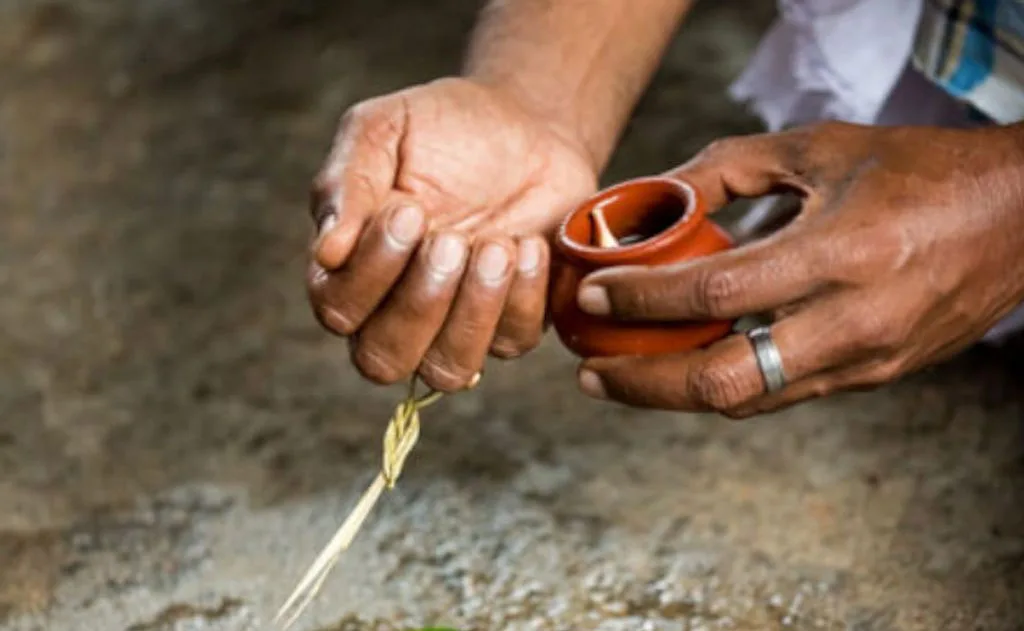
A performing person needs to wear a ring made of this Dharbha. But many have lost the Reason of Why it's to be used in the first place.
What I learnt from my father is proved to be accurately correct by a Medicine Practitioner. A Medical Practitioner once visited my home. When the topic turned to many subjects, I needed to tell him about the Holy Grass named Dharbham. When I told him about the usage and the values, he could not just believe my words. So, he took out a bunch of the Dharbham from me, went straight to the clinic to take an X-ray of his palm, by Covering his Hand with the Dharbham.
To his utter Surprise, he found that the grass absorbed about 60% of the (X-ray) radiation!
When the so Powerful X-ray Radiation can be absorbed by the Holy Grass,
Why can it not absorb the ill-radiations spread over the Atmosphere?
At the time of Solar Eclipse or Lunar Eclipse our Elders used to keep this Holy grass in all the food containers in the house to Protect from Radiation of Eclipses.
While chanting and reciting some Vedic phrases and verses, one needs to wear a ring made of Dharbham on his right hand ring finger. This is most essential, while performing all the rituals, such as Agni Santhanam, Thiru-Aaradhanam, all sorts of Havans known as Homam etc.
- The count of leaves depends upon the function that is held viz. For some functions related to death only single leaf Dharbham is used;
- For auspicious and daily routine a ring made of two leaves is used;
- For inauspicious but not death related functions, (i.e. Amavasya Tharppanam, Pithru Pooja etc) a three-leaf Dharbham ring is used. And for the Temple Prayer and Pooja, a four-leaf Dharbham ring is used.
Also, when a fire ritual known as Agni Santhana is performed, these Dharbham are spread all the four sides of the Agni Kundam. Also, during the Eclipse time, these Dharbham are used to cover all food items to protect them from the harmful ultra violet radiation.
Whenever any function is held, firstly they perform a site-cleansing act known as "Sudhhi Punyaahavachanam"
While reciting the selective versus, they hold the Dharbham bunch in their hand and placing the tip point of it over the vessel containing water. Thus the recited vibration values are absorbed by water in the vessel through the Dharbham.
They found that the Holy Grass known as Dharbham has the highest value in conducting the phonetic vibrations through its tip. Later, they sprinkle the Holy water at every nook and corner of the place, where the function is held. A Dharbham without the tip is considered of no value, as the conductor-type value is lost in it."
Our Rishis were of greater knowledge than today's scientists, today's science is struggling to understand the inventions of ancient Great Rishis..
"Let us Save our Ancient Science and Our Great Heritage"
Dharma Rakshitha Rakshithaha:
Frequently Asked Questions
Why is a Dharba grass ring worn during rituals?
Dharba, also called Darbha, Dharbham, Dharbai or Kusha, is a holy grass used by Brahmins in all functions, auspicious or inauspicious. The performer wears a ring made of it while chanting Vedic verses and performing rituals.
On which finger is the Dharba ring worn?
The Dharbham ring is worn on the right hand ring finger while reciting Vedic phrases and verses. It is considered essential for rituals such as Agni Santhanam, Thiru-Aaradhanam and all Homams.
How many leaves does a Dharba ring have for different occasions?
A single leaf is used for death-related functions, two leaves for auspicious and daily routines, and three leaves for inauspicious but non-death rites such as Amavasya Tharppanam and Pithru Pooja. Temple prayer and pooja use a four-leaf ring.
Why is Dharba grass placed in food during eclipses?
Elders kept the grass in all food containers during solar and lunar eclipses to protect the food from eclipse radiation. It is said to have absorbed about 60% of X-ray radiation in one practitioner's test.
What is the role of Dharba in Sudhhi Punyaahavachanam?
At the start of a function, the Dharbham bunch is held with its tip over a vessel of water while verses are recited, so the vibrations pass into the water. This water is then sprinkled in every corner of the venue.
Can a Dharba grass without its tip be used?
No. Dharbham is valued for conducting phonetic vibrations through its tip, so a piece without the tip is considered to have no value.
Share this with family and friends
Send it on WhatsApp, post it, or copy the link.
More from Traditions
- Peepal Tree Puja Vidhi: Ashwattha Worship, Pradakshina, Mantras and Rules
- Hindu Wedding Traditions Abroad: A Complete Guide for NRI Couples and Families
- Must-Performed Rituals Every NRI Woman Should Do for Her Family's Wellbeing
- Friday Rituals in Hinduism — Shukravar Lakshmi Puja, Devi Worship & Complete NRI Guide for 2026
- Thursday Rituals in Hinduism — Guruvara Vishnu Puja, Guru Worship & Complete NRI Guide for 2026
You might also like
Hindu Dietary Restrictions: A Complete Guide to Food Rules, Practices & TraditionsDietaryHindu Dietary Restrictions: A Complete Guide to Food Rules, Practices & Traditions

Sacred Hindu Numbers: The Complete Story of 108 and Its Divine Significance

Raga and Spirituality — The Sacred Science of Indian Classical Music | Complete Guide