Hindu Wedding Traditions Abroad: A Complete Guide for NRI Couples and Families
It is a cold Saturday morning in New Jersey. Inside a hired hall, a mandap of marigolds and banana leaves stands where a conference stage was the night before. The priest is arranging the havan kund, an aunt is untangling a string of mango leaves, and on a tablet propped against a brass lamp, two gr
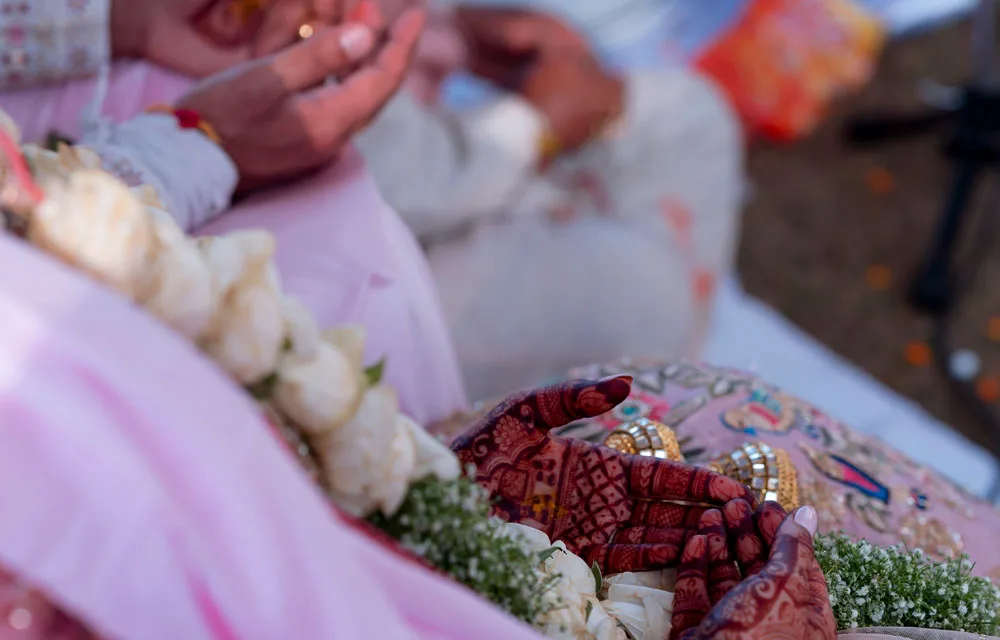
It is a cold Saturday morning in New Jersey. Inside a hired hall, a mandap of marigolds and banana leaves stands where a conference stage was the night before. The priest is arranging the havan kund, an aunt is untangling a string of mango leaves, and on a tablet propped against a brass lamp, two grandparents in Hyderabad are waving, dressed in their best silk at nine in the evening their time. When the couple takes the seven steps, the grandmother's blessing comes through the speaker a second late, and the whole hall laughs and cries at once.
Scenes like this happen every weekend in Toronto, London, Sydney, Frankfurt and Houston. Hindu families abroad are keeping the vivaha samskara alive, but they have to plan around fire codes, venue curfews, time zones, legal paperwork and guests who have never seen a Hindu wedding. This guide is about that planning. For the detailed meaning of each ritual and the full range of regional customs, read our companion guide to Hindu wedding traditions, rituals, symbolism and regional diversity.
Vivaha samskara: a sacred partnership
In Hindu tradition, marriage is one of the samskaras, the sacred rites that mark the stages of life. Our guide to the 16 Hindu samskaras and the NRI guide to the Shodasha Samskaras explain where vivaha sits in that sequence.
Vivaha is understood as a partnership in dharma. It begins grihastha ashrama, the householder stage, in which the couple supports family, community and spiritual life together. The ceremony is not only a contract between two people. It is a promise made before Agni, the elders and the Divine.
Customs vary widely by region, language, community and family. There is no single "correct" Hindu wedding. What follows describes common elements; your family priest is the best guide to your own tradition.
Core elements of a Hindu ceremony
| Element | Brief meaning |
|---|---|
| Agni (sacred fire) | The divine witness to the vows |
| Mantras | Vedic and traditional verses that sanctify each step |
| Saptapadi | Seven steps or rounds taken together, each with a vow or blessing |
| Mangalya dharanam | Tying of the mangalsutra or thali, common in South India |
| Kanyadaan | The bride's family entrusting their daughter to the marriage, in many communities |
| Homa | Offerings into the fire for blessings on the new household |
Many NRI couples also hold a separate civil ceremony, either because the religious ceremony alone is not legally recognised where they live or simply for convenience. More on that below.
Key rituals in brief
These short notes help you plan timing and space. For deeper symbolism, see our rituals and regional diversity guide.
Ganesh puja. The wedding usually begins with a prayer to Lord Ganesha, remover of obstacles: ॐ गं गणपतये नमः (Om Gam Ganapataye Namah). Allow 20 to 30 minutes and a small altar.
Vara yatra or baraat. The groom's arrival with family, music and dancing. Abroad, check whether the venue allows a procession outdoors, a horse or a car, and amplified music.
Varamala. The couple exchanges flower garlands, a sign of mutual acceptance. It is quick but photographers will want space around it.
Kanyadaan. Practised in many but not all communities. The bride's parents place her hand in the groom's and pray for the couple. Some couples adapt the wording to stress the blessings of both families and the bride's own choice. Discuss the wording with your priest well before the day.
Panigrahanam. The groom takes the bride's hand, a promise of lifelong companionship and support.
Vivaha homa. Offerings are made into the sacred fire. The venue must permit an open flame, even a small one, so confirm this in writing before you book.
Saptapadi. The couple takes seven steps or seven rounds together. Interpretations of the seven vows vary between texts and communities, but all speak of nourishment, strength, prosperity, happiness, family, harmony and lifelong friendship.
Mangalya dharanam. In many South Indian traditions, the groom ties the mangalsutra or thali around the bride's neck at the auspicious moment, often to the sound of nadaswaram or the chant of "mangalyam tantunanena".
Sindoor and other symbols. Sindoor, toe rings, the mangalsutra, bangles and other marks of marriage differ by region. None is compulsory everywhere, and families decide what they follow.
Ashirvadam. The elders bless the couple, often with akshata (rice grains with turmeric). This is the best moment to bring in grandparents on video.
Regional snapshots
These are examples, not checklists. Two families from the same state may do things differently.
Telugu weddings. Families often begin with nischitartham, the formal engagement. On the day, the groom's snathakam and the playful kashi yatra, where he "leaves" for Kashi and is persuaded to marry, come before edurukolu, the welcome of the groom's party. At the muhurtham, the couple places jeelakarra bellam, a paste of cumin and jaggery, on each other's heads, followed by mangalya dharanam and talambralu, when the couple showers each other with rice.
Tamil weddings. Nichayathartham fixes the match. Kashi yatra is common here too, followed by the oonjal, where the couple sits on a swing while women sing. Kanyadaanam, mangalya dharanam and saptapadi form the heart of the ceremony, and nalangu brings games and laughter afterwards.
Gujarati weddings. Ganesh sthapana opens the celebrations and pithi (turmeric) is applied before the wedding. A cloth called the antarpat is held between the couple until the auspicious moment, then hasta milap joins their hands. Many Gujarati families take four mangal pheras around the fire, often linked to dharma, artha, kama and moksha, though practice varies by family and priest.
Bengali weddings. Aiburo bhaat is the last unmarried meal at home, and gaye holud is the turmeric ceremony. At shubho drishti, the bride lowers the betel leaves covering her face to see the groom, then the couple exchanges garlands in mala badal. Saat paak (seven rounds) and sampradan, the giving away of the bride, are central rites.
Punjabi Hindu weddings. Roka and sagai mark the commitment, followed by mehendi, sangeet and haldi. On the day there is the baraat, jaimala and the pheras around the fire, and the emotional vidaai as the bride leaves her parents' home.
Marathi weddings. Sakhar puda is the engagement, and kelvan is a family puja and meal before the wedding. Halad is the turmeric ceremony. During the ceremony, the antarpat is held between the couple while mangalashtaka verses are sung, then lowered for the garland exchange. The groom typically ties the mangalsutra, a central symbol of Marathi marriage, though the exact order of rites differs by family.
Planning a Hindu wedding abroad, step by step
1. Decide the tradition
Sit down with both families early. Whose regional customs will you follow? Will the ceremony be in Sanskrit only, or with explanations in English? How long can it be? Agreeing on this first saves arguments later.
2. Find the right priest
Ask every priest:
- Which traditions and languages do you perform weddings in?
- How long is your ceremony, and can it be shortened without losing the essential rites?
- Will you explain the rituals to guests in English?
- What do you bring, and what do we need to arrange?
- Are you authorised to solemnise marriages legally here, or should we plan a separate civil ceremony?
- Can you meet both families beforehand to plan the sequence?
Our country checklists help you start: USA, Canada, Australia, Germany and other European countries.
3. Choose a suitable venue
- Fire permission. Many hotels and halls restrict open flames. Ask about a small havan kund, smoke detectors and any fire-safety conditions in writing.
- Mandap space. You need room for the mandap, the priest, both sets of parents and space to walk around the fire.
- Sound. A clip-on microphone for the priest lets guests hear the mantras.
- Catering. Check whether vegetarian or satvik food can be prepared, and whether outside caterers are allowed.
- Timing. Make sure the booking covers setup, the muhurtham and any curfew.
4. Gather puja materials
Ask the priest for a written list well in advance: turmeric, kumkum, akshata, coconuts, betel leaves, flowers, ghee, samidha (sacred wood), a mangalsutra or thali and more. Some items are hard to find abroad. Ask which substitutes are acceptable rather than guessing, and buy from an Indian grocer or temple shop early.
5. Build the schedule
Work backwards from the muhurtham. Your priest can help you choose an auspicious date; our Vivah muhurat 2026-27 guide lists shubh dates, but always confirm local timings for your city with the priest. Build in buffer time for photographs, the baraat and the meal.
Including grandparents and family in India
- Livestream. Use a stable connection, a dedicated phone or camera on a tripod and one family member in charge of it. Test the link the day before.
- Time zones. If possible, place the main rites at a time when elders in India are awake.
- Recorded blessings. Ask elders who cannot join live to record a short blessing to play during ashirvadam.
- Share the programme. Send the sequence of rituals in advance so relatives know when to watch.
Explaining the rituals to children and young guests
A printed programme with one line per ritual works wonders. For example: "Varamala: the couple exchange garlands to show they accept each other." Children enjoy being given small roles, such as carrying flowers or rice. Friends from other backgrounds will appreciate our guest's guide to Hindu wedding traditions, which covers what to wear and expect.
Combining two traditions
Many NRI weddings unite families from different regions, such as a Telugu groom and a Bengali bride, or a Hindu and a non-Hindu partner. Let the priest set the sequence, so that rites appear in a meaningful order rather than a random mix. Some couples hold separate ceremonies on different days. Above all, both partners and both families should agree to every part of the plan.
Religious wedding and legal marriage
A Hindu ceremony is a sacred rite, but whether it also creates a legal marriage depends entirely on the country, and sometimes the state or province, where it takes place.
Before the wedding, check:
- whether your priest or venue is authorised to solemnise legal marriages;
- whether you need a marriage licence, notice or registration, and how far in advance;
- when and how the marriage must be registered after the ceremony.
For example, the UK government's page on planning a ceremony in England and Wales says a religious wedding can take place at any registered religious building, that an authorised person must attend, and that you can book a registrar if the venue has no authorised person. It also says the ceremony must take place within 12 months of giving notice. Rules differ in Scotland, Northern Ireland and every other country.
Indian citizens marrying abroad may also need to consider registration or consular requirements, for example with the Indian embassy or consulate. Always confirm the current rules with the relevant government authority or a qualified adviser. This guide is general information, not legal advice.
Wedding planning checklist
6 to 12 months before
- Agree on the tradition and the outline of the ceremony with both families.
- Choose a date with the priest's guidance.
- Book the priest and a venue that permits fire.
- Check the legal requirements and decide whether to hold a civil ceremony.
3 to 6 months before
- Get the puja materials list and source hard-to-find items.
- Book caterers, decorators, a mandap supplier and photographers.
- Plan the livestream and the programme booklet.
- Order wedding clothes and jewellery, including the mangalsutra if your tradition uses one.
1 month before
- Confirm the ritual sequence and timings with the priest.
- Complete any legal notices or licence applications by the required dates.
- Share the programme with relatives in India.
- Assign roles: who holds the antarpat, who manages the livestream, who looks after the priest.
On the wedding day
- Arrive early for setup and a quick sound check.
- Keep the puja materials together in one labelled box.
- Test the livestream before the Ganesh puja.
- Sign and file any registration documents as instructed.
Why it matters for the next generation
For children growing up abroad, a wedding may be their deepest encounter with Hindu ritual. When they hear the mantras, see the fire and understand why their parents walked seven steps together, the tradition becomes theirs and not just their grandparents'. A thoughtfully planned wedding, with explanations and family participation, is one of the best gifts you can give to the next generation.
Frequently asked questions
Can a Hindu wedding abroad include all the traditional rituals?
Yes, in most cases. The main limits are venue rules on fire and time. A good priest can perform the essential rites in a shorter format if needed.
Is a Hindu religious ceremony legally valid abroad?
It depends on the country. In some places an authorised officiant and registered venue make it legal; in others you need a separate civil ceremony. Check with the relevant authority.
How long does a Hindu wedding ceremony take?
Typically one to three hours for the main ceremony, depending on the tradition and how much the priest explains.
What if our venue does not allow fire?
Ask about a small, contained havan kund or a nearby outdoor area. If fire is impossible, discuss alternatives with your priest, or hold the homa at a temple or home.
Can two regional traditions be combined?
Yes. Ask the priest to design a sequence that honours both, and make sure both partners agree.
Do we have to do kanyadaan?
It is practised in many but not all communities. Some couples adapt it to emphasise both families' blessings. Discuss it with your priest and families.
How do we choose an auspicious date abroad?
Your priest can calculate a muhurtham for your city. Our Vivah muhurat guide gives a starting list.
How can grandparents in India take part?
Livestream the ceremony, schedule key rites for their waking hours, and include a recorded blessing.
What should non-Hindu guests know?
Share a simple programme and our guest's guide. Most guests enjoy understanding each step.
Can a Hindu wedding be performed in English?
Yes. The mantras are usually chanted in Sanskrit, and many priests abroad explain each step in English or a regional language as they go. Ask your priest in advance which languages they can use, and add short explanations to the printed programme.
Can the rituals be performed outdoors?
Yes, if the venue and local rules allow it. Check fire-safety permission for the homa, plan for wind and rain, and keep a covered or indoor fallback for the mandap.
Where can we learn more about the meaning of each ritual?
Read our detailed guide to Hindu wedding traditions, rituals and symbolism.
May your wedding, wherever in the world it takes place, be filled with the blessings of your elders and the Divine.
शुभमस्तु। कल्याणमस्तु।
Share this with family and friends
Send it on WhatsApp, post it, or copy the link.
More from Traditions
- Thursday Rituals in Hinduism — Guruvara Vishnu Puja, Guru Worship & Complete NRI Guide for 2026
- Thursday Rituals in Hinduism: Complete Guide to Guruvar Pooja, Temples & Sacred Foods
- Vidyarambha Muhurat 2026 — Best Day to Begin Education
- Hindu Dietary Restrictions: A Complete Guide to Food Rules, Practices & TraditionsDietaryHindu Dietary Restrictions: A Complete Guide to Food Rules, Practices & Traditions
- Mahalaya Amavasya Special: Feed Brahmins, Offer Pinda – Crores of Punya
You might also like
A Guest’s Guide to Hindu Wedding Traditions: What to Expect, Wear, and Understand
Hindu Wedding Traditions: Rituals, Symbolism, and Regional Diversity
Monday Rituals in Hinduism — Somavar Shiva Puja, Vrat & Complete NRI Guide for 2026