Hindu Temples in Pakistan After the 1947 Partition: The Forgotten Religious Heritage of Hindus
Imagine a temple that has stood for hundreds of years. Every morning, bells once rang in its sanctum. Devotees gathered to offer flowers, light lamps and chant the names of their beloved deities. Festivals brought entire communities together. Children grew up listening to stories from the Ramayana a
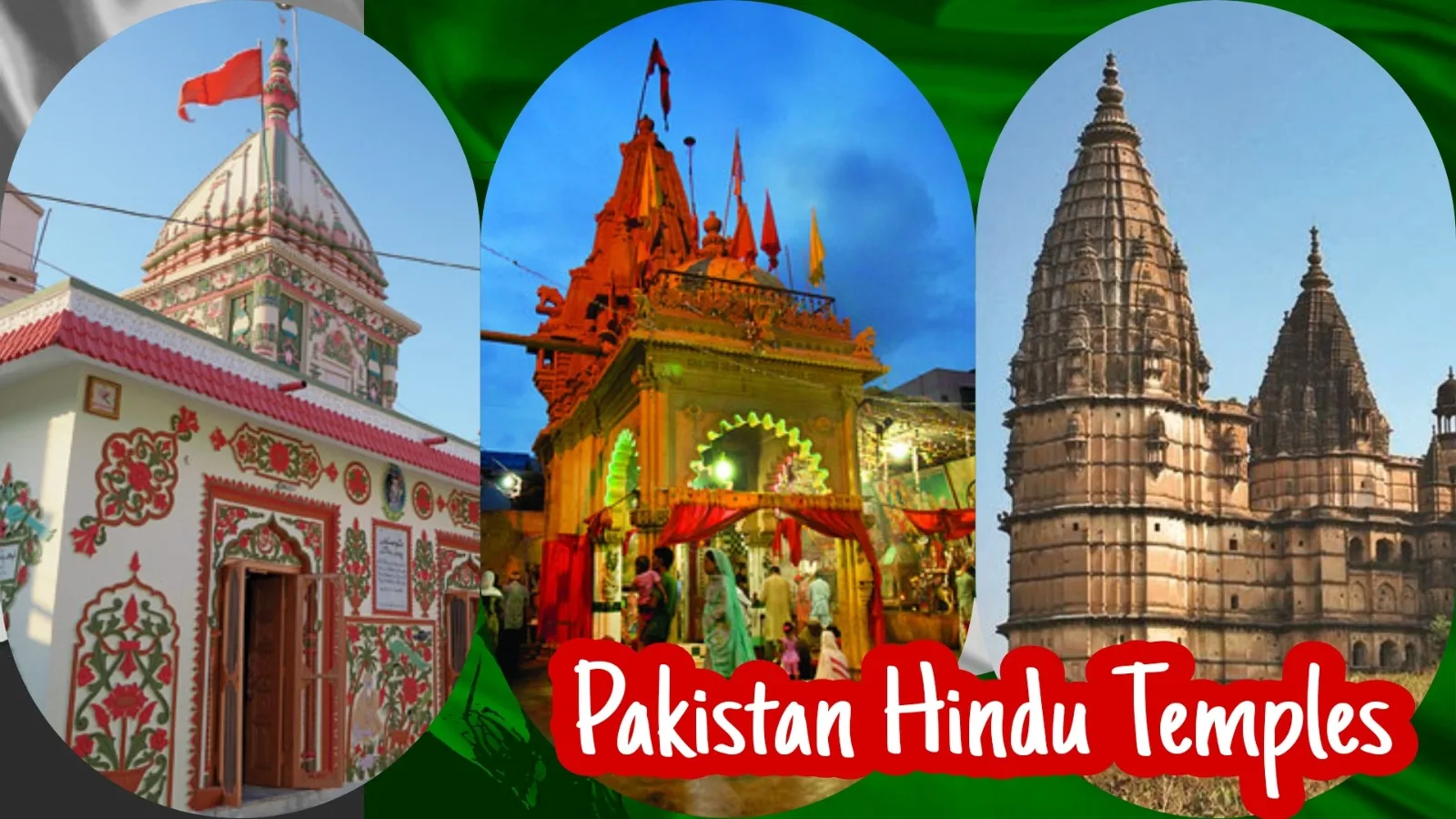
Imagine a temple that has stood for hundreds of years. Every morning, bells once rang in its sanctum. Devotees gathered to offer flowers, light lamps and chant the names of their beloved deities. Festivals brought entire communities together. Children grew up listening to stories from the Ramayana and Mahabharata.
Then history changed. In August 1947, British India was divided into two independent countries, India and Pakistan. Millions of people were displaced, families were separated, and communities that had lived together for generations were caught in one of the most painful human tragedies of modern South Asian history.
Among the greatest cultural losses of Partition was the abandonment and neglect of numerous Hindu temples in the territories that became Pakistan. For Hindus, these temples were not simply buildings. They held centuries of devotion, family tradition, sacred geography and civilizational memory.
This article looks at what the evidence actually shows: how many Hindu worship sites Pakistan still lists, how few are functional, which great temples survive, and why their preservation matters to every Hindu family.
Key facts at a glance
| Question | What the evidence shows |
|---|---|
| Hindu worship sites listed in Pakistan (2025) | 1,285, along with 532 Sikh gurdwaras, as presented to Pakistan's Parliamentary Committee on Minority Caucus (Dawn, December 2025) |
| How many are functional | Only 37 of the combined 1,817 Hindu and Sikh sites |
| Who manages them | The Evacuee Trust Property Board (ETPB), set up in 1960 |
| An earlier survey | The All Pakistan Hindu Rights Movement counted 428 temples at Partition, with only about 20 still in use (reported in 2014) |
| Best-known surviving sites | Katas Raj (Punjab), Hinglaj Mata (Balochistan), Sadhu Bela (Sindh), Swaminarayan Mandir (Karachi) |
A word of caution on numbers: a temple that physically exists, a temple under government custody, an abandoned temple and a temple where regular worship takes place are four different things. Surveys from different years count different things, so their figures should not be mixed. Viral social-media posts that claim "4,580 temples in 1947 and only 20 today" are not backed by any reliable census.
1. Before 1947: centuries of Hindu heritage
Before Partition, the areas that became Pakistan were home to Hindus, Muslims, Sikhs, Jains and others. Hindu communities had deep roots in Sindh, Punjab, the North-West Frontier region and Balochistan. Pilgrimage routes, temples, ashrams and sacred tanks connected these regions with the wider Indian civilization.
Some of the most important Hindu heritage sites in present-day Pakistan are:
- Katas Raj Temples, Chakwal district, Punjab
- Hinglaj Mata Temple, Hingol National Park, Balochistan
- Shri Swaminarayan Mandir, Karachi
- Panchmukhi Hanuman Mandir, Karachi
- Krishna Mandir, Lahore
- Sadhu Bela, near Sukkur, Sindh
- Shivala Teja Singh Temple, Sialkot
- Umarkot Shiv Mandir, Sindh
Many of these were not merely local places of worship. They were pilgrimage destinations woven into the spiritual life of the whole subcontinent.
2. 1947 Partition: a humanitarian and cultural catastrophe
Pakistan became independent on 14 August 1947 and India on 15 August 1947. The new border divided families, villages, businesses, religious communities and ancestral homelands.
Millions of Hindus and Sikhs migrated from the areas that became Pakistan to India, and millions of Muslims moved in the opposite direction. The migration was accompanied by horrific communal violence, killings, abductions, destruction of property and mass displacement.
For Hindu families leaving their ancestral homes, the loss went far beyond houses and farmland. They also left behind:
- family temples and village shrines
- ancestral homes and sacred spaces
- religious books and manuscripts
- community festivals and traditions
- cremation grounds and pilgrimage connections
- historic monuments and cultural institutions
Many temples were abandoned because the communities that maintained them had gone. Some later came under government administration; others were occupied, repurposed, damaged or simply left to decay. Partition was therefore not only a political and geographical division. It was a profound cultural and religious rupture.
3. What happened to Hindu temples in Pakistan?
The Evacuee Trust Property Board (ETPB), established in 1960, manages properties and religious sites left behind by Hindus and Sikhs who migrated during Partition, and facilitates Hindu and Sikh pilgrims. Its management of these properties has been criticised repeatedly, including inside Pakistan.
In December 2025, Dawn and Business Recorder reported on the first meeting of Pakistan's Parliamentary Committee on Minority Caucus. According to the data presented there:
- 1,285 Hindu worship sites were listed.
- 532 Sikh gurdwaras were listed.
- Only 37 of the combined 1,817 sites were reported as functional.
Members of the committee linked the abandonment largely to the 1947 migration, when Hindu and Sikh communities left these areas, and the committee recommended that the ETPB chairman should be a member of a minority community.
An older survey points the same way. In 2014, The Express Tribune reported a survey by the All Pakistan Hindu Rights Movement which counted 428 Hindu temples at the time of Partition and found that only about 20 were still in use, with many converted into shops, restaurants, government offices and schools.
The two surveys count different things and should not be added together. But both describe the same reality: the great majority of Pakistan's historic Hindu places of worship no longer function as temples. A historic temple should not be allowed to disappear simply because the community that built and cared for it became smaller or migrated. For more on encroachment, vandalism and restoration efforts, read our report on the challenges faced by Hindu temples in Pakistan.
4. Famous Hindu temples that survive in Pakistan
Despite enormous challenges, several important Hindu pilgrimage destinations survive and still receive devotees.
Katas Raj Temples, Punjab
Katas Raj, in Chakwal district of Punjab, is one of the most significant Hindu temple complexes in Pakistan. Several historic temples stand around a sacred pond. According to Hindu tradition, the pond was formed from the tears of Lord Shiva after the death of Goddess Sati, which makes the site especially dear to devotees of Shiva.
Hinglaj Mata Temple, Balochistan
Hinglaj Mata, in the Hingol National Park region of Balochistan, is revered as a Shakti Peetha and is one of the most important Shakti pilgrimages for Hindus anywhere. Every year devotees make the difficult journey to seek Hinglaj Mata's blessings, a reminder that sacred geography does not follow modern borders. See our feature on the Hinglaj Mata Mandir in Lasbela, Balochistan.
Shri Swaminarayan Mandir, Karachi
The Swaminarayan Mandir in Karachi is an important Hindu religious and cultural landmark and a centre of community life for the city's Hindus.
Krishna Mandir, Lahore
Lahore has long been home to many religious traditions. Its Krishna Mandir carries the city's Hindu heritage into the present.
Sadhu Bela, Sindh
Sadhu Bela stands on an island in the Indus River near Sukkur. Associated with the Udasi tradition, it is an important pilgrimage destination for Sindhi Hindus. Read more in Temples of Sindh: the spiritual heart of Pakistan's Hindu community.
These temples are not just historic structures. They are living reminders of the religious diversity and cultural history of the subcontinent.
5. Why preservation matters
When a temple disappears, much more than a building is lost:
- historic inscriptions and architectural evidence
- traditional sculpture and religious art
- records of local communities and their ancestors
- ancient rituals and forms of worship
- cultural links between generations
- evidence of the region's historic diversity
Some abandoned temples have been turned to commercial or administrative use; others suffer from encroachment, decay and too little restoration. A one-man commission headed by Dr Shoaib Suddle, appointed by Pakistan's Supreme Court to look into minority rights, has also examined the management of minority religious properties and raised concerns about their condition. This is not only an emotional debate on social media. It is a documented question of heritage protection and institutional accountability.
6. What about the viral claim about mosques in India?
Viral posts often compare the temple figures with a claim that India had 88 mosques in 1947 and has 6,00,000 today. Neither number comes from an official census. India has no verified nationwide mosque count that would allow such a comparison.
India is home to a large Muslim population and many thousands of mosques, dargahs and other Islamic institutions, and its Constitution protects every community's freedom of religion and its right to manage its own religious affairs.
The meaningful question is not which community has more buildings. It is whether every community can preserve its historic religious heritage and practise its faith with dignity and security. Hindu temples in Pakistan deserve protection, and so do mosques and other places of worship in India. Preserving one community's heritage never requires denying another community its rights.
7. Was Partition a betrayal of Hindus?
For the millions of Hindus and Sikhs forced to leave their ancestral homes, Partition remains a deeply painful memory. Families lost homes, businesses, land, temples and the villages of their ancestors. With the creation of Pakistan, a large part of the historic Hindu and Sikh religious heritage of undivided India fell outside India's borders.
Some people describe Partition as a "scam" on Hindus. That word expresses real anger and grief, but as a historical judgement it would need evidence of a specific deception. It is more accurate to say that Partition was a profound political and humanitarian tragedy for millions of people, including the Hindus and Sikhs who suffered displacement, violence and the loss of their sacred heritage. Its consequences for Hindu communities deserve serious study, not dismissal.
8. The Hindu minority of Pakistan today
Hindus still live in Pakistan, mostly in Sindh, and are part of the country's social, cultural and economic life. They celebrate Diwali, Holi, Navaratri, Janmashtami, Maha Shivaratri and local temple festivals, and their historic temples and community shrines remain central to family life.
Their concerns include religious freedom, security, property rights, access to education and protection of places of worship. These deserve constitutional protection, transparent administration and independent monitoring. Equally, the resilience of Hindu families who keep their traditions alive in difficult circumstances deserves to be acknowledged. They are a living part of the continuing story of Hindu civilization in the region.
9. Why the younger generation must learn about Partition
Many young Hindus in India, the United States, Canada, the United Kingdom, Australia and the Gulf know the basic story of Partition, but few know what happened to the temples and communities left across the new border. Parents and grandparents can help by talking about:
- the geography of undivided India
- the events that led to Partition
- the stories of families displaced in 1947
- the significance of the temples in present-day Pakistan
- the importance of protecting Hindu religious heritage
- the importance of religious freedom for every community
Children should learn this history through credible records, photographs, documents and family memories. Remembering the past does not mean teaching hatred. It means understanding history so that future generations can protect heritage and prevent similar tragedies.
10. What Hindus can do to preserve this heritage
- Document historic temples: build digital archives of photographs, inscriptions, architectural details and records.
- Support heritage research: encourage historians, archaeologists and researchers to study neglected temples.
- Raise awareness: share verified information about temples in Pakistan and their significance.
- Support peaceful cultural dialogue: encourage cooperation between historians, heritage bodies and religious communities.
- Preserve family histories: record the stories of grandparents and relatives who migrated in 1947.
- Promote restoration: advocate for the protection and restoration of historic temples through lawful, peaceful channels.
11. A message to Hindus around the world
You may live thousands of miles from your ancestral homeland. You may celebrate Diwali in New York, London, Toronto, Sydney, Dubai or Singapore, and your children may speak English more fluently than their mother tongue. But the stories of our temples, traditions and ancestors are a heritage worth passing on.
Learn about the temples of Kashmir, Sindh, Punjab, Balochistan, Gujarat, Odisha, Tamil Nadu and every region connected with Hindu civilization. Teach your children the history of sacred places. Remember the families who lost their ancestral homes in Partition. And remember that protecting religious heritage is an obligation of humanity, not of one community alone.
Conclusion: a temple is more than stone
The history of Hindu temples in Pakistan after 1947 is a story of loss, survival, faith and memory. Some temples have disappeared, some have been damaged, some stand abandoned, and others still welcome devotees. The story is not finished.
The survival of Katas Raj, Hinglaj Mata and Sadhu Bela shows that centuries of devotion cannot be erased by a line drawn on a map. Let us remember history honestly, preserve the evidence, and ask for equal respect for every religious community. Let us remember the temples our ancestors left behind, protect the temples that survive, and teach the next generation about our heritage.
A civilization lives not only through its monuments, but through the people who remember, respect and preserve its traditions.
Jai Shri Ram! Har Har Mahadev! Jai Mata Di!
Frequently asked questions
How many Hindu temples existed in Pakistan at the time of Partition in 1947?
There is no universally accepted census of the exact number. A survey by the All Pakistan Hindu Rights Movement, reported in 2014, counted 428 Hindu temples at Partition. That figure belongs to that survey and its own method of counting.
How many Hindu temples are there in Pakistan now?
There is no single verified count of all Hindu temples. In December 2025, Pakistan's Parliamentary Committee on Minority Caucus was told that the country lists 1,285 Hindu worship sites and 532 Sikh gurdwaras, and that only 37 of these 1,817 sites are functional.
Why were so many Hindu temples in Pakistan abandoned?
Most Hindu families in the affected areas migrated to India during Partition. With their congregations gone, many temples lost their worshippers and caretakers, and some were later neglected, occupied or put to other uses.
Which is the most famous Hindu temple in Pakistan?
The Katas Raj Temples in Punjab and the Hinglaj Mata Temple in Balochistan are among the most important Hindu pilgrimage and heritage sites in Pakistan.
Is Hinglaj Mata Temple a Shakti Peetha?
Yes. Hinglaj Mata is traditionally revered by Hindus as one of the Shakti Peethas.
Do Hindus still live in Pakistan?
Yes. Hindus live in Pakistan today, mostly in Sindh, and continue to keep their religious and cultural traditions.
How many mosques are there in India?
There is no authoritative nationwide census of all mosques in India. Viral figures should not be treated as official statistics.
Can Indian Hindus visit temples in Pakistan?
Some pilgrimage visits are arranged under bilateral arrangements between India and Pakistan and facilitated by Pakistani authorities. Visa rules and travel arrangements change, so check the current requirements before planning a visit.
Why should Hindus remember the temples in Pakistan?
These temples are historical, religious and cultural links to the wider Indian subcontinent. Documenting and preserving them helps future generations understand their heritage.
Sources
- Dawn: Only 37 of 1,800 Hindu, Sikh worship sites functional in Pakistan, minority caucus told (December 2025)
- Business Recorder: report on the Parliamentary Committee on Minority Caucus (December 2025)
- The Express Tribune (Zahid Gishkori), "Only 20 Hindu temples operational in Pakistan", 2014, reporting the All Pakistan Hindu Rights Movement survey
Share this with family and friends
Send it on WhatsApp, post it, or copy the link.
More from Temples
- Vadapalli Venkateswara Temple (Konaseema Tirumala): History, Legend, the Seven Saturdays Vow and Darshan Guide
- Hindu Temple Worship: The Daily Rituals Explained
- Mahabharata Places Today: Kurukshetra, Hastinapur, Indraprastha and Dwarka
- Ramayana Places in India: The Trail from Ayodhya to Rameswaram
- Hinglaj Mata Mandir: Divine Glow of Diyas at the Shakti Peetha in Lasbela, Balochistan
You might also like
Kateel Sri Durgaparameshwari Temple: History, Legend, Timings and Prabhas's Visit
Anjaneri Hills, Nashik: The Traditional Birthplace of Lord Hanuman and the Anjani Mata Temple
Mayiladuthurai: Thousands Join Mayuranathar Temple's Five-Chariot Festival in the Cauvery Thula Utsavam