Ugadi Pachadi 2026: Sacred Six Flavors & Meaning
Ugadi Pachadi 2026: The Sacred Six-Flavored Elixir for Parabhava Nama Samvatsara – Traditional Recipe & Symbolism Published: February 18, 2026 | Updated:…
Ugadi Pachadi 2026: The Sacred Six-Flavored Elixir for Parabhava Nama Samvatsara – Traditional Recipe & Symbolism Published: February 18, 2026 | Updated:…
Ugadi Pachadi 2026: The Sacred Six-Flavored Elixir for Parabhava Nama Samvatsara – Traditional Recipe & Symbolism
Published: February 18, 2026 | Updated: Real-time festival prep insights Author: HinduTone Editorial Team For: www.hindutone.com
Ugadi 2026, the auspicious Hindu New Year for Telugu and Kannada communities in Andhra Pradesh, Telangana, Karnataka, and beyond, falls on Thursday, March 19, 2026. This marks the dawn of Sri Parabhava Nama Samvatsara (the 40th year in the 60-year Vedic cycle), a time symbolically dedicated to humility, ego dissolution, and spiritual transcendence. As families in Hyderabad and across South India prepare Panchangam Sravanam (almanac reading), temple visits, and festive meals, the centerpiece remains Ugadi Pachadi—the iconic six-taste preparation that perfectly embodies Parabhava's profound message: life's inevitable mix of joys and trials must be embraced with equanimity for true growth.
At HinduTone, we celebrate this tradition by sharing an authentic, devotional Ugadi Pachadi recipe 2026 tailored for home preparation. This isn't just a dish—it's a ritual of acceptance, offered first as naivedya to deities like Lord Rama (whose dharma aligns with Parabhava's call to humility) or Lord Brahma (the creator invoked on Ugadi). The six rasas (tastes) remind us that Parabhava may bring humbling experiences—challenges that "defeat" ego—but through devotion and balance, they lead to divine blessings.
Why Ugadi Pachadi Symbolizes Parabhava Year Traditional Foods
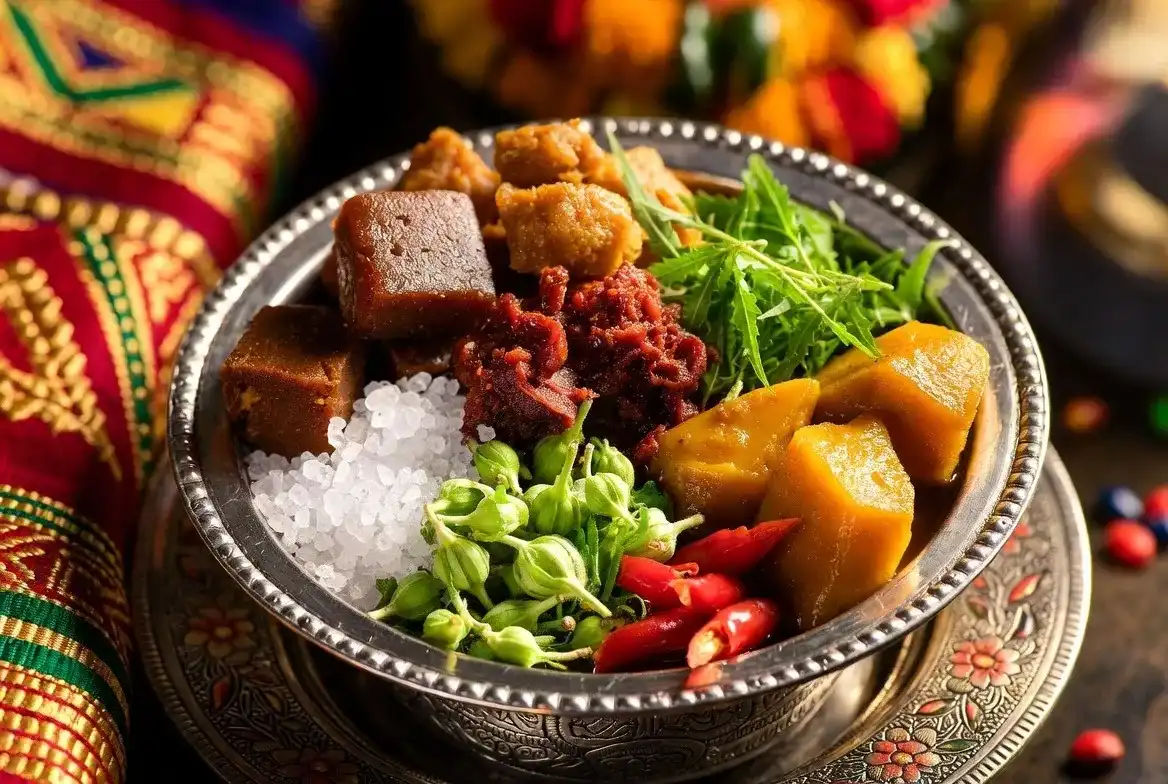
Ugadi Pachadi (also called Bevu-Bella in Karnataka) is the first item consumed on Ugadi morning after oil bath, new clothes, and temple prayers. Its six distinct flavors represent life's full spectrum of emotions and events in the coming year:
- Sweet (Jaggery) → Happiness, joy, prosperity
- Sour (Tamarind) → Unpleasantness, difficulties
- Bitter (Neem flowers) → Sadness, sorrow, disappointments
- Spicy/Pungent (Black pepper or green chili) → Anger, frustration
- Salty (Salt) → Fear, anxiety
- Tangy/Astringent (Raw mango) → Surprise, unexpected twists
In Parabhava Nama Samvatsara, this symbolism resonates deeply: the year urges surrender of ego ("para" meaning beyond, "bhava" meaning existence/ego). Just as the bitter neem tempers the sweet jaggery, life's hardships humble us, paving the way for spiritual victory—like Lord Rama's exile leading to triumph. Consuming Pachadi first thing teaches acceptance: no matter the predominance of bitter or sweet in your bite, embrace it all with devotion for a balanced, blessed year.
Devotional Tip: Before preparing or eating, light a diya, chant "Om Namo Narayanaya" or "Jai Sri Ram," and offer the first spoonful as naivedya. This transforms the Pachadi into prasad, infusing it with divine energy for health, harmony, and humility in Parabhava.
Authentic Ugadi Pachadi Recipe 2026 – Step-by-Step (Andhra/Telangana Style)
This traditional version uses fresh, seasonal ingredients common in Hyderabad markets. It yields a semi-liquid chutney-like drink (perfect for sipping or spooning) for 4–6 people.
Prep Time: 15 minutes Servings: 4–6 Calories per Serving: ~80–100 (light and detoxifying)
Ingredients & Their Ayurvedic/Devotional Benefits (SEO-Optimized List)
- Raw Unripe Mango (2–3 tbsp, finely chopped with skin) → Tangy/astringent; rich in vitamin C, boosts immunity, aids digestion—symbolizes life's surprises.
- Jaggery (3–4 tbsp, grated or powdered) → Sweet; iron-rich, natural energy, digestive aid—represents joy and prosperity.
- Tamarind Pulp (2 tbsp, from lemon-sized ball) → Sour; vitamin C, anti-inflammatory, gut health—denotes challenges overcome with wisdom.
- Neem Flowers (1–2 tbsp fresh or 1 tsp dried) → Bitter; blood purifier, antibacterial, detoxifies—embodies sadness that purifies the soul in Parabhava.
- Black Pepper Powder or Green Chili (½–1 tsp) → Pungent/spicy; metabolism booster, pain relief—signifies anger channeled positively.
- Salt (¼–½ tsp) → Salty; electrolyte balance, hydration—reflects fear transformed into caution.
- Water (1–1½ cups) → Base for blending; optional fresh coconut (1 tbsp grated) for mild creaminess and sattvic purity.
These ingredients align with Ayurveda's six-rasa principle, promoting holistic health while symbolizing Parabhava's call for inner balance.
Step-by-Step Preparation with Devotional Narrative
- Invoke Divine Blessings: Begin with a short prayer: "O Lord Rama/Brahma, bless this preparation as a symbol of life's balance in Parabhava year. May humility prevail." This sets sattvic intention.
- Extract Tamarind Pulp: Soak tamarind in ½ cup warm water for 10 minutes. Squeeze and strain to get thick pulp (discard fibers). This sour base reminds us to extract lessons from difficulties, much like Rama's trials in exile.
- Dissolve Sweetness: Add grated jaggery to the tamarind water. Stir until fully dissolved. The sweetness counters bitterness, symbolizing joy following sorrow—echoing Rama's coronation after humility.
- Add Bitterness Mindfully: Gently mix in neem flowers. Their intense bitterness signifies ego's "defeat" in Parabhava—offer a silent thought: "May this purify my attachments as neem cleanses the body."
- Incorporate Remaining Flavors: Fold in chopped raw mango (tangy surprise), black pepper/chili (pungent energy), and salt. Add remaining water for desired consistency (semi-thick like rasam or thinner like a drink).
- Final Adjustment & Naivedya: Taste gently—aim for harmony, not dominance of any rasa. Adjust minimally to preserve balance. Place a small portion before your deity photo/idol, chant "Jai Sri Ram," and offer as prasad.
Serve fresh at room temperature or slightly chilled. In traditional Hyderabad homes, it's consumed first on Ugadi morning for auspicious beginnings.
Variations for 2026:
- Karnataka style (Bevu-Bella): More neem-jaggery focus, less liquid.
- Modern twist: Add a pinch of edible camphor for aroma (optional, traditional in some families).
Health & Spiritual Benefits in Parabhava Context
- Detox & Immunity: Neem and mango combat seasonal ailments common post-winter.
- Digestive Harmony: Tamarind + jaggery aid gut health for a sattvic start.
- Emotional Resilience: Eating the mix cultivates acceptance—key for Parabhava's transformative energy.
- Ayurvedic Balance: Six rasas ensure dosha equilibrium (vata-pitta-kapha).
Quick Reference: Six Tastes & Parabhava Symbolism Table
Ugadi Pachadi 2026 isn't just food—it's a meditative practice. As you savor each flavor, reflect: Parabhava invites us to transcend ego through devotion, finding sweetness in every experience.
Ugadi Subhakankshalu from HinduTone! May Sri Parabhava bring you humility, growth, and divine grace. Visit www.hindutone.com for more on Ugadi rituals, Panchangam predictions, and festival guides.
Frequently Asked Questions
When is Ugadi Pachadi 2026?
Ugadi Pachadi 2026 falls on February 18, 2026.
What is the significance of Ugadi Pachadi?
Ugadi Pachadi 2026: The Sacred Six-Flavored Elixir for Parabhava Nama Samvatsara – Traditional Recipe & Symbolism Published: February 18, 2026 | Updated: Real-time festival prep insights Author: HinduTone Editorial Team For: www.hindutone.com Ugadi 2026, the auspicious Hindu New Year for Telugu and Kannada communities in Andhra Pradesh, Telangana, Karnataka,
How is Ugadi Pachadi celebrated?
Devotees observe it with puja, fasting or special offerings, visiting temples, chanting mantras, and gathering with family. Customs vary by region and tradition.
What should devotees do on Ugadi Pachadi?
Take a sacred bath, perform the day's puja and charity (dana), observe any prescribed fast, and chant mantras with sincere devotion.
You might also like

Gita Jayanti 2026 Prasad Recipes — Tulsi-Honoring Sweets, Krishna's Favourites & December 10 Bhog Plate

Maha Shivratri 2026 Vrat Recipes — Sabudana Khichdi, Singhada Halwa, Phalahara Foods Complete Fasting Guide

Shani Deva Temples Worldwide & Must-Performed Rituals — Complete Devotee's Guide