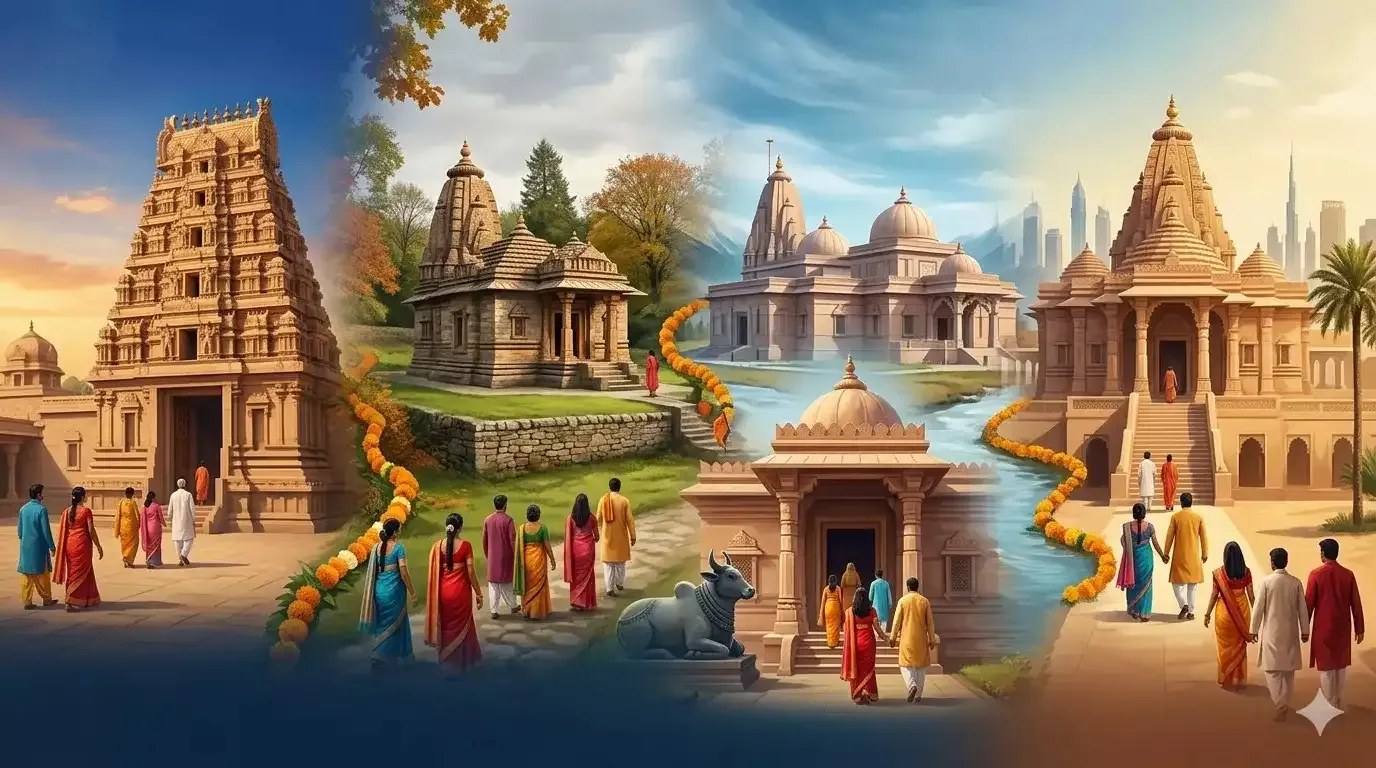
Shivaji Maharaj: The Legendary Warrior Who Shaped India's Destiny
A fearless warrior, a visionary leader, and the founder of the Maratha Empire – Chhatrapati Shivaji Maharaj was a beacon of Hindu pride and self-rule.
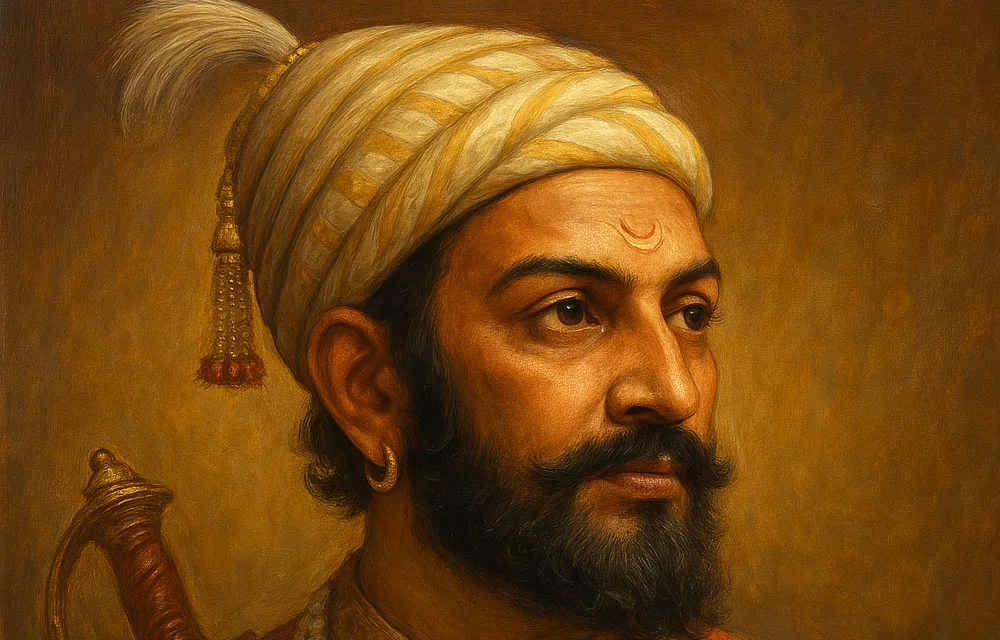
A fearless warrior, a visionary leader, and the founder of the Maratha Empire – Chhatrapati Shivaji Maharaj was a beacon of Hindu pride and self-rule.
A fearless warrior, a visionary leader, and the founder of the Maratha Empire – Chhatrapati Shivaji Maharaj was a beacon of Hindu pride and self-rule.
On April 3, 1680, at noon, Shivaji Maharaj breathed his last at Raigad Fort after battling a severe fever for three weeks. Despite ruling for just a few decades, he spent 27 years in warfare, relentlessly fighting against the Mughals, Adilshahi, Nizams, Portuguese, and British to establish a Hindu empire.
Life and Achievements of Chhatrapati Shivaji Maharaj
1. Early Life & Inspiration
- Born: February 19, 1630, at Shivneri Fort, Pune
- Father: Shahaji Bhonsle – a brave Maratha general
- Mother: Jijabai – his spiritual and ideological guide
- Inspired by Hindu epics like Ramayana and Mahabharata, Shivaji dreamt of an independent Hindu kingdom.
2. The Establishment of Hindu Swarajya
- At just 15 years old, Shivaji captured his first fort, laying the foundation of Swarajya.
- In 1674, he was coronated as Chhatrapati at Raigad Fort, marking the formal establishment of the Maratha Empire.
- His resistance against the mighty Mughal Emperor Aurangzeb became legendary.
- He fought against foreign invaders like the Portuguese and British, ensuring Maratha dominance.
3. Shivaji’s Military Strategy & Warrior Tactics
- Guerrilla Warfare Tactics: Outnumbered by enemy forces, Shivaji used strategic surprise attacks to win battles.
- First to Establish a Naval Force in India: He built a powerful naval fleet to protect the Indian coastline.
- Religious Tolerance & Just Rule: Despite being a devout Hindu, he treated all subjects equally, ensuring justice and fairness.
4. Protection of Hindu Dharma & Culture
- Ban on Cow Slaughter: Shivaji strictly prohibited cow killing in his empire.
- Revival of Hindu Temples: He reconstructed temples destroyed by invaders.
- Support for Scholars & Saints: Encouraged intellectual and spiritual growth in his kingdom.
The Rise of Chhatrapati Sambhaji Maharaj – The Torchbearer of Swarajya
After Shivaji Maharaj’s demise in 1680, his son, Chhatrapati Sambhaji Maharaj, took over the Maratha throne.
Chhatrapati Sambhaji Maharaj (1657–1689) was a fearless warrior who continued his father’s legacy by fiercely resisting Aurangzeb’s tyranny.
- Defeated Mughal forces multiple times, preventing their control over the Deccan.
- Refused to convert to Islam despite extreme torture by Aurangzeb.
- Executed brutally on March 11, 1689, proving his unwavering commitment to Hindu Dharma.
Sambhaji Maharaj’s sacrifice ignited a spirit of resistance in the Maratha Empire, ultimately leading to the Mughals’ downfall.
Lessons from Shivaji & Sambhaji Maharaj for Today’s Youth
- Self-respect & Courage: Never bow down to oppression.
- Determination & Strategic Thinking: Small forces can achieve great victories with the right strategy.
- Preservation of Hindu Heritage: Protecting culture and traditions is every citizen’s duty.
Honoring Chhatrapati Shivaji Maharaj on His Punyatithi
- Let’s spread the legacy of Shivaji Maharaj & Sambhaji Maharaj among today’s generation.
- Protecting Hindu culture and traditions is our responsibility.
- Inspire young minds with true Indian history and heroism.
"Har Ghar Shivaji, Har Man Sambhaji!"
Jai Shivaji | Jai Bhavani | Har Har Mahadev
Jijabai: The Dharmic Force Behind the Warrior King
Rajmata Jijabai, born into the Jadhav clan of Sindkhed Raja, was not merely a devoted mother but Shivaji's first and most formative teacher. She narrated stories from the Ramayana and Mahabharata to the young Shivaji with deliberate purpose — specifically the valour of Sri Rama reclaiming Ayodhya and the Pandavas fighting against adharma — so that he would internalise the ideal of a righteous king who protects the weak and upholds dharma.
Jijabai's own life was marked by separation and hardship, as Shahaji Bhonsle spent long years in service to the Adilshahi Sultanate far from Pune. Rather than allowing adversity to diminish her resolve, she channelled it into raising a son who would restore what she believed the Deccan had lost. Contemporary historians note that she actively guided early military decisions from the Pune jagir and was present at key moments of Shivaji's young campaigns. Her influence is acknowledged in Maratha chronicles known as Bakhar literature, which describe her as 'Svarajyalakshmi' — the goddess of self-rule incarnate.
The Coronation at Raigad: A Vedic Ceremony That Reclaimed Sovereignty
The Rajyabhisheka of June 6, 1674 at Raigad Fort was far more than a political event — it was a deliberate act of Vedic restoration. Shivaji invited the scholar Gaga Bhatt of Varanasi, a respected pandit in the Vishvanatha tradition, to conduct the ceremony according to the rites prescribed in the Dharmashastra texts. A significant theological debate preceded the event: certain Brahmins questioned Shivaji's Kshatriya lineage, since the Bhonsle clan had not maintained all the rituals for generations under Sultanate rule. Gaga Bhatt researched the genealogy and traced the lineage to the Sisodia Rajputs of Mewar, resolving the dispute and enabling the sacred thread re-investiture (Upanayana) before the coronation.
The ceremony itself followed the Hiranyagarbha and Tulabhara rites — Shivaji was weighed against gold, which was then distributed as dana. He was anointed with water brought from sacred rivers including the Ganga, Godavari, and Krishna. The formal title 'Chhatrapati' — lord of the royal umbrella — signalled sovereignty independent of both the Mughal Emperor in Delhi and the Adilshah in Bijapur. Sanskrit inscriptions composed for the occasion described him using the honorific 'Kshatriya Kulavatansa,' meaning 'the crown jewel of the Kshatriya lineage,' an assertion of legitimacy that resonated across the Deccan.
Shivaji's Naval Vision: India's First Organised Maritime Defence
Long before the concept of a modern navy existed in Indian statecraft, Shivaji Maharaj recognised that the Konkan coastline — stretching from the Gulf of Khambhat to Goa — was a strategic lifeline that no land army could adequately protect. He commissioned the construction of a fleet of war vessels called 'Ghurab' and 'Gallivat' — fast, shallow-draught ships suited to the Konkan's estuaries and creek systems. At its peak, his naval force comprised several hundred vessels operating from fortified island bases including Sindhudurg Fort (built in 1664 on a coral island near Malvan) and Vijaydurg Fort on the Vagad River.
The primary adversaries at sea were the Siddis of Janjira — Abyssinian commanders who held loyalty to the Mughal Empire — and the Portuguese based in Goa. Shivaji's naval operations denied these powers free movement along the coast and protected Maratha trade routes. He appointed Kanhoji Angre's predecessors as his earliest naval commanders, establishing the institutional tradition that Kanhoji Angre would later make legendary. Shivaji's strategic insight — that a Hindu Swarajya without maritime power would always be vulnerable — placed him centuries ahead of his contemporaries in Deccan political thought.
Ashtapradhan: Shivaji's System of Ethical Governance
Shivaji Maharaj did not merely conquer territory; he built institutions. He established the Ashtapradhan, a council of eight ministers, each entrusted with a defined portfolio: the Peshwa (prime minister), Amatya (finance), Mantri (royal records), Senapati (military), Sachiv (correspondence), Sumant (foreign affairs), Nyayadhish (justice), and Panditrao (religious and charitable affairs). This structure drew on the model of governance described in Kautilya's Arthashastra and ensured that no single court faction could monopolise power.
Crucially, Shivaji insisted that Marathi replace Persian as the language of court administration — a radical cultural reversal at a time when Persian was the prestige language of every Deccan sultanate. He commissioned the 'Rajya Vyavahar Kosha,' a glossary that replaced Persian administrative terms with Sanskrit-derived Marathi equivalents, reasserting the cultural identity of the Deccan in the very vocabulary of governance. Revenue collection was reformed through the Ryotwari-style system under Annaji Datto, reducing the intermediary exploitation that had impoverished Maratha peasants under previous regimes.
Shivaji and the Saints: The Spiritual Roots of Swarajya
The Bhakti movement of Maharashtra was not merely a religious backdrop to Shivaji's reign — it was an active spiritual force that shaped his worldview and popular legitimacy. The Varkari tradition, rooted in devotion to Vitthal of Pandharpur, had produced poet-saints like Sant Dnyaneshwar, Sant Namdev, and Sant Tukaram, whose abhangas (devotional compositions) articulated a vision of equality, justice, and surrender to the divine that resonated with Shivaji's own sense of mission.
Sant Ramdas Swami, the author of the Dasbodha — a monumental text on practical Vedanta and active living — is considered Shivaji's most influential spiritual mentor in later tradition, though the precise nature and timeline of their relationship is a matter of scholarly discussion within Maratha historical records. Ramdas's teaching that 'Udyog karava nirantara' (engage in effort ceaselessly) and his emphasis on the installation of Maruti (Hanuman) temples across the Deccan as centres of community strength aligned deeply with Shivaji's vision of a culturally rooted Hindu polity. Shivaji reportedly granted Ramdas the village of Chaphal as a math (spiritual centre), symbolising the union of temporal and spiritual authority that the Maratha Swarajya embodied.
The Afzal Khan Encounter: Strategy, Courage, and Its Place in Maratha Memory
The killing of Afzal Khan at Pratapgad Fort in November 1659 stands as one of the most analysed episodes in Maratha history. Afzal Khan, a senior general of the Adilshahi Sultanate of Bijapur, led a large army into the Sahyadri ranges with the explicit aim of either capturing or killing Shivaji. When negotiations for a personal meeting were proposed, many of Shivaji's advisors warned against attending, fearing treachery. Shivaji chose to attend — but arrived prepared, wearing armour beneath his robe and concealing a 'wagh nakh' (tiger-claw weapon) and a 'bichwa' (curved dagger).
When Afzal Khan attempted to seize Shivaji during their embrace, Shivaji responded with the wagh nakh, mortally wounding the general. Simultaneously, his forces launched a coordinated assault on the Bijapur army positioned in the valley below Pratapgad. The victory shattered Adilshahi prestige in the Deccan and opened the western Sahyadri to Maratha expansion. In Maratha Bakhar literature and in the folk tradition of 'powadas' — ballads composed by shahirs (bards) — this encounter became the defining image of Shivaji's combination of intelligence, physical courage, and tactical foresight, a man who never entered any situation, whether diplomatic or military, without thorough preparation.
Frequently Asked Questions
What is Shivaji Maharaj?
A fearless warrior, a visionary leader, and the founder of the Maratha Empire – Chhatrapati Shivaji Maharaj was a beacon of Hindu pride and self-rule. On April 3, 1680, at noon, Shivaji Maharaj breathed his last at Raigad Fort after battling a severe fever for three weeks.
What are the key points about Shivaji Maharaj?
Despite ruling for just a few decades, he spent 27 years in warfare, relentlessly fighting against the Mughals, Adilshahi, Nizams, Portuguese, and British to establish a Hindu empire. Life and Achievements of Chhatrapati Shivaji Maharaj 1.
Why does Shivaji Maharaj matter in Hinduism?
It deepens a devotee's connection with Lord Shiva and with the values of Sanatana Dharma — clarity, devotion and dharmic living.
How can devotees apply Shivaji Maharaj in daily life?
By reflecting on its teaching, incorporating the related practices or observances into daily routine, and approaching it with sincere devotion and understanding.
You might also like
The Resolve of a Monk – A Divine Incident Showcasing Kanchi Paramacharya’s Compassion
ISKCON to Serve Pure Sattvik Mid-Day Meals to School Children in Bengal | Suvendu Adhikari Initiative
Mantra Recitation in a Diaspora Apartment: A Beginner's Guide for 2026