Rani Lakshmibai of Jhansi: Life and the Revolt of 1857
Rani Lakshmibai (about 1828–1858) was the queen of Jhansi who led its forces against the British East India Company in the revolt of 1857–58. Born Manikarnika in Varanasi, she married the Maharaja of Jhansi, resisted the Company's annexation of the state, defended Jhansi in 1858 and died fighting ne
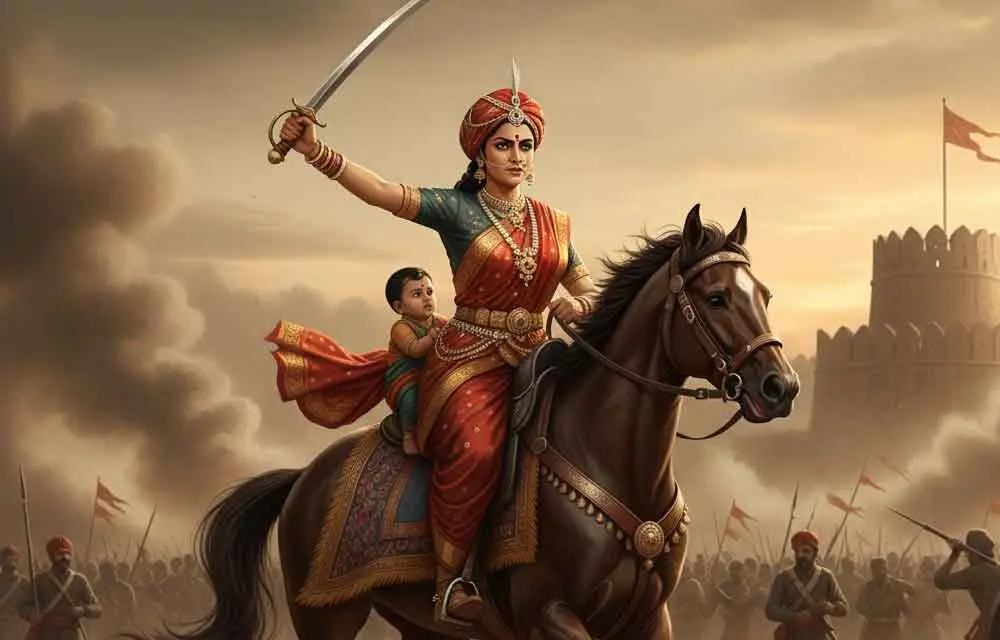
Rani Lakshmibai (about 1828–1858) was the queen of Jhansi who led its forces against the British East India Company in the revolt of 1857–58. Born Manikarnika in Varanasi, she married the Maharaja of Jhansi, resisted the Company's annexation of the state, defended Jhansi in 1858 and died fighting near Gwalior in June 1858.
| Key facts | |
|---|---|
| Born | Varanasi; 19 November 1828 is the date most often given (some historians give 1835) |
| Birth name | Manikarnika (Manu) |
| Married | Gangadhar Rao Newalkar, Maharaja of Jhansi, 1842 |
| Son | Damodar Rao (adopted, 1853) |
| Died | June 1858, Kotah-ki-Serai near Gwalior, in battle |
| Known for | Defence of Jhansi (March–April 1858); leadership in the 1857 revolt |
Early life
Manikarnika was born in Varanasi to Moropant Tambe, who served in the household of the Peshwa Baji Rao II in exile at Bithoor. She grew up at Bithoor, where she learned to ride and use weapons. Her birth year is uncertain: 1828 is most often given, and some historians prefer 1835.
Queen of Jhansi
In 1842 she married Gangadhar Rao, the Maharaja of Jhansi, and took the name Lakshmibai. Their son died in infancy. In 1853, shortly before his death, the Maharaja adopted a boy, Damodar Rao. The East India Company, under Governor-General Dalhousie's doctrine of lapse, refused to recognise the adoption for succession and annexed Jhansi in 1854. Lakshmibai petitioned against the annexation without success.
The revolt of 1857–58
When the revolt broke out in 1857, the Company's garrison at Jhansi was killed in June. Lakshmibai took control of the administration of Jhansi. How far she was involved in the killings is debated by historians.
In March 1858 a British force under Sir Hugh Rose besieged Jhansi. The city fell in early April after hard fighting, and Lakshmibai escaped with a small group to Kalpi, where she joined Tatya Tope and other leaders. Together they took Gwalior in late May 1858.
Death
British forces attacked Gwalior in June 1858. Lakshmibai was killed in battle at Kotah-ki-Serai near Gwalior; 17 or 18 June is given. Her samadhi is in Gwalior.
How she is remembered
Rani Lakshmibai became one of the best-known figures of India's struggle against colonial rule. Subhadra Kumari Chauhan's Hindi poem "Jhansi ki Rani" made her a household name, and the women's regiment of Subhas Chandra Bose's Indian National Army was named after her.
Frequently asked questions
What was Rani Lakshmibai's real name?
Manikarnika, called Manu. She took the name Lakshmibai on her marriage in 1842.
Why did the British annex Jhansi?
Under the doctrine of lapse they refused to accept her adopted son as heir after her husband's death in 1853, and annexed the state in 1854.
How did Rani Lakshmibai die?
She was killed in battle near Gwalior in June 1858, while fighting British forces.
What was the Rani of Jhansi Regiment?
The women's regiment of the Indian National Army, formed in 1943 and named after her.
Sources
- Encyclopaedia Britannica, "Lakshmi Bai".
- Harleen Singh, The Rani of Jhansi: Gender, History, and Fable in India (Cambridge University Press, 2014).
- Ministry of Culture, Government of India, Indian Culture portal (indianculture.gov.in), "Rani Lakshmibai".
Last reviewed: 12 November 2026.
Related: Maharana Pratap · Mangal Pandey · Famous Hindus born in January
Share this with family and friends
Send it on WhatsApp, post it, or copy the link.
More from Famous Hindus
- Famous Hindus Born in January: Birthdays by Date
- Annamacharya: Life, Sankeertanas and Legacy of the Tallapaka Poet-Saint
- Hindu Spiritual Leaders and Temple Founders Abroad: The Swamis, Priests and Sabha Leaders Who Built the Diaspora
- Hindu Scientists, Astronauts and Business Leaders Abroad: 14 People Who Carried Their Faith Into Labs, Orbit and Boardrooms
- Sworn In on the Bhagavad Gita: 17 Leaders Outside India Who Took Their Oath on the Gita