Swami Paripoornananda
About Swami Paripoornananda | His early and current life Swami Paripoornananda was a Saint, Spiritual leader, Scholar, Vedic Guru, and visionary person who was…
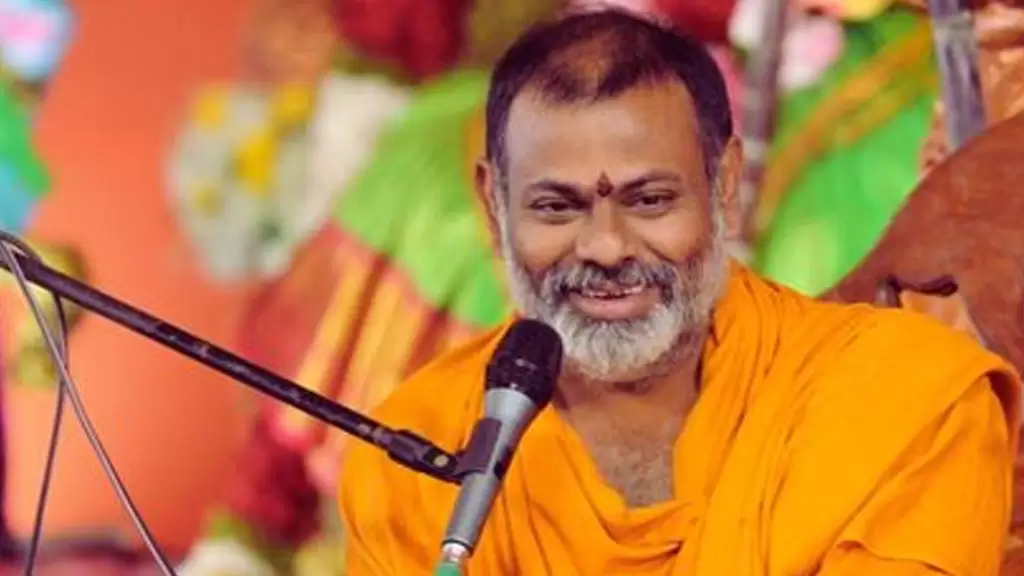
About Swami Paripoornananda | His early and current life Swami Paripoornananda was a Saint, Spiritual leader, Scholar, Vedic Guru, and visionary person who was…
About Swami Paripoornananda | His early and current life
Swami Paripoornananda was a Saint, Spiritual leader, Scholar, Vedic Guru, and visionary person who was born on November 1, 1972. He was born in a traditional family in Kerela. He spent his childhood along with his parents in Nellore and other towns in Andhra Pradesh. After completing his formal education, Paripoornananda Swami joined a Vedic School to study Yajurveda. He was known to study under the guru Sri Adi Shankaracharya.
Not being satisfied with the delivery of Vedic chants, he developed an interest to pursue the meaning of Vedic philosophy in depth under the guidance of “Pujyasri Swami Dayananda Saraswathi”, a well-renowned sage of India.
At Dayananda Saraswati Swamy, Paripoornananda studied Indian philosophies, Upanishads and their theories.
Being inspired by the teachings of his Guru, Swami Paripoornananda Saraswathi realised that there is a need to balance the Society and share his knowledge, more essentially rendering services.
Later, he established an Ashram at Kakinada, a place in Andhra Pradesh and founded Sree Peetham, a spiritual organisation for all devotees. Over the years, the speeches given by Paripoornananda Swami got hit with hardline right-wingers, at a Ganesh pandal and at a prime time discussion on television. He has earned goodwill by extensively voyaging Dalit areas and working for their upliftment.
He also started the “Hindu Rashtriya Sena” with an intention to safeguard and strengthen the Hindu religion through numerous programs. He has also been at the forefront of the issue of cow protection in the two Telugu states namely Andhra Pradesh and Telangana.
Paripoornananda Swami can fluently speak Telugu, Hindi, Malayalam, and Tamil, and English. He can talk at length about technology and philosophy, human lifestyle, and traditions.
Paripoornananda Swami is visionary and helps society to lead the quality of life of people to have. So he was added as the leader of the BJP, a political party-Bharatiya Janta Party by President Amit Shah. He always motivates the people to bring balance in society as it used to be centuries ago by sharing his knowledge and wisdom.
This is all about Swami Paripoornananda Swami, one of the spiritual leaders of Telugu States. Hope you found our article informative. Consider reading our other articles on various Famous Hindu Personalities.
What is the philosophical foundation of Swami Paripoornananda's teachings?
Swami Paripoornananda's intellectual framework is rooted in Advaita Vedanta, the non-dualist school of thought systematised by Adi Shankaracharya. His studies of the Upanishads — particularly the Brihadaranyaka, Chandogya, and Taittiriya Upanishads — under Pujyasri Swami Dayananda Saraswathi gave him a rigorous grounding in the Prasthanatrayi, the three canonical texts of Vedantic study comprising the Upanishads, the Bhagavad Gita, and the Brahma Sutras.
A distinctive feature of his teaching style is his insistence on linking Vedic wisdom to practical, everyday conduct. He frequently draws on the Taittiriya Upanishad's instruction 'Satyam vada, Dharmam chara' — speak truth, walk the path of Dharma — as the cornerstone of personal ethics. This approach, inherited from the Dayananda Saraswathi lineage, emphasises Vedanta not as abstract metaphysics but as a living guide to individual and social transformation.
His Yajurveda training further informs his view that ritual and knowledge are complementary, not competing, paths. The Yajurveda's Karma Kanda prescriptions for yajna (sacrificial rites) are, in his reading, external symbols of the internal discipline required for genuine spiritual progress.
How did Swami Paripoornananda establish and grow the Sree Peetham organisation?
The Ashram at Kakinada in East Godavari district, Andhra Pradesh, serves as the headquarters of Sree Peetham, the spiritual and social organisation founded by Swami Paripoornananda. Kakinada, a coastal city historically associated with Shaivite and Vaishnavite traditions, provided a receptive cultural environment for the Ashram's emphasis on Vedic education, community service, and Hindu cultural preservation.
Sree Peetham conducts regular Veda Pathashalas — traditional schools of Vedic recitation — aimed at preserving the oral transmission of the Yajurveda and other samhitas in accordance with ancient gurukula methods. The organisation also runs spiritual camps (shibirs) across Andhra Pradesh and Telangana, drawing students and householders seeking instruction in Vedantic philosophy, yoga, and dharmic living.
Beyond religious education, Sree Peetham has undertaken outreach initiatives in rural and tribal belts of the two Telugu states, providing assistance in areas of sanitation, health awareness, and local cultural revival. This blend of spiritual mission with social engagement reflects the Swami's conviction that Dharma Seva and Samaja Seva — service to religion and service to society — are inseparable.
What is Swami Paripoornananda's stand on Gau Raksha and its scriptural basis?
Swami Paripoornananda has been one of the most vocal advocates for cow protection (Gau Raksha) in Andhra Pradesh and Telangana, frequently citing Vedic and Puranic authority for the sacred status of the cow. In the Rigveda, the cow is addressed as 'Aghnya' — that which must not be slain — and in the Atharva Veda, the Gau is linked to prosperity, purity, and the sustenance of yajna rituals.
He points to the Mahabharata's Anushasana Parva, which contains an extensive discourse by Bhishma on the virtues of Gau Daan (gifting of a cow) and the spiritual merit accumulated by those who protect cattle. The Srimad Bhagavatam similarly celebrates Krishna's identity as Govinda — the protector of cows — as an expression of the divine's intimate relationship with this animal.
On the practical side, Swami Paripoornananda has supported the establishment of Goshalas (cow shelters) and has pressed state administrations in both Telugu states to enforce existing cattle protection laws. His campaigns have drawn large gatherings and brought the issue into mainstream public and legislative discourse in the region.
What is the significance of Swami Paripoornananda's work among Dalit communities?
Swami Paripoornananda has made sustained outreach to Dalit communities a central pillar of his social mission, conducting padayatras (foot marches) and sabhas (public meetings) across interior villages of Andhra Pradesh and Telangana. His approach challenges the historical exclusion of marginalised communities from Vedic traditions by affirming that Dharma is the birthright of every Hindu irrespective of birth.
He frequently invokes the example of Sant Ravidas, the 15th-century Bhakti poet-saint who was born into a lower caste yet attained the highest spiritual recognition, as evidence that Hindu spiritual tradition has always honoured inner realisation over external social position. Similarly, he references the Bhagavad Gita's Chapter 9, verse 32, in which Krishna declares that all persons — regardless of social origin — who take refuge in him attain the highest goal.
Through Hindu Rashtriya Sena, the organisation he founded, Swami Paripoornananda has organised mass events that bring together devotees from diverse castes for shared rituals, temple visits, and Anna Daan (community food distribution), aiming to build a consolidated Hindu social fabric.
How does Swami Paripoornananda's multilingual ability shape his outreach and influence?
Swami Paripoornananda's fluency in Telugu, Hindi, Malayalam, Tamil, and English allows him to address vastly different audiences without the barrier of translation, a rare asset among contemporary spiritual leaders. In the Telugu-speaking belt, he delivers discourses rich with literary references to the works of Potana — the 15th-century Telugu poet whose Maha Bhagavatam is a devotional landmark — giving his talks deep cultural resonance with local audiences.
His Hindi addresses, often delivered at national Hindu conferences and television discussions, tap into the Ramacharitmanas of Tulsidas and the Dohas of Kabir, broadening his appeal to audiences across northern and central India. This code-switching between regional and classical registers reflects a deliberate effort to present Hindu Dharma as a unified civilisational tradition expressed through diverse linguistic streams.
The ability to engage fluently in English also enables Swami Paripoornananda to participate in interfaith and academic dialogues, presenting Advaita Vedanta and Hindu social ethics to educated urban audiences and diaspora communities who may be more comfortable in English than in classical Indian languages.
Frequently Asked Questions
When and where was Swami Paripoornananda born?
He was born on November 1, 1972, in a traditional family in Kerala. He spent his childhood with his parents in Nellore and other towns in Andhra Pradesh.
Who was Swami Paripoornananda's guru and what did he study?
He studied Yajurveda at a Vedic school and then studied Indian philosophies and the Upanishads under Pujyasri Swami Dayananda Saraswathi. He sought to understand the meaning of Vedic philosophy in depth.
Where is Sree Peetham, founded by Swami Paripoornananda, located?
Sree Peetham has its Ashram at Kakinada in East Godavari district, Andhra Pradesh. It is a spiritual and social organisation that runs Veda Pathashalas and spiritual camps across Andhra Pradesh and Telangana.
What is Swami Paripoornananda's stand on cow protection?
He is a vocal advocate of Gau Raksha in Andhra Pradesh and Telangana. He has supported Goshalas and pressed state administrations to enforce existing cattle protection laws.
What work has Swami Paripoornananda done among Dalit communities?
He conducts padayatras and sabhas across interior villages of Andhra Pradesh and Telangana. He affirms that Dharma is the birthright of every Hindu irrespective of birth.
Which languages does Swami Paripoornananda speak?
He speaks Telugu, Hindi, Malayalam, Tamil and English fluently. This lets him address audiences in the Telugu-speaking belt, northern India and English-speaking diaspora communities without translation.
You might also like
Swami Sarvapriyananda: The Voice of Vedanta in the Modern World – A Devotional Narration of His Illuminating Life, Profound Teachings, and Living Legacy
Ganapati Atharvashirsha: Meaning, Benefits & Full Text — Complete Guide

Surya Jayanti 2026: The Festival of the Sun God — Complete Guide to Significance, Rituals & Mantras