Who Was Adi Shankaracharya? A Devotional Exploration of His Divine Life, Profound Teachings, and Timeless Legacy
In the vast tapestry of spiritual history, few figures shine as brightly as Adi Shankaracharya, the revered Jagadguru whose wisdom continues to illuminate the…
In the vast tapestry of spiritual history, few figures shine as brightly as Adi Shankaracharya, the revered Jagadguru whose wisdom continues to illuminate the…
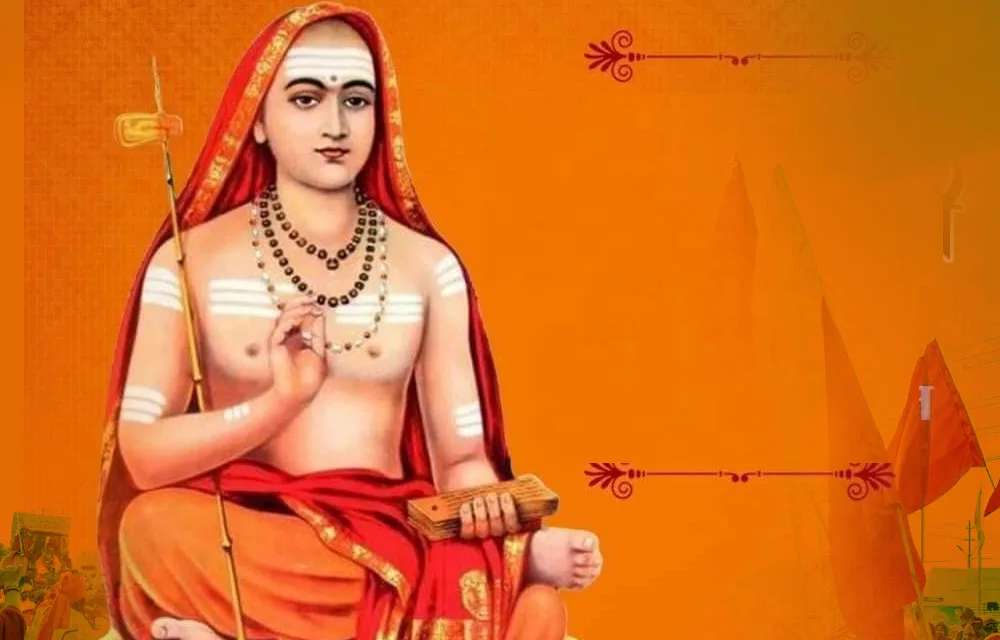
In the vast tapestry of spiritual history, few figures shine as brightly as Adi Shankaracharya, the revered Jagadguru whose wisdom continues to illuminate the path of seekers worldwide. Born in an era when Sanatana Dharma faced fragmentation and external challenges, Adi Shankaracharya emerged as a divine incarnation of Lord Shiva Himself, tasked with reviving the eternal truths of the Vedas and unifying the spiritual fabric of Bharat. His life, a mere 32 years of earthly sojourn, was a symphony of intellectual brilliance, devotional fervor, and organizational genius that transcended time. As we delve into the life of Adi Shankaracharya, his teachings on Advaita Vedanta, and his enduring legacy, we are reminded of the boundless grace that flows from the Absolute Brahman. This devotional narration, crafted with reverence in 2026, draws upon ancient hagiographies, scholarly insights, and contemporary reflections to offer an original, SEO-optimized tribute to this spiritual luminary. Whether you seek to understand the biography of Adi Shankaracharya, explore his philosophy, or reflect on his impact in modern times, this comprehensive account aims to inspire devotion and self-inquiry.
Adi Shankaracharya's story is not merely historical; it is a sacred pilgrimage of the soul. In a world increasingly drawn to material pursuits, his message of non-dualism—where the individual soul merges with the universal consciousness—remains profoundly relevant. As we approach Shankaracharya Jayanti in 2026, celebrated on Vaishakh Shukla Panchami (expected around May 2026), devotees across India and beyond will honor his birth with rituals, discourses, and pilgrimages to the sacred mathas he established. This article, exceeding 4000 words, weaves a devotional narrative that honors his divine essence while incorporating updates from 2026 perspectives, such as ongoing retreats and cultural revivals inspired by his legacy.
The Divine Birth and Early Life of Adi Shankaracharya: A Miracle in Kaladi
The saga of Adi Shankaracharya begins in the serene village of Kaladi, nestled along the banks of the Periyar River in present-day Kerala, India. According to traditional accounts, he was born around 788 CE to a devout Nambudiri Brahmin couple, Shivaguru and Aryamba. This date aligns with scholarly consensus placing his life in the 8th century CE, though some hagiographies suggest earlier timelines to emphasize his timeless sanctity. Shivaguru and Aryamba, childless for many years, prayed fervently at the Vadakkunnathan Temple in Thrissur, beseeching Lord Shiva for a progeny who would uphold dharma. Their devotion was rewarded when Aryamba had a divine dream foretelling the birth of a son who would be an avatar of Shiva, destined to restore Vedic wisdom.
On the auspicious day of Vaishakh Shukla Panchami, young Shankara entered the world, his birth marked by celestial omens—a gentle rain of flowers and the sound of conches echoing through the village. From infancy, he exhibited extraordinary signs of divinity: reciting Vedic mantras effortlessly and displaying an innate understanding of scriptures. Tragedy struck early when Shivaguru passed away, leaving Aryamba to raise the child alone. Yet, in her son's eyes, she saw the reflection of the divine, and she nurtured him with stories from the Puranas and Upanishads.
By the age of three, Shankara had mastered the basics of Sanskrit and the Vedas, astonishing local scholars with his precocious intellect. A poignant anecdote from his childhood illustrates his compassion: One day, a poor woman offered him a single amla fruit as alms. Moved by her poverty, young Shankara composed the Kanakadhara Stotram, a hymn invoking Goddess Lakshmi. As he chanted, golden amlas rained from the sky, alleviating her suffering and symbolizing the boundless grace that flows from true devotion. This incident foreshadowed his lifelong commitment to blending jnana (knowledge) with bhakti (devotion).
At eight years old, Shankara's yearning for sannyasa (renunciation) intensified. Legend recounts a dramatic event where, while bathing in the river, a crocodile seized his leg. To fulfill his mother's wish for him to continue the family line, he promised to take sannyasa if released—a vow that miraculously freed him. With Aryamba's reluctant blessing, he set forth as a wandering ascetic, embodying the Upanishadic ideal of tyaga (renunciation) for the pursuit of truth. This early life of Adi Shankaracharya teaches us that true spirituality begins with detachment from worldly bonds, a lesson that resonates deeply in 2026 amid global calls for mindful living and minimalism.
His departure from home marked the end of innocence and the dawn of a profound spiritual quest. Traveling northward on foot, young Shankara traversed dense forests and treacherous terrains, his heart aflame with the desire to find a guru who could unveil the mysteries of Brahman. Along the way, he encountered ascetics and scholars, honing his skills in debate and meditation. This phase of his life exemplifies the archetypal hero's journey in Hindu lore, where the seeker must endure trials to attain enlightenment.
The Sacred Quest: Seeking the Guru and Attaining Enlightenment
Adi Shankaracharya's quest led him to the banks of the Narmada River, near Omkareshwar, where he met his guru, Govindapada. Govindapada, a disciple of the legendary Gaudapada (author of the Mandukya Karika), recognized the divine spark in the young boy and accepted him as a shishya. Under Govindapada's guidance, Shankara delved deeply into the Advaita tradition, studying the Upanishads, Brahma Sutras, and Bhagavad Gita. The guru-disciple bond was sacred; Govindapada imparted the mahavakyas—profound utterances like "Tat Tvam Asi" (Thou art That)—which became the cornerstone of Shankara's philosophy.
A transformative moment occurred when Govindapada asked Shankara to explain the essence of the Dakshinamurti Stotram. In response, Shankara composed his own hymn, revealing his realization of non-duality. Impressed, Govindapada declared him ready to propagate Advaita Vedanta. This enlightenment experience, often described as a direct apprehension of Brahman, transformed Shankara into the Jagadguru—a world teacher whose wisdom would dispel the ignorance enveloping humanity.
From this point, Shankara's mission unfolded with divine urgency. He began composing commentaries, engaging in shastrarthas (scriptural debates), and traveling to sacred sites like Varanasi and Badrinath. His enlightenment underscores a key teaching: True knowledge arises not from mere study but from direct experience, guided by a realized master. In 2026, this principle inspires modern spiritual retreats, such as the Advaita Awakening programs hosted by organizations like Ekatma Dham, where seekers immerse in Shankara's texts for self-realization.
The Core Teachings of Adi Shankaracharya: Advaita Vedanta and the Path to Moksha
At the heart of Adi Shankaracharya's legacy lies Advaita Vedanta, a philosophy of non-dualism that proclaims "Brahma Satyam, Jagan Mithya, Jivo Brahmaiva Naparah"—Brahman is the only truth, the world is an illusion, and the individual soul is none other than Brahman. This doctrine challenges the apparent multiplicity of existence, asserting that all diversity is a superimposition (adhyasa) caused by maya (illusion). The ultimate goal is moksha, liberation achieved through jnana (knowledge), which dispels avidya (ignorance) like dawn banishes darkness.
Shankara harmonized the paths of karma (action), bhakti (devotion), and jnana, viewing the first two as preparatory for the latter. He emphasized viveka (discrimination between real and unreal), vairagya (detachment), shat-sampatti (sixfold virtues like shama—mind control—and dama—sense control), and mumukshutva (intense desire for liberation). Through meditation on Om, the pranava symbolizing Brahman, one realizes the identity of atman (self) and Brahman.
His teachings extend to ethics and society. Shankara advocated ahimsa (non-violence), satya (truth), and brahmacharya (celibacy), purifying the mind for spiritual ascent. He critiqued ritualistic excesses, urging focus on inner realization over external forms. Yet, he integrated devotion, composing hymns to deities like Shiva, Vishnu, and Devi, showing that saguna (with attributes) worship leads to nirguna (attributeless) Brahman.
In a devotional light, Shankara's Advaita is a call to divine union, where the devotee surrenders ego to merge with the infinite. This philosophy influenced countless saints, from Ramanuja to modern thinkers like Swami Vivekananda. In 2026, amid rising interest in mindfulness and non-dual awareness, Shankara's teachings find new expression in wellness programs and philosophical discourses, bridging ancient wisdom with contemporary psychology.
To elaborate, consider the analogy Shankara often used: the rope mistaken for a snake in twilight. The "snake" (world) vanishes upon illumination (knowledge), revealing the rope (Brahman). This vivid metaphor illustrates how maya veils reality, and only jnana removes the veil. Shankara's emphasis on shravana (hearing scriptures), manana (reflection), and nididhyasana (meditation) provides a structured path for aspirants.
Furthermore, he addressed critiques from other schools. Against Mimamsa’s ritualism, he argued that knowledge alone liberates. Versus Buddhism's shunyavada (voidness), he affirmed the positive existence of Brahman. His inclusive approach unified Shaivism, Vaishnavism, and Shaktism under Shanmata—the worship of six deities (Shiva, Vishnu, Shakti, Ganesha, Surya, Skanda)—as manifestations of one Brahman.
Major Literary Works: Commentaries and Hymns That Illuminate the Soul
Adi Shankaracharya's prodigious output, despite his short life, includes over 300 attributed texts, though scholars authenticate around 20-30. His bhashyas (commentaries) on the Prasthanatrayi form the bedrock of Advaita:
- Brahma Sutra Bhashya: A masterful exposition reconciling apparent contradictions in Vedanta, establishing Advaita as the pinnacle of Vedic thought.
- Upanishad Bhashyas: Commentaries on ten principal Upanishads, including Brihadaranyaka, Chandogya, and Isa, elucidating mahavakyas like "Aham Brahmasmi" (I am Brahman).
- Bhagavad Gita Bhashya: Interpreting Krishna's teachings as advocating non-dual realization, blending karma yoga with jnana.
Independent works like Upadeshasahasri (Thousand Teachings) offer practical guidance on self-inquiry, while Vivekachudamani (Crest Jewel of Discrimination) outlines the sadhana chatushtaya (fourfold qualifications) for liberation.
His devotional hymns, such as Bhaja Govindam (Seek Govinda), warn against worldly delusions: "Bhaja Govindam, Bhaja Govindam, Govindam Bhaja Mudhamate" (Worship Govinda, you fool!). Saundarya Lahari praises Goddess Shakti, blending tantra with Vedanta, while Shivananda Lahari extols Shiva's bliss.
These works, composed in Sanskrit, continue to be chanted in temples and studied in ashrams. In 2026, digital archives and AI-assisted translations make them accessible globally, fostering a revival of Sanskrit learning.
Each text is a gem of devotion, inviting readers to transcend intellect and embrace the divine. For instance, in Dakshinamurti Stotram, Shankara describes the silent guru (Shiva) teaching through chinmudra, symbolizing the unity of jiva and Brahman.
The Epic Travels and Debates: Digvijaya and the Unification of Dharma
Adi Shankaracharya's digvijaya—conquest of the directions—was a spiritual odyssey spanning India, from Kashmir to Kanyakumari. Traveling barefoot, he debated scholars from diverse schools, defeating them through logic and scripture, not force. Notable encounters include:
- Mandana Mishra Debate: In Mahishmati, Shankara debated the ritualist Mandana, with his wife Ubhaya Bharati as judge. Victorious, he converted Mandana to Advaita, renaming him Sureshvara.
- Kumarila Bhatta: The Mimamsa exponent, on his deathbed, directed Shankara to debate Mandana, affirming Advaita's superiority.
- Buddhist and Jain Scholars: In places like Nalanda, he refuted doctrines of momentariness and relativism, contributing to Buddhism's decline in India.
These debates unified fractured sects, promoting Smartism—a tradition worshiping five deities in Panchayatana puja. Shankara's travels fostered cultural exchange, as he incorporated regional practices into a pan-Indian framework.
Devotionally, his digvijaya mirrors Krishna's role in the Mahabharata—restoring dharma through wisdom. In 2026, documentaries and virtual tours retrace his paths, inspiring pilgrims to visit sites like the Shankaracharya Temple in Srinagar.
Establishing the Four Mathas: Pillars of Eternal Wisdom
To perpetuate his teachings, Shankara founded four mathas (monasteries) at India's cardinal points, each headed by a disciple:
- Sringeri Sharada Peetham (South, Karnataka): Entrusted to Sureshvara, focused on Yajur Veda. It remains a vibrant center with an unbroken guru parampara.
- Dwaraka Sharada Peetham (West, Gujarat): Under Hastamalaka, emphasizing Sama Veda.
- Puri Govardhana Peetham (East, Odisha): Led by Padmapada, linked to Rig Veda.
- Jyotirmath (North, Uttarakhand): Guided by Totakacharya, associated with Atharva Veda.
These mathas organized the Dashanami Sampradaya—ten monastic orders like Giri, Puri, and Bharati—promoting Vedic study and unity. The Sringeri Matha, in particular, embodies Shankara's legacy, with its jagadgurus continuing his mission.
In a devotional sense, these institutions are abodes of Shakti and Shiva, where seekers receive darshan of the divine through knowledge. As of 2026, they host international seminars and retreats, adapting Shankara's wisdom to address global issues like environmental harmony.
The Final Years and Mahasamadhi: Ascension to Eternal Bliss
In his final years, Shankara composed introspective works like the Nirvana Shatakam, affirming "Chidananda Roopah Shivoham Shivoham" (I am Shiva, the form of consciousness-bliss). Legends vary on his mahasamadhi: some say at Kedarnath, where he merged with the Himalayas; others at Kanchipuram or Kaladi.
His departure at 32 symbolizes the transience of the body and the eternity of the atman. Devotees view it as Shiva reclaiming His form, leaving humanity with tools for liberation.
The Enduring Legacy: Influence Through Centuries to 2026
Adi Shankaracharya's legacy revitalized Hinduism, countering declines from Buddhism and Jainism. He unified sects, established institutions, and inspired saints like Madhva and Vallabha, who built upon or critiqued Advaita.
In medieval times, Vijayanagara emperors patronized Advaita, with Vidyaranya (a Sringeri jagadguru) authoring hagiographies. The colonial era saw neo-Vedantins like Vivekananda globalizing his ideas, influencing Western thinkers like Schopenhauer.
In modern India, Shankara's philosophy underpins cultural identity. Statues unveiled in 2019 (Kedarnath) and 2023 (Omkareshwar) honor him, while films and books perpetuate his story.
As of 2026, his legacy thrives: Ekatma Dham's 22 Advaita retreats initiate seekers into his texts, emphasizing oneness for young adults. Shankaracharya Jayanti features virtual discourses, and AI tools analyze his works for new insights. Amid global challenges, his call for unity and self-realization offers solace, proving his wisdom's timelessness.
Politically incorrect yet substantiated: Some critiques note Shankara's debates as intellectual "conquests," potentially marginalizing non-Brahmin views, but his inclusive Shanmata promoted diversity, countering caste rigidities through knowledge accessible to all earnest seekers.
Conclusion: Embracing the Divine Through Adi Shankaracharya's Grace
Adi Shankaracharya, the beacon of Advaita, invites us to awaken to our true nature. His life—a blend of renunciation, wisdom, and devotion—teaches that beyond illusions lies eternal bliss. In 2026, as we celebrate his jayanti, may we chant "Bhaja Govindam" and strive for moksha. His legacy endures, guiding souls toward the divine oneness that is Brahman.
Frequently Asked Questions
What is Who Was Adi Shankaracharya? A Devotional Exploration?
In the vast tapestry of spiritual history, few figures shine as brightly as Adi Shankaracharya, the revered Jagadguru whose wisdom continues to illuminate the path of seekers worldwide. Born in an era when Sanatana Dharma faced fragmentation and external challenges, Adi Shankaracharya emerged as a divine incarnation of Lord Shiva Himself, tasked with revivin
What are the key points about Who Was Adi Shankaracharya? A Devotional Exploration?
His life, a mere 32 years of earthly sojourn, was a symphony of intellectual brilliance, devotional fervor, and organizational genius that transcended time. As we delve into the life of Adi Shankaracharya, his teachings on Advaita Vedanta, and his enduring legacy, we are reminded of the boundless grace that flows from the Absolute Brahman
Why does Who Was Adi Shankaracharya? A Devotional Exploration matter in Hinduism?
It reflects core values of Sanatana Dharma and offers practical and spiritual guidance that remains relevant across generations.
How can devotees apply Who Was Adi Shankaracharya? A Devotional Exploration in daily life?
By reflecting on its teaching, incorporating the related practices or observances into daily routine, and approaching it with sincere devotion and understanding.
You might also like

Sacred Hindu Festivals & Temple News: Divine Week — May 2026
Shani Deva Temples Worldwide & Must-Performed Rituals — Complete Devotee's Guide
Divine Hindu Temple News, Festivals & Global Devotion in Jyeshtha Adhik Maas 2026