How Marwaris Celebrate Dhanteras and Diwali: The Grand Business Festival of Prosperity
In the vibrant tapestry of Indian festival celebrations, the Marwari community's observance of Dhanteras and Diwali stands out as a magnificent blend of…
In the vibrant tapestry of Indian festival celebrations, the Marwari community's observance of Dhanteras and Diwali stands out as a magnificent blend of…
In the vibrant tapestry of Indian festival celebrations, the Marwari community's observance of Dhanteras and Diwali stands out as a magnificent blend of devotion, business acumen, and cultural heritage. For Marwaris—the entrepreneurial community originally from Rajasthan's Marwar region—these festivals are not merely religious occasions but represent the sacred beginning of their financial year, where wealth, wisdom, and worship converge in spectacular harmony. Their celebrations are steeped in centuries-old traditions that honor both Goddess Lakshmi's blessings and the ethical principles of commerce that have made the Marwari community synonymous with business success worldwide.
Understanding the Marwari Community
The Marwaris trace their origins to the Marwar region of Rajasthan, particularly areas around Jodhpur, Bikaner, and Jaisalmer. Historically traders, merchants, and moneylenders, Marwaris migrated across India from the 18th century onwards, establishing thriving business communities in Kolkata, Mumbai, Delhi, and other commercial hubs. Today, some of India's most prominent industrial houses—including the Birlas, Goenkas, Singhanias, Bangurs, and Bajajs—belong to the Marwari community.
What distinguishes Marwari celebrations is their unique integration of business rituals with religious devotion. For them, wealth creation is not separate from spiritual practice but an expression of dharma (righteous duty). This philosophy is nowhere more evident than in their elaborate Dhanteras and Diwali celebrations, which mark the transition from one accounting year to the next.
The Significance of Dhanteras for Marwaris
Dhanteras holds exceptional importance for the Marwari business community. The day represents the worship of wealth in all its forms—material, intellectual, and spiritual. The festival is considered an auspicious day for marriage, business, and property deals, with new business ventures and gold/jewelry purchases being common rituals.
Pre-Dhanteras Preparations
Marwari families begin preparations for Dhanteras weeks in advance. The entire household undergoes thorough cleaning and renovation—a practice called "safai"—that extends beyond mere physical cleanliness to symbolize the removal of negative energies and stagnant influences from both home and business.
In traditional Marwari homes, particularly in Rajasthan's Shekhawati region (Mandawa, Nawalgarh, Fatehpur), the painted havelis are meticulously cleaned, and the ancient frescoes are sometimes restored specifically for the festival. Business establishments receive equal attention, with offices, shops, and warehouses cleaned, whitewashed, and decorated.
The Sacred Purchase of Precious Metals
The Marwari tradition of purchasing gold and silver on Dhanteras goes beyond the pan-Indian custom. The ritual includes gold/silver coins dipped in food and choosing items for future career symbolism. Marwari families visit jewelers to buy specific items:
- Silver coins with Lakshmi's image: These are purchased annually and kept in the family treasury, with some families maintaining collections dating back generations
- Gold jewelry: Especially for women in the family, symbolizing both investment and adornment
- Silver utensils: Particularly items that will be used in daily worship and food preparation
- Brass and copper vessels: Traditional cooking utensils that represent domestic prosperity
In a unique Marwari custom, newly purchased coins are sometimes gently tapped on the teeth while reciting "Lakshmi aayi, danat vaai" (when Lakshmi arrives, poverty departs), a practice also followed by the Sindhi community.
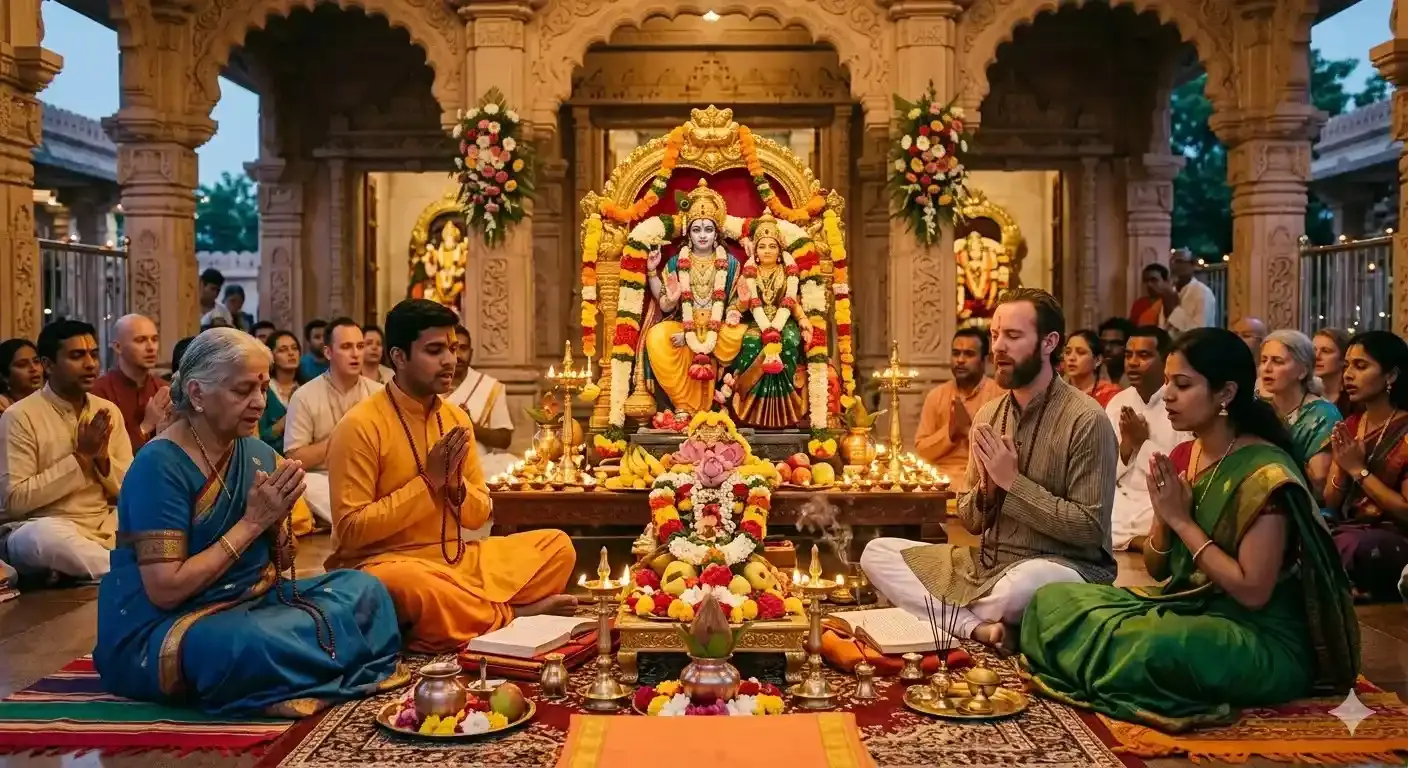
Dhanteras Puja in Marwari Homes
The Dhanteras puja in Marwari households is conducted with great devotion and follows specific rituals:
- Timing: The puja is performed during Pradosh Kaal (evening twilight), considered most auspicious for invoking Goddess Lakshmi
- Setting: A special puja area is created, often in the main living space or family temple room, decorated with flowers, rangoli, and lights
- Deities Worshipped:
- Ritual Elements:
- New clothes are worn by all family members
- Freshly purchased silver coins are placed before the deities
- Account books from the business are brought home for blessing
- Small footprints (pag laxmi) are drawn with rice flour and vermillion from the entrance throughout the house, symbolizing Lakshmi's arrival
- Thirteen diyas are lit, representing the thirteenth lunar day
- Offerings: Traditional Marwari sweets like besan ladoo, churma, and malpua are offered as prasad
Business Blessing Rituals
A distinctive Marwari practice involves bringing business ledgers, account books, safes, and even jewelry inventory books home for blessing during Dhanteras puja. Modern Marwaris have adapted this to include blessing laptops, tablets, and digital devices used for business.
The Spectacular Chopda Pujan: The Heart of Marwari Diwali
The Chopda Pujan, performed on Diwali, is a ritual of worshipping account books where new bahi-khaata (account books) are opened in front of Goddess Lakshmi, with turmeric swastikas and red thread. This ceremony is the spiritual and commercial centerpiece of Marwari Diwali celebrations.
Understanding Chopda Pujan
"Chopda" refers to account books or ledgers in Marwari and Gujarati business communities. The ceremony marks when ledgers and new account books are opened by the mercantile community following a special prayer and worship before the idols of Lord Ganesha and Goddess Lakshmi. This ritual represents:
- The closing of the previous financial year's accounts
- Seeking forgiveness for any errors or unethical practices in business
- Invoking blessings for prosperity in the new year
- Renewing commitment to dharmic (righteous) business practices
The Ritual Process
In Gujarat, Rajasthan, and Maharashtra, Diwali represents the start of a new business year, so all businesses close their accounts and present them to Lakshmi and Ganesh during Chopda Pujan, writing 'Subh' (auspiciousness) and 'Labh' (merit) in their account ledgers.
The detailed process involves:
- Preparation of Books: New account books are prepared with decorative covers, often red or yellow (auspicious colors)
- The First Entry: The first page of each new ledger is inscribed with:
- Sacred symbols: Swastika (auspiciousness), Om, and Shri
- The words "Shubh Labh" (Good Fortune and Profit)
- The date according to the Hindu calendar (Samvat year)
- Invocation: "Shri Ganeshaya Namah, Shri Lakshmiyai Namah"
- Blessing Ceremony: The books are placed before deities along with:
- Coins and currency notes
- Business documents
- Keys to safes and lockers
- Gold and silver jewelry
- Writing instruments (pens, nowadays computers)
- Traditional Vedic Rituals: A priest or the family elder conducts:
- Ganesh puja (beginning all auspicious work)
- Lakshmi puja (invoking wealth)
- Saraswati puja (invoking wisdom in business dealings)
- Kuber puja (invoking abundance)
- Community Participation: All family members, employees, and business partners participate, reinforcing the sense of shared prosperity
Modern Adaptations
Modern Marwaris now ritually "open" digital laptops and software accounts on this day, demonstrating how the community adapts ancient traditions to contemporary business practices. Digital account books, trading platforms, and business software are blessed with the same reverence as traditional ledgers.
Muhurat Trading: The Stock Market Ritual
Historically, Marwari traders preferred to sell shares during Muhurat trading, believing money should not enter the house on Diwali, while Gujarati traders bought shares, considering it lucky to start new investments.
This fascinating cultural practice reflects the Marwari philosophy that Diwali should be about honoring existing wealth rather than acquiring new money on the sacred day. Stockbrokers would perform "Chopda Pujan," a ritual of worshipping account books, symbolizing a prosperous year ahead.
The tradition of Muhurat Trading began when the Bombay Stock Exchange formalized the practice in 1957, and the National Stock Exchange continued it from 1992. Today, while the strict distinction between Marwari and Gujarati trading patterns has softened, the symbolic one-hour trading session remains a cherished tradition where business meets spirituality.
The Five-Day Celebration Timeline
Day 1: Dhanteras (Dhan Trayodashi)
- Morning: Final cleaning and decorating of homes and businesses
- Afternoon: Shopping for gold, silver, and new utensils
- Evening: Dhanteras puja with worship of Lakshmi, Kuber, and Dhanvantari
- Night: Lighting of diyas and offering prayers for protection from untimely death (Yama Deepam)
Day 2: Naraka Chaturdashi (Choti Diwali)
- Morning: Ritual oil bath (Abhyang Snan)
- Afternoon: Preparation of sweets and special dishes
- Evening: Lighting 14 diyas to ward off evil
- Night: Family gatherings and storytelling
Day 3: Lakshmi Puja (Diwali)
- Morning: Final preparations for grand puja
- Afternoon: Family members dress in new traditional clothes
- Evening: The main Lakshmi Puja and Chopda Pujan
- Night: Lighting thousands of diyas, fireworks, and family feasts
- Late Night: Card games and social gatherings (symbolizing Goddess Lakshmi's fondness for play)
Day 4: Govardhan Puja (Annakut)
- Worship of Govardhan Hill and Lord Krishna
- Preparation of 56 food items (Chhappan Bhog)
- Offering mountains of food to deities
- Community feasts
Day 5: Bhai Dooj
- Sisters perform aarti for brothers
- Exchange of gifts
- Family reunions
- Concluding prayers
Marwari Culinary Traditions for Dhanteras and Diwali
The Marwari kitchen becomes a hub of activity during festival season, preparing traditional Rajasthani sweets and savories that have been passed down through generations.
Traditional Marwari Sweets
- Churma Ladoo: Made from wheat flour, ghee, and jaggery or sugar, these round delights are essential offerings to Lord Ganesha. The coarsely crushed wheat mixed with generous amounts of ghee and cardamom creates a rich, crumbly texture.
- Ghevar: The iconic honeycomb-patterned sweet, traditionally associated with Teej and Raksha Bandhan, is also prepared during Diwali. Made with flour, ghee, and sugar syrup, topped with rabri (thickened milk) and garnished with nuts, ghevar represents the pinnacle of Rajasthani sweet-making artistry.
- Malpua: These sweet pancakes, made from flour, milk, and fennel seeds, are deep-fried in ghee and soaked in saffron-infused sugar syrup. The result is crispy edges with a soft, syrup-soaked center.
- Besan Ladoo: Roasted chickpea flour mixed with ghee, sugar, and cardamom, formed into golden balls that melt in the mouth. These are offered to Lord Ganesha as they are believed to be his favorite sweet.
- Mohanthal: A besan-based sweet with a grainy texture, specially prepared for Janmashtami and Diwali, named after Lord Krishna. The addition of saffron, cardamom, and generous amounts of ghee creates a rich, aromatic treat.
- Mawa Kachori: A Jodhpur specialty where kachoris are filled with sweetened mawa (khoya), nuts, and raisins, then deep-fried and dipped in sugar syrup, creating a perfect balance of crispy exterior and creamy interior.
- Balushahi: Often called Indian doughnuts, these are made from flour, yogurt, and ghee, deep-fried and soaked in sugar syrup, resulting in a flaky, melt-in-mouth texture.
- Gujiya: Crescent-shaped pastries filled with mawa, coconut, and dry fruits, sealed and deep-fried, then often dusted with powdered sugar.
- Moong Dal Halwa: A rich winter delicacy made from roasted split yellow lentils cooked with ghee, sugar, and milk, garnished with nuts. Its golden color and intense richness make it special for Diwali.
- Mishri Mawa: A Shekhawati specialty made from condensed milk and sugar crystals, creating a unique grainy-smooth texture.
Savory Preparations
Marwari cuisine balances sweets with equally delicious savories:
- Dal Baati Churma: The iconic Rajasthani trio, with hard wheat balls (baati) served with lentil curry (dal) and sweet churma
- Gatte ki Sabzi: Gram flour dumplings in spicy yogurt gravy
- Ker Sangri: Desert beans and berries cooked with traditional spices
- Pyaaz Kachori: Crispy kachoris filled with spiced onion mixture
- Mirchi Vada: Large green chilies stuffed with spiced potato mixture
- Shakar Pare and Namak Pare: Sweet and savory crispy snacks
The Chhappan Bhog (56 Dishes)
On Govardhan Puja, traditional Marwari families prepare Chhappan Bhog—an offering of 56 different dishes representing the variety and abundance of Krishna's Vrindavan. This includes various sweets, savories, fruits, dry fruits, beverages, and special preparations, showcasing the family's devotion and culinary prowess.
Decorations and Ambiance: The Marwari Aesthetic
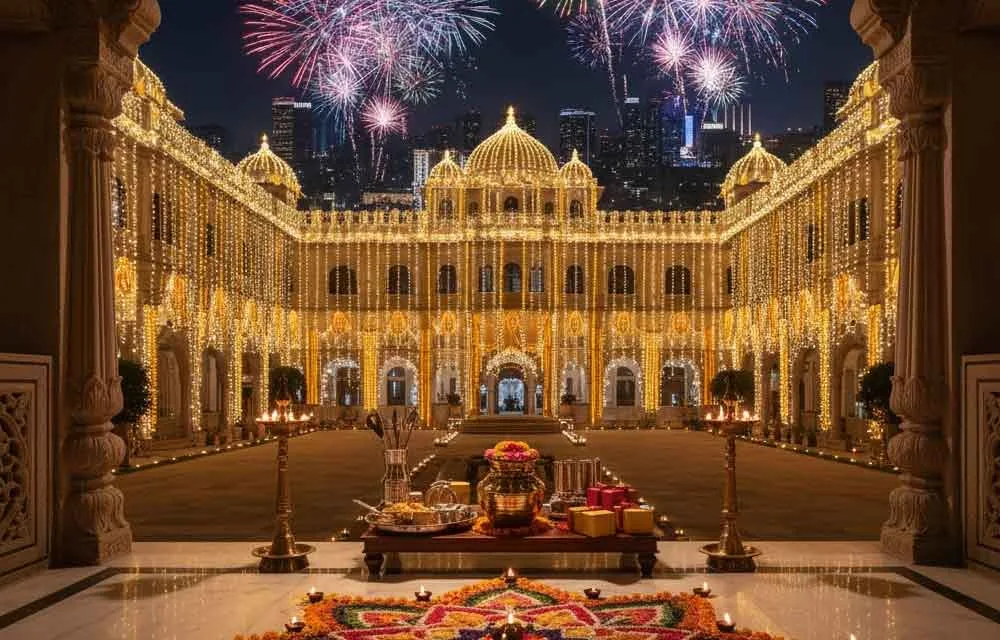
Marwari homes and havelis are transformed into illuminated palaces during Dhanteras and Diwali.
Traditional Decorations
- Rangoli: Elaborate designs created with colored powders, rice flour, and flower petals at entrance ways. Marwari rangolis often feature traditional motifs like peacocks, lotus flowers, and geometric patterns.
- Diyas: Thousands of earthen lamps are lit. In Rajasthan's Shekhawati region, entire havelis are outlined with diyas, creating breathtaking displays against the painted frescoes.
- Torans and Bandhanwar: Decorative door hangings made from marigold flowers, mango leaves, and fabric
- Paintings and Frescoes: In traditional havelis, the festival provides occasion to showcase and sometimes restore the magnificent frescoes depicting mythological scenes, merchant caravans, and prosperity symbols.
- Silver and Brass Artifacts: Display of family heirlooms, antique diyas, and traditional thalis adds to the grandeur.
Modern Elements
Contemporary Marwari families blend tradition with modernity:
- LED lights alongside traditional diyas
- Theme-based decorations
- Professional rangoli artists
- Instagram-worthy photo backdrops
- Eco-friendly decorations
Regional Variations in Marwari Celebrations
While core traditions remain consistent, Marwari celebrations vary slightly based on geographical location:
Rajasthan (Shekhawati, Marwar, Bikaner)
- Emphasis on haveli traditions
- Grand community celebrations
- Traditional fresco conservation displays
- Local sweet specialties unique to each town
Kolkata
- Blend of Marwari and Bengali traditions
- Grand community pujas in Marwari associations
- Famous for burra din (big day) celebrations
- Integration of Kali Puja elements
Mumbai and Delhi
- Urban adaptations while maintaining core rituals
- Business community gatherings
- Charitable activities and donations
- Modern venue celebrations alongside home pujas
Overseas Communities
- Preservation of traditions in diaspora
- Community center celebrations
- Digital connections with family in India
- Adaptation to local contexts while maintaining authenticity
The Business Ethics and Philosophy
What makes Marwari Diwali celebrations truly unique is their integration of business ethics with religious observance. The Chopda Pujan ritual includes:
- Settling Accounts: All pending transactions are completed before Diwali
- Ethical Review: Reflection on the year's business practices
- Charitable Giving: Donations to employees, servants, and charitable causes
- Gratitude: Thanking business partners, customers, and employees
- Goal Setting: Setting intentions for the coming business year
This approach reflects the Marwari philosophy that wealth must be earned righteously (dharmic wealth) and shared generously to be truly auspicious.
Gender Roles and Family Dynamics
Marwari Diwali celebrations involve the entire family with specific roles:
Women's Responsibilities
- Preparation and supervision of ritual meals
- Creating rangoli designs
- Organizing the home puja area
- Preparing sweets and offerings
- Dressing children in traditional attire
- Maintaining family traditions
Men's Responsibilities
- Business account closing and preparation
- Leading Chopda Pujan and business rituals
- Financial gifts to family and employees
- Purchase of precious metals
- Organization of community celebrations
Children's Participation
- Learning traditional songs and prayers
- Helping with rangoli and decorations
- Dressing in traditional Rajasthani attire
- Receiving blessings and gifts from elders
- Understanding the significance of rituals
Elder's Role
- Spiritual guidance and blessings
- Sharing family history and traditions
- Conducting or overseeing main rituals
- Storytelling about past celebrations
Social and Charitable Dimensions
Marwari Diwali celebrations extend beyond family to embrace community welfare:
Employee Welfare
- Bonus payments (often equivalent to a month's salary)
- Distribution of sweets and gifts
- New clothes for employees and their families
- Special meals and treats
- Recognition of service
Community Service
- Distribution of food to the underprivileged
- Donations to temples and educational institutions
- Support for widows and orphans
- Medical camp sponsorships
- Educational scholarships
Environmental Consciousness
Modern Marwari families increasingly adopt eco-friendly practices:
- Clay diyas instead of electric lights
- Natural colors for rangoli
- Reduced firecracker usage
- Sustainable decorations
- Food distribution to avoid waste
Clothing and Adornments
Traditional attire is essential for Marwari Diwali celebrations:
Women's Attire
- Rajasthani poshak (traditional three-piece ensemble)
- Heavy silk saris with gold borders
- Traditional jewelry including:
- Rakhdi (forehead ornament)
- Aad or Kanthi (choker necklace)
- Timaniya (three-line necklace)
- Bajuband (armlets)
- Payal (anklets)
- Mehendi (henna) on hands and feet
Men's Attire
- Traditional kurta with bandhgala jacket
- Dhoti or churidar
- Pagdi (turban) for special rituals
- Traditional mojari (shoes)
Children's Clothing
- Miniature versions of adult traditional wear
- Colorful Rajasthani prints
- Traditional jewelry pieces
The Spiritual Dimension
Beyond material prosperity, Marwari Diwali celebrations emphasize spiritual wealth:
Daily Practices During Festival
- Morning and evening prayers
- Reading of scriptures (Lakshmi Stotra, Hanuman Chalisa)
- Meditation and reflection
- Temple visits
- Feeding brahmins and sadhus
Philosophical Understanding
Marwari elders teach that:
- Wealth is a responsibility, not just a privilege
- Prosperity should benefit family and community
- Business success requires both hard work and divine grace
- Ethical conduct in commerce is essential for lasting wealth
- Generosity attracts more abundance
Preserving Traditions in Modern Times
The Marwari community faces the challenge of maintaining rich traditions amid rapid modernization:
Successful Adaptations
- Digital account book blessings
- Online family participation across distances
- Social media documentation of traditions
- Professional event management for large gatherings
- E-commerce for purchasing traditional items
Challenges
- Younger generation's limited knowledge of rituals
- Time constraints in urban lifestyles
- Space limitations in modern apartments
- Availability of traditional items
- Language barriers (diminishing Marwari/Rajasthani fluency)
Solutions
- Community workshops on traditions
- Documentation through videos and books
- Inter-generational mentoring programs
- Cultural associations preserving heritage
- Integration of tradition with contemporary life
The Economic Impact
Marwari Diwali celebrations have significant economic implications:
Gold and Silver Market
- Surge in precious metal purchases
- Traditional jewelers see peak business
- Investment in physical assets
Textile Industry
- Demand for traditional Rajasthani textiles
- Boost to handloom weavers
- Fashion designers creating fusion wear
Sweet and Food Industry
- Traditional sweet shops experience highest sales
- Home-based businesses thrive
- Catering services in high demand
Retail Sector
- Festival sales across all sectors
- Employment opportunities
- Supply chain activation
The Legacy and Future
The Marwari celebration of Dhanteras and Diwali represents more than festival observance—it's a living tradition that:
- Preserves ancient business ethics
- Maintains cultural identity across generations
- Balances material and spiritual aspirations
- Strengthens family and community bonds
- Demonstrates that prosperity and piety can coexist
As Marwari families worldwide continue these traditions, they carry forward a legacy where ledgers are sacred texts, commerce is prayer, and every business transaction becomes an act of devotion.
Conclusion: The Essence of Marwari Celebrations
The Marwari celebration of Dhanteras and Diwali is a magnificent synthesis of devotion, commerce, culture, and community. It transforms the pursuit of wealth from mere materialism into a spiritual practice, where account books are blessed alongside deities, where business success is sought through ethical means, and where prosperity is shared generously with family, employees, and society.
Through their elaborate Chopda Pujan ceremonies, traditional sweet preparations, magnificent home decorations, and charitable activities, Marwaris honor not just Goddess Lakshmi but the entire philosophy of righteous prosperity. Their celebrations remind us that true wealth encompasses material abundance, spiritual fulfillment, family bonds, cultural heritage, and social responsibility.
As thousands of diyas illuminate Marwari homes and havelis from Rajasthan to Kolkata, from Mumbai to global cities, they carry forward a centuries-old tradition that beautifully demonstrates how the sacred and the commercial, the spiritual and the material, can dance together in perfect harmony.
Shubh Dhanteras and Diwali to the Marwari community worldwide! May your new accounting year bring prosperity, health, happiness, and continued success in all righteous endeavors.
For more insights on Hindu festivals and community traditions, visit www.hindutone.com
Frequently Asked Questions
When is How Marwaris Celebrate Dhanteras and Diwali?
How Marwaris Celebrate Dhanteras and Diwali is observed on its traditional tithi in the Hindu lunar calendar; refer to the year's panchang for the exact date in your region.
What is the significance of How Marwaris Celebrate Dhanteras and Diwali?
In the vibrant tapestry of Indian festival celebrations, the Marwari community's observance of Dhanteras and Diwali stands out as a magnificent blend of devotion, business acumen, and cultural heritage. For Marwaris—the entrepreneurial community originally from Rajasthan's Marwar region—these festivals are not merely religious occasions but represent the sac
How is How Marwaris Celebrate Dhanteras and Diwali celebrated?
Devotees observe it with puja, fasting or special offerings, visiting temples, chanting mantras, and gathering with family. Customs vary by region and tradition.
What should devotees do on How Marwaris Celebrate Dhanteras and Diwali?
Take a sacred bath, perform the day's puja and charity (dana), observe any prescribed fast, and chant mantras with sincere devotion.
You might also like
Gita Jayanti 2026 Prasad Recipes — Tulsi-Honoring Sweets, Krishna's Favourites & December 10 Bhog Plate
Maha Shivratri 2026 Vrat Recipes — Sabudana Khichdi, Singhada Halwa, Phalahara Foods Complete Fasting Guide
Hindu Festival Calendar 2026 — Complete Guide for NRIs (Dates, Tithis, Puja)