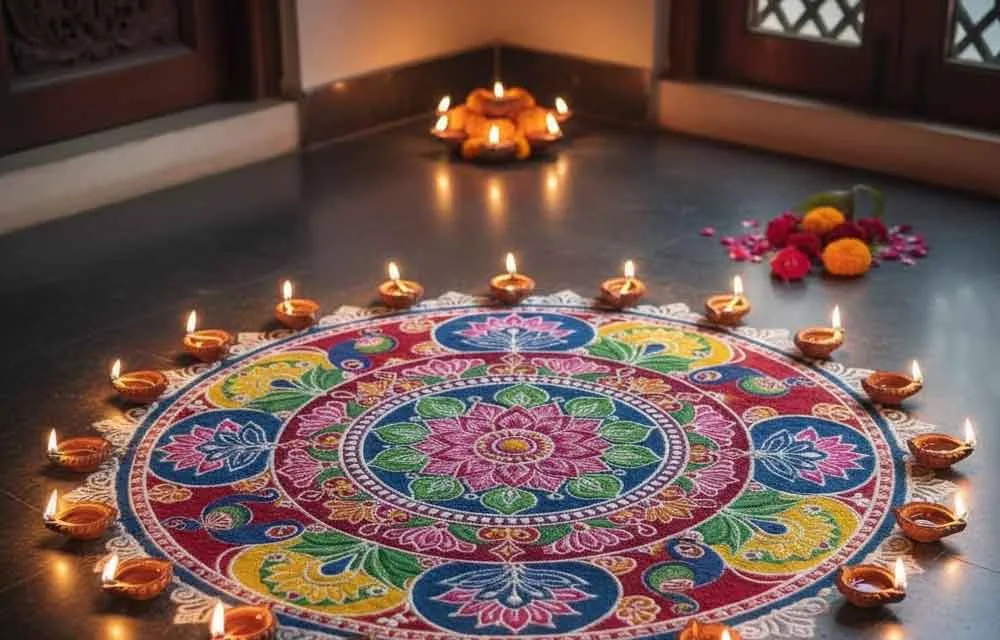
Diwali in Japan 2026: Hindu Traditions, Japanese Life, Lakshmi Puja Times and Temples
Diwali (Lakshmi Puja) 2026 in Japan is Sunday 8 November, with Lakshmi Puja from 5:02 PM – 6:54 PM in Tokyo. Local muhurat for five cities, verified temples and associations, and how to keep a Hindu festival in a Japanese apartment, school week and neighbourhood.
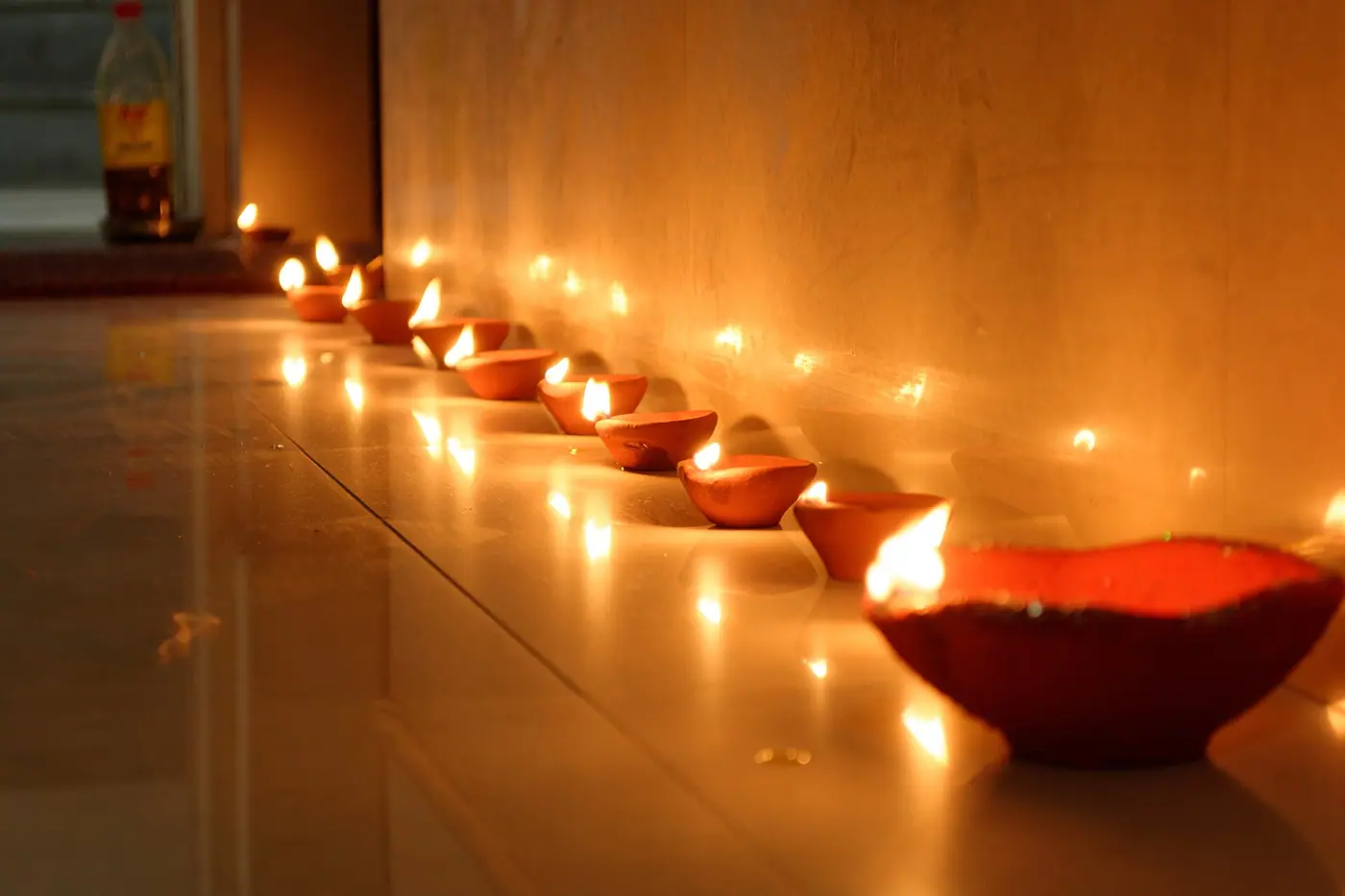
Quick answer: Diwali (Lakshmi Puja) 2026 in Japan is on Sunday 8 November. In Tokyo the Lakshmi Puja muhurat is 5:02 PM – 6:54 PM Japan Standard Time, and Dhanteras is Friday 6 November.
Part of Diwali 2026: dates and muhurat for all five days are in our Diwali 2026 guide. See also: Diwali 2026 date and Lakshmi Puja muhurat and the 5 days of Diwali 2026.
Editor's note (10 October 2026): The local times on this page were calculated by HinduTone using the Drik Panchang method (Pradosh Kaal with the Vrishabha lagna) for each Japanese city, and checked against Drik Panchang for major world cities to within one to two minutes; confirm with your temple. Event details come only from organisers' own announcements. Please confirm puja times and programmes with your temple or association.
Diwali in Japan runs on two clocks. One is the Hindu calendar, which puts Lakshmi Puja on the Amavasya evening. The other is Japanese daily life: an early autumn sunset, compact apartments with compulsory smoke alarms, strict rubbish sorting, school on Monday and a last train to catch. This guide is about fitting one inside the other: your city's muhurat, where the community gathers, and how to keep the lamp lit in a Japanese home.
Local dates in Japan (HinduTone calculation, 1 November 2026): Dhanteras Friday 6 November; Naraka Chaturdashi Sunday 8 November; Lakshmi Puja Sunday 8 November; Govardhan Puja Tuesday 10 November; Bhai Dooj Wednesday 11 November. Worked out from Drik Panchang's tithi times at local sunrise and sunset, with the method checked against Drik's own dates for 15 countries. Other countries: Diwali 2026 dates in every country.
Diwali 2026 in Japan: the five days
| Day | Date | What is observed |
|---|---|---|
| Dhanteras (Dhantrayodashi) | Friday 6 November | Puja to Dhanvantari and Lakshmi, the Yama Deepam lamp, and buying a new utensil or a little gold or silver |
| Kali Chaudas / Narak Chaturdashi | Saturday 7 November | Kali Chaudas in the Gujarati tradition; protective rituals and lamps |
| Diwali / Lakshmi Puja | Sunday 8 November | Lakshmi and Ganesha puja in Pradosh Kaal; Narak Chaturdashi and Tamil Deepavali oil bath in the morning; Kali Puja for Bengali families; Chopda / Sharda Puja for traders |
| Govardhan Puja / Annakut | Tuesday 10 November (in India) | Annakut offerings to Krishna, Bali Pratipada and the Gujarati New Year |
| Bhai Dooj / Yama Dwitiya | Wednesday 11 November (in India) | Sisters apply tilak and pray for their brothers |
In India the Amavasya tithi runs from 11:27 AM IST on Sunday 8 November to 12:31 PM IST on Monday 9 November,; in every Japanese city Lakshmi Puja falls on the evening of 8 November. Never convert India's muhurat into Japanese time. Govardhan Puja and Bhai Dooj dates are given for India; local temples may announce their own day.
The lamps recall Rama's return to Ayodhya; Narak Chaturdashi remembers Krishna's victory over Narakasura; Lakshmi Puja invites prosperity into a clean, lit home; and Bali Pratipada honours King Bali, whom Vamana allowed to return once a year. For each day's story, see our 5 days of Diwali 2026 explained.
Lakshmi Puja muhurat 2026, city by city
All times are Japan Standard Time (UTC+9), calculated by HinduTone using the Drik Panchang method (Pradosh Kaal with the Vrishabha lagna); checked against Drik Panchang for major world cities to within one to two minutes; confirm with your temple.
| City | Region | Lakshmi Puja (Sun 8 Nov) | Pradosh Kaal | Dhanteras puja (Fri 6 Nov) |
|---|---|---|---|---|
| Tokyo | Tokyo | 5:02 PM – 6:54 PM | 4:40 PM – 7:22 PM | 5:10 PM – 7:02 PM |
| Yokohama | Kanagawa | 5:02 PM – 6:54 PM | 4:40 PM – 7:22 PM | 5:10 PM – 7:02 PM |
| Nagoya | Aichi | 5:14 PM – 7:06 PM | 4:52 PM – 7:33 PM | 5:21 PM – 7:13 PM |
| Osaka | Osaka | 5:20 PM – 7:13 PM | 4:58 PM – 7:39 PM | 5:29 PM – 7:21 PM |
| Kobe | Hyogo | 5:21 PM – 7:14 PM | 4:59 PM – 7:41 PM | 5:30 PM – 7:22 PM |
Japan has one time zone but stretches far east to west, so on 8 November the sun sets at 4:40 PM in Tokyo and Yokohama but 4:59 PM in Kobe (Nagoya 4:52 PM, Osaka 4:58 PM).
Pradosh Kaal is the twilight period of about two and a half hours after sunset, when lamps are traditionally lit. Vrishabha lagna is when Taurus, a "fixed" sign, is rising, so Lakshmi's blessing is said to stay in the home. The muhurat is their overlap; any time inside Pradosh Kaal is still traditional.
Dhanteras falls on a Friday, and Tokyo's window opens at 5:10 PM, before many office workers have left. Light the south-facing Yama Deepam lamp when you get home, inside the window if you can.
The Hindu community in Japan
Japan counts residents by nationality, not religion, so there is no official number of Hindus. The clearest guide is the Immigration Services Agency's count of foreign residents. At the end of 2025 there were 58,999 Indian nationals living in Japan, up from 53,974 a year earlier and 26,244 at the end of 2015, according to the Immigration Services Agency's end-2025 statistics. That is out of a total of 4,125,395 foreign residents, the first time the figure has passed four million (ISA press release).
Indian residents are concentrated around Tokyo. The same tables show 21,224 Indian nationals in Tokyo and 7,946 in Kanagawa at the end of 2025, with smaller communities in Aichi (2,420), Osaka (2,158) and Hyogo (1,794), all figures from the ISA tables. Within Tokyo the centre of gravity is Edogawa ward. According to the Edogawa ward office, the ward had 51,800 foreign residents on 1 October 2025, more than any other part of Tokyo, and its Indian residents are the largest Indian community of any municipality in Japan, about 40 per cent of all Indians in Tokyo. Nishi-Kasai and the nearby stations on the Tozai line are where you hear Hindi, Telugu, Tamil and Marathi on the platform.
The community has two very different layers. The older one is in the port city of Kobe, where long-established bodies such as The India Club and the Indian Social Society, Kobe still bring families together. The newer and much larger layer, centred on Tokyo, is made up of software engineers, bankers, researchers, students and their families from every part of India; the Indian population in Japan more than doubled between 2015 and 2025. The Embassy of India's list of Indian associations in Japan shows that variety, with groups such as the Tokyo Tamil Sangam, Japan Telugu Samakhya, Tokyo Marathi Mandal, Tokyo Kannada Balaga, the Bengali Association of Tokyo, Japan, Rajasthani, Odia and Uttarakhandi associations, and Hindu Swayamsevak Sangh (HSS) Japan.
Diwali in Japan is not only an Indian festival. The ISA counts 300,992 Nepali nationals and 79,128 Sri Lankan nationals in Japan at the end of 2025, and many Hindu families among them keep the season too, Nepali families as Tihar with their own calendar, and Sri Lankan Tamil families as Deepavali. Bengali families keep Kali Puja on the same night, and Gujarati families mark their New Year at Govardhan Puja.
Where to celebrate: temples and community organisations
Japan has few purpose-built Hindu temples, so much of Diwali happens in rented halls and homes. Each place below was checked against its own website or the Embassy of India's list; we give name and area only. Temples and community associations usually announce Diwali programmes from mid-October — check their websites and social pages.
Tokyo
Tokyo's Lakshmi Puja window is 5:02 PM – 6:54 PM. Association cultural evenings are often held on the nearest weekend.
- ISKCON New Gaya (ISKCON Tokyo) — Funabori, Edogawa. A Hare Krishna temple listed in ISKCON's official centre directory with its own website. ISKCON temples usually mark Diwali with lamp offerings, and celebrate Govardhan Puja with an Annakut of many dishes.
- Indian Community of Edogawa (ICE) — Edogawa. A neighbourhood association for the Nishi-Kasai area, on the Embassy of India's list.
- Bengali Association of Tokyo, Japan (BATJ) — Tokyo. A Bengali cultural association on the Embassy's list; Bengali families keep Kali Puja on the Diwali night.
- Tokyo Tamil Sangam — Tokyo. A Tamil association on the Embassy's list, for families who keep Deepavali with the morning oil bath.
Yokohama and Kanagawa
Yokohama's times match Tokyo's: Lakshmi Puja 5:02 PM – 6:54 PM. Kanagawa has the second-largest Indian population in Japan.
- Vedanta Society of Japan (Nippon Vedanta Kyokai) — Zushi, Kanagawa. The Japanese branch of the Ramakrishna Mission. Its website announces a Kali Puja with aarti, flower offerings and homa on the evening of Sunday 8 November 2026, with advance reservation and a livestream (announced by the Vedanta Society of Japan; check before you go).
- Yokohama Mandal — Yokohama. A community association on the Embassy's list.
- Kawasaki Indian Community — Kawasaki. A local association on the Embassy's list.
In past years, Yokohama has hosted the large outdoor festival Diwali in Yokohama beside Yamashita Park, with dance, Indian food stalls and a closing prayer parade (Global Voices, 2017). We have not found an organiser's announcement for 2026, so check before you plan around it.
Kobe
Kobe's Lakshmi Puja window is 5:21 PM – 7:14 PM, the latest of the five cities. The city's Indian community is long established, and many families are second or third generation.
- The India Club, Kobe — Kobe. A long-standing Indian community body, on the Embassy of India's list, and a traditional venue for festival gatherings.
- The Indian Social Society, Kobe — Kobe. A long-standing community association, also on the Embassy's list.
Diwali is shared across faiths in an Indian community like Kobe's: Jains mark the nirvana of Mahavira and Sikhs Bandi Chhor Divas on the same days. Ask your association which programmes are Hindu, Jain or open to all.
Osaka and Nagoya
Osaka's window is 5:20 PM – 7:13 PM and Nagoya's is 5:14 PM – 7:06 PM. We could not confirm a Hindu temple or an Osaka- or Nagoya-based association from an official source, so we list none. Osaka families are close to Kobe's community bodies, and nationwide groups on the Embassy's list, such as Japan Telugu Samakhya and HSS Japan, can point you to local gatherings. A home puja is entirely traditional.
Celebrating at home in Japan
For most families in Japan, the main Lakshmi Puja is at home. A short vidhi that fits in a small apartment:
- Clean the home in the days before; Lakshmi is said to enter a clean, bright house. Japan's end-of-year cleaning, oosouji, is a month away, so this is a good early start.
- On Sunday evening, bathe and put on fresh or new clothes before your Pradosh Kaal begins.
- Set up a low table or shelf with a red or yellow cloth, a picture or murti of Lakshmi and Ganesha, a kalash of water with a coconut or mango leaves if you have them, rice, kumkum, flowers and sweets.
- Light one diya, pray to Ganesha first, then offer Lakshmi flowers, kumkum, rice, coins or a new note, and sweets, and recite her mantra or the Lakshmi Ashtakam.
- Finish with aarti, then share prasad and light the lamps around the home.
For a fuller, step-by-step version, see our Lakshmi Puja 2026 vidhi.
Diyas, apartments and smoke alarms. Keep real flames to one or two diyas on a metal plate, away from curtains, tatami and shoji, and never leave them burning unattended. The Tokyo Fire Department says residential fire alarms have been required in all Tokyo homes since 1 April 2010 under the fire prevention ordinance, in living rooms, stairways and kitchens; never cover or disable one. LED diyas and string lights give the look without the risk.
Tenancy and neighbours. Leases and building rules often restrict open flames, incense and decorations in corridors or on balconies, so check with your management company, and keep balconies clear as escape routes. Keep bhajans moderate late at night, and sort used diyas and wicks by your ward's rubbish rules.
Weather. Early November is usually clear and cool, with chilly evenings once the sun goes down. Bring a warm layer, and check last-train times if you go out after the puja.
Food and decorations you can find locally
Indian grocers are easy to find in Tokyo, especially around Nishi-Kasai, and the other big cities have them too, with dals, spices, ghee and frozen sweets. Many stock diyas, rangoli colours and puja items before Diwali but sell out quickly, so buy a week ahead; online Indian grocers deliver nationwide.
Japanese supermarkets cover more than you might expect: rice flour, sesame, nuts, milk and butter for homemade ghee, and fruit for the puja plate. Chrysanthemums, in season in November, make good offerings. Coloured rice or petals make an easy rangoli at the genkan, and a Japanese paper lantern beside an Indian toran is a small, everyday version of the blend this page is about.
Diwali with children and second-generation families
In 2026 Diwali is on a Sunday, which helps, but the rest of the week is ordinary. Japan has no Diwali holiday; the national holidays nearest the festival are Culture Day on Tuesday 3 November and Labor Thanksgiving Day on Monday 23 November (Cabinet Office). Dhanteras on Friday 6 November and Govardhan Puja and Bhai Dooj on 10 and 11 November are all working and school days, so plan short evening rituals, or move the family gathering to the weekend.
Children at Japanese public schools may be the only Indian child in their class. A short note to the teacher with photos of diyas and rangoli can become a classroom talk; ask before bringing sweets.
Keeping heritage languages alive is hard when children speak Japanese at school. Diwali is a good time to teach the aarti or a Lakshmi mantra in Hindi, Tamil, Telugu, Bengali or Marathi; the language associations on the Embassy's list are a natural place to find other families. Our Diwali activities for kids work in any language.
Fireworks, safety and local rules
In Japan, fireworks rules are set nationally and locally, and parks, riverbanks and building grounds each have their own conditions. Edogawa ward, home to Tokyo's largest Indian community, publishes a clear example on its handheld fireworks page (updated July 2026):
- Fire is banned in principle in Edogawa's parks and riverbanks, but small handheld fireworks are allowed in most of them. Some parks and children's playgrounds do not allow them, and nothing is allowed where there is a "no fireworks" sign.
- Aerial fireworks, fountain fireworks and any fireworks that are very loud or smoky are not allowed.
- Avoid playground equipment, lawns and rubber surfaces, keep a bucket of water ready and put everything out completely.
- Children must use fireworks with an adult, all rubbish and burnt remains must be taken home, and you must stop at once if anyone complains. Groups should consult the ward in advance.
Other wards and cities set their own rules, so check your city office's official guidance first. Never use fireworks on a balcony or in a shared corridor.
Celebrating far from family
Japan is three and a half hours ahead of India, so when your puja ends in Tokyo it is still afternoon at home, and you can join family by video call for their evening aarti. Many temples in India stream their Diwali aarti online, and the Vedanta Society of Japan has announced a livestream of its Kali Puja.
If you live alone, as many students and young engineers do, look for a weekend community puja or invite colleagues for sweets. Seva is part of Diwali too: give to a temple, a food bank in your ward or a charity in India, or help your association set up a hall.
Diwali checklist for Japan
- Note your city's Lakshmi Puja window: 5:02 PM – 6:54 PM in Tokyo and Yokohama, 5:21 PM – 7:14 PM in Kobe.
- Plan Dhanteras for Friday 6 November after work, with the Yama Deepam lamp facing south.
- Buy diyas, wicks, ghee, flowers and sweets from an Indian grocer a week early.
- Check your lease and building rules on open flames, incense and balcony decorations.
- Test your smoke alarms, and keep diyas well away from them, curtains and shoji.
- Use LED diyas or string lights for windows and balconies.
- Check your temple's or association's website for weekend programmes from mid-October.
- Reserve early for any community puja that asks for booking, and check last-train times.
- Tell your child's teacher about Diwali, and ask whether sweets can be shared.
- Schedule a video call with family in India after your own puja.
- Read your ward's rules before any fireworks, and take every scrap of rubbish home.
Frequently asked questions
When is Diwali 2026 in Japan, and what time is Lakshmi Puja in Tokyo?
Sunday 8 November 2026 everywhere in Japan. Lakshmi Puja is 5:02 PM – 6:54 PM in Tokyo and Yokohama, 5:14 PM – 7:06 PM in Nagoya, 5:20 PM – 7:13 PM in Osaka and 5:21 PM – 7:14 PM in Kobe (Japan Standard Time).
Is Diwali a public holiday in Japan?
No. Diwali is not a Japanese national holiday. In 2026 it falls on a Sunday, but Dhanteras (Friday 6 November) and 9 to 11 November are normal working and school days.
Why does Lakshmi Puja start so early in Japan?
Pradosh Kaal begins at sunset, and on 8 November the sun sets at 4:40 PM in Tokyo, so the whole window falls between about five and seven in the evening. Be home and ready before dark.
Can I light diyas in my Japanese apartment?
Usually, in small numbers and never unattended, but check your lease first. Residential fire alarms are compulsory in every Tokyo home, so keep flames and incense away from them and never cover them. Many families light one ghee diya at the altar and use LED diyas elsewhere.
Can we do fireworks for Diwali in Japan?
Only within local rules. Edogawa ward allows small handheld fireworks in most parks but bans aerial, fountain, loud or smoky fireworks; children need an adult and rubbish must go home with you. Other wards and cities set their own rules.
Where can I join a Diwali puja in Japan?
ISKCON New Gaya in Funabori, Edogawa, is Tokyo's verified Hindu temple. The Vedanta Society of Japan in Zushi has announced a Kali Puja on the evening of 8 November 2026 (announced by the Vedanta Society of Japan; reservation needed; check before you go). In Kobe, ask The India Club or the Indian Social Society.
When are Govardhan Puja and Bhai Dooj for families in Japan?
In India, Govardhan Puja is Tuesday 10 November and Bhai Dooj Wednesday 11 November 2026. Both are working days in Japan, and local temples may announce their own day.
Related guides
- Diwali / Deepavali 2026: complete 5-day guide
- The 5 days of Diwali 2026 explained
- Lakshmi Puja 2026: date, muhurat and step-by-step vidhi
- Tihar 2026: Diwali in Nepal
- Dussehra 2026 in Hong Kong, area by area
- November 2026 Hindu festivals in Singapore
- Bhai Dooj 2026 in Singapore, Malaysia and New Zealand
Sources
- Immigration Services Agency — foreign residents, end of 2025 (tables)
- Immigration Services Agency — end-2025 press release
- Edogawa City — about Edogawa
- Edogawa City — handheld fireworks rules
- Embassy of India, Tokyo — Indian associations in Japan
- ISKCON Centres — ISKCON Tokyo
- ISKCON New Gaya Japan
- Vedanta Society of Japan
- Tokyo Fire Department — residential fire alarms
- Cabinet Office — national holidays
- Global Voices — Diwali in Yokohama (2017)
- Muhurat: HinduTone calculation (Drik Panchang method)
Share this with family and friends
Send it on WhatsApp, post it, or copy the link.
More from Diwali 2026
- Hindu Rituals to Perform After Diwali 2026: Complete Guide to Govardhan Puja, Annakut, Bali Pratipada, Bhai Dooj and Karthika Masam for Hindus in USA, UK & Canada
- Diwali in Kashmir 2026: Famous Hindu Temples, Srinagar Celebrations, Tourist Attractions and Cultural Heritage
- Diwali 2026 in Noida and Greater Noida: Lakshmi Puja Muhurat, NCR Green Cracker Rules, Sale Sites, Govardhan Puja and Bhai Dooj
- Diwali 2026 in Ghaziabad: Lakshmi Puja Muhurat, NCR Green Cracker Rules, Sale Sites, Traffic and Parking
- Diwali 2026 in Meerut: Lakshmi Puja Muhurat, NCR Green Cracker Rules, Market Traffic Diversions and Temples
You might also like
Diwali 2026 Dates UK: Complete 5-Day Celebration Guide with Lakshmi Puja Timings, Stories, Rituals & Events at Neasden, Leicester, Wembley & Birmingham
Diwali 2026 Dates Australia: Complete 5-Day Celebration Guide with Stories, Rituals, Lakshmi Puja Timings, Recipes & Major Events in Sydney, Melbourne, Brisbane, Perth & Adelaide
Diwali at the White House 2026: History, Significance & Why It Matters