Ganesh Chaturthi 2026 Fasting Rules: What to Eat, What to Avoid
A practical, tradition-first guide to Ganesh Chaturthi vrat for 2026 — fasting styles, permitted and avoided foods, regional differences, who traditionally does not fast, and the Bhadrapada Shukla Chaturthi moon-sighting custom.
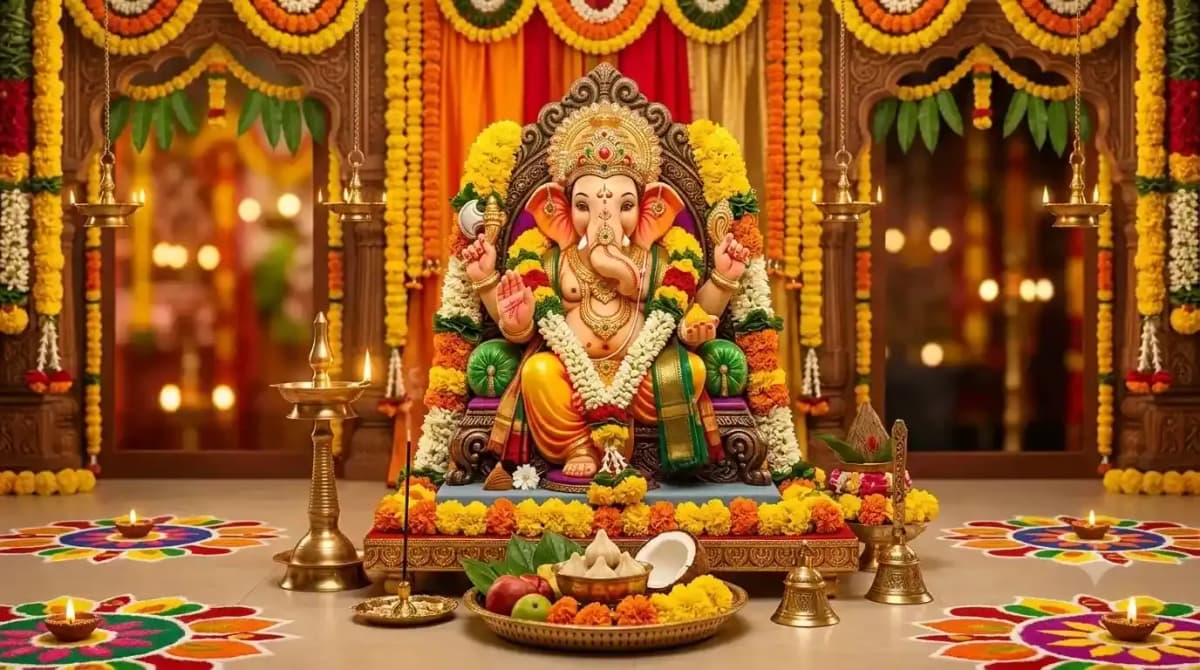
A practical, tradition-first guide to Ganesh Chaturthi vrat for 2026 — fasting styles, permitted and avoided foods, regional differences, who traditionally does not fast, and the Bhadrapada Shukla Chaturthi moon-sighting custom.
Quick answer: Ganesh Chaturthi 2026 falls on Monday 14 September 2026 (Bhadrapada Shukla Chaturthi). Devotees traditionally keep a vrat that day, choosing nirjala (waterless), phalahar (fruit-based) or a single satvik meal. Grains, onion, garlic and non-vegetarian food are avoided, and many families follow the custom of not looking at the moon that night.
Ganesh Chaturthi 2026 falls on Monday 14 September 2026, on Bhadrapada Shukla Chaturthi. For many households this is one of the most joyful days of the year, and observing a vrat (fast) is a common way to prepare the body and mind before welcoming Lord Ganesha. Fasting on this day is entirely a matter of tradition and personal devotion — it is not compulsory, and the form it takes varies widely from family to family and region to region.
This guide explains the main styles of fasting kept on Ganesh Chaturthi, the foods that are traditionally permitted and avoided, how customs differ across Maharashtra, the Telugu states, Tamil Nadu, Karnataka and North India, who is traditionally excused from fasting, and the well-known tradition of not looking at the moon on this particular Chaturthi night. Please treat all of this as devotional custom rather than instruction with any guaranteed result.
Styles of Ganesh Chaturthi fasting
There is no single correct way to fast. Families choose the intensity that suits their health, age and tradition. The three most common approaches are described below, and any of them is considered a sincere observance.
- Nirjala vrat — a strict fast taken without food and even without water, usually from sunrise until the puja is complete or until the next sunrise. This is the most demanding form and is generally kept only by those in good health.
- Phalahar vrat — a fruit-and-milk fast in which grains are avoided but fruits, milk, nuts, and vrat-friendly ingredients such as sabudana (tapioca) and singhare/rajgira flour are allowed.
- Satvik ek-bhukt (one-meal) vrat — the devotee eats a single simple satvik meal, usually after the midday or evening Ganesh puja, and abstains the rest of the day.
Some people keep the fast only until the aarti and prasad are offered, then break it with modak or another naivedya; others continue until the following morning. All of these are valid, and the choice should always respect one's physical capacity.
Foods traditionally permitted and avoided
The table below summarises what is commonly eaten and what is set aside on a Ganesh Chaturthi vrat day. Exact lists vary between families, so follow your own household custom where it differs.
| Traditionally permitted | Traditionally avoided |
|---|---|
| Fresh and dried fruits, dates | Rice, wheat, and regular grains |
| Milk, curd, buttermilk, paneer | Onion and garlic |
| Sabudana (tapioca), singhara & rajgira flour | Non-vegetarian food, eggs |
| Potato, sweet potato, raw banana | Alcohol and tobacco |
| Rock salt (sendha namak) | Common table salt (in strict vrat) |
| Nuts, ghee, jaggery, modak/undrallu as prasad | Packaged, fried or heavily spiced food |
Modak and undrallu are Ganesha's most cherished offerings, so many families prepare them as naivedya even during the fast. If you would like to make them at home, see our modak and undrallu prasadam recipe for step-by-step guidance.
Regional differences in the vrat
Ganesh Chaturthi is celebrated across India with local flavour, and fasting customs reflect that diversity. Each of the following traditions is equally valid.
- In Maharashtra, the festival is central to the year; many keep a phalahar or one-meal fast and break it with ukadiche modak after the puja, continuing through the days until visarjan.
- In the Telugu states, the day is Vinayaka Chavithi; families commonly offer undrallu and kudumulu, and some observe a satvik one-meal fast alongside the reading of the Vinayaka Vratha Katha.
- In Tamil Nadu and Karnataka (Vinayaka Chaturthi / Chavithi), kozhukattai and modaka are prepared, and fasting is often light and satvik, broken after the midday puja.
- In North India, phalahar with sabudana, kuttu or singhara items is popular, and many break the fast only after the evening aarti.
Whichever region's custom you follow, the heart of the day is the puja itself. Our Ganesh Chaturthi 2026 date and city-wise muhurat guide explains the timing, and remember that the exact muhurat is location-specific — always confirm it from a local panchang.
Who traditionally does not fast
Fasting is a personal offering, and tradition itself makes room for those who should not undertake a strict vrat. It is customary to relax or skip the fast in these situations:
- Young children and the very elderly.
- Pregnant or nursing mothers.
- Anyone who is unwell, recovering from illness, or on regular medication.
- People with diabetes, low blood pressure or other conditions affected by not eating.
- Those doing heavy physical labour or long travel on the day.
In such cases devotees often keep the spirit of the vrat through a light satvik meal, prayer and the offering of naivedya rather than abstaining from food. Devotion, not strain, is the intention.
A note on health: if you have any medical condition or are unsure whether fasting is safe for you, please consult a doctor before observing nirjala or a prolonged fast. There is no spiritual requirement to put your health at risk.
The moon-sighting tradition on Chaturthi
A distinctive custom of this day is avoiding sight of the moon on Bhadrapada Shukla Chaturthi night. Tradition holds that seeing the moon on this Chaturthi can bring a false blame or accusation, known as Mithya Dosha. The custom comes from the Syamantaka gem story and Chandra Darshan tradition, in which even Lord Krishna was falsely accused after glimpsing the moon on this night.
Should someone see the moon inadvertently, families traditionally recite the Syamantaka verse or listen to that story as a remedy. This is observed as protective custom and a mark of respect for the day, and is understood as tradition rather than a guarantee of any outcome.
A simple observance plan for the day
If you are keeping the vrat for the first time, this gentle outline keeps the day meaningful without strain.
- Rise early, bathe, and set the intention (sankalpa) for the fast you can comfortably keep.
- Install and worship Ganesha with the puja your family follows; offer durva grass, flowers and naivedya.
- Maintain your chosen fast — nirjala, phalahar or one satvik meal — through the day.
- Perform the aarti and offer modak or undrallu, then take prasad.
- Avoid looking at the moon that night, following the customary tradition.
- Break or continue the fast the next morning as per your family practice, with a light satvik meal.
Explore the Ganesh Chaturthi 2026 Complete Guide
This page is part of Hindutone’s Ganesh Chaturthi 2026 cluster:
- Complete Ganesh Chaturthi 2026 guide (hub)
- Date & city-wise muhurat
- Ganesh Sthapana (setup at home)
- Vinayaka Vrata Vidhanam (full puja)
- Ganesh Ashtottara: 108 names
- Ganesh Visarjan mantra
- Stories of Ganesha
Related reading
- p[object Object]
- p[object Object]
- p[object Object]
- p[object Object]
- p[object Object]
Related
See the main Ganesh Chaturthi / Vinayaka Chavithi 2026 complete guide for the date (14 September), madhyahna muhurat, puja vidhi and visarjan.
Frequently Asked Questions
When is Ganesh Chaturthi 2026 and when is the fast kept?
Ganesh Chaturthi 2026 falls on Monday 14 September 2026, on Bhadrapada Shukla Chaturthi. The vrat is traditionally observed on this day, often from sunrise until the puja and aarti are complete, though some continue until the next morning. Exact puja timings are location-specific, so confirm the muhurat from a reliable local panchang.
Is fasting compulsory on Ganesh Chaturthi?
No, fasting is not compulsory. It is a personal act of devotion, and families choose whether and how to fast according to their tradition and health. Some keep a strict nirjala fast, others a fruit-based phalahar fast or a single satvik meal, and some simply offer prayers and naivedya without fasting at all.
What can I eat during a Ganesh Chaturthi phalahar fast?
A phalahar fast traditionally allows fruits, milk, curd, buttermilk and nuts, along with vrat-friendly foods such as sabudana, singhara and rajgira flour, potato and rock salt. Regular grains like rice and wheat, onion, garlic and non-vegetarian food are avoided. Exact lists vary between families, so follow your own household custom.
Why should the moon not be seen on Ganesh Chaturthi?
Tradition holds that seeing the moon on Bhadrapada Shukla Chaturthi night can bring a false accusation, called Mithya Dosha. The custom arises from the Syamantaka gem story, in which even Lord Krishna faced a false charge after glimpsing the moon on this night. It is observed as protective custom and respect for the day.
What is the remedy if I accidentally see the moon?
If the moon is seen inadvertently, families traditionally recite the Syamantaka verse or listen to that story as a customary remedy. This is treated as a mark of respect for the day rather than a guarantee of any specific outcome. The tradition centres on humility and devotion, not on fear of the moon itself.
Who is traditionally excused from fasting?
Tradition makes room for young children, the very elderly, pregnant or nursing mothers, and anyone who is unwell or on regular medication. People with diabetes, low blood pressure or similar conditions, and those doing heavy work or travel, are also excused. Such devotees often keep the day's spirit through a light satvik meal and prayer.
Can people with health conditions fast on Ganesh Chaturthi?
Fasting is a personal choice, and health always comes first. If you have any medical condition or are unsure whether fasting is safe for you, please consult a doctor before observing nirjala or a prolonged fast. There is no spiritual requirement to risk your health; a light satvik meal with prayer is equally sincere.
Do fasting customs differ by region?
Yes, and each regional custom is equally valid. Maharashtra families often break a fast with ukadiche modak; Telugu families offer undrallu and kudumulu on Vinayaka Chavithi; Tamil Nadu and Karnataka prepare kozhukattai and modaka; and North Indian devotees favour sabudana, kuttu and singhara phalahar. The shared heart of the day is worship of Lord Ganesha.
Related guides you may find helpful
You might also like
Ganesh Visarjan 2026 in North India: Delhi, Lucknow & NCR Immersion Guide
Jagaddhatri Puja 2026: Dates, Chandannagar's Dazzling Lights & Significance
Rama Ekadashi 2026: Date, Vrat Katha, Puja Vidhi & Significance