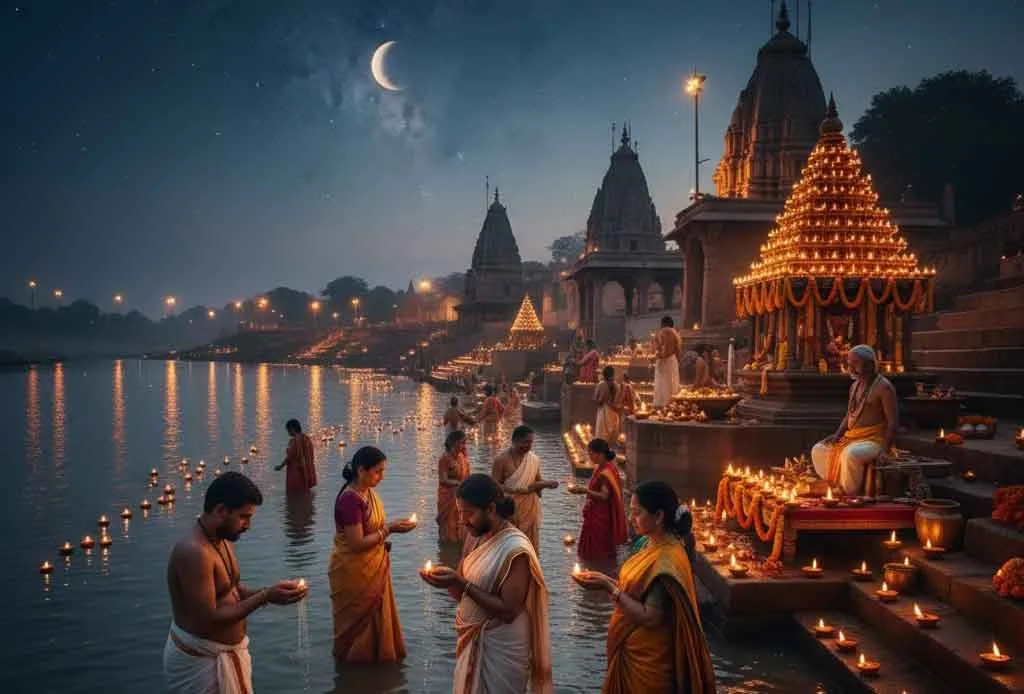
How Villages in Andhra Pradesh Celebrate Karthika Deepotsavam
The golden glow of oil lamps transforms the villages of Andhra Pradesh into an ethereal wonderland during Karthika Masam, the most sacred month in the Telugu…
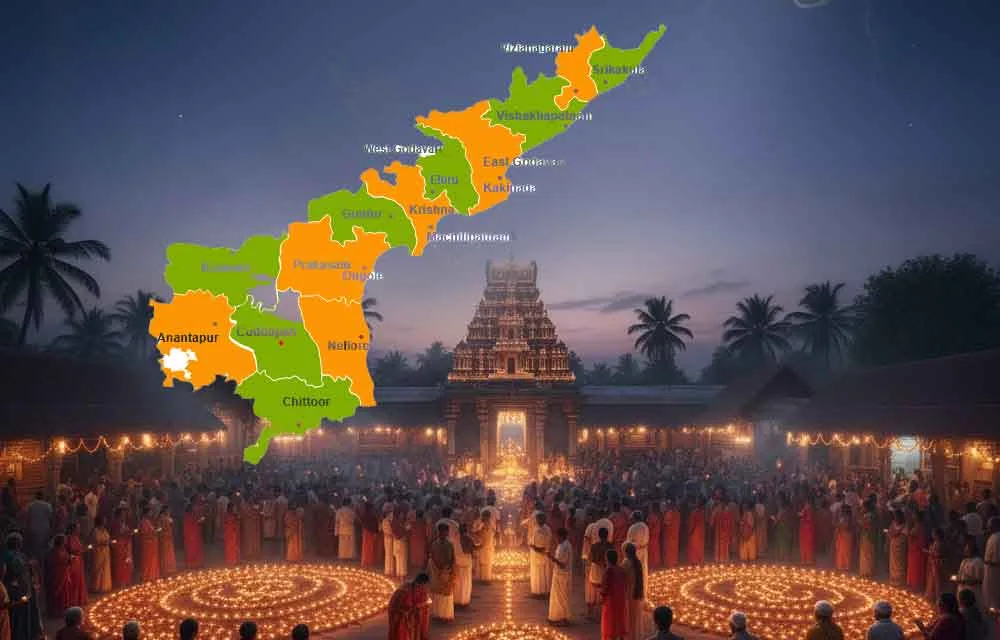
The golden glow of oil lamps transforms the villages of Andhra Pradesh into an ethereal wonderland during Karthika Masam, the most sacred month in the Telugu…
The golden glow of oil lamps transforms the villages of Andhra Pradesh into an ethereal wonderland during Karthika Masam, the most sacred month in the Telugu calendar. From the coastal plains of Godavari delta to the rocky terrains of Rayalaseema, from the lush green fields of Krishna basin to the tribal hamlets of Eastern Ghats, the entire state becomes a canvas painted with the light of devotion. This is Karthika Deepotsavam – a month-long celebration where ancient traditions merge seamlessly with rural life, creating a spiritual symphony that resonates through every village lane and temple courtyard.
The Sacred Significance of Karthika Masam in Andhra Pradesh
Karthika Deepam is a distinguished festival of lights primarily celebrated by Hindus in Tamil Nadu, Kerala, Andhra Pradesh, Telangana, Karnataka, and Sri Lanka. In Andhra Pradesh, this festival holds a unique position where Karthika Masam is dedicated to Lord Shiva as per the Panchangas followed in Andhra Pradesh, with Shivalinga Puja, Upavasa Vratham, and Deeparadhana (lighting lamps) in Shiva temples as major rituals.
The month derives its spiritual power from ancient scriptures. According to Shiva Purana, Lord Shiva destroyed the demon Tripurasuras during this month, freeing the universe from tyranny. According to Vishnu Purana, Lord Vishnu awakens from his cosmic sleep (Yoga Nidra) on Karthika Ekadasi after resting since Ashadha Ekadasi, making the entire month auspicious for both Shaivite and Vaishnavite devotees.
For Andhra Pradesh's villages, where agriculture shapes the rhythm of life, Karthika Masam arrives after the Kharif harvest, allowing farming communities to dedicate themselves fully to spiritual practices. The cooler November weather makes early morning rituals comfortable, and the clear skies provide perfect conditions for the spectacular lamp displays that define this celebration.
Regional Diversity: How Different Regions Celebrate
Andhra Pradesh's geographical and cultural diversity creates fascinating regional variations in Karthika Deepotsavam celebrations:
Coastal Andhra (Uttarandhra - North Coastal Districts)
The villages of Srikakulam, Vizianagaram, and Visakhapatnam districts have unique traditions influenced by their proximity to the Bay of Bengal and the Eastern Ghats.
Sacred River Worship: Devotees get up early in the mornings and go to nearby water bodies for 'Kaarthika Snaanam,' having a holy dip in the river, with people in coastal regions going to the sea for a holy dip. Villages near the Nagavali, Vamsadhara, and Gosthani rivers witness mass gatherings before dawn. Fishermen communities perform special pujas to the sea, seeking blessings for safe voyages.
Simhachalam Temple Influence: Villages around the famous Simhachalam Varaha Narasimha Swamy temple incorporate elements of Vaishnavite worship into their Karthika celebrations. The tradition of offering amla (Indian gooseberry) to Lord Vishnu is particularly strong here.
Tribal Integration: Tribal communities in the Eastern Ghats, particularly the Konda Dora and Bagata tribes, blend their nature worship with Hindu traditions during Karthika Masam, creating unique syncretic practices.
Godavari Districts (East and West Godavari)
The fertile Godavari delta region, known as Andhra's rice bowl, celebrates with agricultural abundance reflected in their rituals.
River Godavari Centrality: Telugu people celebrate Karthika Somavara Vratam by visiting Shiva temples and performing punya snana in holy rivers such as Godavari, Krishna, Tungabhadra, and Cauvery. Villages along the Godavari river organize massive morning bathing ceremonies. The ghats at Bhadrachalam, Rajahmundry, and Draksharamam witness thousands of devotees.
Coconut Shell Lamps: A unique tradition in Godavari villages involves using coconut shells as lamp holders. These Narikela Deepams, filled with coconut oil, create a distinctive aesthetic and utilize locally abundant materials.
Temple Town Traditions: Villages near major temple towns like Draksharamam (one of the Pancharama Kshetras) and Rajahmundry host elaborate Karthika celebrations with temple processions and cultural programs featuring traditional Kuchipudi dance performances.
Krishna District Villages
The Krishna river basin villages have their own distinctive traditions:
Durgamma Temple Celebrations: Villages with Durgamma temples combine goddess worship with Karthika Deepotsavam, creating a unique blend where both Shiva and Shakti worship occur simultaneously.
Kanakadurga Temple Influence: Villages near Vijayawada, particularly around Kanaka Durga temple, witness pilgrim traffic throughout Karthika Masam, with locals organizing community feasts for pilgrims.
Kondapalli Toy Lamps: Villages near Kondapalli incorporate traditional wooden toy lamps into their celebrations, showcasing local craftsmanship.
Rayalaseema Region (Kurnool, Anantapur, Kadapa, Chittoor)
The semi-arid Rayalaseema region brings its own flavor to Karthika Deepotsavam:
Rock Formations and Hill Temples: Villages near rocky outcrops and hills light lamps on elevated locations, creating spectacular hilltop displays. The tradition at Ahobilam, Sri Kalahasti, and numerous smaller hill shrines is particularly impressive.
Scarcity-Driven Sustainability: In water-scarce regions, communities practice extremely judicious use of resources. Oil is pressed collectively, and water is shared communally for ritual baths.
Peanut Oil Tradition: Given the extensive groundnut cultivation in Anantapur and other districts, many villages use groundnut oil for lamps instead of sesame oil.
Sheep Herding Communities: The Yadav and Kuruba communities, traditionally sheep herders, have unique Karthika customs involving livestock welfare and thanksgiving for pastoral prosperity.
Nellore District
The Karthika Masam festivities began grandly at the Moolapeta Moolasthaneswara Swamy Temple in Nellore, with the Akaasa Deepotsavam (Sky Lamp Festival), where sacred sky lamps are lit and special prayers performed in front of Lord Shiva.
Akaasa Deepam Tradition: The practice of lighting sky lamps (lamps suspended high on poles) is particularly prominent in Nellore district villages. These towering lamps, visible from great distances, serve as beacons for travelers and symbols of communal devotion.
Fishing Community Celebrations: Coastal villages in Nellore have unique traditions where fishing communities thank the sea and seek protection for their voyages. Special lamps are floated in the sea on Karthika Pournami.
Preparations: The Village Mobilizes
Community Organization
Unlike urban celebrations that are largely individual or nuclear family affairs, village Karthika Deepotsavam is fundamentally communal. Preparations begin weeks in advance with panchayat meetings where community leaders, temple committees, and village elders plan the month's activities.
Task Distribution: Different families take responsibility for various aspects:
- Potter families prepare thousands of clay lamps
- Oil pressers organize collective oil extraction
- Women's self-help groups coordinate wick-making sessions
- Youth organize cultural programs
- Temple committees arrange for priests and logistics
Financial Planning: Wealthy families sponsor community activities, but everyone contributes according to their capacity. Even landless laborers offer their time and effort, ensuring inclusive participation.
Material Gathering
The preparation of materials follows sustainable, traditional methods:
Clay Lamp Production: Village potters work round the clock during the weeks before Karthika Masam. The clay is sourced locally, shaped on traditional pottery wheels, dried in the sun, and fired in small kilns. These biodegradable lamps embody the eco-friendly ethos of rural celebrations.
Oil Pressing: Vanabhojanam or Karthika vanabhojanam is undertaken during Karthika masam in Andhra Pradesh, where amla trees are worshipped as it is widely believed that Lord Vishnu and Goddess Lakshmi prefer to reside under Amla trees during Karthika month. Villages organize collective oil pressing sessions using traditional ghani (oil press). Sesame seeds, groundnuts, or coconuts are pressed, and the oil is distributed among families. The oil cake (residue) is used as cattle feed or fertilizer, ensuring zero waste.
Cotton Wick Preparation: Women gather in courtyards or under trees for wick-rolling sessions. These gatherings become social events where news is exchanged, songs are sung, and community bonds are strengthened. The art of rolling perfect wicks—not too loose, not too tight—is passed from experienced hands to younger generations.
Flower Arrangements: Villages with flower gardens contribute blooms for temple decorations. Marigold, chrysanthemum, jasmine, and hibiscus are collected fresh each day. Those without gardens gather wildflowers from fields.
Home Preparation
Individual households undertake extensive preparations:
Thorough Cleaning: Preparations for Karthika Deepam begin a couple of days before the actual festival, with homes cleaned thoroughly and brass and silver lamps polished to shine. In villages, this extends to cleaning cattle sheds, storage areas, and even outdoor toilets. The entire living environment is purified.
Whitewashing and Decoration: Many families whitewash their homes using lime. Mud houses receive fresh mud coating mixed with cow dung, which acts as a natural disinfectant and gives homes a fresh appearance.
Utensil Preparation: Bronze, brass, and copper vessels used for puja are cleaned with tamarind, ash, and lemon until they shine like gold. These vessels, often family heirlooms, are displayed with pride.
The Daily Ritual: A Month of Dedication
Pre-Dawn Awakening: Karthika Snanam
The defining feature of Karthika Masam in Andhra Pradesh villages is the pre-dawn ritual bath. Women, who are the primary observers of this vrata, wake around 3:30 AM. The darkness before dawn is broken only by the light of small hand-held lamps as groups of women make their way to water sources.
The Journey to Water: In villages with rivers or canals, processions of lamp-carrying women create luminous trails through dark paths. The sound of bhajans, the tinkling of anklets, and devotional conversations fill the pre-dawn air. This daily journey becomes a moving meditation, preparing minds for the sacred bath.
The Sacred Bath: Karthika Masam signifies Karthika snanam, meaning month-long early morning showers, with devotees going to nearby water bodies for 'Kaarthika Snaanam'—a holy dip in the river, and people in coastal areas taking a holy dip in the seawater. The water is cold in November, making the bath an act of discipline and devotion. Women bathe fully clothed, maintaining modesty, while chanting mantras and prayers.
The belief is powerful: Medical reports show that in Kaarthika Masam, water gains more magnetic power from earth and is stored before sunrise, and as stated in magnetic therapy, bathing on Kaarthika Somavaram (Monday) in any flowing water for 15 minutes brings relief from stomach disorders, liver disorders, general health disorders, and anemic conditions.
Community Solidarity: The daily gathering at water sources strengthens women's networks. Elderly women who can't walk long distances are carried or supported. Young girls accompany mothers, learning through participation. This daily ritual becomes the backbone of community cohesion throughout the month.
Morning Temple Worship
Directly from the bathing site, devotees proceed to temples, their wet hair signifying the completion of their sacred bath.
Temple Opening Rituals: Village temples open earlier than usual during Karthika Masam. Priests prepare for the influx of devotees by completing preliminary pujas before dawn. The sanctum sanctorum is decorated fresh each morning with flowers and lamps.
Abhishekam Ceremonies: Special ritual baths are given to deities using milk, curd, honey, ghee, and sacred water—the Panchaamritam. Devotees offer Vibhuthi (Bhasma) and Bilva Patra (Bilva leaves) which are favorites of Lord Shiva.
Pradakshina (Circumambulation): Devotees circumambulate the temple, inner shrine, and sacred trees. Each round is accompanied by mantras or silent prayer. The number of rounds varies by individual vows, with some completing 108 circumambulations.
Tulsi Worship: A unique feature of Andhra Pradesh villages is the prominence of Tulsi (holy basil) worship. Most homes have Tulsi plants in specially constructed raised platforms (Tulsi Kota or Brindavanam). Women offer water, flowers, turmeric, and kumkum to Tulsi daily. The plant is adorned with decorations, and oil lamps are lit around it morning and evening.
Daytime Activities
After morning prayers, village life continues with regular work, but the consciousness of the sacred month permeates all activities:
Dietary Restrictions: Many families avoid non-vegetarian food throughout the month. The basic rituals include not eating non-vegetarian food for the whole month, and avoiding Brinjal, Onions, and Garlic in Kaarthika Masam. This sattvic (pure) diet is believed to aid spiritual progress and physical purification.
Modified Work Schedule: Farmers and laborers try to finish work earlier, allowing time for evening rituals. Community activities are prioritized, and commercial transactions are minimized.
Continuous Chanting: Religious households maintain continuous chanting of mantras, particularly the Shiva Panchakshari (Om Namah Shivaya) or Vishnu Sahasranama. Some families organize collective reading of Karthika Purana.
Evening Lamp Lighting: The Radiant Ritual
The evening lamp lighting ceremony is the emotional and visual highlight of each day during Karthika Deepotsavam.
Preparation Phase (3:00 PM - 5:00 PM)
On the festival evening, the front of houses are washed and decorated with kolam (rangoli) made from rice powder, colors, or both, with lamps decorated with vermilion, sandalwood, and flowers placed on top of the kolam, facing east.
Kolam Creation: Women create intricate rangoli designs at their doorsteps, courtyards, and around Tulsi plants. Unlike the quick daily kolams, Karthika Masam rangolis are elaborate, often covering several square feet. Traditional motifs include peacocks, lotuses, lamps, and geometric patterns passed through generations.
In coastal villages, powdered seashells mixed with rice flour create brilliant white rangolis. In interior villages, natural colors from turmeric (yellow), kumkum (red), limestone (white), and charcoal (black) are used.
Lamp Arrangement: Lamps are arranged in specific patterns with symbolic meanings:
- Straight lines along pathways represent the path of righteousness
- Circular arrangements around Tulsi symbolize completeness
- Lamp pyramids at entrances represent ascending spiritual consciousness
- Lamps around house boundaries provide spiritual protection
Lamp Decoration: Before filling with oil and placing wicks, lamps are decorated. A paste of turmeric and vermillion is applied to the lamp's exterior. Sandalwood paste dots are added. Small flower petals are placed around the lamp base. This decoration transforms simple clay lamps into objects of beauty and devotion.
The Lighting Ceremony (5:30 PM - 6:30 PM)
Women, dressed in traditional attire, light these lamps after performing pooja and mangalarti, marking the beginning of the festivities.
The First Flame: The ceremony begins with lighting a central lamp (Mukha Deepam) at the family prayer room or Tulsi plant. This lamp is lit first after offering prayers, and all other lamps are lit from this sacred flame, symbolizing the spread of divine light from a single source.
Methodical Lighting: Starting from the Tulsi plant, lamps are lit in a specific order:
- Tulsi Brindavanam (minimum 3 lamps)
- Main entrance (5-7 lamps in a row)
- All four corners of the house boundary
- Windows and doorways
- Cattle shed (seeking prosperity through livestock)
- Well or water source (thanking water deities)
- Sacred trees in the courtyard
- Boundary walls and gates
Community Lighting: As individual families light their lamps, a beautiful transformation occurs. Within 30-45 minutes, the entire village glows with thousands of tiny flames. The sight from any elevation point—a temple tower, a hillock, or even a rooftop—is breathtaking. Every home, every lane, every temple becomes part of a luminous tapestry.
Sound and Atmosphere: The evening air fills with the sound of temple bells, conch shells blown from homes, devotional songs from loudspeakers and individual households, children's excited chatter, and the occasional sound of firecrackers. As night falls, the atmosphere resembles that of Deepavali with people bursting crackers, lighting sparklers, and enjoying the company of neighbors and friends.
Night-Time Gatherings
After lamp lighting, villages come alive with social and spiritual activities:
Bhajan Mandalis: Groups gather in temple courtyards, community halls, or under large trees for collective devotional singing. Traditional bhajans praising Shiva, Vishnu, and other deities are sung in call-and-response format. These sessions often extend late into the night, with different groups taking turns.
Karthika Purana Recitation: In Andhra Pradesh, on the day of full moon or Karthika pournami, the holy text of Kartheeka puranam is recited to invite auspiciousness and good fortune. Village elders or visiting scholars recite portions of this sacred text, explaining its meanings in colloquial Telugu.
Cultural Programs: Youth organize cultural programs featuring folk dances like Kolatam (stick dance), Lambadi dance, and dramatic performances depicting mythological stories. These programs preserve traditional art forms and provide entertainment.
Coastal Village Traditions (continued)
Lighthouse Connection: In coastal villages, the tradition of lighting lamps during Karthika Masam historically served navigational purposes. Fishermen villages organize coordinated lamp lighting along the coastline, creating a luminous guide for boats returning after dark. This practical aspect merged with spiritual significance—protecting seafarers became a form of devotion.
Sea Offerings: Fishing communities perform special pujas to the sea goddess (Samudra Devi) on Karthika Pournami. Boats are decorated with flowers and lamps, taken out to sea with offerings of coconuts, fruits, and flowers. This ritual seeks blessings for safe voyages and abundant catches in the coming season.
Beach Lamp Displays: Villages near beaches create spectacular lamp displays on the sand. Geometric patterns, images of deities, and traditional motifs are outlined with thousands of lamps. The reflection of these lights on wet sand and breaking waves creates a mesmerizing visual effect.
Salt Panner Traditions: Villages involved in salt production have unique customs. Salt pans are purified and lamps are lit around them, seeking divine blessings for the salt harvest season that follows Karthika Masam.
Godavari Delta Traditions
Island Temple Pilgrimages: The Godavari delta's numerous islands host ancient temples. During Karthika Masam, villagers undertake boat pilgrimages, traveling from island to island. Each island temple is illuminated for the visiting pilgrims, creating a magical experience of temple-hopping by boat under moonlight.
Coconut Cultivation Rituals: As major coconut-growing regions, delta villages perform special pujas to coconut trees during Karthika Masam. Trees are decorated with turmeric and kumkum, offerings are made at their base, and lamps are lit around groves. This ensures healthy trees and abundant harvests.
Water Channel Decorations: The extensive irrigation canal network is decorated with lamps along the banks. This serves both aesthetic and practical purposes—thanking the water channels that sustain agriculture while creating beautiful reflections.
Toddy Tapper Communities: Traditional toddy tappers (Goud community) observe unique rituals, offering prayers to palm trees and seeking protection while climbing for toddy extraction.
Rayalaseema Traditions
Hilltop Illuminations: Villages near hills and rocky outcrops create stunning hilltop lamp displays. Devotees climb hills carrying hundreds of lamps, lighting them at strategic points. Viewed from below, these hilltop illuminations appear like earthly constellations.
Water Conservation Rituals: In this semi-arid region, special prayers are offered at village tanks, wells, and stepwells. These water sources, lifelines for communities, are cleaned, decorated, and worshipped. Lamps are floated in tanks, and prayers seek adequate rainfall in the coming year.
Sheep and Goat Blessings: Pastoral communities conduct special pujas for their livestock. Animals are bathed, decorated with turmeric and kumkum, and blessed. This reflects the pastoral economy's importance and the holistic worldview where animal welfare is integral to human prosperity.
Rock Art Integration: Some villages with ancient rock art sites incorporate these locations into their Karthika celebrations, lighting lamps near prehistoric paintings and carvings, creating a bridge between ancient and contemporary spiritual practices.
Temple Town Villages
Villages surrounding major pilgrimage centers have distinct traditions:
Sri Kalahasti Villages: Near the famous Vayu Linga temple, villages celebrate with special emphasis on air element worship. Kites with attached lamps are flown on Karthika Pournami, representing offering lights to the sky.
Ahobilam Area Villages: Villages near the Narasimha Swamy temple complex observe both Shaivite and Vaishnavite traditions, creating a unique syncretic celebration. The nine Narasimha temples on the hill are illuminated, and pilgrimage circuits connecting them witness thousands of devotees throughout Karthika Masam.
Srisailam Region Villages: In the Nallamala forest area surrounding Srisailam, tribal and mainstream Hindu practices blend. Forest produce is incorporated into offerings, and traditional tribal dances are performed during Karthika celebrations.
Tirupati Region Villages: Villages around Tirumala have strong Vaishnavite influence. Along with Shiva worship common throughout Andhra Pradesh, special emphasis is placed on Vishnu worship, Tulsi veneration, and offering amla fruits.
Food Traditions: The Sacred Cuisine
Food during Karthika Masam in Andhra Pradesh villages reflects both spiritual principles and seasonal appropriateness.
Daily Preparations
Sattvic Diet Principles: The basic rituals include not eating non-vegetarian food for the whole month, and avoiding Brinjal, Onions, and Garlic in Kaarthika Masam Palakkadiyers. This sattvic approach emphasizes purity and digestibility.
The avoidance of specific vegetables has traditional reasoning:
- Brinjal: Believed to heat the body excessively
- Onions and Garlic: Considered rajasic and tamasic, stimulating base instincts rather than spiritual consciousness
- Leafy Greens: Some families avoid certain greens believed to contain insects during this season
Morning Offerings: Simple but wholesome offerings prepared fresh each day:
Bellam Annam (Jaggery Rice): Cooked rice mixed with melted jaggery, ghee, and cardamom. This sweet preparation symbolizes the sweetness devotees seek in spiritual life.
Nuvvula Undalu (Sesame Balls): Roasted sesame seeds and jaggery shaped into balls. Rich in nutrients, these provide sustained energy during fasting periods.
Payasam Varieties: Multiple payasam types are prepared—rice payasam, vermicelli payasam, green gram payasam—each offered to deities and distributed as prasad.
Special Occasion Foods
Karthika Monday Specials:
Chalimidi: A kind of sweet prepared of rice flour mixed with jaggery and ghee The News Mill, offered especially during Nagula Chavithi but also throughout Karthika Mondays.
Ariselu: Perhaps the most iconic Karthika Masam sweet in Andhra Pradesh. Rice flour is fermented with jaggery, spread into circular shapes, and deep-fried in ghee. The preparation is labor-intensive, often a community activity where women gather to make hundreds of ariselu together. The golden-brown, crispy-yet-soft ariselu are offered to deities and distributed to all households.
Boorelu: Moong dal and jaggery mixture encased in rice flour batter and deep-fried. These golden balls are considered auspicious offerings during Karthika Masam.
Karthika Pournami Feast:
Pulihora (Tamarind Rice): The quintessential Telugu temple prasad. Freshly cooked rice mixed with tamarind extract, seasoned with mustard, curry leaves, peanuts, and red chilies. Every household and temple prepares massive quantities on Pournami.
Chakkara Pongali (Sweet Pongal): Freshly harvested rice cooked with moong dal, jaggery, and liberal amounts of ghee, flavored with cardamom and garnished with cashews and raisins.
Sambar and Rasam: Multiple varieties prepared—drumstick sambar, tomato rasam, pepper rasam—each with distinct flavors and digestive properties.
Vadalu (Fritters): Various types—masala vada, garelu (medu vada), saggubiyyam vadalu (sabudana vada)—are prepared and offered.
Fasting Foods
For those observing fasts, specific foods are permitted:
Sabudana (Tapioca Pearls): Soaked and cooked with peanuts, cumin, and rock salt, providing energy without breaking fast restrictions.
Fruits: Fresh seasonal fruits—bananas, papaya, pomegranate, and especially amla, which is considered highly auspicious during Karthika Masam.
Milk Products: Fresh milk, curd, buttermilk, and paneer are consumed. Many families prepare basundi (thickened sweetened milk) as a fasting treat.
Root Vegetables: Potatoes, sweet potatoes, yams, and arbi (colocasia) are permissible and prepared in various ways.
Community Cooking Traditions
Bhandara (Community Feast): Large-scale cooking operations demonstrate remarkable organizational skills:
Division of Labor:
- Senior women supervise recipes and taste
- Middle-aged women handle bulk cooking
- Younger women assist with preparation
- Men manage firewood, water supply, and heavy vessels
- Children help with serving and cleaning
Traditional Techniques: Cooking is done over wood fires in massive brass or earthen vessels. The slow cooking and wood smoke impart distinctive flavors impossible to replicate with modern methods.
Serving Protocol: Food is served with specific etiquette—rice first, followed by sambar, then vegetables, chutneys, and finally sweets. Servers ensure everyone receives equal portions, moving systematically through the dining rows.
Prasad Distribution
Temples distribute prasad throughout Karthika Masam, with Pournami seeing maximum distribution:
Pulihora Packets: Small packets of tamarind rice wrapped in banana leaves or biodegradable containers, distributed to every visiting devotee.
Sweet Prasad: Ariselu, laddu, or payasam in small quantities, blessed during the main puja and distributed as divine grace.
Vibhuti and Kumkum: Sacred ash and vermillion distributed to devotees for application.
Tulsi Leaves: Holy basil leaves from temple Tulsi plants, considered highly sacred when consumed.
Cultural Programs: Arts and Entertainment
Karthika Deepotsavam is not merely religious observance but also cultural celebration, showcasing Andhra Pradesh's rich artistic heritage.
Traditional Performing Arts
Harikatha: This unique Telugu art form combines storytelling, music, and moral teaching. A lead performer narrates stories from Puranas and epics, accompanied by musicians. The narrator alternates between prose narration, verse chanting, and singing, keeping audiences engaged for hours. During Karthika Masam, Harikathas focus on Shiva stories, Karthika Purana episodes, and the significance of lamp lighting.
Burrakatha: A folk narrative art form where performers use tambura-like instruments (burra) to provide rhythmic accompaniment to their storytelling. Three performers—one lead narrator and two accompanists—present stories with dramatic flair, incorporating social messages alongside religious themes.
Kuchipudi Performances: In villages near Kuchipudi (the art form's birthplace in Krishna district), classical dance performances are organized during Karthika Masam. Traditional Kuchipudi pieces depicting Shiva's cosmic dance, Krishna's divine play, or the burning of Kamadeva are particularly popular.
Hari Bhajan Mandalis: Groups of devotional singers perform throughout the month. Unlike formal concerts, these are participatory events where audience members join in choruses. Traditional compositions by Telugu saint-poets—Annamacharya, Tyagaraja, Ramadasu—dominate the repertoire.
Folk Arts
Kolatam (Stick Dance): Groups of women perform this rhythmic dance holding decorated sticks, striking them in patterns while dancing in circular formations. The synchronized stick strikes create musical rhythms, and the colorful costumes and graceful movements make kolatam a highlight of Karthika celebrations.
Dappu (Frame Drum) Performances: Dalit communities traditionally perform dappu—high-energy drum performances with acrobatic elements. During Karthika Masam, dappu troupes perform at temples and during processions, their thunderous rhythms adding excitement to the festivities.
Lambadi Dance: The semi-nomadic Lambadi (Banjara) communities perform their distinctive dance form characterized by colorful mirror-work costumes, intricate footwork, and energetic movements. Their performances celebrate their unique cultural identity while participating in broader Hindu celebrations.
Shadow Puppetry (Tholu Bommalata): In some villages, traditional leather shadow puppet shows present stories from Hindu epics. Performed through the night with lamps providing backlighting, these shows entertain while imparting moral and religious lessons.
Folk Songs: Women sing traditional folk songs while performing daily tasks—rolling wicks, creating rangoli, cooking prasad. These songs, passed orally through generations, encode agricultural wisdom, social customs, and spiritual teachings in memorable melodies.
Modern Cultural Adaptations
Youth Cultural Programs: Younger generations organize programs blending traditional and contemporary elements—classical music concerts, devotional song competitions, drama presentations, and dance performances.
Competitions: Villages organize friendly competitions during Karthika Masam:
- Best rangoli design
- Most creative lamp arrangement
- Bhajan singing competitions
- Traditional cooking competitions
- Children's drawing and essay contests on Karthika Masam themes
Audio-Visual Presentations: Some villages with electricity and basic equipment screen religious films, documentaries about pilgrimage sites, or recordings of famous temple celebrations, making spiritual content accessible to all.
Social and Economic Dimensions
Karthika Deepotsavam's impact extends beyond religion into social and economic spheres:
Economic Activity
Artisan Employment: The festival season provides significant income for traditional artisans:
- Potters selling thousands of clay lamps
- Oil pressers working overtime
- Florists supplying fresh flowers daily
- Brass and bronze smiths selling and repairing traditional vessels
- Traditional sweet makers receiving bulk orders
Agricultural Connection: In Nellore, farmers donate paddy to be distributed as alms to the underprivileged during the festive season Prokerala. The post-harvest timing means farmers have resources to contribute to temple activities and community celebrations.
Small Business Opportunities: Temporary markets spring up selling puja materials, decorative items, special foods, and festival-specific goods. Small vendors and women's self-help groups find income opportunities.
Social Cohesion
Conflict Resolution: The sacred atmosphere of Karthika Masam encourages resolution of disputes. Village elders mediate conflicts, and the spiritual focus softens hardened positions. Many families reconcile long-standing feuds during this period.
Collective Action: The extensive coordination required for month-long celebrations strengthens community organizational capacity, which benefits villages in other contexts—disaster response, development projects, agricultural cooperation.
Caste Dynamics: While caste hierarchies persist in rural Andhra Pradesh, Karthika celebrations create spaces for interaction across caste lines. Community meals, temple activities, and cultural programs involve inter-caste cooperation, gradually eroding rigid boundaries.
Women's Networks: The daily gatherings of women for temple visits, lamp lighting, and collective cooking strengthen female social networks. These networks provide emotional support, share practical knowledge, and sometimes organize for social causes.
Inter-Village Connections: Pilgrimages to regional temples, invitation of artists from other villages, and marriage relationships create networks beyond individual villages, fostering broader regional identity.
Educational Transmission
Karthika Deepotsavam serves crucial educational functions in villages:
Religious Education: Children learn Hindu mythology, ritual procedures, proper conduct in sacred spaces, and philosophical concepts through participation rather than formal instruction.
Cultural Preservation: Traditional arts, crafts, cooking techniques, agricultural practices, and social customs are transmitted to younger generations through active involvement in festival activities.
Value Formation: The festival instills values—discipline (waking early, fasting), generosity (feeding others, donating), community service (helping with preparations), and devotion (regular prayer).
Language and Literature: Exposure to Sanskrit mantras, classical Telugu poetry, folk songs, and Puranic stories enriches linguistic abilities and literary appreciation.
Environmental Aspects
Traditional village celebrations demonstrate inherent ecological wisdom:
Sustainable Materials
Biodegradable Components: Everything used—clay lamps, cotton wicks, natural oils, flower offerings, banana leaf plates, rice flour rangoli—is completely biodegradable. Post-festival waste returns harmlessly to the environment.
Local Sourcing: Materials are sourced locally, minimizing transportation carbon footprint. This also supports local economy and ensures freshness.
Reusable Items: Bronze and brass lamps, vessels used for cooking, and decorative items are preserved for next year, embodying reuse principles.
Resource Conservation
Oil Efficiency: Despite lighting thousands of lamps daily, the practice is resource-efficient. Small quantities of oil burn slowly, and careful wick preparation ensures complete combustion with minimal waste.
Water Management: Even with daily ritual bathing by entire villages, water conservation is practiced. River and tank bathing doesn't consume water but purifies practitioners in naturally occurring water bodies. Well water used for ritual purposes is often directed to gardens afterward.
Energy Consciousness: The festival emphasizes natural light—lamps burning renewable vegetable oils—rather than electricity. This traditional wisdom resonates with modern sustainability concerns.
Agricultural Integration
Harvest Timing: The festival's timing after the Kharif harvest allows farmers to participate fully without conflicting with agricultural duties. The fallow period before Rabi sowing provides ideal timing.
Organic Waste Utilization: All organic festival waste—flower offerings, food leftovers, used oil, lamp ash—is composted or used as organic fertilizer, enriching agricultural soil.
Seed Preservation: Some traditions involve offering new crop seeds to deities during Karthika Masam before storing them for next season, invoking divine blessings for agricultural success.
Health and Wellness Dimensions
Traditional practices during Karthika Masam demonstrate sophisticated understanding of health:
Physical Benefits
Morning Bathing: Medical reports show that in Kaarthika Masam, water gains more magnetic power from earth and is stored before sunrise, and as stated in magnetic therapy, bathing on Kaarthika Somavaram (Monday) in any flowing water for 15 minutes brings relief from stomach disorders, liver disorders, general health disorders, and anemic conditions New Kerala.
The cold water bath in November stimulates circulation, boosts immunity, and energizes the body. Regular early rising establishes healthy sleep patterns.
Fasting Benefits: Scientifically, the process of digestion takes longer in winter and people don't feel hungry easily, so to avoid eating unnecessarily without feeling hungry, fasting is observed, helping in cleansing internal organs and removing excess fatty content from the body, thus maintaining a healthy body during winter The News Mill.
Intermittent fasting practiced during Karthika Mondays promotes autophagy (cellular cleaning), improves insulin sensitivity, and aids weight management.
Sattvic Diet: Avoiding heavy non-vegetarian foods, onions, and garlic makes diet lighter and more digestible. The emphasis on fresh fruits, particularly amla (rich in Vitamin C), provides nutritional benefits.
Physical Activity: Daily walks to temples, circumambulation, and participation in community activities ensure regular exercise. The month-long routine establishes healthy habits.
Mental and Emotional Wellness
Routine and Discipline: The structured daily schedule—early rising, regular prayers, timely meals—provides psychological benefits through routine and accomplishment.
Community Connection: Social isolation is a growing rural problem as youth migrate. Karthika celebrations combat loneliness through regular community interaction.
Stress Reduction: The devotional focus, peaceful atmosphere, and temporary break from worldly concerns provide mental relaxation. Chanting, singing, and meditation reduce stress hormones.
Purpose and Meaning: Religious observances provide existential meaning, particularly important for elderly villagers who might feel marginalized. Active participation gives purpose and identity.
Spiritual Wellness
Beyond physical and mental health, the spiritual dimension addresses fundamental human needs:
Transcendence: Rituals connect practitioners with something larger than themselves—cosmic order, divine presence, ancestral traditions—satisfying the human need for transcendence.
Community Belonging: Participating in collective rituals creates strong belonging, addressing one of humanity's core needs—being part of something meaningful and enduring.
Hope and Optimism: The festival's focus on light conquering darkness, spiritual merit earning divine grace, and collective prayers for prosperity generates hope and optimistic outlook.
Challenges and Changes
Despite their vitality, village celebrations face contemporary challenges:
Demographic Changes
Youth Migration: Increasing numbers of young people migrate to cities for education and employment. While they might return for Deepavali, maintaining daily participation throughout Karthika Masam becomes difficult. Villages notice fewer young voices in bhajan groups and fewer hands for community tasks.
Aging Population: With youth departure, villages have disproportionately elderly populations. While elders are devoted observers, they need physical assistance with preparations that younger people traditionally provided.
Changing Family Structures: Joint families fragment into nuclear units, and even villages see this trend. Activities requiring multi-generational cooperation become harder to organize.
Economic Pressures
Time Constraints: Modern agriculture uses intensive inputs and tight schedules. Some farmers struggle to balance crop management with religious observances, particularly in regions with year-round cultivation.
Opportunity Costs: For families depending on daily wage labor, taking time off for religious activities means lost income. While community solidarity traditionally supported such families, weakening bonds make this challenging.
Commercialization: Market forces enter even village celebrations. Industrially produced lamps replace locally crafted ones. Packaged sweets substitute homemade preparations. While convenient, this erodes traditional skills and local economies.
Environmental Challenges
Climate Change: Erratic rainfall patterns affect agricultural cycles, sometimes creating conflicts between farm work and festival timing. Unseasonable rains can disrupt outdoor celebrations.
Water Scarcity: Increasing water stress in some regions raises questions about water use for ritual bathing, though traditional practices are actually quite water-efficient.
Deforestation: Reduced availability of traditional materials like bilva leaves or flowers from forest trees affects ritual completeness.
Cultural Changes
Education and Rationalism: Increasing education sometimes leads to questioning traditional practices. Some educated youth view elaborate rituals as superstition, creating generational conflicts.
Media Influence: Television and internet expose villagers to alternative lifestyles and values, sometimes undermining traditional practices' appeal.
Religious Diversity: Growing religious diversity within villages, including Christian converts and rationalist movements, changes community dynamics around Hindu festivals.
Language Shift: English medium education and Hindi media exposure affect Telugu language proficiency. Younger generations struggle with Sanskrit mantras and classical Telugu devotional songs, creating transmission barriers.
Adaptation and Innovation
Despite challenges, villages demonstrate remarkable adaptive capacity:
Technology Integration
Mobile Communication: WhatsApp groups coordinate festival activities efficiently. Families can share photos and videos with migrated members, maintaining emotional connection.
Digital Devotion: Some villages livestream temple ceremonies, allowing non-resident members to participate virtually. Elderly parents video call children in cities during evening lamp lighting, sharing the moment despite physical distance.
Online Resources: Younger generations use internet resources to learn mantras, understand ritual meanings, and access devotional music, complementing traditional oral transmission.
Modified Practices
Flexible Participation: Recognizing modern constraints, communities allow flexible participation. Those who can't attend daily prayers contribute through financial support or weekend help.
Condensed Observances: Some families condense the month-long observance, focusing intensively on Karthika Mondays and Pournami while maintaining lighter practices other days.
Urban-Rural Bridge: Migrated youth organize Karthika celebrations in cities, maintaining traditions in modified forms and sometimes bringing urban resources to support village celebrations.
Revival Movements
Cultural Organizations: NGOs and cultural groups work to document and revive fading traditions. They organize workshops teaching traditional crafts, songs, and rituals to younger generations.
Pride in Heritage: Growing appreciation for indigenous knowledge and cultural roots, partly reaction against globalization's homogenizing effects, motivates some youth to actively engage with traditional practices.
Government Support: State government schemes sometimes support temple renovations, traditional artisan livelihoods, and cultural programs, providing infrastructure and financial resources for traditional celebrations.
School Integration: Some village schools incorporate Karthika Masam themes into curriculum—art classes creating rangoli, language classes analyzing devotional poetry, history classes exploring festival origins—making tradition educationally relevant.
The Future of Village Karthika Deepotsavam
Looking forward, several trends will likely shape the festival's evolution:
Opportunities
Cultural Tourism: Authentic village celebrations attract cultural tourists seeking genuine experiences. Managed sensitively, this provides economic incentive for maintaining traditions without excessive commercialization.
Documentation and Digitization: Modern technology allows comprehensive documentation—video recordings, photography, written accounts—preserving knowledge even if some practices fade. Digital archives ensure future generations can access this cultural wealth.
Cross-Cultural Exchange: Globalization's negative effects are balanced by positive possibilities—NRIs bringing international appreciation for Indian culture, cross-cultural interest in sustainable traditional practices, and academic attention validating indigenous knowledge.
Ecological Relevance: As environmental crises intensify, traditional sustainable practices gain relevance. Karthika celebrations' ecological wisdom—biodegradable materials, local sourcing, minimal waste—offer models for sustainable festivity.
Challenges to Address
Intergenerational Transmission: Ensuring knowledge passes to younger generations despite changing family structures and migration patterns remains crucial. Innovative approaches—summer camps teaching traditions, mentorship programs pairing elders with youth—might help.
Economic Sustainability: Supporting traditional artisan livelihoods against industrial competition requires conscious choices—preferring handmade lamps, supporting local oil pressers, purchasing from traditional sweet makers even if slightly more expensive.
Inclusive Participation: As villages become more diverse—economically, religiously, culturally—maintaining inclusive celebrations that welcome all while preserving core traditions requires sensitivity and adaptation.
Balancing Tradition and Modernity: The ongoing negotiation between preserving authentic practices and adapting to contemporary realities will continue. Success lies in discerning which changes strengthen tradition and which undermine it.
Conclusion: The Eternal Light of Tradition
As the final lamps of Karthika Masam flicker out in Andhra Pradesh villages, their light doesn't truly end. It continues in the renewed faith of devotees, the strengthened bonds of community, the transmitted wisdom across generations, and the memories that sustain souls through the year until lamps are lit again.
Village celebrations of Karthika Deepotsavam represent more than religious ritual—they embody a comprehensive way of life integrating spirituality, community, ecology, economics, art, and agriculture into coherent wholeness. In an increasingly fragmented modern world, this holistic approach offers profound lessons.
The simple clay lamp—formed from earth, fueled by plant oil, lit with cotton wick, glowing with quiet dignity through the darkness—becomes a powerful symbol. Like the lamp, traditional village life is rooted in earth, sustained by natural resources used sustainably, illuminated by accumulated wisdom, and persists steadily despite the darkness of challenges.
For those who experience Karthika Deepotsavam in an Andhra Pradesh village—whether coastal fishing hamlet, delta agricultural settlement, Rayalaseema pastoral community, or tribal forest village—the month becomes transformative. It's a journey into timeless India where ancient rhythms still guide life, where community trumps individualism, where divine presence permeates daily existence, and where the simple act of lighting a lamp becomes prayer, art, ecological practice, and social bonding simultaneously.
As cities grow more alienating, as technology makes us more connected yet isolated, as environmental crises threaten our planet, these village celebrations preserve something essential about human flourishing—our need for ritual that marks time as sacred, for community that provides belonging, for connection with forces transcending our limited selves, and for beauty created not for commercial profit but for devotional joy.
The thousands of lamps lit nightly in Andhra Pradesh villages during Karthika Masam do more than illuminate physical darkness. They illuminate the path forward for humanity—showing that prosperity need not destroy tradition, that modernity need not abandon wisdom, that progress can be sustainable, that community can be egalitarian, and that the sacred can infuse the everyday.
May the eternal flame of Karthika Deepotsavam continue burning in the hearts of Andhra Pradesh's villages, lighting the way not just for devotees but for all humanity seeking to reconnect with what truly matters—meaning, belonging, harmony with nature, and the divine light that dwells within every human soul, waiting to be kindled through devotion, sustained through community, and shared generously with all beings.
Keywords: Karthika Deepotsavam Andhra Pradesh, Telugu village festivals, Godavari Karthika celebrations, coastal Andhra traditions, Rayalaseema culture, Karthika Masam rituals AP, traditional Telugu festivals, Andhra Pradesh temple celebrations, village spirituality India, Telugu devotional practices, Indian agricultural festivals, sustainable village traditions
Hashtags: #KarthikaDeepotsa vam #AndhraPradesh #TeluguTraditions #VillageCelebrations #KarthikaMasam #APCulture #IndianVillages #TeluguHeritage #GodavariCulture #RayalaseemaTraditions #CoastalAndhra #IndianFestivals #SpiritualIndia #VillageLife #TraditionalIndia #TeluguCulture #TempleRituals #RuralAndhraPradesh #IndianHeritage #DevotionalTraditions
Informal Socializing: Families visit neighbors, exchange sweets and snacks, and strengthen social bonds. The relaxed atmosphere of the cool evening, the beauty of lamp-lit surroundings, and the shared spiritual focus create ideal conditions for community building.
Karthika Somavaram: The Sacred Mondays
Mondays during Karthika Masam hold special significance, with enhanced rituals and observances:
Fasting and Austerities
Mondays are dear to Lord Shiva, with the 4-5 Mondays of Karthika masam specially important, where devotees observe fasting the entire day, refreshing with a shower at sunset, lighting 'sandhya deepam' (evening lamp), worshipping Lord Shiva, and then breaking their fast at night with light/simple food.
Types of Fasts:
- Complete Fast (Upavasa): Some devotees abstain from all food and water until evening
- Fruit Fast: Others consume only fruits and milk
- Single Meal Fast (Ekabhuktam): One meal taken after evening prayers
- Naktavrata: Eating only after stars become visible
The physiological wisdom behind this practice: Scientifically, the process of digestion takes longer in winter and people don't feel hungry easily, so to avoid eating unnecessarily without feeling hungry, fasting is observed, helping in cleansing internal organs and removing excess fatty content from the body, thus maintaining a healthy body during winter.
Enhanced Temple Activities
Shiva temples in villages witness maximum attendance on Karthika Mondays:
Special Abhishekams: Multiple rounds of abhishekam are performed using various materials—milk, curd, ghee, honey, sugarcane juice, coconut water, and sacred waters from holy rivers. Some temples conduct Rudrabhishekam with 1000 kalashas (pots) of water.
Bilva Patra Offerings: Devotees bring fresh bilva (bael) leaves, which are particularly dear to Lord Shiva. The leaves are washed in clean water, offered with devotion, and placed on the Shivalinga while chanting mantras.
Lingarchan a: Special archana (worship) where each name of Lord Shiva from the Shiva Sahasranama (thousand names) is chanted while offering bilva leaves, rice grains, or flowers.
Community Processions
Many villages organize processions on Karthika Mondays:
Deity Procession: The temple deity is taken in a decorated palanquin (pallaki) or mounted on a vahana (vehicle—bull for Shiva, elephant for Vishnu) through village streets. Musicians playing nadaswaram, tavil, and drums accompany the procession.
Mass Participation: The entire village participates—men carry torches and flags, women sing devotional songs, children run alongside with small hand-held lamps, and elderly watch from their doorsteps, receiving blessings as the deity passes.
Route Planning: The procession route is planned to ensure the deity visits different sections of the village, bringing blessings to all areas. Stops are made at important landmarks—ancient trees, village boundaries, other small shrines—for brief pujas.
Nagula Chavithi: The Serpent Worship Day
On the 4th day (chaviti/chaturdhi day) after Deepavali Amaavasya, Telugu speaking people of Andhra Pradesh and Telangana celebrate Naagula Chaviti, with people observing fasting and going to nearby snake burrows to perform pooja to Naaga Devata or the serpent god.
Preparation and Rituals
Nagula Chavithi will be observed on October 25, 2025, with the festival starting at 1:19 AM on 25th October and ending at 3:48 AM on 26th October, with the best time (Shubh Muhurat) to observe serpent worship between 8:59 AM and 10:25 AM.
Anthill Worship: Devotees clean up the area around anthills, decorate it with muggulu/rangoli, light oil lamps in front of the anthill, worship the snake god with turmeric powder, kumkum and flowers, offer milk to Naaga Devata by pouring milk into the holes of anthills, and offer chalimidi (a kind of sweet prepared of rice flour mixed with jaggery and ghee) as naivedyam.
Scientific and Ecological Significance: The scientific significance of the festival is that it helps in harmonious communion between venomous creatures and humans, thus helping in maintaining ecological balance in nature.
Village-Wide Celebrations
Collective Naga Puja: Villages identify significant anthills and snake burrows, often near trees or in undisturbed areas. Community pujas are organized where everyone contributes offerings.
Children's Involvement: Children are taught about coexisting with wildlife, particularly snakes that control rodent populations beneficial for agriculture. Stories of Naga deities are narrated, instilling respect for these creatures.
Evening Festivities: In the evenings, people enjoy playing with firecrackers, and it's just like a chota Deepavali on this day in Andhra Pradesh. This provides children with festive joy and marks the transition deeper into Karthika Masam.
Vanabhojanam: The Sacred Picnic
Vanabhojanam or Karthika vanabhojanam is a kind of annual ritualistic picnic undertaken during Karthika masam in Andhra Pradesh, where amla trees are worshipped as it is widely believed that Lord Vishnu and Goddess Lakshmi prefer to reside under Amla trees during Karthika month.
Traditional Practice
People offer puja to Lord Vishnu and recite the Vishnu purana and Karthika purana during Vana Mahotsavam rituals, and traditionally people cook food under these trees after puja and consume the food as prasad.
Selecting the Location: Villages with amla groves or large amla trees become gathering points. Traditionally people had at least one amla plant in their courtyard, but nowadays due to congestion in cities, people observe Vanamahotsava more as a cultural festival than as a religious event.
The Ritual: Families or community groups travel to selected spots carrying:
- Puja materials (flowers, fruits, incense, camphor)
- Cooking utensils and ingredients
- Firewood and water
- Religious texts for recitation
Amla Tree Worship: The amla tree is decorated with turmeric, kumkum, and flowers. Prayers are offered to Lord Vishnu and Goddess Lakshmi believed to reside in the tree. The Vishnu Sahasranama or portions of Bhagavata Purana are recited.
Outdoor Cooking: The Telugu phrase "Vanabhojanam" roughly translates to "eating outside" or "spending lunch in the gardens under the trees," where people used to prepare their meals in the "vanam" or gardens, consuming them while surrounded by the natural world. Traditional dishes are cooked in the open using firewood:
- Pulihora (tamarind rice)
- Sweet pongali
- Various curries and pickles
- Payasam (sweet pudding)
Community Bonding: Vanabhojanam strengthens family and community bonds. Multiple generations participate—grandparents supervise, parents cook, children play. The natural setting, away from daily routine, provides relaxation and spiritual rejuvenation.
Modern Adaptations
In villages where amla trees are scarce, communities adapt creatively:
- Collective trips to nearby forests or groves
- Organizing Vanabhojanam in temple compounds with large trees
- Urban-influenced villages treating it as a cultural outing while maintaining religious elements
Many organizations, both religious and social, organize mass Vanabhojanam events, sometimes accommodating hundreds of families, ensuring the tradition continues even as village demographics change.
Karthika Pournami: The Grand Culmination
The full moon day of Karthika Masam represents the month's spiritual crescendo, with villages orchestrating their grandest celebrations.
The 365-Wick Lamp
In Andhra Pradesh, on the day of full moon or Karthika pournami, a big lamp with 365 wicks is lit to ward off any evil and the holy text of Kartheeka puranam is recited to invite auspiciousness and good fortune.
This spectacular lamp is the centerpiece of Karthika Pournami celebrations:
Preparation: Days before Pournami, skilled artisans and devoted volunteers prepare this massive lamp. A large bronze or earthen vessel is filled with ghee or sesame oil. Cotton wicks, each hand-rolled and precisely measured, are arranged in concentric circles. The arrangement requires expertise to ensure all wicks ignite simultaneously and burn evenly.
Lighting Ceremony: The entire village gathers at the main temple for the lighting ceremony. After elaborate pujas, the head priest or a respected elder lights the central wick. As the flame spreads to all 365 wicks—representing each day of the year—the crowd breaks into spontaneous devotional chants. The sight of this brilliant lamp illuminating hundreds of faces filled with devotion creates a deeply moving spiritual atmosphere.
Symbolism: Each wick represents a day, with the lighting symbolizing divine illumination of the entire year ahead. The collective burning signifies unity—individual flames merging into one brilliant light, just as individual souls merge into universal consciousness.
Mass Holy Bathing
The full moon day (Purnima) of Karthika Masam is particularly significant, with devotees taking holy baths in rivers and performing special Shiva Poojas, and thousands of lamps lit on the riverbanks and released into flowing waters.
Pre-Dawn Congregation: On Karthika Pournami, the pre-dawn gathering at rivers and water bodies reaches its peak. Villages empty as residents make their way to sacred waters. The procession, lit by thousands of hand-held lamps, creates a river of light flowing toward the actual river.
The Sacred Dip: Taking a holy dip on Karthika Pournami is believed to wash away sins and grant spiritual merit. According to rituals, devotees take holy dips in sacred rivers like Ganga, Yamuna, and Godavari during Karthika Purnima, as this cleansing ritual is believed to purify mind, body, and soul. People immerse themselves fully three times, chanting mantras and offering prayers.
Floating Lamps: After bathing, devotees float small earthen lamps on the water. Hundreds of these lamps, carried by the current, create a magical sight. The floating lights symbolize releasing one's ego and desires, allowing them to be carried away by the divine current.
Temple Celebrations
Temples organize their most elaborate programs on Karthika Pournami:
All-Day Abhishekams: Continuous abhishekams are performed from pre-dawn through evening. Different materials are used in cycles, with devotees sponsoring specific abhishekams.
Annadan (Food Distribution): Temples and wealthy families organize mass feeding programs. Traditional meals are served to hundreds or thousands, with no one turned away. This annadan (food donation) is considered highly meritorious.
Cultural Extravaganzas: All-night cultural programs feature classical music concerts, dance performances, dramatic presentations of mythological stories, and recitations of religious texts.
Community Feast
Karthika Pournami features the grandest community feast of the month:
Collective Cooking: Women organize massive cooking operations, preparing enough food for the entire village. Giant vessels are set up in temple courtyards or community spaces. Men arrange firewood, fetch water, and help with logistics.
Traditional Menu: The feast includes:
- Multiple rice varieties (tamarind rice, lemon rice, sweet rice)
- Sambar and rasam
- Multiple vegetable curries
- Papad and pickles
- Special sweets like payasam, ariselu, and boorelu
Egalitarian Dining: Everyone sits in long rows (pangti) on the ground, eating from banana leaves or plates. Social hierarchies are temporarily suspended—rich and poor, upper and lower castes sit side by side, served equally. This reflects the spiritual truth of fundamental human equality.
Night-Long Vigil
Unlike regular days when celebrations might end by 9-10 PM, Karthika Pournami celebrations continue through the night:
Jagaran (Night Vigil): Groups of devoted practitioners maintain all-night vigil, keeping lamps burning and chanting mantras continuously. The belief is that staying awake and engaged in spiritual practices on this night brings immense merit.
Continuous Bhajans: Different groups take turns singing bhajans throughout the night. Traditional instruments provide accompaniment, and the melodious devotional music creates a transcendent atmosphere.
Star Watching: The full moon and clear November skies make Karthika Pournami perfect for contemplating the cosmos. Elders point out constellations, including the Karthika (Pleiades) constellation from which the month derives its name, and narrate astronomical wisdom from ancient texts.
Sunrise Culmination: As dawn breaks, a special sunrise puja is performed. The transition from the lamp-lit night to the sun-lit morning symbolizes the movement from material to spiritual light, from ignorance to knowledge.
Special Village Traditions
Different villages in Andhra Pradesh have unique local traditions that add distinctive flavors to their Karthika celebrations:
Coastal Village Traditions
Lighthouse Connection: In the olden days the Deepam became useful to the travellers or navigators in the sea or canal as star
Frequently Asked Questions
Why is Karthika Masam sacred in Andhra Pradesh?
In Andhra Pradesh Karthika Masam is dedicated to Lord Shiva, with Shivalinga Puja, Upavasa Vratham and Deeparadhana in Shiva temples. As commonly told, Shiva destroyed the demon Tripurasuras this month, and Vishnu awakens on Karthika Ekadasi.
What are Narikela Deepams in Godavari villages?
Narikela Deepams are lamps that use coconut shells as holders, filled with coconut oil. Villages in the Godavari delta make them from locally abundant materials.
What is Akaasa Deepam and where is it prominent?
Akaasa Deepam is the practice of lighting lamps suspended high on poles. It is especially prominent in Nellore district villages, where the tall lamps are visible from far away and serve as beacons for travelers.
How do villagers prepare for Karthika Deepotsavam?
Preparation is communal, starting weeks ahead with panchayat meetings. Potters make clay lamps, oil pressers organize collective oil extraction, women's groups roll cotton wicks, and temple committees arrange priests and logistics.
What do devotees do at dawn during Karthika Masam?
Devotees rise early for Kaarthika Snaanam, a holy dip in a river, and coastal communities bathe in the sea. Many also visit Shiva temples for Karthika Somavara Vratam and punya snana in rivers such as Godavari and Krishna.
Why are amla trees worshipped in Karthika Masam?
Karthika vanabhojanam is held in Andhra Pradesh, where amla trees are worshipped. It is widely believed that Lord Vishnu and Goddess Lakshmi prefer to reside under amla trees during Karthika month.
You might also like
How Villages in Karnataka Celebrate Karthika Deepotsavam
Karthika Masam Monday Rituals: Complete Guide for Hindus in USA, Canada, UK & Australia
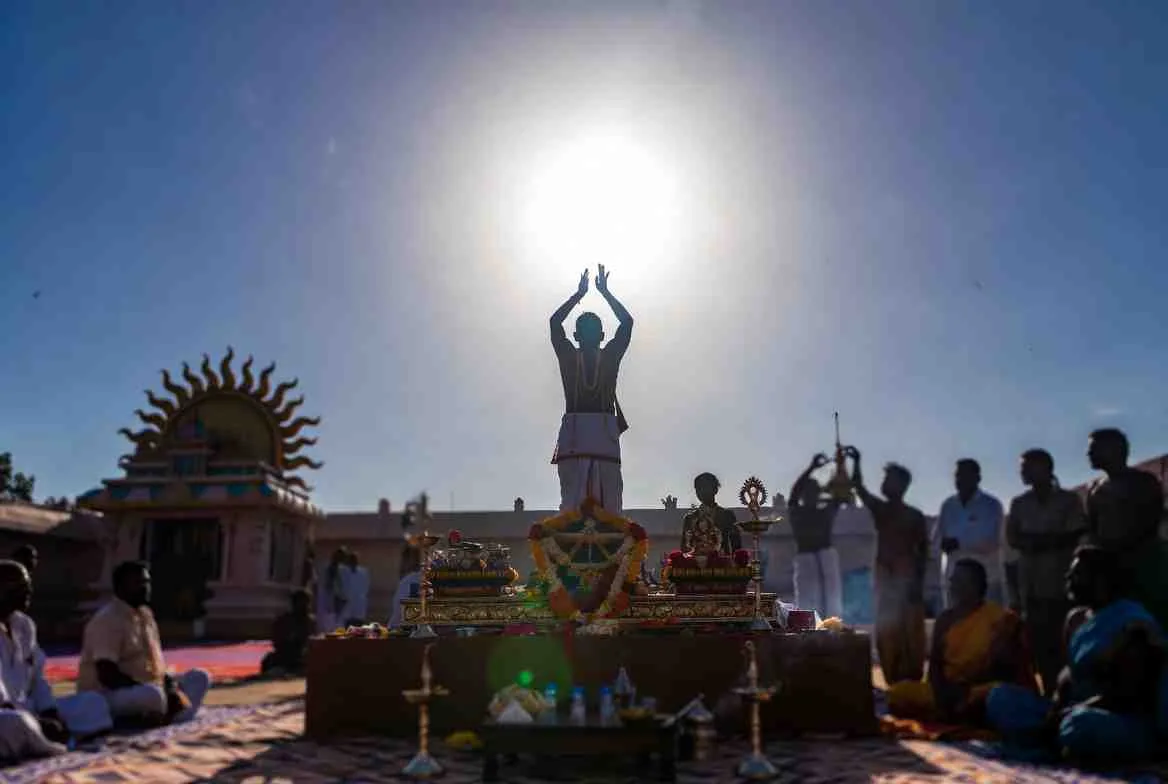
Karthika Masam Sunday Rituals: Sacred Sun Worship Traditions and Mantras