How Villages in Karnataka Celebrate Karthika Deepotsavam
When the sacred month of Karthika arrives in Karnataka's villages, an extraordinary transformation unfolds.
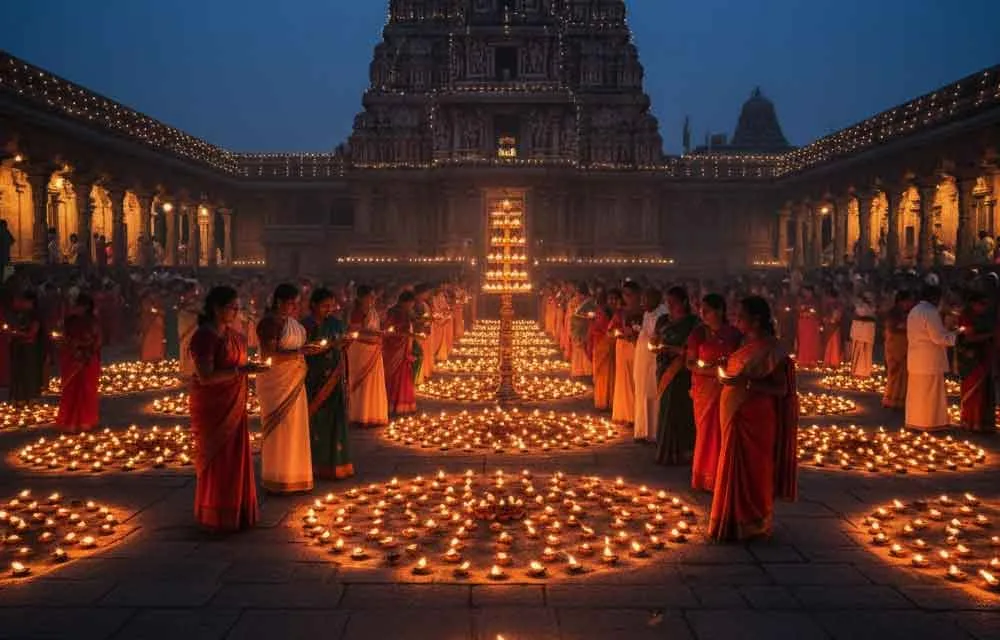
When the sacred month of Karthika arrives in Karnataka's villages, an extraordinary transformation unfolds.
When the sacred month of Karthika arrives in Karnataka's villages, an extraordinary transformation unfolds. From the Western Ghats' misty highlands to the Deccan Plateau's expansive fields, from the coastal communities of Karavali to the ancient temple towns dotting the landscape, every village becomes a luminous celebration of faith, tradition, and community. The Hindus of Kerala, Tamil Nadu, Andhra Pradesh, and Karnataka celebrate this festival by lighting oil lamps in Lord Shiva temples during Karttikai. This is Karthika Deepotsavam—a festival where Karnataka's rich cultural tapestry, linguistic diversity, and spiritual heritage converge in a month-long celebration of light conquering darkness.
The Sacred Month in Karnataka's Context
Deepotsava or Deepotsavam is also known as the festival of lights, is celebrated in the month of Kartika (October – November) every year. In Karnataka, this sacred month holds profound significance for both Shaivite and Vaishnavite traditions, reflecting the state's syncretic spiritual culture where different devotional paths harmoniously coexist.
Karnataka's unique position as a cultural bridge between North and South India manifests beautifully during Karthika Masam. The state's villages preserve traditions influenced by Kannada, Tulu, Konkani, and Kodava cultures, creating regional variations that enrich the overall celebration. Whether in a coastal Mangalorean village, a Malnad hill settlement, a North Karnataka agricultural community, or a South Karnataka temple town, Karthika Deepotsavam reveals distinctive local flavors while maintaining core spiritual principles.
The timing of Karthika Masam aligns perfectly with Karnataka's agricultural calendar. Coming after the Kharif harvest and coinciding with post-monsoon clarity, the month provides ideal conditions for spiritual observances. Cool November mornings make pre-dawn rituals comfortable, clear evening skies showcase spectacular lamp displays, and agricultural respite allows farmers full participation in month-long celebrations.
Regional Diversity: Karnataka's Cultural Mosaic
Karnataka's geographical and cultural diversity creates fascinating regional variations in Karthika Deepotsavam:
Coastal Karnataka (Karavali - Dakshina Kannada, Udupi, Uttara Kannada)
The coastal belt, with its unique Tulu-speaking culture and strong Vaishnavite tradition, celebrates Karthika Masam with distinctive characteristics:
Temple Centricity: The region's numerous ancient temples—particularly the Ashta Mathas of Udupi, Krishna Temple at Udupi, and various Devi temples—become celebration epicenters. Villages organize daily visits, with families walking to temples in pre-dawn darkness carrying small hand-held lamps.
Yakshagana Integration: The traditional theater form Yakshagana often features Karthika-themed performances. Troupes present episodes from Puranas emphasizing light's triumph over darkness, Shiva's cosmic dance, or Krishna's divine play. These all-night performances combine devotion with entertainment, keeping communities engaged through the sacred month.
Coconut-Based Traditions: Given abundant coconut cultivation, villages use coconut oil exclusively for lamp lighting. Coconut shells become natural lamp holders, creating distinctive light aesthetics. Freshly grated coconut features prominently in prasad preparations, and tender coconut water is offered to deities.
River and Sea Worship: Villages near rivers like Netravati, Sharavati, or the Arabian Sea incorporate water worship into Karthika rituals. Karthika Snanam: Holy bath during Brahma Muhurta (4:30–6:00 AM) believed to purify sins. Coastal communities add sea bathing on Karthika Pournami, with floating lamps creating magical seascapes.
Bunt Community Traditions: The Bunt community (traditional landowners) maintains unique customs—elaborate lamp arrangements in ancestral homes (guttu), special offerings to family deities (daivas), and community feasts emphasizing coastal cuisine.
Malnad Region (Western Ghats - Hassan, Chikmagalur, Shimoga)
The lush, forested Western Ghats region brings its own flavor to Karthika celebrations:
Hill Temple Pilgrimages: Villages organize collective pilgrimages to hilltop temples. The journey itself—climbing through forest paths in pre-dawn darkness, carrying lamps and offerings—becomes a moving meditation. Temples like Kodachadri, Kuduremukha, and numerous local hill shrines witness increased devotion during Karthika Masam.
Coffee Planter Traditions: In regions dominated by coffee and spice plantations, estate owners often sponsor community celebrations. Plantation workers from diverse backgrounds participate together, creating multicultural celebrations blending Hindu traditions with tribal elements.
Rainfall Thanksgiving: Having just concluded the intense monsoon season, Malnad villages incorporate thanksgiving themes into Karthika celebrations. The successful monsoon, crucial for the region's hydroelectric projects and agriculture, is acknowledged through special prayers.
Forest Product Integration: Wild honey, forest flowers, aromatic leaves, and medicinal plants gathered from surrounding forests enrich puja offerings. This integration of forest resources reflects the region's intimate relationship with nature.
Lingayat Influence: The region's strong Lingayat community brings unique Shaivite practices—daily Ishtalinga worship intensified during Karthika Masam, recitation of Vachanas (devotional poetry), and emphasis on social equality during community celebrations.
North Karnataka (Belgaum, Dharwad, Bagalkot, Vijayapura, Bidar)
North Karnataka, culturally connected to Maharashtra and Telangana, exhibits distinct celebration patterns:
Marathi Influence: Proximity to Maharashtra brings Marathi cultural elements into Karthika celebrations. Devotional songs (abhangs) by saint-poets like Tukaram and Dnyaneshwar feature prominently. The blending of Kannada and Marathi traditions creates unique syncretic practices.
Basava Philosophy: The region being the homeland of 12th-century social reformer Basavanna, Lingayat philosophy deeply influences celebrations. Emphasis on equality, rejection of caste distinctions, and focus on inner devotion over elaborate rituals characterize North Karnataka's Karthika observances.
Agricultural Community Celebrations: The predominantly agricultural landscape means harvest thanksgiving integrates strongly with Karthika rituals. Newly harvested jowar (sorghum), the region's staple, features in offerings and prasad preparations.
Wrestling and Physical Culture: Uniquely, some villages integrate traditional wrestling (kusti) demonstrations into Karthika festivities, reflecting the region's strong physical culture tradition. Akharas (wrestling arenas) near temples host exhibitions, connecting physical and spiritual discipline.
Dargah Connections: The region's syncretic culture means some villages with both Hindu and Muslim populations see respectful coexistence during festivals. While maintaining distinct traditions, there's mutual participation in community feasts and celebrations.
South Karnataka (Mysuru, Mandya, Tumakuru, Ramanagara)
South Karnataka, historically the Mysore Kingdom's heartland, preserves royal and classical traditions:
Mysore Palace Influence: Even villages emulate aspects of royal Karthika celebrations historically conducted at Mysore Palace. The aesthetic sensibility—elegant lamp arrangements, classical music emphasis, refined prasad preparations—reflects aristocratic influences democratized across society.
Temple Architecture: The region's magnificent temples—Chamundeshwari Temple atop Chamundi Hills, Ranganathaswamy Temple at Srirangapatna, Cheluvanarayana Swamy Temple—set standards for village temple celebrations. Architectural grandeur inspires even modest village temples to maximize decorative efforts during Karthika Masam.
Classical Arts: Strong classical traditions mean villages often host Carnatic music concerts, Bharatanatyam performances, and Harikatha sessions during Karthika Masam. Accomplished artists perform in villages, not just urban centers, democratizing access to high culture.
Sugarcane Belt Traditions: The extensive sugarcane cultivation influences festival foods. Jaggery from local crushing units features prominently in prasad preparations. Some villages organize visits to sugarcane fields during Vanabhojanam, offering prayers for crop prosperity.
Kannada Literary Heritage: The region's deep literary tradition manifests in Karthika celebrations through recitations of classical Kannada poets—Pampa, Ranna, Ponna (Ratnatraya), and later Bhakti poets like Purandara Dasa. Literary gatherings discussing religious texts occur alongside ritual observances.
Bangalore Rural Districts
Villages surrounding India's IT capital present interesting traditional-modern juxtapositions:
Urban-Rural Bridge: Many villages have members working in Bangalore who return weekends, bringing urban resources to support rural celebrations while seeking authentic traditional experiences unavailable in cities.
Technology Integration: Some villages use social media to coordinate celebrations, livestream temple ceremonies for migrated members, and organize funding through digital platforms. This tech-savvy approach coexists with unchanged traditional rituals.
Reverse Migration: Karthika Masam sees temporary reverse migration as urbanites return to ancestral villages, increasing participation and resources available for celebrations.
Preparations: Mobilizing Village Resources
Community Organization
Preparations begin weeks before Karthika Masam, with village panchayats, temple committees, and community organizations coordinating:
Planning Meetings: Elders, temple trustees, and community leaders meet to plan the month's activities. Budgets are discussed, task assignments made, and schedules finalized. These meetings reinforce democratic community governance.
Resource Mobilization: Wealthy families sponsor specific activities—temple lamp oil, community feasts, cultural programs, or prasad materials. The principle of proportional contribution according to capacity ensures inclusive participation without burdening poor families.
Youth Engagement: Young people take responsibility for organizing cultural programs, managing logistics during large gatherings, and using technology to document and share celebrations. This active involvement ensures younger generations remain connected to traditions.
Women's Collectives: Self-help groups and women's organizations coordinate collective activities—wick preparation, kolam creation, prasad cooking, and organizing special women-centric observances. These collectives strengthen female networks and leadership.
Material Gathering
Traditional materials are sourced with attention to sustainability and local economy support:
Clay Lamp Production: Village potters experience their busiest season. Traditional pottery techniques unchanged for generations produce thousands of earthen lamps. The clay, locally sourced and shaped on manual pottery wheels, embodies sustainable practices.
Families visit potters to select lamps, often ordering weeks in advance. Some villages organize collective purchases, ensuring potters receive fair prices while families benefit from bulk rates. The transaction strengthens community bonds and local economic circulation.
Oil Pressing: Deepa Daanam: Lighting of oil lamps (morning and evening) is the most important ritual. Villages organize collective oil extraction sessions using traditional ghani (oil press). Depending on the region:
- Coastal areas: coconut oil
- Malnad region: coconut or sesame oil
- North Karnataka: groundnut or sesame oil
- South Karnataka: sesame oil (nalla enne) preferred
The oil pressing becomes a community event—people contribute oilseeds, share labor, and distribute oil according to family needs. The leftover oil cake serves as cattle feed or organic fertilizer.
Cotton Wick Preparation: Women gather for wick-rolling sessions that double as social occasions. Skilled hands demonstrate proper technique to younger participants—cotton must be rolled neither too loose (causing rapid burning) nor too tight (preventing oil absorption). Songs are sung, news exchanged, and advice shared while hundreds of wicks are prepared.
Flower Arrangements: Depending on season and region, specific flowers are gathered:
- Marigold and chrysanthemum from gardens
- Jasmine from fragrant shrubs
- Lotus from temple tanks
- Champaka (frangipani) from temple trees
- Wild flowers from fields and forests in Malnad
Families with flower gardens contribute generously, considering it meritorious service. Temple priests ensure continuous fresh flower supply for daily pujas.
Special Materials: Villages gather specific ritual items:
- Bilva leaves for Shiva worship (from bilva trees carefully maintained)
- Tulsi leaves from Tulsi plants in every home
- Turmeric and kumkum (traditional sources or purchased)
- Camphor and incense
- Rice flour for kolam
- Natural colors for rangoli
Home Preparations
Individual households undergo extensive preparation:
Deep Cleaning: Homes receive thorough cleaning—walls are cleaned or whitewashed, floors scrubbed, storage areas organized, and even courtyards leveled. This physical cleaning parallels desired spiritual purification.
Utensil Preparation: Bronze, brass, and copper vessels accumulated over generations are brought out, cleaned until gleaming, and prepared for ritual use. These vessels, often family heirlooms, connect present celebrations to ancestral traditions.
Lamp Maintenance: Existing lamps are cleaned, repaired if needed, and inventoried. Additional lamps are purchased to supplement family collections, ensuring sufficient quantities for elaborate displays.
Prayer Space Enhancement: Home prayer rooms (puja room or devara mane in Kannada) receive special attention—deity idols are carefully cleaned, decorations updated, and lamp arrangements planned. Some families hire professional decorators for elaborate setups.
Daily Rituals: A Month of Devotion
Pre-Dawn Awakening
The defining feature of Karthika Masam in Karnataka villages is the pre-dawn routine that establishes the day's spiritual tone:
Early Rising: Families wake around 4:00 AM, significantly earlier than usual. The discipline of rising in Brahma Muhurta (pre-dawn auspicious time) is considered spiritually beneficial, aligning human activity with cosmic rhythms.
The Sacred Bath: Karthika Snanam: Holy bath during Brahma Muhurta (4:30–6:00 AM) believed to purify sins. In Karnataka villages:
- River/stream bathing: Communities near water bodies gather for collective bathing
- Well bathing: Homes with wells use fresh drawn water
- Tank bathing: Temple tanks serve villages without natural water sources
- Coastal sea bathing: Karavali villages add sea bathing to their practice
The water's coldness in November makes bathing an act of determination, symbolizing willingness to undergo discomfort for spiritual goals. Women, the primary observers, bathe fully clothed maintaining modesty. Chanting mantras or singing devotional songs accompanies the bath, transforming physical act into spiritual practice.
Benefits Recognized: Bathing in rivers in Karthika Masam is not only considered holy but also has significant scientific and medical benefits, and Magnetic Therapy believes that taking a dip in any flowing river waters on Karthika Somavaram (Monday) for about 15mins can bring relief from the stomach, and Liver disorders and also help maintain good general health.
Morning Temple Worship
Directly after bathing, devotees proceed to temples, wet hair signifying ritual completion:
Temple Opening: Village temples open earlier during Karthika Masam. Priests complete preliminary rituals before dawn, preparing sanctum sanctorum for devotee influx.
Abhishekam Rituals: Shiva Puja: Mondays are especially sacred. Devotees perform Abhishekam with water, milk, and Bilva leaves. Special ritual baths are given to deities using Panchaamritam (milk, curd, honey, ghee, sugar water), followed by water, sandalwood paste application, and decoration with flowers.
Offering Patterns: Devotees bring offerings according to deity and tradition:
- Shiva temples: bilva leaves, milk, water, flowers
- Vishnu temples: tulsi leaves, fruits (especially amla), flowers
- Devi temples: turmeric, kumkum, coconuts, bangles
Pradakshina: Circumambulation of temple and deity forms essential practice. Numbers vary—3, 7, 11, 21, or 108 rounds depending on individual vows. The physical exertion combined with mantra chanting creates meditative state.
Community Darshan: Unlike hurried urban temple visits, village darshans are leisurely affairs. Devotees spend time in temple precincts—sitting in meditation, participating in group chanting, listening to priests' religious discourses, and simply absorbing the sacred atmosphere.
Tulsi Worship
A distinctive feature across Karnataka villages is prominent Tulsi (holy basil) worship:
Tulsi Brindavana: Most homes maintain Tulsi plants in specially constructed raised platforms (Tulsi Brindavana or Tulsi Katte in Kannada). These structures, often ornately decorated, become focal points for daily worship.
Daily Rituals: Women offer Tulsi:
- Water first thing after bathing
- Lighting lamps (minimum three) around the plant
- Offering turmeric, kumkum, flowers
- Circumambulating while chanting prayers
- Singing devotional songs (Tulsi Stotra)
Tulsi Vivah: An important celebration during Karthika Masam is Tulsi Vivah—the symbolic marriage of Tulsi to Lord Vishnu (represented by Shaligrama or Krishna idol). This marks transition from monsoon to winter season and holds agricultural significance. Villages organize collective Tulsi Vivah ceremonies with priests conducting elaborate rituals, followed by community feasts.
Daytime Observances
After morning rituals, village life continues with regular activities, but Karthika Masam consciousness permeates everything:
Dietary Restrictions: Many families observe sattvic (pure) diet throughout the month:
- Complete vegetarianism
- Avoiding onions, garlic, and certain vegetables
- Emphasis on simple, easily digestible foods
- Some observe fasting on specific days (Mondays, Ekadasi)
The dietary discipline serves both spiritual purification and practical health purposes—lighter foods suit cooler weather and align with reduced agricultural activity periods.
Continuous Chanting: Religious households maintain continuous chanting—Shiva Panchakshari (Om Namah Shivaya), Vishnu Sahasranama, or continuous reading of Bhagavad Gita or other sacred texts. Some families organize relay chanting where different members take shifts, ensuring continuous recitation throughout the month.
Work Modifications: While regular work continues, attempts are made to finish earlier, allowing time for evening rituals. Commercial activities are minimized, and focus shifts toward spiritual and community activities.
Evening Lamp Lighting: The Radiant Heart of Celebration
The evening deepa aradhana represents the emotional and visual apex of each Karthika day:
Preparation Phase (3:00 PM - 5:00 PM)
Courtyard Preparation: Women clean courtyards (aangan or jaaga in Kannada), sprinkle water for dust settlement, and prepare surfaces for kolam.
Kolam/Rangoli Creation: Elaborate designs are created using rice flour, colored powders, or flower petals. Karnataka's regional kolam styles reflect cultural diversity:
- South Karnataka: Mysore style with fine lines and geometric precision
- Coastal: Simpler patterns often incorporating fish motifs
- North Karnataka: Bolder designs with Maharashtrian influence
- Malnad: Nature-inspired designs featuring local flora/fauna
Traditional motifs include peacocks, lotuses, lamps (deepa), mango leaves, conch shells, and geometric patterns symbolizing cosmic order.
Lamp Arrangement: Lamps are arranged in aesthetically pleasing and spiritually significant patterns:
- Linear arrangements along pathways and walls
- Circular patterns around Tulsi Brindavana
- Pyramidal arrangements at entrances
- Scattered placement throughout gardens and courtyards
- Special focus on windows, doorways, and boundary markers
Lamp Decoration: Before filling with oil, lamps are decorated:
- Turmeric and kumkum paste application
- Sandal paste dots
- Small flower petal arrangements
- In some regions, lamps are adorned with small leaf decorations
The Lighting Ceremony (5:30 PM - 6:30 PM)
Systematic Lighting: A central lamp (Mukha Deepa) is lit first after brief prayers. All other lamps are lit from this sacred flame, symbolizing divine light spreading from single source.
Lighting follows specific sequence:
- Tulsi Brindavana lamps
- Puja room lamps
- Main entrance
- All doorways and windows
- Courtyard boundary
- Well or water source
- Cattle shed (if applicable)
- Trees, especially peepal and neem
- Boundary walls and gates
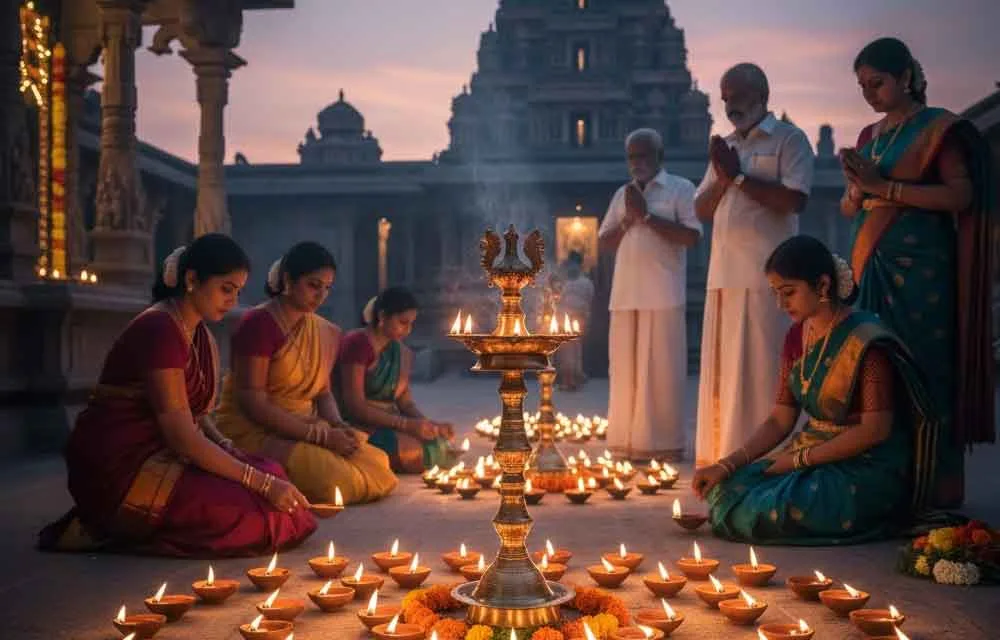
Community Illumination: Within 30-45 minutes, entire villages transform into glowing wonderlands. Every home, temple, pathway, and public space sparkles with thousands of tiny flames. The collective effect—visible from any elevated point—creates breathtaking visual spectacle.
Sound Atmosphere: The evening fills with multi-layered soundscape:
- Temple bells and conch shells
- Devotional songs from homes and temples
- Children's excited chatter
- Traditional instruments (harmonium, drums, cymbals)
- Occasional firecrackers adding celebratory punctuation
Night-Time Activities
After lamp lighting, villages engage in various spiritual and social activities:
Bhajan Sessions: Groups gather for collective devotional singing. Karnataka's rich bhajan tradition includes:
- Haridasa compositions (Purandara Dasa, Kanaka Dasa, Vijaya Dasa)
- Dasara padas
- Traditional folk devotional songs
- Classical Carnatic kirtanas adapted for group singing
These sessions feature call-and-response formats encouraging everyone's participation. Traditional instruments—harmonium, tabla, cymbals, tambura—provide accompaniment.
Religious Discourses: Learned individuals or visiting scholars deliver discourses explaining festival significance, reciting portions of Puranas, or discussing philosophical concepts. Even illiterate villagers absorb religious knowledge through these oral transmissions.
Cultural Programs: Youth organize performances showcasing Karnataka's rich artistic heritage—Yakshagana in coastal regions, Dollu Kunitha (drum dance) in North Karnataka, classical dance and music in South Karnataka, and folk arts everywhere.
Informal Socializing: Families visit neighbors, exchange sweets and snacks, discuss community matters, and strengthen social bonds. The relaxed, lamp-lit atmosphere facilitates meaningful conversations often difficult in daytime's busyness.
Karthika Somavaram: Sacred Mondays
Mondays during Karthika Masam receive special reverence, particularly in Shiva-worshipping communities:
Fasting and Austerities
Shiva Puja: Mondays are especially sacred. Devotees perform Abhishekam with water, milk, and Bilva leaves. Many observe rigorous fasts:
Types of Fasts:
- Complete water-less fast until evening
- Fruit and milk fast
- Single meal after sunset
- Partial fast eating only specific foods
Fast-Breaking: After evening temple visit and lamp lighting, fasts are broken with simple, sattvic food—fruits, milk, light rice preparations, or specific prasad from temples.
Enhanced Temple Activities
Shiva temples witness maximum attendance on Karthika Mondays:
Rudrabhishekam: Special elaborate abhishekams are performed using multiple materials—milk, curd, ghee, honey, sugarcane juice, coconut water, and sacred water. Each substance has specific spiritual significance and is poured while chanting Rudra mantras.
Bilva Patra Offerings: Fresh bilva (bael) leaves, considered especially dear to Shiva, are offered. Devotees bring hand-picked leaves, wash them carefully, and offer while chanting mantras. The three-leafed bilva symbolizes the trinity (Brahma, Vishnu, Shiva) or three aspects of time (past, present, future).
Mass Participation: Mondays see villages emptying as residents flock to Shiva temples. The sense of collective devotion—hundreds chanting together, waiting patiently for darshan, circumambulating together—creates powerful spiritual atmosphere.
Special Celebrations and Events
Nagula Chavithi
Nagula Chavithi holds a deep cultural significance in Andhra Pradesh and Karnataka, where it is celebrated as a key event of the Karthika month. This serpent worship day sees villages engaging in unique rituals:
Anthill Worship: Communities identify anthills believed to house snakes. These are cleaned, decorated with rangoli, and worshipped with offerings of milk, turmeric, flowers, and special foods.
Snake God Temples: Temples dedicated to Naga Devatas (especially prominent in coastal Karnataka and Malnad regions) witness special pujas. The relationship between agricultural communities and snakes (who control rodent populations) is acknowledged through respectful worship.
Women's Observances: Married women observe fasts seeking blessings for children's welfare, reflecting snakes' association with fertility and protection.
Paitha Mahakruchcha Vratham
The southern states, such as Andhra and Telangana, as well as Karnataka, observe the Paitha Mahakruchcha vratham, a five-day ceremony, during Karthika. It is a five day ritual observed in the southern states, like Andhra and Telangana, and even Karnataka, dedicated to the worship of Lord Vishnu.
Five-Day Observance: This intense five-day fasting and worship period culminates in Tulsi Vivah celebrations. Devotees follow specific dietary restrictions each day, worship Lord Vishnu with elaborate rituals, and break their fast only on the fifth day.
Community Support: Recognizing the difficulty of strict fasting, communities provide support—families share permitted foods, temples distribute prasad, and neighbors check on elderly practitioners ensuring their well-being.
Karthika Pournami: The Grand Culmination
The full moon day represents Karthika Masam's spiritual and celebratory peak:
Mass Holy Bathing: The full moon day (Purnima) of Kartika is celebrated grandly, with celebrations in temples, special poojas, processions. Villages witness their largest gatherings at water sources. The combination of full moon and Karthika Nakshatra (Pleiades constellation) creates especially auspicious conditions.
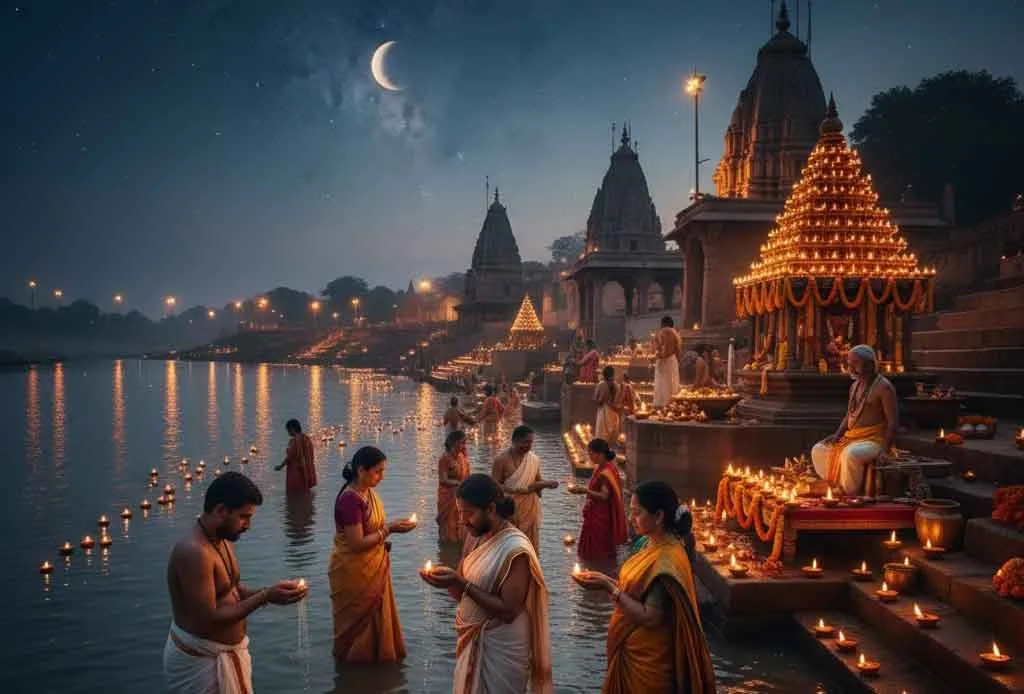
Pre-dawn bathing processions—lit by thousands of hand-held lamps, accompanied by devotional singing—create ethereal atmosphere. The sight of entire communities gathered at rivers or tanks, immersing in moonlit waters, remains deeply moving.
365-Wick Lamp: Large temples light massive lamps with 365 wicks representing each day of the year. Preparations require days—arranging wicks in concentric circles, filling vessels with ghee or oil, ensuring simultaneous ignition. The lighting ceremony attracts massive crowds, and the brilliant illumination symbolizes divine light blessing the entire coming year.
Frequently Asked Questions
How do coastal Karnataka villages celebrate Karthika Deepotsavam?
Villages use coconut oil for lamps and coconut shells as lamp holders, and families walk to temples in pre-dawn darkness with small hand-held lamps. Yakshagana troupes also stage all-night Karthika-themed performances.
What is Karthika Snanam and when is it done?
Karthika Snanam is a holy bath taken during Brahma Muhurta, 4:30–6:00 AM, and is believed to purify sins. Coastal communities add sea bathing on Karthika Pournami, with floating lamps on the water.
When is the Karthika month celebrated in Karnataka?
Karthika falls in October–November. It comes after the Kharif harvest and the monsoon, so cool mornings suit pre-dawn rituals and farmers can take part fully.
How do Malnad villages observe Karthika Masam?
Villages organise group pilgrimages to hilltop temples such as Kodachadri and Kuduremukha, carrying lamps and offerings. Lingayat communities intensify daily Ishtalinga worship and recite Vachanas.
What is distinctive about Karthika celebrations in North Karnataka?
Basavanna's philosophy shapes the observances, stressing equality and inner devotion. Abhangs by Tukaram and Dnyaneshwar are sung, newly harvested jowar is used in prasad, and some villages hold kusti wrestling demonstrations.