Regional Bhadrapada Festivals: From Onam to Hartalika Teej
The month of Bhadrapada (August–September) is vibrant with Hindu festivals that reflect India’s rich cultural and spiritual diversity.
The month of Bhadrapada (August–September) is vibrant with Hindu festivals that reflect India’s rich cultural and spiritual diversity.
The month of Bhadrapada (August–September) is vibrant with Hindu festivals that reflect India’s rich cultural and spiritual diversity. Among these, Onam in Kerala and Hartalika Teej in North India stand out for their unique traditions, devotional significance, and community spirit. This article explores the essence of these state-specific celebrations, their mythological roots, and their cultural importance for 2025.
Onam: Kerala’s Grand Harvest Festival
Mythological Significance
Onam, celebrated predominantly in Kerala, is deeply tied to the legend of King Mahabali, a benevolent Asura king. According to Hindu mythology, Mahabali was a just and generous ruler loved by his subjects. His growing power alarmed the gods, prompting Lord Vishnu to incarnate as Vamana, a dwarf Brahmin. Vamana approached Mahabali during a grand sacrifice and requested three paces of land. When Mahabali agreed, Vamana grew to cosmic proportions, covering the earth and heavens in two steps. For the third step, Mahabali humbly offered his head, symbolizing his complete surrender to dharma. Pleased, Vishnu granted Mahabali the boon to visit his people annually, a visit celebrated as Onam.
This story underscores themes of devotion, humility, and the triumph of righteousness, making Onam a festival of gratitude and unity.
Celebrations in Kerala
Onam 2025, expected around late August or early September, is a 10-day festival marked by vibrant traditions:
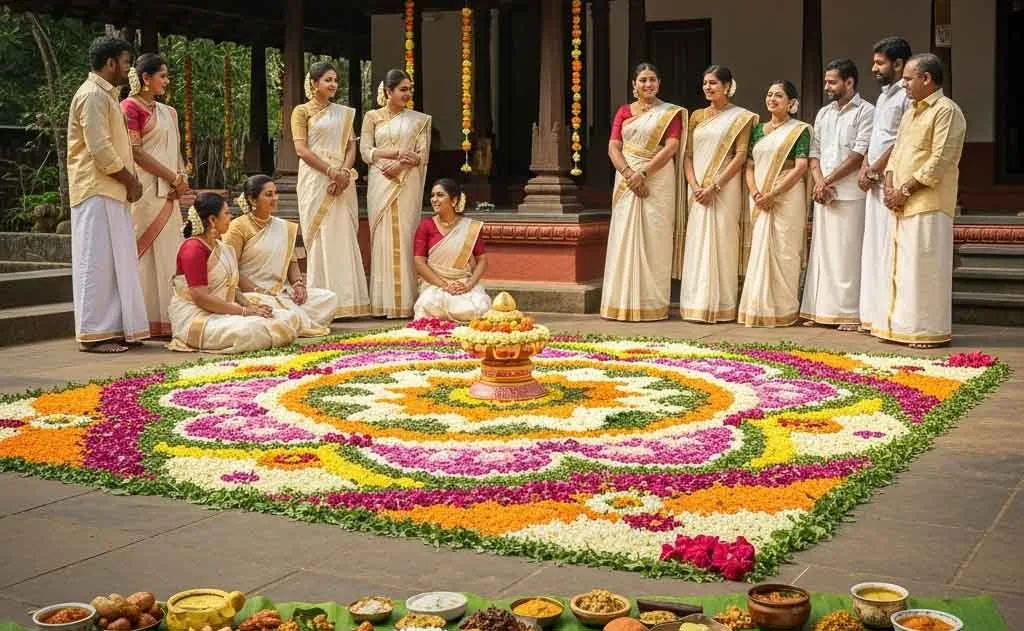
- Pookalam: Intricate floral designs created daily at home entrances to welcome Mahabali.
- Onasadya: A grand vegetarian feast served on banana leaves, featuring dishes like avial, sambar, and payasam.
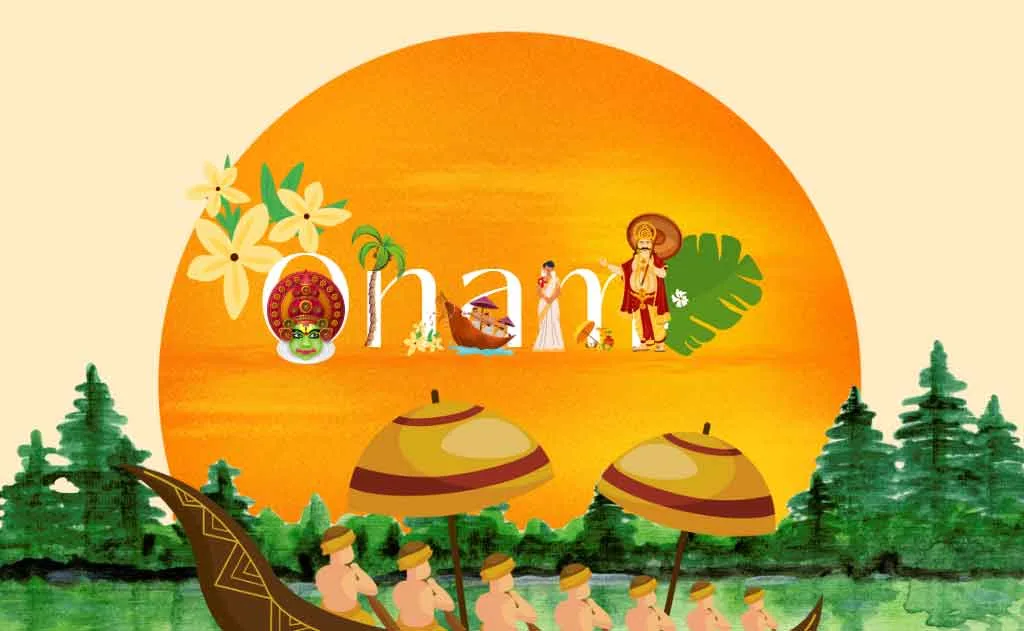
- Vallamkali: Thrilling snake boat races that showcase Kerala’s community spirit.
- Cultural Performances: Traditional dances like Kathakali and Mohiniyattam narrate mythological tales.
Onam transcends religion, uniting Keralites in celebrating their cultural heritage and agricultural prosperity.
Hartalika Teej: North India’s Devotional Festival
Mythological Significance
Hartalika Teej, widely observed in North India (especially in Rajasthan, Uttar Pradesh, Bihar, and Madhya Pradesh), is dedicated to Goddess Parvati and Lord Shiva. The festival’s devotional story revolves around Parvati’s unwavering resolve to marry Shiva.
According to legend, Parvati, daughter of the Himalayas, was deeply in love with Shiva, who was an ascetic detached from worldly desires. When her father planned to marry her to another suitor, Parvati confided in her friend, who whisked her away to a forest to perform intense penance. This act of “abduction” (from Sanskrit hartalika, meaning “abduction by a female friend”) gave the festival its name. Parvati’s rigorous tapas (austerities) in the forest pleased Shiva, who accepted her as his consort. Their divine union symbolizes love, devotion, and perseverance.
This story inspires women to pray for marital bliss, a harmonious relationship, and the well-being of their spouses during Hartalika Teej.
Celebrations in North India
Hartalika Teej 2025, likely falling in late August or early September, is marked by devotion and vibrant rituals:
- Fasting: Women observe a nirjala fast (without water or food) to pray for their husband’s longevity and a blissful marriage. Unmarried women fast to seek a suitable partner.
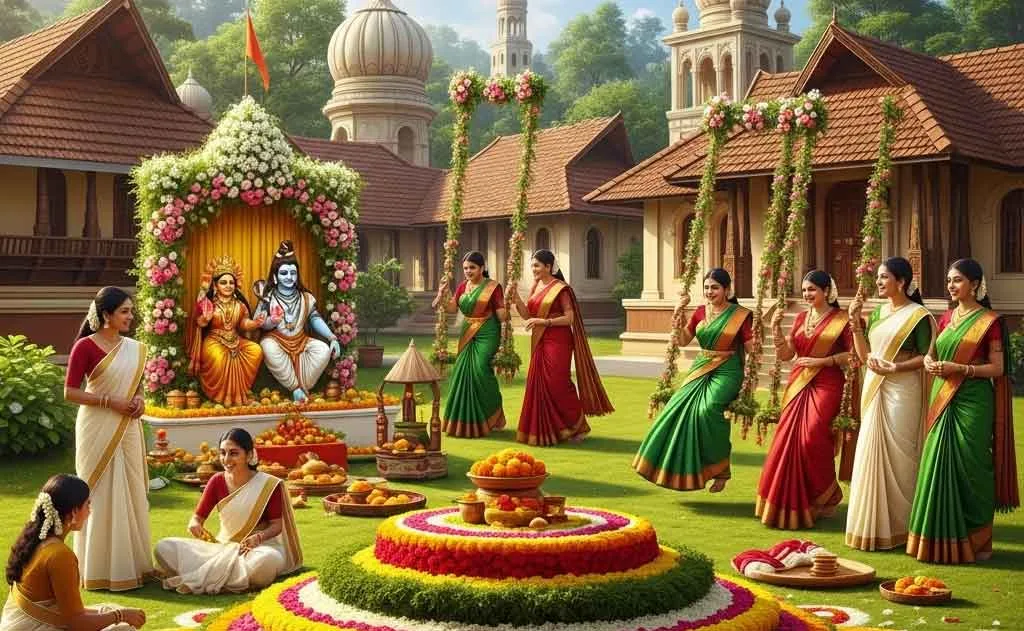
- Puja: Elaborate rituals involve creating clay idols of Shiva and Parvati, offering flowers, fruits, and chanting mantras.
- Swings and Songs: Decorated swings adorned with flowers are a hallmark, with women singing traditional Teej songs and applying mehndi (henna).
- Community Bonding: Women dress in colorful traditional attire, share stories, and celebrate with dance and music.
Hartalika Teej reflects the spiritual strength of women and the sanctity of marriage in North Indian culture.
Cultural and Spiritual Significance
Both Onam and Hartalika Teej highlight the diversity of Bhadrapada celebrations. Onam emphasizes community, gratitude, and Kerala’s agrarian roots, while Hartalika Teej focuses on devotion, sacrifice, and marital harmony in North India. These festivals, rooted in ancient myths, continue to strengthen cultural identities and spiritual bonds in 2025.
For more insights into Hindu festivals, rituals, and their significance, visit www.hindutone.com.
Frequently Asked Questions
Which festivals are celebrated in the Bhadrapada month?
Bhadrapada (August–September) includes Onam in Kerala and Hartalika Teej in North India. Onam centres on community and harvest, while Hartalika Teej focuses on devotion and marital harmony.
What is the legend behind Onam?
As commonly told, Vishnu came as the dwarf Vamana and asked King Mahabali for three paces of land. After two steps covered earth and heaven, Mahabali offered his head for the third, and Vishnu granted him a yearly visit to his people, celebrated as Onam.
What are the main Onam traditions in Kerala?
Onam is a 10-day festival featuring pookalam floral designs at entrances, the onasadya vegetarian feast on banana leaves, Vallamkali snake boat races, and dances like Kathakali and Mohiniyattam.
Why is Hartalika Teej called by that name?
Hartalika comes from Sanskrit and means abduction by a female friend. In the legend, Parvati's friend took her to a forest to perform penance so she would not be married to another suitor, and Shiva accepted her.
How is Hartalika Teej observed?
Women keep a nirjala fast, without water or food, and worship clay idols of Shiva and Parvati with flowers, fruits and mantras. Swings, Teej songs and mehndi are part of the celebration.
When are Onam and Hartalika Teej in 2025?
Both are expected in late August or early September 2025. Check the local panchang for exact dates.