Why Karthika Masam Is Called Karthika: The Krittika Nakshatra, the Pleiades and the Full Moon
Karthika Masam takes its name from Krittika nakshatra, the star cluster known as the Pleiades, because the month's full moon falls in or near it. In 2026, Karthika Pournami on Tuesday 24 November has Krittika running at sunset. Here is how all twelve lunar months got their names, the story of Kartikeya and the six Krittikas, and how to spot the cluster in the November sky.
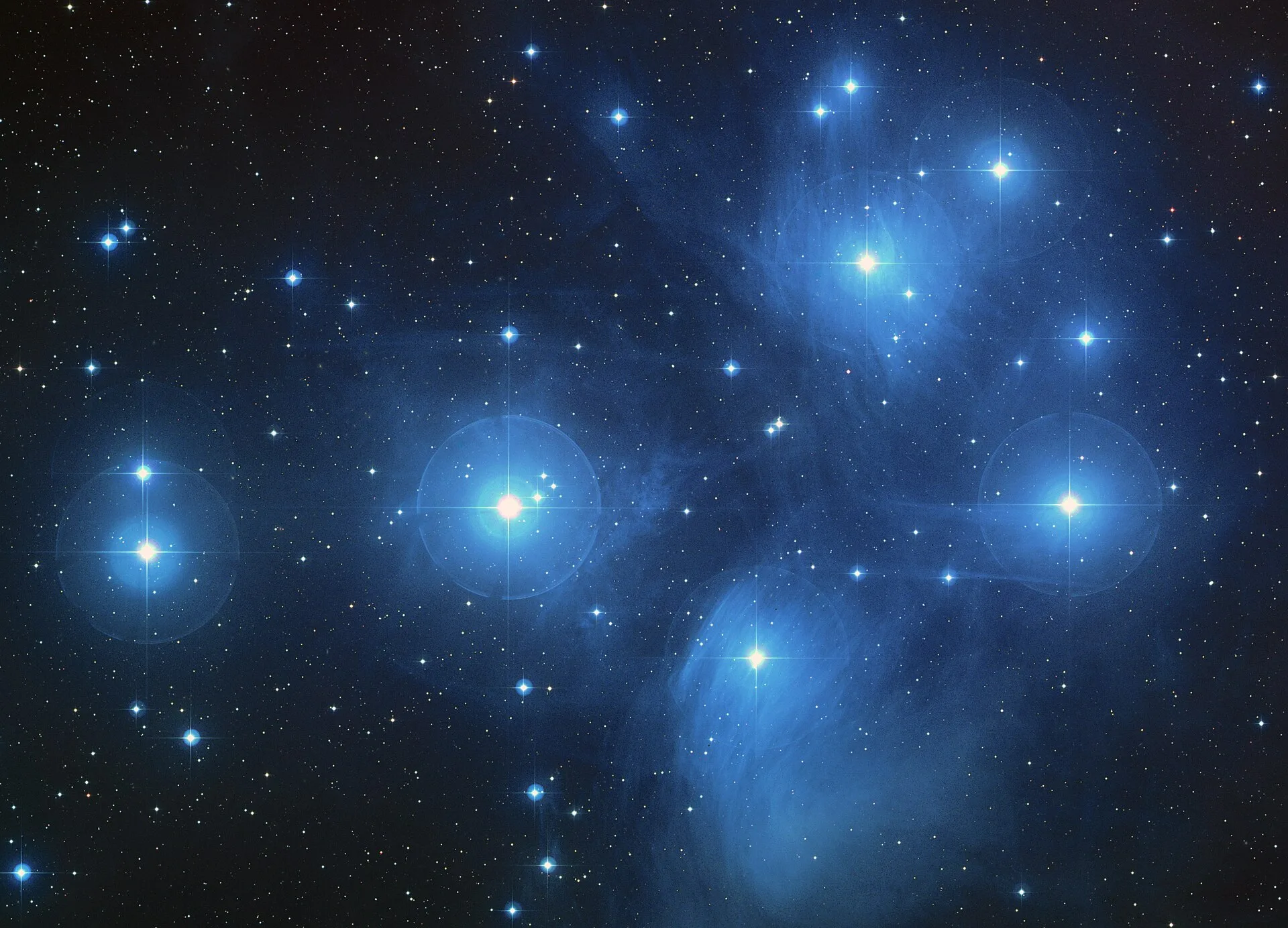
Karthika Masam takes its name from Krittika nakshatra, the star cluster known as the Pleiades, because the month's full moon falls in or near it. In 2026, Karthika Pournami on Tuesday 24 November has Krittika running at sunset.
Quick answer: Karthika Masam is named after Krittika nakshatra, the star cluster known as the Pleiades. Indian lunar months take their names from the nakshatra in or near which the Moon is full, and the full moon of this month falls near Krittika. In 2026, on Karthika Pournami, Tuesday 24 November, Drik Panchang shows Krittika running until 11:25 PM IST and Purnima until 8:23 PM IST, so at sunset the full moon is right there in Krittika.
It is one of those facts that, once you know it, changes how you look at the calendar. Every month name you grew up with, from Chaitra to Phalguna, is quietly pointing at a group of stars. Here is how the system works, why Krittika matters so much, and where Kartikeya comes into the story.
How Indian lunar months get their names
A lunar month runs from one new moon to the next (amanta, the system used in Andhra Pradesh, Telangana, Karnataka, Maharashtra and Gujarat) or from one full moon to the next (purnimanta, common in North India). In both systems, the month carries the name of the nakshatra that the Moon occupies, or is close to, on its Purnima.
The sky has 27 nakshatras, but there are only 12 months, so only some nakshatras give their names to months. The full moon moves on by roughly two or three nakshatras each month, and the twelve that it tends to land on became the month names. Over centuries the names were fixed, so in a particular year the full moon can sit in a neighbour of the named nakshatra. The rule is 'in or near', not 'exactly'.
A useful piece of sky logic: a full moon is always opposite the Sun. In November the Sun is in the opposite part of the sky from the Pleiades, so the November full moon lands near them. That is why the Karthika full moon and the Krittika stars keep meeting, year after year.
The twelve lunar months and their nakshatras
The pattern is easy to spot once it is in a table. Ashadha, Bhadrapada and Phalguna each take their name from a pair of nakshatras, 'Purva' (former) and 'Uttara' (latter), because their full moons fall around that pair.
| Lunar month | Nakshatra near the full moon |
|---|---|
| Chaitra | Chitra |
| Vaishakha | Vishakha |
| Jyeshtha | Jyeshtha |
| Ashadha | Purva Ashadha / Uttara Ashadha |
| Shravana | Shravana |
| Bhadrapada | Purva Bhadrapada / Uttara Bhadrapada |
| Ashwayuja (Ashwin) | Ashwini |
| Karthika (Kartik) | Krittika |
| Margashira (Margashirsha) | Mrigashira |
| Pushya (Pausha) | Pushya |
| Magha | Magha |
| Phalguna | Purva Phalguni / Uttara Phalguni |
Read down the list and the connection is almost always visible in the spelling: Chitra gives Chaitra, Vishakha gives Vaishakha, Mrigashira gives Margashira, and Krittika gives Karthika. Ashwayuja comes from Ashwini, whose older name is Ashvayuj.
Karthika Pournami 2026: the Moon in Krittika
Here is how the full moon of 2026 lines up, using Drik Panchang for New Delhi. Tithi and nakshatra end times are IST and are the same instant across India. Sunset differs by city and is approximate to plus or minus one minute.
| Date (IST) | Tithi | Nakshatra | Sunset |
|---|---|---|---|
| Mon 23 Nov 2026 | Chaturdashi until 11:42 PM, then Purnima | Bharani until 2:02 AM (24 Nov) | New Delhi 5:25 PM |
| Tue 24 Nov 2026 | Purnima until 8:23 PM | Krittika until 11:25 PM | New Delhi 5:25 PM; Hyderabad about 5:40 PM |
| Wed 25 Nov 2026 | Krishna Pratipada until 4:50 PM | Rohini until 8:36 PM | New Delhi 5:24 PM |
So on the evening of 24 November, as families across the Telugu states light the Karthika Pournami deepam, the Moon is both full and in Krittika. You can see the 'in or near' rule working too: the night before, the Moon is still in Bharani, and the night after it has moved into Rohini.
For the full Karthika calendar, the Telugu (amanta) Karthika Masam runs from Tuesday 10 November to Tuesday 8 December 2026 (Amavasya). In the North Indian purnimanta calendar, Kartik ends on the full moon of 24 November and Margashirsha begins on 25 November. See the Karthika Masam 2026 calendar, day by day.
Who are the Krittikas?
Krittika is a small, bright, tightly packed cluster of stars in the constellation Taurus, known in English as the Pleiades or the Seven Sisters. Most people with good eyesight can see six stars with the naked eye on a dark night, and the number six runs all through the Indian stories about them.
- Ruling deity: Agni, the fire god. Krittika's symbol is often given as a blade or a flame, and the nakshatra is associated with sharpness, purity and burning away.
- Position: Krittika spans the end of Mesha (Aries) and the start of Vrishabha (Taurus) in the sidereal zodiac.
- Place in the list: today's nakshatra list begins with Ashwini, which puts Krittika third. But older Vedic lists begin with Krittika, a reminder of how important this cluster was to early Indian sky-watchers.
- The Vedic month: in the older Vedic names for the months, Kartika corresponds to Urja, a name connected with strength and nourishment.
In a well-known story told in the Mahabharata, the Krittikas are the wives of six of the Saptarishis, the seven sages of the Big Dipper. Only Arundhati, the wife of Vasishtha, stayed beside her husband, which is why newly married couples are traditionally shown the star Arundhati as an ideal of devotion.
Kartikeya and the six Krittikas
The best-loved Krittika story is the birth of Kartikeya, also known as Skanda, Subrahmanya and Murugan. As traditionally told, the fiery energy of Shiva was too powerful for anyone to hold. It passed through Agni and the Ganga and came to rest in Sharavana, a lake of reeds, where it became a radiant child, sometimes described as six babies who were later united into one.
The six Krittikas came down to bathe, found the child and nursed him. To feed from all six mothers at once, the child took six faces. So he was named Kartikeya, the son of the Krittikas, and Shanmukha, the six-faced one. Parvati then embraced him as her own son. Different Puranas tell the story with different details, but the Krittikas and the six faces are constant.
This is why the month and the god share a name, and why Murugan devotees keep Krittika days so carefully. In the same Karthika season, Skanda Sashti and Soora Samharam fall on Sunday 15 November 2026 in India. Read more in Skanda Sashti 2026 and Kartikeya: history, significance and pooja.
The Karthigai Deepam connection
Tamil Nadu celebrates Karthigai Deepam on the day Krittika nakshatra is current at sunset in the Tamil month of Karthigai. In 2026 that is also Tuesday 24 November, the same day as Karthika Pournami. Tamil families light rows of clay lamps, and at Tiruvannamalai a great flame is lit on top of the Arunachala hill, recalling the endless column of fire in which, as traditionally told, Shiva appeared to Brahma and Vishnu.
Notice how the threads tie together: Krittika's deity is Agni, the god of fire; the month is famous for lamps; and its central festival is a festival of flame. Whether or not this was planned, it is a lovely fit. See Karthigai Deepam 2026 and the story of Karthika Deepam and Arunachala.
Curious facts for star-gazers and children
- In November the Pleiades rise in the east around sunset and are high overhead around midnight, which is exactly the behaviour of a full moon. That is the whole reason the two keep company in Karthika.
- The best time to spot the cluster is a week or so before or after Karthika Pournami, when the Moon is not nearby. Look east after dark for a tiny, misty dipper shape.
- Many cultures noticed the same cluster: it is the Seven Sisters in Greek myth and Subaru in Japan, whose car company logo shows its stars.
- A well-known passage in the Shatapatha Brahmana observes that the Krittikas do not swerve from the east, one of the oldest astronomical remarks in Indian texts.
- Because the stars slowly shift against the seasons over thousands of years (precession), Indian calendars use fixed names even though the sky has moved slightly since they were settled.
A fun family activity for Karthika: on a clear evening in early November, before the Moon grows bright, step out after lighting the evening lamp and find the Krittikas together. Then tell the children the story of the six mothers and the six-faced child.
Why this matters for Karthika Masam
Knowing why the month is called Karthika is more than trivia. It shows that the Hindu calendar is built on the sky itself, that the festivals of lamps sit under a nakshatra ruled by fire, and that Shiva, Kartikeya and the Krittikas are bound together in the month's name. For the month's rituals, see Karthika Masam importance and significance and Karthika Masam 2026. Readers abroad should use their own country's dates rather than India's times; see the Karthika Masam guide for NRIs.
Frequently asked questions
Why is Karthika Masam called Karthika?
Because the full moon of this lunar month falls in or near Krittika nakshatra. Indian lunar months are named after the nakshatra close to the Moon on the Purnima, so the month whose full moon is near Krittika is called Karthika (Kartika).
Is the Karthika Pournami moon in Krittika in 2026?
Yes. Per Drik Panchang (New Delhi), on Tuesday 24 November 2026 the nakshatra is Krittika until 11:25 PM IST and Purnima tithi runs until 8:23 PM IST, so the Moon is full and in Krittika at sunset. That is also why Karthigai Deepam falls on the same day.
What is Krittika in English?
Krittika is the star cluster known in English as the Pleiades, or the Seven Sisters, in the constellation Taurus. It is the third nakshatra in the modern list that starts with Ashwini.
How is Kartikeya connected to Krittika?
As traditionally told, the infant born from Shiva's divine energy in the Sharavana reed lake was nursed by the six Krittikas. He took six faces to feed from all of them, and so was named Kartikeya, 'son of the Krittikas', and Shanmukha, 'the six-faced one'.
Does the full moon always fall exactly in the month's nakshatra?
Not always. The rule is 'in or near'. In some years the Karthika full moon is in the neighbouring nakshatra, Bharani or Rohini. The name stays fixed because it was settled long ago by the general pattern, not by a single year.
When can I see the Pleiades from India?
In November the Pleiades rise in the east around dusk and climb high in the sky by midnight. On a clear, moonless evening you can see a small, misty cluster of six or so stars with the naked eye. Near Karthika Pournami the bright full moon sits close by and washes them out, so look a week or two before or after.
Editor's note
Editor's note (9 October 2026): This explainer has been restored at its original address after the earlier version was lost. Tithi, nakshatra, sunrise and sunset details for November 2026 are from Drik Panchang (New Delhi; times IST). Hyderabad sunset is from our IST sun table and is approximate to plus or minus one minute; local panchangams may differ slightly. Stories of Kartikeya and the Krittikas are given as traditionally told; details vary between Puranas.
Related guides
- Karthika Masam 2026
- Karthika Pournami 2026: Deepotsavam, Jwala Toranam and story
- Karthika Pournami 2026 Purnima time, India city-wise
- Karthigai Month 2026: Tamil festival dates
- Karthika Pournami 2026 wishes and messages
- Kartika Ashtahnika 2026: the Jain Nandishwar parva
- Karthika to Margasira 2026
Image credit: NASA, ESA, AURA/Caltech, Palomar Observatory, Public domain, via Wikimedia Commons (https://commons.wikimedia.org/wiki/File:Pleiades_large.jpg).
You might also like
Karthika Masam 2026 Deepam Timings City-Wise: Sunset Lamp and Sunrise Snanam Times for 13 Indian Cities
Akasha Deepam in Karthika Masam: Meaning, How to Hoist the Sky Lamp, 2026 Dates and Safety
Karthika Masam 2026 in Hyderabad: Deepam Timings, Temples to Visit and Koti Deepotsavam Update