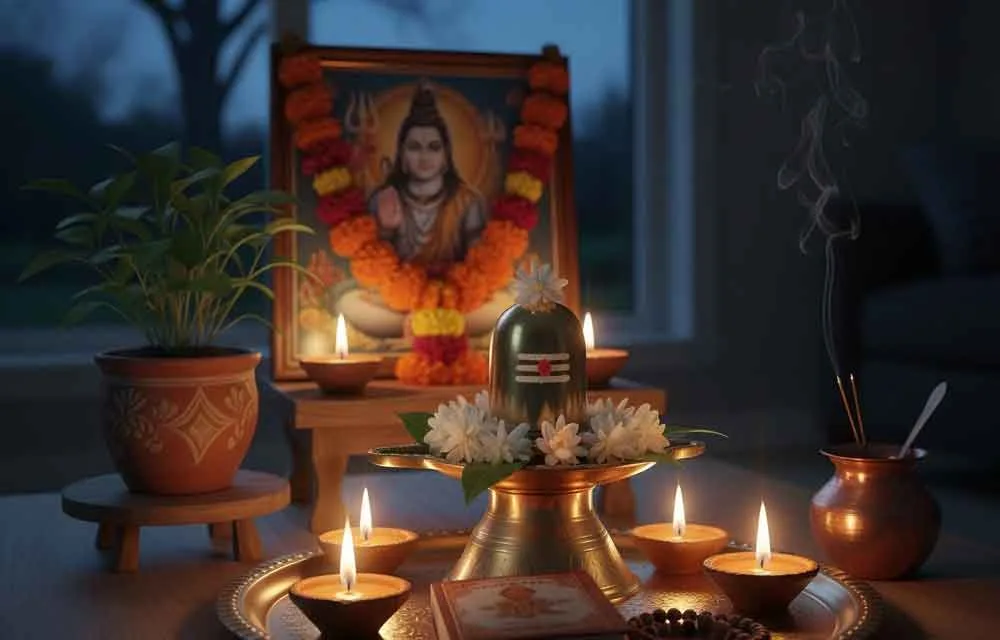
Kartika Ashtahnika 2026: Dates, Nandishwar Dweep Worship and How Jains Observe the Eight-Day Parva
Kartika Ashtahnika 2026, the Jain eight-day parva of the Kartika bright fortnight, begins on Monday 16 November and ends on Kartika Purnima, Tuesday 24 November, per Drik Panchang. This guide explains the Nandishwar Dweep worship described in Digambar tradition, the Siddhachakra vidhan, how Jains observe the days, the reopening of the Shatrunjaya pilgrimage at Palitana, and how the parva overlaps Hindu Karthika Masam.
Kartika Ashtahnika 2026, the Jain eight-day parva of the Kartika bright fortnight, begins on Monday 16 November and ends on Kartika Purnima, Tuesday 24 November, per Drik Panchang. This guide explains the Nandishwar Dweep worship described in Digambar tradition, the Siddhachakra vidhan, how Jains observe the days, the reopening of the Shatrunjaya pilgrimage at Palitana, and how the parva overlaps Hindu Karthika Masam.
Quick answer: Per Drik Panchang, Kartika Ashtahnika 2026 begins on Monday 16 November and ends on Kartika Purnima, Tuesday 24 November 2026. Purnima tithi runs from 11:42 PM on 23 November to 8:23 PM on 24 November IST. Ashtahnika is the Jain eight-day parva held three times a year; in Digambar tradition it is the time when, as described in the scriptures, the devas worship the eternal Jina temples of Nandishwar Dweep, and devotees on earth offer the same worship in their own temples.
For Hindu readers in the Telugu states, these are the busiest days of Karthika Masam: the second Karthika Somavaram, Devutthana Ekadashi, Ksheerabdi Dwadasi and Karthika Pournami all fall inside the Jain parva. This guide explains the Jain observance in its own terms first, then looks at the overlap with respect.
Kartika Ashtahnika 2026 dates, day by day
Tithi at sunrise and day notes below are from Drik Panchang for New Delhi. Tithi end times are IST and are the same instant across India; sunrise-based dates can differ by a day in some local Jain panchangs, so please follow your own temple's calendar.
| Date (2026) | Tithi (Drik, New Delhi) | Also on this day (Drik) |
|---|---|---|
| Mon 16 Nov | Shukla Saptami | Drik marks: Kartika Ashtahnika begins; also Vrishchika Sankranti and a Karthika Somavaram |
| Tue 17 Nov | Shukla Ashtami | Gopashtami; Masik Durgashtami |
| Wed 18 Nov | Shukla Navami | Akshaya Navami |
| Thu 19 Nov | Shukla Navami (ends 7:05 AM) | |
| Fri 20 Nov | Shukla Dashami (ends 7:15 AM), then Ekadashi | Devutthana Ekadashi; Drik notes Chaturmasa last day |
| Sat 21 Nov | Shukla Dwadashi | Tulasi Vivah / Ksheerabdi Dwadasi |
| Sun 22 Nov | Shukla Trayodashi | Pradosh |
| Mon 23 Nov | Shukla Chaturdashi (ends 11:42 PM) | Kartika Chaumasi Chaudas; Vaikuntha Chaturdashi |
| Tue 24 Nov | Purnima (ends 8:23 PM) | Kartika Ashtahnika ends; Kartika Purnima; Dev Diwali; Karthigai Deepam; Guru Nanak Jayanti |
Notice that Drik's list for Monday 23 November includes Kartika Chaumasi Chaudas. Chaumasi Chaudas, the fourteenth of the bright fortnight, marks the close of the Jain chaturmas observances, when monks and nuns who have stayed in one place for the rainy season prepare to resume walking from town to town.
What Ashtahnika means
Ashtahnika (also spelt Ashtanhika or Ashtahnika Parva) simply means 'of eight days'. Jains keep this parva three times a year, each time in the closing days of the bright fortnight, ending on the full moon:
- Kartika Ashtahnika: ending on Kartika Purnima (24 November in 2026).
- Phalguna Ashtahnika: ending on Phalguna Purnima, around the time of Holi.
- Ashadha Ashtahnika: ending on Ashadha Purnima, just as chaturmas begins.
The three Ashtahnikas are spaced about four months apart, so they frame the Jain year much as the three seasons frame the Indian calendar. Kartika Ashtahnika has a special place because it closes the rainy season of retreat, study and restraint.
Nandishwar Dweep: the worship of the devas
Jain cosmology describes the middle world (Madhyaloka) as a series of concentric ring-shaped continents and oceans, with Jambudvipa at the centre. Human beings live only in the inner two and a half continents, bounded by the Manushottara mountain. Far beyond lies the eighth continent, Nandishwar Dweep.
As described in Digambar tradition, Nandishwar Dweep holds 52 eternal, uncreated Jina temples (akritrima chaityalayas), set on its mountains in the four directions. During each Ashtahnika, the devas are said to travel there and worship the Jina images continuously for eight days. Since no human can reach Nandishwar Dweep, devotees perform the Nandishwar puja at home and in their own temples, worshipping those 52 temples in thought and devotion.
Many Digambar temples keep a sculpted or painted representation of Nandishwar Dweep, often with its 52 small shrines arranged around a central model, and these become the focus of puja during Ashtahnika. The idea is beautiful: for eight days, earth joins heaven in the same act of worship.
Siddhachakra and Nandishwar vidhan
A vidhan is an elaborate, structured puja, usually led by a scholar or pratishthacharya and joined by the whole community over several days. During Ashtahnika many Digambar communities hold a Nandishwar Dweep vidhan or a Siddhachakra Mandal vidhan, in which offerings are made, mantra by mantra, to the qualities of the Siddhas, the liberated souls. A large mandala is drawn or set up, and families sit around it through the days of the parva.
The Siddhachakra vidhan is widely linked in Jain storytelling with the devotion of Mainasundari and her husband Shripal, whose faith in the Siddhachakra is told as a lesson in steadiness through hardship. Details of the vidhan vary between sanghs and regions, so the best guide is your own temple.
The ashtadravya puja
Daily Digambar puja during the parva usually uses the eight offerings (ashtadravya): water, sandalwood, unbroken rice (akshat), flowers (often represented by coloured rice), naivedya, a lamp, incense and fruit. Each offering is paired with a verse expressing an inner aim, such as ending the cycle of birth and death or attaining the soul's true nature. The offerings are symbolic: the goal is detachment, not a worldly reward.
How Jains observe the eight days
- Fasting and restraint: some keep full fasts (upvas) on certain days, others eat once a day (ekasana) or avoid green vegetables on parva days, according to their capacity and their sangh's practice.
- Puja and vidhan: daily abhishek and ashtadravya puja, with the Nandishwar or Siddhachakra vidhan in many temples.
- Swadhyaya: study of scripture and listening to discourses by monks, nuns or scholars.
- Pratikraman and samayik: reflection on one's faults and periods of equanimous meditation, central to Jain practice throughout the year.
- Charity: giving food, medicines, knowledge and support for animal shelters (jivdaya).
For a wider picture of the Jain Kartika month, including Mahavira's nirvana at Diwali and Gyan Panchami, read how Jains celebrate Kartik Masam and Diwali and Jainism: Lord Mahavira's nirvana day.
Kartik Purnima and the Shatrunjaya yatra
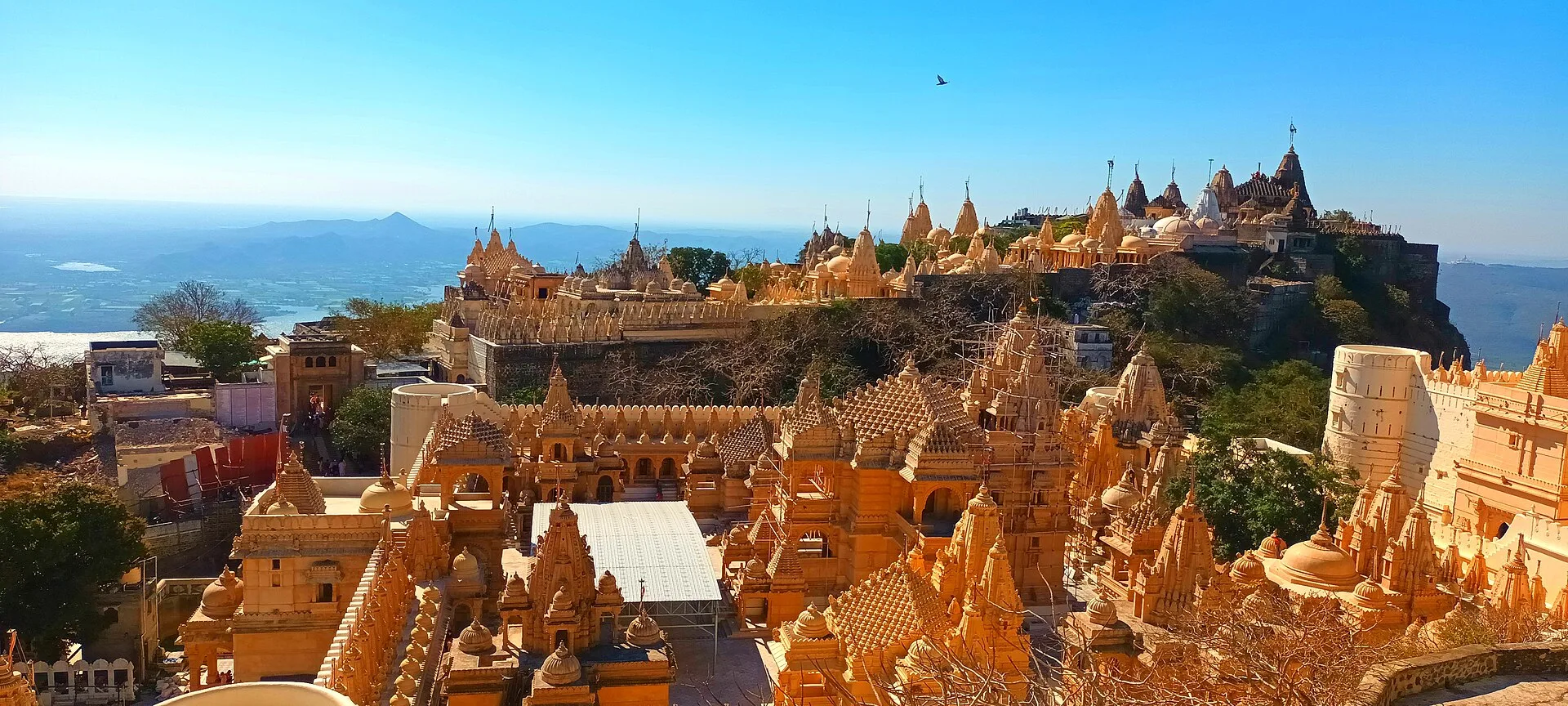
Kartik Purnima is one of the most important days of the Jain year for pilgrims. The Shatrunjaya hills at Palitana in Gujarat, crowned with hundreds of temples and associated above all with Bhagwan Rishabhadeva (Adinath), are traditionally not climbed during chaturmas. The yatra reopens on Kartik Purnima, and the day is especially important in the Svetambara tradition, when pilgrims set out at dawn for the climb.
We do not publish crowd figures, timings or arrangements for 2026. If you plan to go, check with the temple trust and local authorities for current information, start early and carry water.
Svetambara Jains also remember Kartik Purnima as the birth anniversary of Acharya Hemachandra, the great twelfth-century scholar of Gujarat. Kartik Purnima is a day of pilgrimage and puja across many Jain communities, whatever their tradition.
Where Ashtahnika meets Hindu Karthika: a respectful comparison
Jainism and Hinduism share a calendar, a landscape and many words, but they are distinct religions with their own philosophy. It helps to see the overlap clearly without blurring it.
| Theme | Jain Kartika Ashtahnika | Hindu Karthika Masam (Telugu states) |
|---|---|---|
| Focus of worship | The Jinas and Siddhas; Nandishwar Dweep temples | Shiva and Vishnu; Karthika Somavaram, Damodara |
| Lamps | Lamp offered as one of the eight dravyas | Karthika deepam, 365-wick lamp, Jwala Thoranam |
| End of the rainy season | Chaturmas closes; monks resume vihar | Devutthana Ekadashi: Vishnu wakes from yoga-nidra |
| Full moon (24 Nov 2026) | Ashtahnika ends; Shatrunjaya yatra reopens | Karthika Pournami, Dev Deepawali, Karthigai Deepam |
| Discipline | Upvas, ekasana, pratikraman, samayik | Upavasam, ekabhuktam, Karthika snanam |
The shared thread is striking: both traditions treat the end of the monsoon as a turning point, both honour light at the Kartika full moon, and both see self-restraint as the path to inner clarity. Telugu readers may know that the region has a long Jain heritage too; the Svetambara temple at Kolanupaka in Telangana is a well-known pilgrimage site. For a broader comparison, see Hinduism and Jainism compared and Karthika Purnima across Hindu, Sikh and Jain traditions.
For Jain families abroad
Jain centres and derasars in North America, the UK, the Gulf and Singapore usually publish their own Ashtahnika and Kartik Purnima programmes, often on the nearest weekend. Dates abroad can differ from India by a day; use your local centre's calendar, not the IST times on this page. For Hindu Karthika dates by country, see our Karthika Masam 2026 guide for the UK and Karthika Masam 2026 guide for the USA.
Frequently asked questions
When is Kartika Ashtahnika 2026?
Per Drik Panchang (New Delhi), Kartika Ashtahnika begins on Monday 16 November 2026 and ends on Kartika Purnima, Tuesday 24 November 2026. Purnima tithi ends at 8:23 PM IST on 24 November. Local Jain panchangs and your own temple may mark the days slightly differently, so follow your sangh's calendar.
What does Ashtahnika mean?
Ashtahnika means 'of eight days'. It is an eight-day parva observed three times a year, in the last part of the bright fortnight of Kartika, Phalguna and Ashadha, ending on the Purnima of each month.
What is Nandishwar Dweep?
In Jain cosmology, Nandishwar Dweep is the eighth concentric island-continent of the middle world. As described in Digambar tradition, it holds 52 eternal Jina temples, and the devas gather there to worship during each Ashtahnika. Humans cannot travel there, so devotees offer the worship from their own temples.
Is Kartika Ashtahnika the same as Paryushan?
No. Paryushan (Das Lakshan Parva among Digambaras) falls in the monsoon month of Bhadrapada and is the main festival of forgiveness and reflection. Ashtahnika is a separate eight-day parva, held three times a year, with a strong focus on puja and the Nandishwar Dweep worship.
Why do Jains visit Palitana on Kartik Purnima?
The Shatrunjaya hills at Palitana in Gujarat are among the most sacred Jain pilgrimage places. The climb is traditionally not undertaken during chaturmas, the four rainy months, and the yatra reopens on Kartik Purnima, which draws large numbers of pilgrims. Check with the temple trust for current arrangements before travelling.
Can Hindus visit a Jain temple during Ashtahnika?
Visitors are generally welcome at Jain temples if they follow temple customs: dress modestly, remove footwear, do not carry leather items or food inside, keep silence near the sanctum and ask before taking photographs. Some rituals are for initiated or regular devotees, so watch quietly or ask a trustee.
Editor's note
Editor's note (9 October 2026): This page has been restored at its original address after the earlier version was lost. Dates and tithi times are from Drik Panchang (New Delhi; tithi end times IST). Descriptions of Jain practice are given in general, well-established terms and attributed to the tradition concerned; customs vary between Digambar and Svetambara communities and between sanghs. We have not listed 2026 event schedules for any temple or tirtha. Please consult your own temple or a learned member of your sangh for exact observances.
Related guides
- How Jains celebrate Kartik Masam
- Labh Panchami 2026 and Jain Gyan Panchami
- Karthika Pournami 2026
- Karthika Masam 2026 calendar, day by day
- Why Karthika Masam is called Karthika
- Karthika Pournami 2026 wishes and messages
- Ahimsa in Hinduism, Jainism and Buddhism
Image credit: Meet jogani, CC BY-SA 4.0, via Wikimedia Commons (https://commons.wikimedia.org/wiki/File:Palitana_Jain_Temple.jpg).
You might also like
Kartika Month in Odisha 2026: Habisha Brata, Kartika Snana, Akasha Deepa, Panchuka and Boita Bandana

Kartika Amavasya 2026 for USA & Canada Hindus: Complete Guide to Rituals Across Time Zones
Kartika Masam 2026 Monday Rituals for Hindus in Canada