Meenakshi Devi: The Divine Radiance of Sweet Grace and Warrior Strength
In the sacred city of Madurai, Tamil Nadu, where divinity flows through ancient temple corridors and the scent of jasmine lingers in the air, the heart of…
In the sacred city of Madurai, Tamil Nadu, where divinity flows through ancient temple corridors and the scent of jasmine lingers in the air, the heart of…
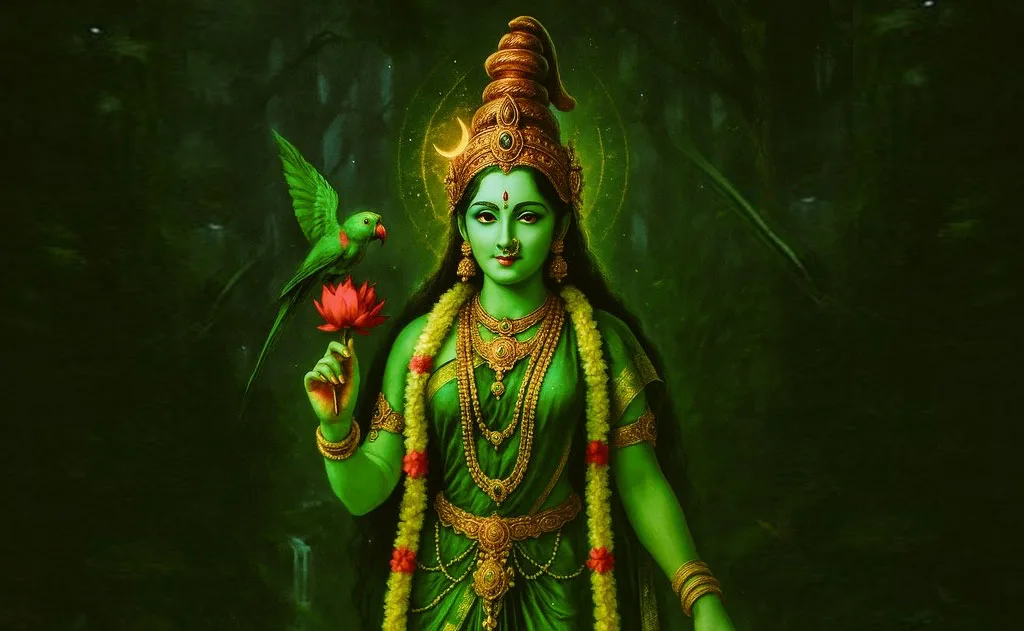
In the sacred city of Madurai, Tamil Nadu, where divinity flows through ancient temple corridors and the scent of jasmine lingers in the air, the heart of devotion beats strongest in the name of Meenakshi Devi—the emerald-hued Goddess known for her compassion, strength, and celestial beauty.
Who Is Meenakshi Devi?
Meenakshi, meaning “fish-eyed,” is the presiding deity of the world-renowned Meenakshi Amman Temple in Madurai. Revered as an incarnation of Parvati, she embodies the divine feminine power (Shakti) in her most graceful yet formidable form. With eyes shaped like fish—symbols of awakening and watchfulness—she gazes upon her devotees with boundless maternal love and fierce protection.
Her unique origin sets her apart: born with three breasts, a divine prophecy foretold that the third would disappear when she met her destined consort. Upon meeting Lord Sundareshwarar (a form of Shiva), the third breast vanished—signifying the divine union of Shakti and Shiva, the eternal balance of energy and consciousness.
The Symbol of Sweet Grace and Fierce Power
More than a goddess, Meenakshi is a living force. Her form is mesmerizing—emerald green skin, resplendent ornaments, and a smile that radiates joy like the rising sun after a monsoon storm. Her laughter is said to echo like temple bells, and her presence brings healing, strength, and peace.
Meenakshi Amman Temple: A Living Testament of Devotion
The Meenakshi Amman Temple, one of the oldest and most visited temples in India, is not just an architectural marvel but a spiritual epicenter. Each pillar and mural tells stories of divine love, cosmic battles, and the deep faith of generations.
The annual Meenakshi Thirukalyanam, or divine wedding ceremony, draws thousands of pilgrims from around the globe. It reenacts the celestial marriage of Meenakshi and Sundareshwarar with grandeur, rituals, music, and processions—celebrated not just on Earth, but believed to be witnessed by devas in the heavens.
A Goddess for All Times
In today’s modern world, Meenakshi Devi remains a symbol of feminine empowerment, inner strength, and unwavering love. For those facing adversity, heartbreak, or spiritual darkness, invoking her name—“O Meenakshi Amma!”—is said to bring instant solace and divine support.
“She is the light in darkness, the song in silence, the strength in our surrender.”
Whether you’re a devotee seeking blessings or a spiritual seeker exploring the power of Devi worship, Meenakshi Amma welcomes all with the sweetness of a thousand lotus blooms and the fierceness of a mother protecting her child.
Visit: www.hindutone.com for more articles on Hindu deities, temple traditions, festivals, and spiritual insights.
Follow us on Instagram, Facebook, YouTube @hindutone for daily inspiration.
What Do the Scriptures and Puranas Say About Meenakshi's Divine Birth?
The story of Meenakshi's origin is preserved most fully in the Tiruvilaiyaadal Puranam and the Skanda Purana's Tatva Samhita section dedicated to the Pandya kingdom. According to these texts, King Malayadhvaja Pandya and his queen Kanchanamala performed an intense putrakameshti yajna—a Vedic fire ritual performed to beget a child. From the sacred flames, a three-year-old girl emerged fully adorned, bearing the third breast that marked her as no ordinary human soul but as Shakti herself descended to rule the mortal realm.
The Puranic account emphasizes that this child was not born of a womb but of fire and penance, directly linking her nativity to the agni-born origin of sacred power. The text records that the sages and priests present at the yajna immediately recognized her as an amsha—a divine fragment—of Parvati. The disappearance of the third breast upon meeting Shiva at Mount Hemakuta is interpreted in Shaiva Siddhanta philosophy as the moment when the apparent 'otherness' of Shakti dissolves back into her primordial unity with Shiva.
How Did Meenakshi Conquer the Three Worlds Before Her Marriage?
Before her celestial wedding, Meenakshi's legend is that of a fearless warrior queen. Raised as the crown princess of the Pandya kingdom, she led her armies across the fourteen worlds in a digvijaya—a conquest of all directions—subduing kings, asuras, and even celestial guardians one by one. The Tiruvilaiyaadal Puranam details how she defeated the armies of Indra in the heavens and stood unopposed at the gates of Mount Kailasha itself, her parrot perched on her shoulder and a sugarcane bow in her hand.
It was at Kailasha that the conquest paused. When Meenakshi's eyes fell on Lord Shiva in his form as Sundareshwarar—the Handsome Lord—her warrior composure melted into shyness, fulfilling the prophecy of her third breast. Shaiva commentators read this episode not as submission but as the recognition of complementarity: her fierce digvijaya established that Shakti is never subordinate, and the union that followed was a meeting of equals. This narrative is unique in the Shakta–Shaiva tradition for presenting a goddess who chooses her consort after demonstrating supreme sovereignty.
What Is the Architectural and Ritual Significance of the Meenakshi Amman Temple Complex?
The Meenakshi Amman Temple in Madurai spans approximately 45 acres and is enclosed by four towering gopurams (gateway towers), the tallest of which—the southern tower—rises to about 170 feet. These gopurams are encrusted with over 1,500 sculptural figures each, depicting scenes from the Puranas, the Shaiva Agamas, and local Pandya lore. The temple complex contains the Ayiram Kaal Mandapam, the Hall of a Thousand Pillars, each of which produces a distinct musical note when gently struck—an acoustic marvel described by Carnatic music scholars as a built stone veena.
Ritualy, the temple follows the Shaiva Agama tradition codified in texts such as the Kamikagama and the Suprabhedagama. Daily worship (nityapuja) is conducted in six sessions from dawn to midnight. Among the most distinctive practices is the nightly ritual of Sundareshwarar's processional image being ceremonially carried to Meenakshi's sanctum—symbolizing Shiva coming to rest in Shakti's presence. This custom, called thiruvadhirai, underlines the temple's theological core: that even the supreme ascetic Shiva finds his resting place in the grace of the Goddess.
Which Hymns and Poets Have Celebrated Meenakshi Across the Centuries?
The bhakti literature addressed to Meenakshi is vast and spans multiple languages. The Tevaram, the anthology of Shaiva Nayanmars, references the sanctity of Madurai as a tirtha where Shiva performed divine sports (Tiruvilaiyaadal). Later, the 17th-century poet-saint Kumaraguruparar composed the Meenakshi Ammai Pillai Tamil in refined classical Tamil, celebrating the Goddess's childhood, beauty, and grace in the pillai-tamil genre—a literary form structured around ten stages of a divine child's life.
In Sanskrit, the Mooka Pancha Shati—five hundred verses attributed to the poet Mookakavi—dedicates an entire section called the Padaravinda Shatakam to Meenakshi's lotus feet, describing each attribute of her form in intricate kavya style. Devotional hymns such as the Meenakshi Stotram and Meenakshi Pancharatnam composed in Sanskrit continue to be recited daily in the temple and across households in Tamil Nadu and the diaspora. These texts collectively form a living literary canon that interprets Meenakshi's theology through beauty, devotion, and philosophical depth.
What Are the Major Festivals That Bring Meenakshi's Story to Life Each Year?
Beyond the celebrated Meenakshi Thirukalyanam, the temple's festival calendar is anchored by the Chithirai Festival held annually in April–May, which spans a full month and draws an estimated one million pilgrims. The first half of the festival commemorates Meenakshi's divine wedding to Sundareshwarar; the second half celebrates the coronation of Lord Alagar (Vishnu as Meenakshi's brother) who arrives in a grand procession from the Alagar Koil temple on the outskirts of Madurai. The confluence of these two narratives in one festival is a remarkable expression of the theological harmony between Shaivism and Vaishnavism in Tamil religious culture.
The Navaratri celebrations at Meenakshi Amman Temple are equally distinctive. Unlike many North Indian Navaratri observances centered on the Devi Mahatmyam's battle narratives, Madurai's Navaratri emphasizes Meenakshi's sovereignty as a queen through elaborate kolu (display of figurines) and daily alankara—special decorative forms in which the Goddess is dressed and adorned differently each day to represent her various aspects: the warrior, the mother, the beloved, and the teacher. Each day's darshan draws enormous crowds who come specifically to witness the unique form revealed that morning.
How Does Meenakshi Devi Represent the Philosophy of Shakti in Daily Devotional Practice?
In Shakta and Shaiva Siddhanta philosophy, Meenakshi is understood as Parashakti—the supreme power that both animates and transcends the universe. The Sri Vidya tradition, which venerates the Goddess as the embodiment of the Sri Chakra yantra, sees Meenakshi's fish-shaped eyes as symbolic of the all-pervading awareness described in the Devi Bhagavata Purana as 'sarvam khalvidam shakti'—all this is indeed Shakti. Her emerald green complexion is associated with the color of new life, the element of earth, and the heart chakra (anahata), suggesting her role as a nurturing, sustaining force.
For the ordinary devotee, worship of Meenakshi is approached through the twin channels of bhakti (devotion) and seva (service). Presenting a fresh garland of jasmine, offering turmeric as a symbol of auspiciousness, and chanting her ashtottara—108 names—are daily acts that connect the householder to her protective grace. Pilgrims who undertake parikrama (circumambulation) of the Madurai temple complex often do so barefoot on the stone-paved prakarams, an embodied act of surrender that mirrors the theological teaching that approaching Meenakshi requires humility before her supreme, all-encompassing Shakti.
Frequently Asked Questions
Who is Meenakshi Devi?
In the sacred city of Madurai, Tamil Nadu, where divinity flows through ancient temple corridors and the scent of jasmine lingers in the air, the heart of devotion beats strongest in the name of Meenakshi Devi—the emerald-hued Goddess known for her compassion, strength, and celestial beauty. Meenakshi, meaning “fish-eyed,” is the presiding deity of the world
How is Meenakshi Devi worshipped?
Through daily puja, mantra chanting, aarti and offerings of flowers, lamps and prasad — on dedicated days and festivals associated with the deity.
What are the benefits of worshipping Meenakshi Devi?
Devotees seek blessings for protection, prosperity, health, wisdom and inner peace, and a deeper connection with the divine.
Which day is dedicated to Meenakshi Devi?
Each deity has an associated day and festivals; worshipping on that day, with fasting and mantra, is considered especially auspicious (see the guide above).
You might also like
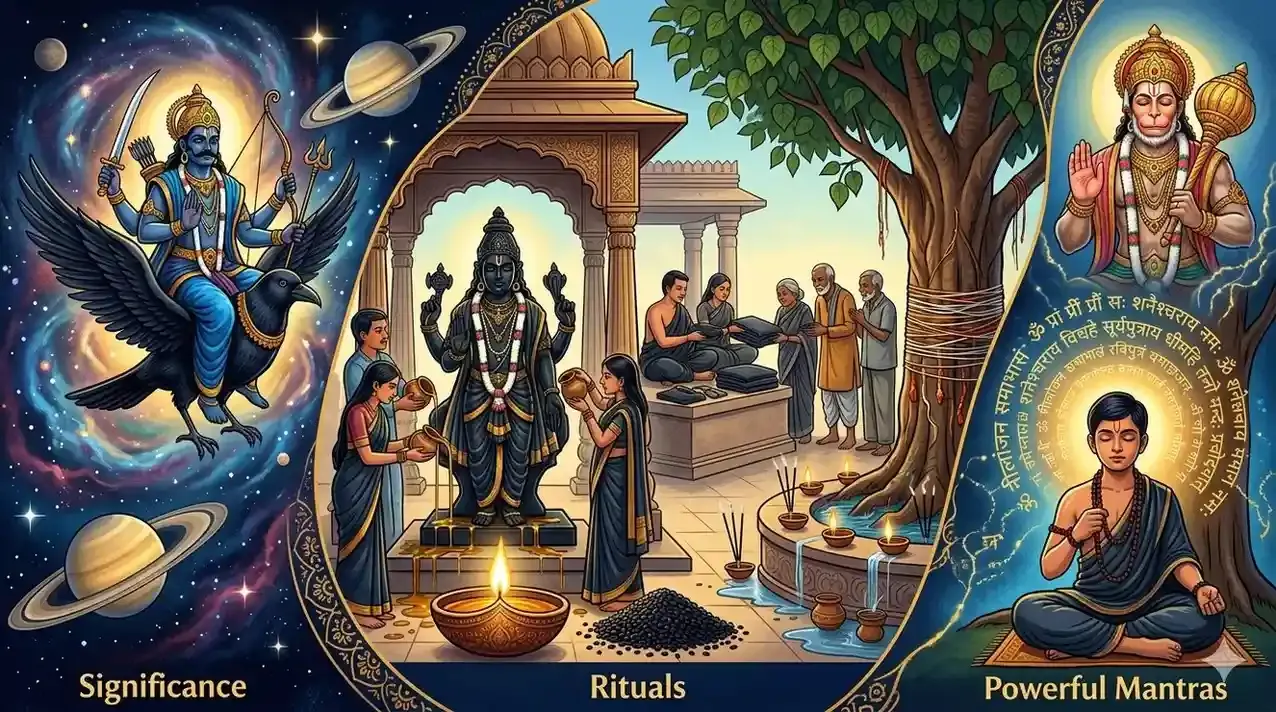
Shani Jayanti 2026: Date, Significance, Rituals & Powerful Mantras
Sacred Hindu Festivals & Temple News: Divine Week — May 2026
Shani Deva Temples Worldwide & Must-Performed Rituals — Complete Devotee's Guide