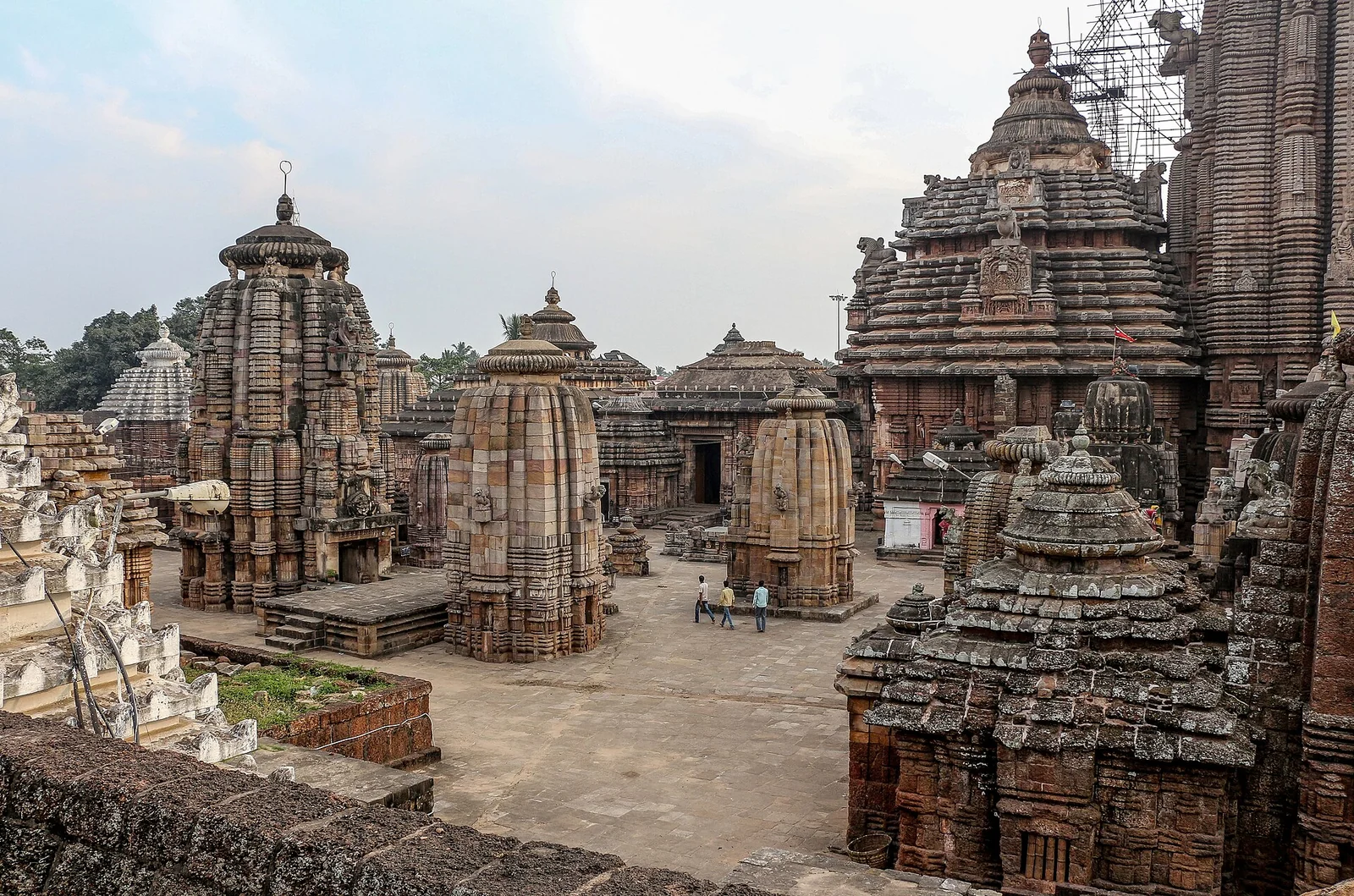
The World’s Only Hindu Glass Temple — Arulmigu Sri Rajakaliamman, Malaysia
The Arulmigu Sri Rajakaliamman Glass Temple in Johor Bahru, Malaysia is the world’s only Hindu temple built from glass — 3,00,000 mosaic pieces, 3,00,000 Rudraksha beads, and a unique Athma Shiva Lingam on a lotus worshipped with rose water. Its history, symbolism, rituals and visiting guide.
The Arulmigu Sri Rajakaliamman Glass Temple in Johor Bahru, Malaysia is the world’s only Hindu temple built from glass — 3,00,000 mosaic pieces, 3,00,000 Rudraksha beads, and a unique Athma Shiva Lingam on a lotus worshipped with rose water. Its history, symbolism, rituals and visiting guide.
A unique-temples feature by HinduTone Editorial · ~9 min read
“3,00,000 pieces of mosaic glass. 3,00,000 Rudraksha beads. One Shiva Lingam seated on a lotus. One temple that exists nowhere else in the universe.”
A Temple Unlike Any Other on Earth
In the bustling city of Johor Bahru, Malaysia — just across the causeway from Singapore — stands a temple so extraordinary that architects, historians and pilgrims come simply to behold it. The Arulmigu Sri Rajakaliamman Glass Temple is the world’s only Hindu temple constructed almost entirely from glass.
Roughly 90% of the temple is built from 3,00,000 mosaic glass pieces of various hues. Its walls are embedded with 3,00,000 Rudraksha beads. Its roof carries 10 gold-finished sculptures. And at its sacred centre, a Shiva Lingam in the form of a lotus, where devotees pour rose water in devotion. There is no other temple like it anywhere on earth.
A Temple Born in 1922 — The Origins
The Arulmigu Sri Rajakaliamman Temple was first built in 1922 — a modest, hut-like structure raised by the Tamil Hindu community who had come to Johor Bahru as indentured and contracted labourers from South India. It began as a community effort — a piece of Tamil Nadu in the heart of the Malay Peninsula.
The presiding deity is Goddess Rajakaliamman — a fierce yet maternal form of Shakti, daughter of Lord Shiva. Uniquely, the Shiva Lingam at the centre — the Athma Lingam — makes this a temple of profound Shaivite significance as well. Decades later came the transformation that made it immortal in the history of Hindu architecture.
The Glass Transformation — How and Why
The reconstruction used approximately 3,00,000 hand-laid mosaic glass pieces covering nearly 90% of the temple’s surfaces — a painstaking process requiring years of skilled artisanal work. When sunlight strikes the glass through the day, the building shimmers and glows like a living jewel; at night, lit from within, it becomes a lantern of colour visible from afar.
Why glass? In sacred architecture it carries deep symbolism:
Transparency — glass hides nothing, mirroring the Vedic ideal of seeing the divine without illusion.
Light — glass transmits and transforms light, as a purified consciousness transmits divine grace.
Multiplicity in unity — 3,00,000 pieces form one coherent whole, as individual souls form one cosmic consciousness.
Permanence through fragility — the mosaic technique gives extraordinary durability — a metaphor for resilient faith.
The Sacred Shiva Lingam — Athma Lingam on a Lotus
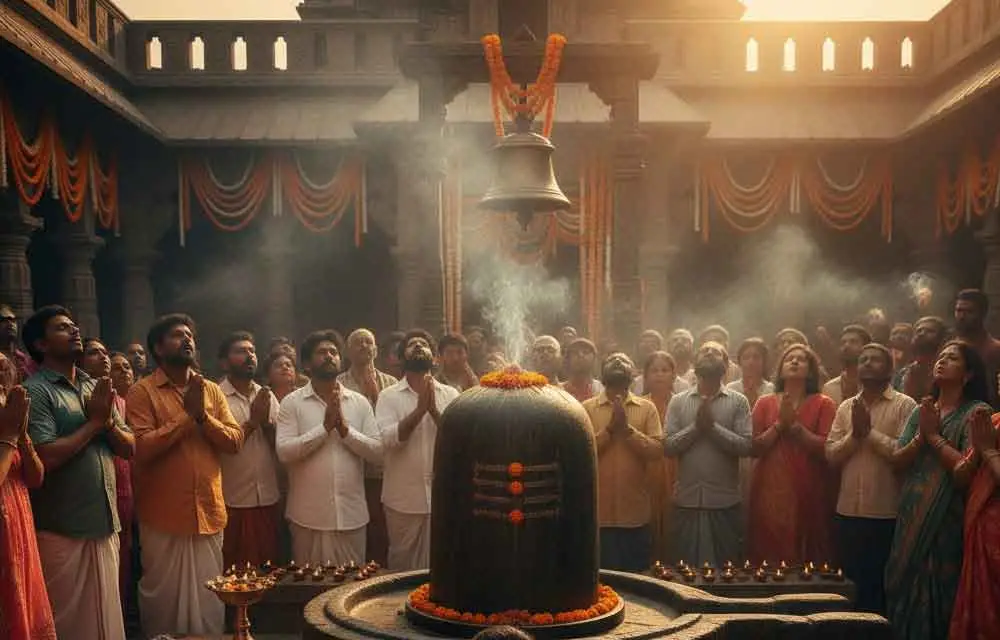
In the innermost sanctum, the Athma Lingam is presented in the form of a lotus flower, with Lord Shiva seated within it — the lotus, symbol of purity arising from the mud of existence, becoming the pedestal of the divine. Devotees worship it by pouring rose water over it — a rare and beautiful offering found almost exclusively at this temple.
The rose, across sacred traditions, symbolises divine love at its most refined. Offering rose water to Shiva is to offer the sweetest, most fragrant form of one’s devotion; the fragrance fills the sanctum, creating an atmosphere of extraordinary sensory worship. Fill a small vessel with rose water, approach the Athma Lingam, and pour it in a gentle steady stream while chanting “Om Namah Shivaya.”
3,00,000 Rudraksha Beads — The Wall of Shiva
The inner wall before which Lord Shiva is depicted is inlaid with 3,00,000 Rudraksha beads, hand-set in intricate patterns. Rudraksha (रुद्राक्ष) literally means "the eye of Rudra (Shiva)" — and the seeds are said to have originated from Shiva’s tears, making this one of the most extraordinary expressions of Shaivite devotion in the world.
Spiritual protection — a shield of divine energy around the space and the devotee.
Calming of the mind — reduces anxiety, promotes inner stillness.
Deeper meditation — amplifies the quality of contemplative practice.
Physical wellbeing — in Ayurveda, linked to cardiovascular and neurological benefits.
Beads span multiple mukhis (faces) — from the rare one-faced Ekamukhi (representing Shiva himself) to many-faced varieties. Sitting before this wall in prayer or meditation is said to be a deeply powerful spiritual experience.
The Ten Gold Sculptures — The Cycle of Life on the Roof
The roof carries 10 gold-finished sculptures depicting the complete cycle of human life — from conception and birth, through childhood, youth, adulthood and middle age, to the wisdom years, renunciation, old age and finally death and liberation (Moksha). Every visitor who looks up receives, without a word, the entirety of Vedantic wisdom about human existence.
The temple also includes 10 standing white marble statues of various spiritual figures — including Gautam Buddha and Sai Baba — reflecting a universal vision that transcends any single tradition.
Spiritual Significance — Why This Temple Is More Than a Marvel
The Glass Temple is a complete spiritual cosmos compressed into a single building: the glass exterior teaches transparency and the transmission of light; the Rudraksha walls create a field of Shiva’s protective energy; the Athma Lingam on a lotus teaches that pure consciousness arises from within every experience; the rose-water offering teaches devotion refined to its most fragrant form; and the roof sculptures teach the sacred arc of life toward liberation. To stand here is to study architecture, cosmology, philosophy and devotion at once — in a building that shimmers like a jewel.
Must-Perform Rituals at the Glass Temple
Rose Water Abhishek (Athma Lingam)
The signature ritual — offer rose water to the Athma Lingam while chanting “Om Namah Shivaya”, pouring the fragrance of your devotion over the form of the divine.
Rudraksha Wall Meditation
Sit before the wall of 3,00,000 beads, close your eyes, and chant the Mahamrityunjaya Mantra 11 times, absorbing the accumulated sacred energy of the space.
Pradakshina
Walk clockwise around the sanctum 3 or 7 times, observing the glass mosaic, the roof sculptures and the sacred figures — each circuit a surrender to the cycle of life depicted above.
Festival Pujas
The temple is most vibrant during Navaratri (the Goddess’s grandest season), Maha Shivaratri (night-long worship at the Athma Lingam), and Thaipusam.
Visiting Guide
Address: Jalan Tun Abdul Razak 1/1, Wadi Hana, 80300 Johor Bahru, Johor, Malaysia
From Johor Bahru city: 10–15 min by taxi/Grab.
From Singapore: cross the Causeway into Johor Bahru, then 10–15 min — an extraordinary day trip for devotees (~30–45 min total depending on border crossing).
AdvertisementHours: open daily, morning to evening; mornings (8–10 AM) show the glass mosaic at its most beautiful.
Dress: modest — shoulders and knees covered; footwear removed before entering.
Entry: free; donations welcome.
Bring: rose water for the Athma Lingam abhishek, flowers, and a camera (respectful photography is permitted in most areas).
Frequently Asked Questions
Is this really the world’s only glass temple?
Yes — the first glass temple in history and the only Hindu temple in the world built predominantly from glass mosaic. The combination of 3,00,000 glass pieces, 3,00,000 Rudraksha beads and the unique Athma Lingam makes it genuinely one of a kind.
Who is the presiding deity?
Goddess Rajakaliamman — a powerful form of Shakti and daughter of Lord Shiva. But the Athma Lingam (Shiva Lingam on a lotus) in the main sanctum makes this an important Shaivite temple too. Both Shiva and Shakti are worshipped here.
What is the significance of the Rudraksha beads on the walls?
Rudraksha beads are said to have originated from Shiva’s tears, each carrying protective and meditative energy. A wall of 3,00,000 transforms the inner temple into a field of concentrated Shiva energy that amplifies every prayer and offering performed within.
Is the temple accessible from Singapore?
Yes — Johor Bahru is just across the causeway, roughly 30–45 minutes by car depending on border crossing times. It is one of the most accessible extraordinary Hindu temples in Southeast Asia.
What makes the rose water offering unique?
While most Shivalingams receive panchamrit abhishek (milk, curd, honey, ghee, sugar), the Athma Lingam here is worshipped with rose water — a rare tradition whose fragrance fills the sanctum, creating a uniquely sensory worship experience.
Conclusion: A Temple That Shines Like the Divine Itself
The Glass Temple is a philosophical statement in glass, stone, Rudraksha and gold — declaring that the divine can be expressed in any material or form, as long as the intention is pure and the devotion genuine. When you pour rose water over the Athma Lingam you offer the most fragrant gift to the most hidden divinity; when you sit before the Rudraksha wall you are bathed in 3,00,000 tears of Shiva. There is no temple like this anywhere on earth — part of our wider guide to Shiva temples outside India.
Related Reading on HinduTone
Har Har Mahadev. 🔱
You might also like

Koneswaram: Divine Mysteries & Soul-Stirring Miracles of Lord Shiva in Sri Lanka

Bhimashankar Jyotirlinga Reopens June 15, 2026 After Major Renovation
The Twelve Jyotirlingas of Lord Shiva: A Complete Pilgrim's Guide Across India