The 13th Jyotirlinga in Australia — The Extraordinary Story of Mukti Gupteshwar Temple, Minto
The extraordinary story of the 13th Jyotirlinga — gifted by King Birendra of Nepal and consecrated in a man-made cave temple at Minto, near Sydney. The only Jyotirlinga outside India and in the Southern Hemisphere, why the scriptures say it belongs there, the Mahabharata connection, and a complete visitor guide.
The extraordinary story of the 13th Jyotirlinga — gifted by King Birendra of Nepal and consecrated in a man-made cave temple at Minto, near Sydney. The only Jyotirlinga outside India and in the Southern Hemisphere, why the scriptures say it belongs there, the Mahabharata connection, and a complete visitor guide.
A Jyotirlinga feature by HinduTone Editorial · ~10 min read
“The 13th Jyotirlinga — the last sacred icon of the current cycle of creation — rests not in the Himalayas, not on the banks of the Ganga, but in a man-made cave in the suburbs of Sydney, Australia. And there is a profound cosmic reason why.”
A Royal Gift, A Sacred Cave, and a Divine Cosmic Design
Most Hindus know the 12 sacred Jyotirlingas — the luminous manifestations of Lord Shiva scattered across India, from Somnath in Gujarat to Rameshwaram in Tamil Nadu. But very few know about the 13th Jyotirlinga — the last, the most extraordinary, the one placed not in India but on the other side of the world, in Minto, New South Wales, Australia.
This is the story of how a sacred idol once held by the King of Nepal found its way to an Australian suburb, why the scriptures themselves decreed it must happen, and what makes the Mukti Gupteshwar Mandir one of the most spiritually unique temples on earth.
What Is a Jyotirlinga? The Sacred Twelve of India
A Jyotirlinga (ज्योतिर्लिंग) is a self-manifested, luminous form of Lord Shiva — a pillar of divine light combining jyoti (light) and linga (sacred form). The Shiva Purana tells how Brahma and Vishnu argued over who was greatest; Shiva appeared as an infinite column of light with no beginning or end, which neither could fathom — and was declared supreme.
The 12 Jyotirlingas of India:
Somnath (Gujarat) · Mallikarjuna (Andhra Pradesh) · Mahakaleshwar (Ujjain, MP) · Omkareshwar (MP)
Kedarnath (Uttarakhand) · Bhimashankar (Maharashtra) · Kashi Vishwanath (Varanasi) · Trimbakeshwar (Maharashtra)
AdvertisementVaidyanath (Jharkhand) · Nageshwar (Gujarat) · Rameshwaram (Tamil Nadu) · Grishneshwar (Maharashtra)
The scriptures speak of 12 principal Jyotirlingas — but also of a 13th: the last and final Jyotirlinga of this cosmic cycle, destined to be placed at the very end of the world, in the southern hemisphere.
The 13th Jyotirlinga — What Ancient Scriptures Say
According to the scriptures, the 13th Jyotirlinga is the last icon of the current cycle of creation and destruction — and as the last, it had to be consecrated in the southern hemisphere. The sacred name "Mukti-Gupteshwar" is one of the 1,129 divine names of Shiva: Mukti (liberation) and Gupteshwar (the Hidden Lord who dwells in the secret cave). The original Gupteshwar Shivalingam rested in Nepal for over 7,000 years, first in a natural cave aligned with ancient yogic tradition.
Why Australia? The Cosmic Reason Behind Minto
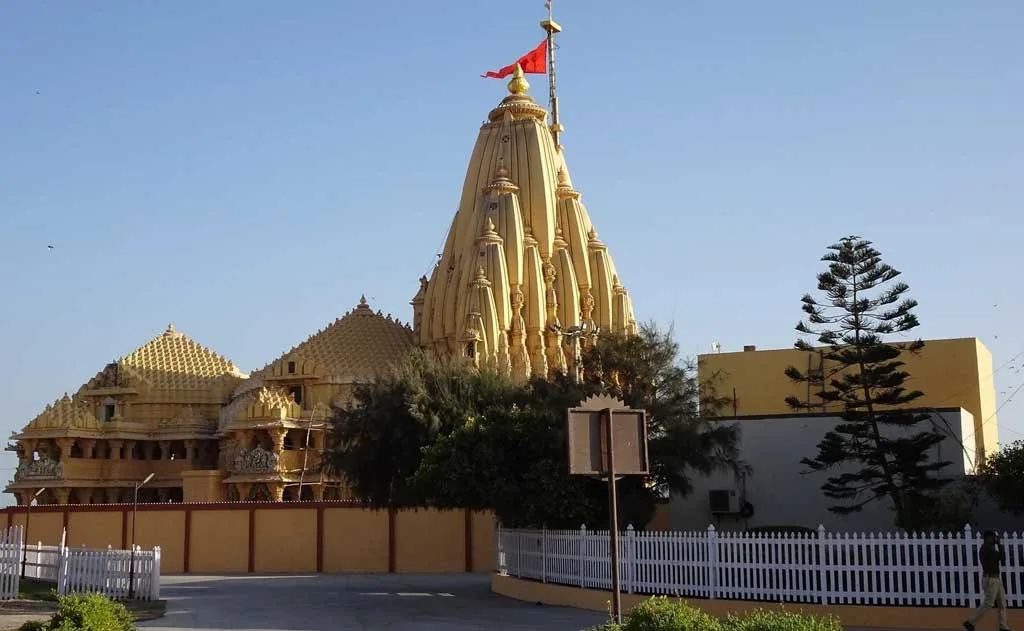
The answer comes from the scriptures themselves. Australia is said to lie at the "mouth of the snake" — the serpent Vasuki coiled around Shiva’s neck, a symbol of protection and the infinite cycle of time. Outside the Somnath temple (the first Jyotirlinga), an arrow — the Banasthambh — points along an unobstructed path of light towards the South Pole, indicating that the 13th Jyotirlinga should be consecrated in the Southern Hemisphere.
The 13th Jyotirlinga represents the closing of the cosmic cycle — the last beacon before the great dissolution (Mahapralaya).
The serpent of time begins in the north (Somnath points south) and ends in the south.
AdvertisementAustralia — the most southerly continent with a large population — sits at the protective "mouth of the snake".
The first Jyotirlinga points south; the last rests in the south. The circle is complete.
When Australian Hindu devotees presented this argument, backed by ancient texts and the Mukti-Gupteshwar Mandir Society, the King of Nepal agreed. In 1999, the sacred idol was formally gifted and the temple consecrated.
The Royal Gift — King Birendra of Nepal and the Sacred Idol
The 13th Jyotirlinga was gifted to the Australian people in 1999 by the late Maharajadhiraja Birendra Bir Bikram Shah Dev, King of Nepal — accompanied by 7,996 hymns arranged in 8 volumes. The idol had been the King’s personal sacred icon.
1997: construction of the man-made cave temple begins at Minto, NSW.
1999 (Feb 14, Maha Shivaratri): the temple is inaugurated; King Birendra gifts the Gupteshwar Jyotirlinga idol.
Sept 2000: the Crown Prince of Nepal visits the newly consecrated temple.
Inside Mukti Gupteshwar Mandir — What Makes It Unique
The Man-Made Cave
The temple is built underground as a cave, deliberately replicating the natural cave settings of the earliest Shivalingas. Below ground there is complete silence and a constant temperature; the structure is even bushfire-proof — a real consideration in the Australian bush. The cave-womb recreates the primordial atmosphere of Amarnath or the original Gupteshwar cave in Nepal.
The 2-Million Hymn Vault
In the sanctum, a 10-metre-deep vault contains over 2 million handwritten notes from devotees worldwide, each bearing "Om Namah Shivaya" — alongside water from 81 rivers (including Australian rivers and all five oceans), eight precious metals, and good wishes from holy men and dignitaries around the world.
The 1,128 Lingas
Alongside the 13th Jyotirlinga, the temple houses scale replicas of all 12 Indian Jyotirlingas, 108 lingas for the 108 Rudra names, and 1,008 representations of Shiva’s Sahasranama — a total of 1,128 small mandirs, possibly the most complete Shiva shrine ensemble in the Southern Hemisphere.
The Mahabharata Connection — Arjuna, Shiva, and the 13th Linga
During the Pandavas’ exile, their journey led them to a serene ashram in Nepal where the 13th Jyotirlinga had rested for 7,000 years. There, Arjuna encountered Lord Shiva disguised as a hunter (Kirata). Seeking the divine Pashupatastra, Arjuna fought the disguised lord without recognising him; when Shiva revealed himself, Arjuna bowed in awe. Shiva blessed him with the Pashupatastra and promised to be with all who worshipped that Linga — making the consecration of the 13th in the southern hemisphere a symbolic culmination aligned with sacred geography and scripture.
Must-Perform Rituals at Mukti Gupteshwar
Daily Brahmin Puja
Each morning a Brahmin priest performs abhishek, flower offering, mantra recitation and aarti — sustaining the living sacred energy of the 13th Jyotirlinga.
The Cave Meditation
Spend 15–20 minutes in complete silence inside the cave. The underground stillness, the 2 million "Om Namah Shivaya" inscriptions and water from 81 rivers create an extraordinary meditative field.
Writing Your “Om Namah Shivaya”
Bring paper and a pen — devotees contribute handwritten "Om Namah Shivaya" notes to the sacred vault, a unique ritual available only at this temple in the world.
Jyotirlinga Pradakshina
Circumambulate the 13th Jyotirlinga 3, 7 or 12 times; many devotees also circle all 12 replica Jyotirlingas — completing a sacred pilgrimage through all 12 + the 13th in a single visit.
Maha Shivaratri & Shravan Mondays
Maha Shivaratri is the biggest festival here — an all-night celebration. Every Monday of the sacred month of Shravan (Jul–Aug) also sees special worship, with families carrying kanwar water pots for abhishek.
Visiting Mukti Gupteshwar — Visitor Guide
Address: 203 Eagleview Road, Minto, NSW 2566, Australia
From Sydney CBD: about 45 minutes by car.
By train: Minto Railway Station (T8 Airport & South Line), then uphill to Eagleview Road.
By car: M5 toward Campbelltown, Minto exit, onto Ben Lomond Road, then Eagleview Road.
Hours: Mon–Fri 8 AM–12 noon & 4–8 PM; Sat–Sun 8 AM–8 PM.
Bring: paper & pen for the vault, milk & bilwa leaves for abhishek, modest clothing; remove footwear.
Frequently Asked Questions
Is Mukti Gupteshwar the only Jyotirlinga outside India?
Yes. It is the only Jyotirlinga outside India and the only one in the Southern Hemisphere — recognised as the 13th Jyotirlinga based on ancient texts that decreed the last Jyotirlinga of this cosmic cycle must be consecrated in the southern hemisphere.
Who gifted the 13th Jyotirlinga to Australia?
His Majesty Maharajadhiraja Birendra Bir Bikram Shah Dev, King of Nepal, in 1999. The idol had been in the King’s personal care; when Australian devotees presented their scripturally-backed case, the King agreed it was the idol’s rightful home.
Why is the temple built as a cave?
The cave mirrors the earliest tradition of Shivalingam worship in natural caves like Amarnath and the original Gupteshwar cave in Nepal. It produces complete silence and a constant year-round temperature — ideal for meditation. It is the world’s first and only man-made cave temple.
What is inside the 10-metre vault?
Over 2 million handwritten "Om Namah Shivaya" notes from devotees worldwide, water from 81 rivers (including Australian rivers and all five oceans), eight precious metals, and good wishes from holy men and dignitaries.
Can non-Hindus visit?
Yes — all respectful visitors are welcome in modest clothing. The cave sanctum carries a powerful atmosphere of sanctity that visitors of all backgrounds report feeling.
Conclusion: The Last Light of This Cosmic Age
The 12 Jyotirlingas of India are 12 beams of Shiva’s infinite light across the sacred land of Bharatavarsha. Now there is a 13th — resting not in a Himalayan cave or a riverbank temple, but in a quiet suburb of Sydney, placed there by cosmic design, royal grace and the devotion of Hindu Australians who built a sacred cave from scratch to receive it. When you enter that cave, you stand at the end of a sacred thread stretching from Somnath across 12 luminous points in India to the mouth of the serpent of eternity — part of the wider story of Shiva temples outside India.
Related Reading on HinduTone
Om Mukti Gupteshwaraya Namah. 🔱
You might also like

Bhimashankar Jyotirlinga Reopens June 15, 2026 After Major Renovation
Somnath: Divine Mysteries & Soul-Stirring Miracles of the First Jyotirlinga
Ramanathaswamy: Divine Mysteries & Soul-Stirring Miracles of the Rameswaram Jyotirlinga