The Temple in the Sea — One Man’s 25-Year Act of Devotion That Moved a Nation
Jailed for building a temple on land, Sewdass Sadhu — an Indian indentured labourer in Trinidad — built one in the sea instead, alone, on a bicycle, stone by stone, for 25 years. The extraordinary true story of the Temple in the Sea, now a National Treasure of Trinidad & Tobago.

Jailed for building a temple on land, Sewdass Sadhu — an Indian indentured labourer in Trinidad — built one in the sea instead, alone, on a bicycle, stone by stone, for 25 years. The extraordinary true story of the Temple in the Sea, now a National Treasure of Trinidad & Tobago.
A story of extraordinary devotion by HinduTone Editorial · ~10 min read
“He was jailed for building a temple on land. So he went where no one owned the land — into the sea. For 25 years, alone, on a bicycle, stone by stone, he built his temple. That is what faith looks like.”
A Story That Will Change How You Think About Devotion
Quarter of a mile off the west coast of Trinidad, in the warm waters of the Gulf of Paria, stands a white octagonal temple with gleaming onion-shaped domes. Inside, Lord Shiva, Hanuman, Ganesha and Durga welcome every soul who walks the long causeway from the shore. This is the Sewdass Sadhu Shiv Mandir — popularly known as the Temple in the Sea.
It was built by one man. Alone. Without permission. Without machinery — using a bicycle, his hands and 25 years of unbroken faith. When the government tore down his first temple, he found a solution of extraordinary ingenuity: he built in the sea, where no one could own the land and no one could stop him.
The World That Made Sewdass Sadhu — Indian Indenture in Trinidad
In 1845, Indian indentured labourers were brought to Trinidad to work the sugarcane and cocoa plantations after the abolition of slavery across the British West Indies. They came from the villages of Bihar, UP, Tamil Nadu and Andhra — bound to five-year contracts, leaving behind family, temples, rivers and the sound of Sanskrit and Tamil chant. In the fields, they kept faith alive through memory, song, prayer and makeshift shrines.
Sewdass Sadhu was born into this world on January 1, 1903. He came to Trinidad with his parents, Boodhram and Bissoondayia, as indentured servants, living at Brickfield and working at the Waterloo Estates. A quiet, humble sugar worker his whole life — yet inside him burned an unbroken connection to Lord Shiva, and a vow to build him a home in Trinidad.
The Promise — A Man Who Missed India
After his parents passed and his indenture ended, Sewdass returned to India for the first time in 1926 — his first glimpse of the sacred land in decades. He visited the holy shrines and great temples, and felt what it meant to be a Hindu in a land made for Hinduism. He returned several more times, saving his meagre wages for each pilgrimage — until the voyages became too expensive.
And so he made a decision that would define his life: if he could not go to the temples of India, he would bring a temple to Trinidad. The calm Gulf of Paria was like the Ganges to him. He would build his temple by that water.
The First Temple — Built and Destroyed
In 1947, Sewdass built his first temple on unused swamp land near the sea at Waterloo — a modest structure raised in his free time after work, with no machinery or funding. For five years it stood and devotees worshipped there. Then, in 1952, the government demolished it: it had been built on land belonging to the Tate & Lyle sugar company. Sadhu was sent to prison for 14 days.
Any other man might have given up. But he came out of prison, thought carefully, and found a solution as brilliant as it was simple.
Into the Sea — The Most Creative Act of Devotion
The sea belonged to no one. No company owned the Gulf of Paria; no government had jurisdiction over open water. If he built in the sea — on a platform in the sea — no one could call it trespassing and no one could demolish it.
In 1948, more determined than ever, Sadhu began the new temple. He used oil drums from Lever Brothers, filled them with concrete and tied them together with steel to make the foundation. He reclaimed land at low tide, moving rocks by hand and on his bicycle, bringing stone by stone out into the Gulf — during lunch hours, after work, on weekends, in the early mornings. Alone. Ridiculed. Joyful.
“Engineers does want to know how he did it. He got oil drums from Lever Brothers, filled them with concrete and tied them together with steel. That was how he made the foundation.” — a Waterloo resident
25 Years of Solitary Labour — Stone by Stone on a Bicycle
For 25 years, Sewdass continued his solitary labour in the sea. No construction crew, no funding committee, no temple trust. He had a bicycle, faith and time. Day by day he carried materials along the reclaimed seabed to the growing structure, some 500 feet off the shore. The temple took the form of an octagon — eight-sided, reflecting the eight directions of cosmic space — planned as a complete Shiva mandir with murtis of Shiva, Hanuman, Ganesha and Durga.
Engineers who later studied it were baffled by how it had been accomplished with such primitive means. The concrete-filled oil-drum foundation was unconventional — but it held. This is the power of devotion: it finds a way when engineering says there is none.
Death Before Completion — But Not Before Happiness
Sewdass did not live to see the temple completed. After giving the best of his hours, strength and wages to this act of love, he returned to India on his last pilgrimage and passed away there in 1970 of a heart attack, at the age of 67. But before he died, villagers say he spent many happy hours in his partially completed shrine — happy not because the temple was finished, but because he had been faithful and had kept his vow.
After his death the temple fell into neglect, and the sea began to reclaim what one man had given so much to build. But his story was not over — it was just beginning.
The Resurrection — 1995 and the Government’s Tribute
In 1994–1995, the Government of Trinidad and Tobago recognised the Temple in the Sea as a site of profound national significance — the occasion being the 150th anniversary of the arrival of Indians in Trinidad. The state declared it an Unemployment Relief Project; labourers were paid to complete the structure and add a causeway linking it to the mainland. The temple was consecrated and dedicated to the memory of Sewdass Sadhu.
A statue of Sewdass Sadhu now stands at the entrance of the causeway, so every pilgrim who walks to the temple first passes the image of the man who built it. The Sewdass Sadhu Shiv Mandir has since been declared a National Treasure of Trinidad and Tobago.
The Temple Today — A National Treasure
The temple today is an octagonal structure topped with two gleaming white onion-shaped domes, flags fluttering around its perimeter, with beautifully adorned murtis of Hanuman, Ganesha, Shiva and Durga inside. Visitors remove their shoes — once inside, you are on holy ground. Walking the long causeway over the water is itself a pilgrimage.
Visitors of all faiths come, because the story of Sewdass Sadhu transcends religion. As a Muslim neighbour, Mr Sheik, famously said: “I am a Muslim, and this is a Hindu business. But it is hurting me to see the destruction. A man made an honourable jail for that temple. You mean to say we can’t keep it up.”
Must-Perform Rituals & Spiritual Experience
The Causeway Walk — Enter as a Pilgrim
Begin at the statue of Sewdass Sadhu. Pause and look at the quiet, determined face of a man who gave 25 years of labour to love. Then walk the causeway slowly, in silence or quietly chanting “Om Namah Shivaya.”
Shiva Puja at the Mandir
Offer flowers, incense and a little milk or water to the Shivalingam. Offer a small prayer to each of the murtis of Hanuman, Ganesha and Durga.
The Sea Meditation
Stand at the edge of the temple and look out at the Gulf of Paria — the same sea Sewdass worked in for 25 years. Let the waves dissolve any sense of obstacle in your own life. If this man built a temple in the sea with a bicycle, what obstacle is truly insurmountable?
Monday & Maha Shivaratri Worship
The temple is most vibrant on Mondays (sacred to Shiva) and at Maha Shivaratri — the sea, the night and the chanting, the temple lit against the dark water, make for a deeply moving experience.
Offer a Prayer for Sewdass Sadhu
Light a diya and offer a sincere prayer for the soul of the man who made this sacred space possible — completing a circuit of gratitude that keeps the energy of devotion alive.
Frequently Asked Questions
Who built the Temple in the Sea in Trinidad?
Sewdass Sadhu — an Indian indentured labourer born on January 1, 1903, who came to Trinidad with his parents as indentured servants. Working alone, on his bicycle, stone by stone, he built the temple over 25 years in the Gulf of Paria after the government demolished his first temple on land.
Why did Sewdass Sadhu build the temple in the sea?
His first temple stood on land owned by the Tate & Lyle sugar company and was demolished; he was jailed for 14 days. On release he realised the sea was owned by no one — free, public, no-man’s land — so he built there, where no permission was needed and no authority could stop him.
Is the Temple in the Sea an active Hindu temple?
Yes. Lord Shiva, Hanuman, Ganesha and Durga are worshipped there. A caretaker maintains a serene, sacred atmosphere free from meat and alcohol, and the temple is open to all visitors.
Is it a national monument?
Yes. The Sewdass Sadhu Shiv Mandir has been declared a National Treasure of Trinidad and Tobago and is listed by the National Trust as a site of cultural heritage.
When was the temple completed and by whom?
Sewdass began building in 1948 but died in 1970 before completion. The government completed and consecrated the temple in 1994–1995 to commemorate the 150th anniversary of Indian indenture in Trinidad.
Conclusion: The Ocean Did Not Stop Him. Nothing Should Stop You.
A poor man with a bicycle and a faith that could not be demolished — not by colonisers, not by governments, not by the sea — built a temple that now stands as a National Treasure. He was jailed; he kept going. He was ridiculed; he kept going. The sea rose against him; he kept going.
When you walk the causeway to the Temple in the Sea, remember Sewdass Sadhu. The faith you carry — wherever in the world you live — is the same faith that built a temple in the sea. Carry it with the same determination. For more, explore Shiva temples outside India.
Related Reading on HinduTone
Har Har Mahadev. 🔱
You might also like

Bhimashankar Jyotirlinga Reopens June 15, 2026 After Major Renovation

The Twelve Jyotirlingas of Lord Shiva: A Complete Pilgrim's Guide Across India
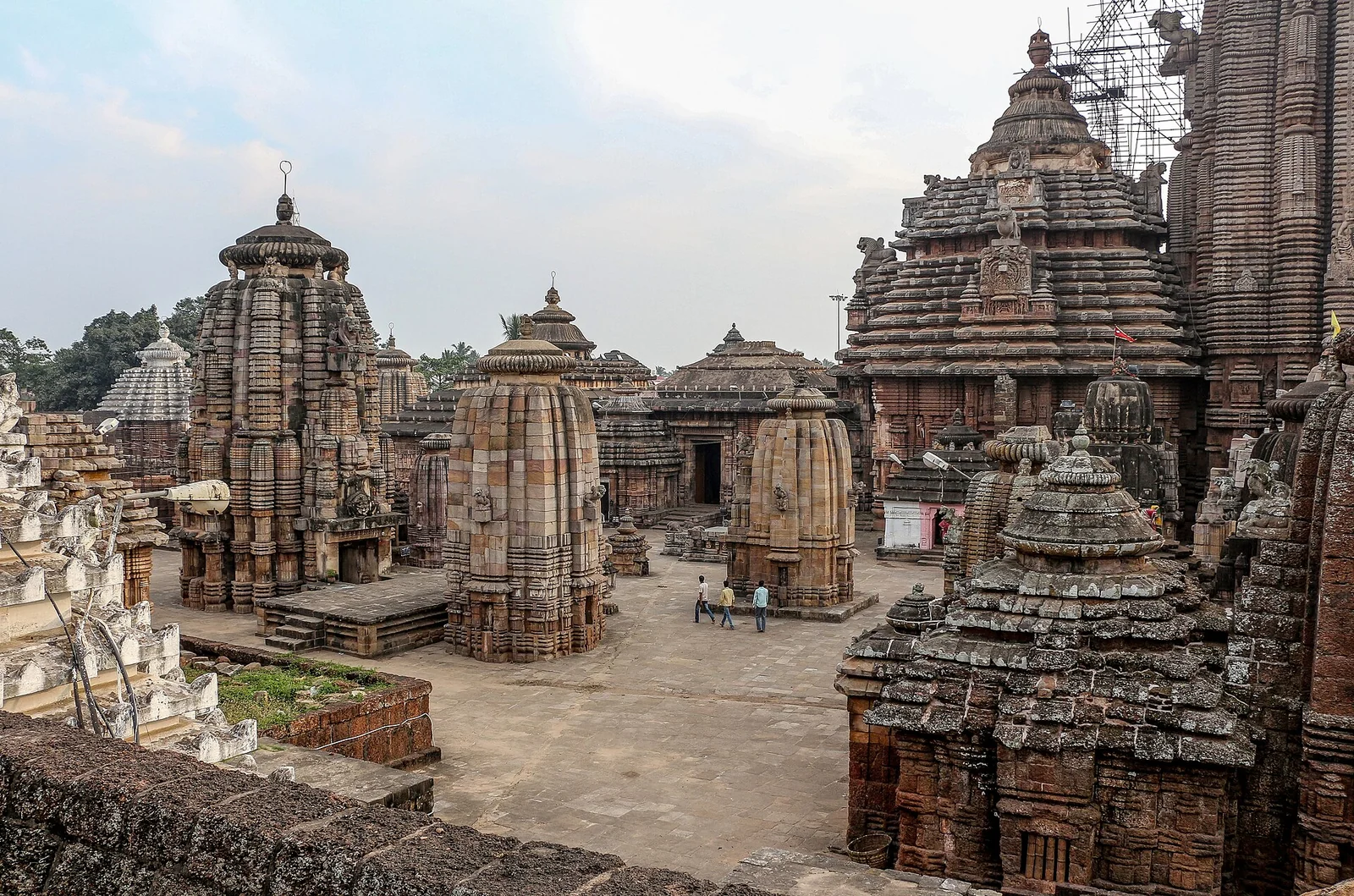
Lingaraja: Divine Mysteries & Soul-Stirring Miracles of the Eleventh-Century Shiva-Vishnu Temple at Bhubaneswar