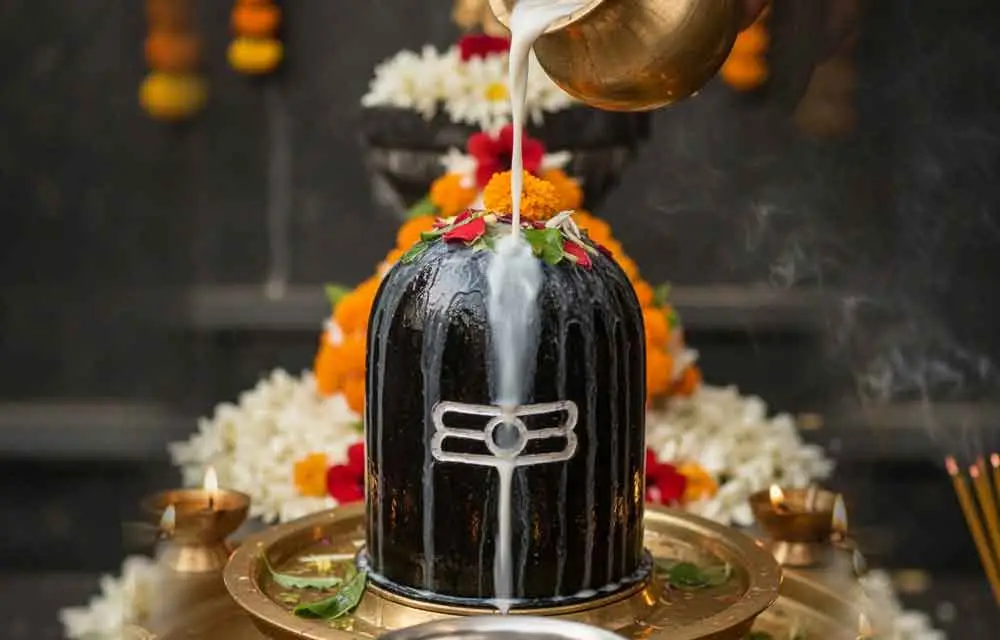
Maha Shivaratri Four Prahar Puja — The Complete Night-by-Night Ritual Guide
The complete step-by-step guide to the Maha Shivaratri Char Prahar Puja — the four watches of the sacred night, each with its own abhishek (water, milk, curd, ghee, honey), mantra and spiritual theme, plus Nishita Kaal timing, fasting rules and how NRI devotees can perform it at home.
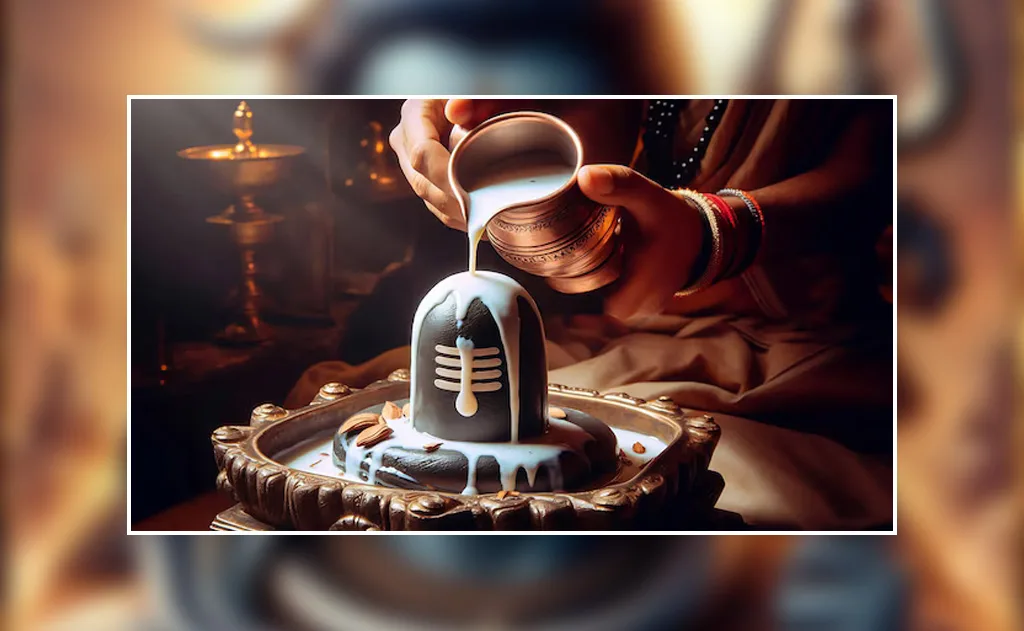
The complete step-by-step guide to the Maha Shivaratri Char Prahar Puja — the four watches of the sacred night, each with its own abhishek (water, milk, curd, ghee, honey), mantra and spiritual theme, plus Nishita Kaal timing, fasting rules and how NRI devotees can perform it at home.
A complete puja vidhi by HinduTone Editorial · ~12 min read
“Maha Shivaratri is not a festival of celebration — it is a night of vigil, surrender, and the burning of the ego in Shiva’s sacred fire. Those who observe all four Prahars receive blessings that a thousand ordinary prayers cannot match.” — Shiva Purana
Why Maha Shivaratri Is Not Like Other Festivals
Har Har Mahadev. Every Hindu festival has its signature — Diwali its lamps, Holi its colours, Navratri its dance. But Maha Shivaratri is a festival of darkness, not light; of vigil, not celebration; of inner fire, not outer spectacle. The Great Night of Shiva — the 14th night of the dark fortnight of Phalguna (Feb–Mar) — is the most powerful night in the Vedic calendar for spiritual practice. Unlike festivals where God descends to celebrate with humanity, Maha Shivaratri is the night humanity ascends toward God.
At its heart is one extraordinary ritual — the Char Prahar Puja — the four-watch puja that divides the sacred night into four phases, each with its own offering, mantra and spiritual awakening. This is the complete, step-by-step guide.
What Is Maha Shivaratri? The Cosmic Significance
Observed on the Chaturdashi (14th day) of Krishna Paksha in Phalguna, the significance of this night is layered:
Cosmic: the night Shiva performed the Tandava and the night Shiva and Shakti (Parvati) were united in sacred marriage — the merger of individual consciousness with the universal.
Astrological: the planetary positions create a natural upward flow of energy through the spine — ideal for meditation, pranayama and the ascent of kundalini.
Devotional: sincere night-long worship is said to burn away accumulated karma and grant liberation.
Advertisement
Unlike other festivals that peak at sunrise, Maha Shivaratri’s power intensifies as the night deepens. Staying awake through the entire night, in worship and meditation, is the central practice.
What Are the Four Prahars? The Structure of the Sacred Night
The word Prahar (प्रहर) refers to a traditional time division — about one-quarter of the night, roughly three hours. The night from sunset to sunrise is divided into four equal Prahars, each with its own puja, abhishek material, mantra and theme. If a devotee worships sincerely through all four, blessings are received in abundance.
First Prahar: ~6–9 PM · Water & Milk · Purification · Second: ~9 PM–12 AM · Curd & Ghee · Nourishment
Third Prahar: ~12–3 AM · Ghee · Liberation · Fourth: ~3–6 AM · Honey · Sweetness & Bliss
NRI note: adjust to your local sunset. The First Prahar begins at sunset in your city; divide the hours until sunrise into four equal parts.
Preparation — What to Do Before Sunset
The Day Before
Eat only one simple sattvic meal the day before the fast.
AdvertisementAvoid tamasic foods (meat, fish, eggs, onion, garlic, alcohol) for at least 24 hours prior.
Keep the mind calm — avoid arguments and agitation.
Morning of Maha Shivaratri
Wake before sunrise.
Sacred bath — add a few black sesame seeds to purify accumulated karma.
Wear clean white or saffron clothing.
Take Sankalp — with folded hands, state your name, your intention to observe the fast and the four-Prahar puja, and what you seek from Shiva’s grace.
Puja Materials You Will Need
Shivalingam (idol or image) — the focus of all puja
Ganga jal / clean water, whole milk, curd, pure ghee, honey, sugar — the panchamrit abhishek items
AdvertisementBilwa patra (bel leaves) — Shiva’s most beloved offering; essential
White flowers (dhatura, jasmine, white lotus), camphor (karpoor), incense, mustard-oil lamp
Rudraksha mala (108 beads), bhasma (sacred ash), a small bell
First Prahar — The Puja of Purification (Sunset to ~9 PM)
The opening Prahar clears the field of consciousness. Shiva is invoked as Mahamrityunjaya — the Great Conqueror of Death. The devotee brings all burdens, fears and karmic weight to his feet. Abhishek: water and milk.
Light the lamp and incense.
Ring the bell and chant “Om Namah Shivaya” thrice to invoke Shiva.
Pour Ganga jal over the Shivalingam in a slow steady stream, then fresh milk.
Chant the Mahamrityunjaya Mantra 108 times on your Rudraksha mala.
AdvertisementOffer 3 or 11 bilwa leaves, white flowers and incense.
Conclude with camphor aarti and 10 minutes of silent meditation.
ॐ त्र्यम्बकं यजामहे सुगन्धिं पुष्टिवर्धनम् । उर्वारुकमिव बन्धनान् मृत्योर्मुक्षीय मामृतात् ॥ — Om Tryambakam Yajamahe Sugandhim Pushtivardhanam, Urvarukamiva Bandhanan Mrityor Mukshiya Mamritat
Second Prahar — The Puja of Nourishment (~9 PM to Midnight)
As the night deepens, Shiva is invoked as Somanatha — Lord of the Moon, nourisher of all life. Abhishek: curd and ghee. Pour curd slowly, then pure ghee, chanting the Panchakshara Mantra “Om Namah Shivaya” 108 times — slowly, savouring each of the five syllables. Offer datura, sandalwood paste and fruits; conclude with camphor aarti and recitation of the Shiva Chalisa.
Third Prahar — The Puja of Liberation (Midnight to ~3 AM)
The deepest, most powerful phase — the Prahar of Moksha, the dissolution of the ego in Shiva’s infinite consciousness. Abhishek: ghee, the most transformative offering. The supreme Nishita Kaal falls within this Prahar (see below). Chant Rudra’s mantra “Om Namo Bhagavate Rudraya” 108 times; offer bhasma to the forehead and up to 108 bilwa leaves; then 20–30 minutes of deep silent meditation.
Meditation: ask yourself — “What in me is ready to be released tonight?” Let the answer arise, then offer it mentally to the flame burning before the Shivalingam.
Fourth Prahar — The Puja of Sweetness (~3 AM to Dawn)
The puja of arrival — the sweetness of grace after the long vigil. Shiva is invoked as Bholenath — the innocent, easily-pleased Lord who gives freely to those who simply stay awake and love him. Abhishek: honey — poured slowly, at its own pace. Chant “Om Parvatipataye Hara Hara Mahadev” 108 times, invoking the joy of Shiva-Parvati’s union. Offer white flowers; at the first light of dawn, perform the final, complete camphor aarti — the aarti of completion and gratitude.
Nishita Kaal — The Supreme Sacred Hour
Within the Third Prahar lies Nishita Kaal — the midnight hour, approximately 12:09 AM to 1:01 AM — when Lord Shiva is believed to have first manifested as the Shivalingam. Devotees unable to observe all four Prahars often focus their entire worship here.
Perform Panchamrit Abhishek — milk, curd, honey, ghee and sugar-water in sequence.
Chant Om Namah Shivaya 108 times without interruption.
Offer 108 bilwa leaves — one per mantra repetition if possible.
Deep silent meditation for at least 15 minutes.
State your sincere prayer internally, with complete faith.
Sincere worship during Nishita Kaal — even for this one hour — is said to grant the merit of a complete night vigil.
Maha Shivaratri Fasting Rules
Nirjala fast: no food or water for the full day and night — the most intense form, for seasoned devotees.
Phalahar fast (most common): fruits, milk, nuts, sabudana and sendha namak (rock salt) permitted; no grains, no regular salt, no non-veg.
Permitted: fresh fruits, milk/curd/paneer, sabudana, kuttu (buckwheat), singhara flour, sendha namak, dry fruits, sweet potato and arbi.
Avoid: all grains (rice, wheat, maize, barley), regular iodised salt, non-vegetarian food, onion, garlic, alcohol and tobacco.
Breaking the fast (Parana): the morning after, ideally after the Chaturdashi tithi ends and sunrise occurs — take a little prasad first, then a light sattvic meal.
For NRI Devotees — Performing Char Prahar Puja Abroad
Living outside India does not diminish the power of your vigil. Find your local sunset on Maha Shivaratri and the next morning’s sunrise, then divide the hours between into four equal parts — those are your Prahars.
Example — London: if sunset is 5:30 PM and sunrise 7:00 AM (13.5 hrs), each Prahar ≈ 3 hr 22 min: 5:30–8:52 PM, 8:52 PM–12:14 AM, 12:14–3:36 AM, 3:36–7:00 AM.
Set up a clean dedicated puja space with a Shivalingam at the centre and all abhishek items in small vessels.
Parthiv Shivalingam: if you have no stone lingam, make one from clean clay or earth — explicitly allowed by the scriptures for home puja.
Many temples worldwide live-stream the Maha Shivaratri puja — synchronise your home worship for a sense of community.
Frequently Asked Questions
Is it necessary to stay awake all four Prahars?
It is the ideal and yields the greatest merit, but the scriptures say sincere worship during Nishita Kaal alone carries enormous blessings. Do what is genuinely possible — Shiva values sincerity over performance.
What is the correct order of abhishek materials?
First Prahar — water and milk; Second — curd and ghee; Third — ghee; Fourth — honey. Rinse the Shivalingam with clean water between offerings. The full panchamrit is most appropriate during Nishita Kaal.
Can women observe the Char Prahar Puja and night vigil?
Yes, absolutely. Women have observed and led the Maha Shivaratri vigil across all Hindu traditions. The puja carries no gender restriction — devotion is the only qualification. Home puja has no restrictions.
What if I fall asleep during the vigil?
It happens, especially between 1 and 3 AM. If you wake, resume the puja without guilt — splash water on your face, relight the lamp, ring the bell and chant. Shiva, called Bholenath (the innocent one), rewards genuine effort, not perfect performance.
Why is honey offered in the Fourth Prahar?
After purification, nourishment and liberation, the soul arrives at a state of sweetness — the natural state of a consciousness that has been purified, nourished and freed. Honey, the sweetest natural substance, is the offering of arrival.
What is the significance of bilwa patra?
The Shiva Purana calls bel leaves Shiva’s most beloved offering — more meritorious than gold. The three-leafed bilwa symbolises Shiva’s three eyes, the Trimurti and the three Gunas. Offering one per mantra repetition is the single most powerful act of Shiva worship on this night.
Conclusion: The Night That Changes Everything
The devotee who emerges from the four Prahars at dawn is not quite the same person who entered at sunset. The long hours of chanting, offering and vigil work on the soul in ways that need no explanation. The ego is quieter; the heart is softer.
Shiva requires no perfection, no elaborate temple, no team of priests — only that you come to him, stay, and keep your lamp burning through the darkness. The one who does that on Maha Shivaratri — in Varanasi or London, in a cave in Australia or a temple in the sea in Trinidad — receives the same grace.
Related Reading on HinduTone
Om Namah Shivaya. 🔱 Har Har Mahadev.
You might also like
Mantra Recitation in a Diaspora Apartment: A Beginner's Guide for 2026
Shiva Vrats of June 2026: Kalashtami (June 8) & Masik Shivaratri (June 13)
The Twelve Jyotirlingas of Lord Shiva: A Complete Pilgrim's Guide Across India