Can a Robot Perform Puja? Robot Aarti, AI in Rituals and What Hindu Tradition Says
In 2017 an industrial robot arm waved an aarti lamp before Ganesha, and the video started a debate that has not ended. What actually happened, are robots replacing priests, and what do traditional ideas such as bhava and adhikara suggest? A sourced, balanced look.

In 2017 an industrial robot arm waved an aarti lamp before Ganesha, and the video started a debate that has not ended. What actually happened, are robots replacing priests, and what do traditional ideas such as bhava and adhikara suggest?
Quick answer: A robot can perform the physical movements of a puja. The best-known case is the 2017 Ganpati robot arm that performed aarti before Ganesha at Patil Automation's facility, which a company worker called "more of a decoration", not a replacement for priests. Anthropologist Holly Walters reports later prototypes, some still performing aarti regularly, and devotees are divided. No report was found of a temple replacing its priests with a robot. Whether a robot's puja is puja in the full sense is a question Hindu tradition approaches through ideas such as bhava (devotional feeling), adhikara (eligibility) and the role of the priest; these are perspectives, and teachers answer differently.
Start with a surprising, true scene. In September 2017, during the Ganpati festival, an industrial robotic arm, the kind of machine built for factory work, performed aarti before Ganesha at an automation company's facility. The story was widely reported, and a question that once sounded like science fiction became a real conversation in Hindu homes: can a machine worship?
This guide looks at the question in three layers: (1) the documented examples, with sources; (2) the real debate among devotees and scholars; and (3) traditional Hindu concepts that people bring to the question, offered as perspectives for reflection rather than rulings.
The documented examples
The 2017 Ganpati aarti arm. During the 2017 Ganpati festival, the automation firm Patil Automation had an industrial robotic arm perform aarti before Ganesha. Quartz called the firm Ahmedabad-based; OfficeChai named it Patil Automotive Pvt. Limited of Pune, and company filings describe Patil Automation as Pune-headquartered. A company worker told Quartz the robot was "more of a decoration", not a replacement for priests (Source: Quartz). No source we found names the arm's manufacturer, so claims online that it was a particular brand are unverified.
The prototypes that followed. Writing in The Conversation, anthropologist Holly Walters says the 2017 arm inspired several prototypes, some of which still perform the ritual regularly in India. She reports that some devotees and priests see ritual robots as human progress, while others call replacing practitioners "a bad omen" and worry that automation could drive people away from worship. She links this to falling numbers of young people entering the priesthood (Source: PBS NewsHour, republished from The Conversation, 11 March 2023).
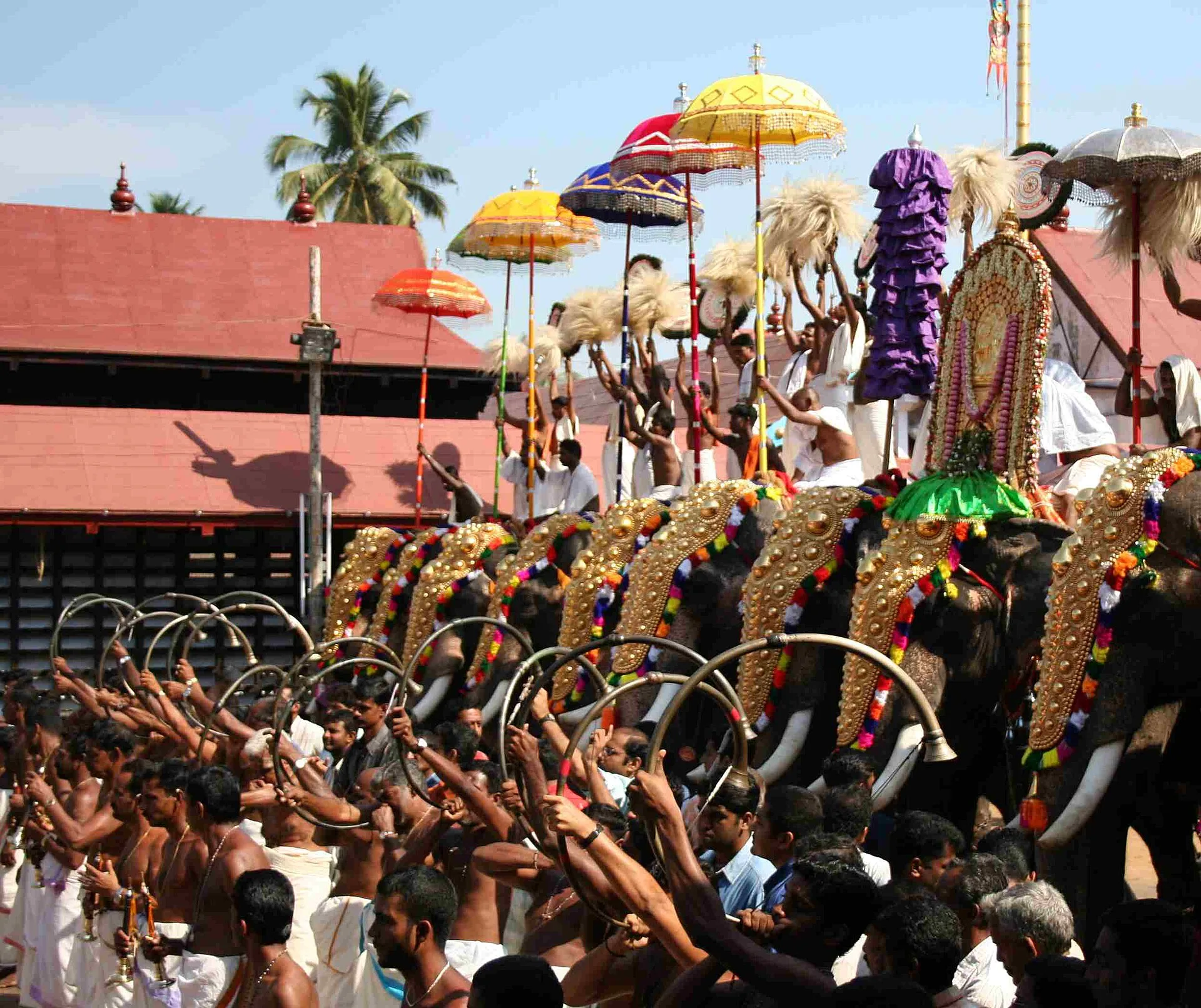
Mechanical elephants in temple ritual. A different kind of machine has entered ritual life in Kerala. On 26 February 2023 the Irinjadappilly Sree Krishna Temple near Thrissur dedicated a life-size mechanical elephant, Irinjadappilly Raman, in a Nadayiruthal ceremony (Source: The News Minute). These figures are motorised, built from rubber, fibre, metal, mesh, foam and steel and moved by five motors (Source: The Tribune). They carry an elephant's ritual role; they are not robots that worship. Our robotic elephants guide covers them in detail.
| Example | What the machine does | Who still leads the worship | Source |
|---|---|---|---|
| Ganpati aarti arm, 2017 | Performs aarti before Ganesha | People who programmed and set it up; described as decoration | Quartz |
| Later aarti prototypes | Perform aarti, some regularly | Devotees and priests, who are divided about it | The Conversation (PBS) |
| Kerala mechanical elephants, 2023 onwards | Stand in for a live elephant in ritual | Temple priests and devotees | The News Minute; The Tribune |
| Tirumala AI command centre, 2025 | Crowd prediction, cameras, missing-person search | Not ritual at all: priests unchanged | Sakshi Post |
Where AI really is in Hindu worship spaces
It is worth being precise about the word AI. The aarti arm and the mechanical elephants are machines following programmed movements. The genuinely AI-based systems in Hindu spaces today are mostly about crowds and information:
- Tirumala: an AI-powered Integrated Command Control Centre opened on 25 September 2025, linking more than 6,000 AI cameras for crowd prediction and finding missing persons (Source: Sakshi Post).
- Maha Kumbh 2025: Kumbh Sah'AI'yak, a multilingual chatbot in 11 languages, launched on 13 December 2024 (Source: The Week (PTI)); about 250 of roughly 2,750 cameras were AI-enabled (Source: The Federal (PTI)).
None of these systems performs worship. They help people reach the deity safely; the puja inside remains in human hands.
The debate: three sincere positions
Devotees disagree, and each view comes from care for the tradition.
- It is progress, or at least harmless. Walters reports that some devotees and priests see ritual robots as human progress (PBS). The Patil Automation worker's description of the 2017 arm as "more of a decoration" suggests many see such machines as a festive display, much like lights or recorded bhajans.
- It is a bad omen. Others, Walters reports, call replacing practitioners "a bad omen" and fear automation could drive people away from worship (PBS).
- It is a symptom of a deeper problem. Walters connects the debate to falling numbers of young people entering the priesthood (PBS). For some, the worry is less about robots and more about who will carry the tradition forward.
Perspectives from Hindu tradition
The ideas below are traditional concepts many Hindus bring to this question. They are presented as perspectives for reflection, not as rulings. Different sampradayas, agama traditions and teachers weigh them differently, and the right person to ask about your own practice is your family priest or teacher.
Bhava: the feeling behind the offering. Many teachers stress that puja is an offering of the heart, and that the devotion of the worshipper, rather than the precision of the movement, is what gives it meaning. From this perspective a machine can move a lamp but cannot feel devotion, so the arm's movement is not, by itself, worship. Some would add that the bhava may belong to the people who built, set up or watched the robot, which is one reason a family might find such a display moving rather than empty.
Adhikara: who is eligible to perform a rite. Traditional ritual thought speaks of adhikara, the qualification or eligibility to perform a particular rite, often linked to initiation, training and the rules of a temple's tradition. On this view, a temple's formal rituals are the responsibility of qualified, trained priests; a device has no adhikara of its own. Others point out that in home worship the emphasis is on sincere devotion, and many households already use aids such as recorded mantras.
The priest as a living link. In many temples the archaka or pujari is not only a performer of actions but a person who carries a lineage, serves the deity daily and guides devotees. The concern Walters records, that automation could drive people away from worship, reflects this: if the priest is a living link between devotee and deity, removing the person changes the relationship, not just the procedure.
An analogy, clearly labelled. Some people compare a robot aarti arm to a temple bell or a recorded bhajan: tools that support worship without being the worshipper. This is an analogy, not a doctrine, and it has limits; whether it fits depends on whether the machine is seen as an aid to devotees or as a substitute for them.
Myth vs fact
| Myth | What the evidence says |
|---|---|
| Robots performing aarti are meant to replace temple priests. | The best-known example was a company showcase called "more of a decoration"; no report was found of a temple replacing its priests with a robot (Quartz). |
| Kerala's robot elephants are AI. | They are motorised figures moved by five motors, with no learning or autonomous decisions reported (The Tribune). |
| AI in temples means AI doing the worship. | Documented temple AI is for crowds and information, such as Tirumala's command centre and the Kumbh chatbot (Sakshi Post; The Week). |
| The 2017 aarti robot was made by a famous robot brand. | No source found names ABB or any other arm maker (Quartz). |
What this means for NRI families
Many NRI households already use technology in worship: livestreamed abhishekams, apps for mantras, and video calls with a family priest in India for special pujas. The robot aarti debate is a useful prompt to ask what you want technology to do. A simple test many families find helpful: does this tool help a person offer worship with more devotion, or does it stand in for the person? Children, especially, may enjoy a robot video; it is a natural opening to explain why the family lights the lamp with its own hands. For festival worship at home, our Navratri and Dussehra 9-day Devi worship guide and Ayudha Puja and Vahana Puja vidhi show how tools and vehicles are honoured in Hindu practice, rather than made to worship.
Frequently asked questions
Has a robot ever performed aarti?
Yes. During the 2017 Ganpati festival, the automation firm Patil Automation had an industrial robotic arm perform aarti before Ganesha at its facility (Quartz). Anthropologist Holly Walters writes that it inspired several prototypes, some of which still perform the ritual regularly in India.
Are robots replacing Hindu priests?
No report was found of a temple replacing its priests with a robot. A Patil Automation worker told Quartz the 2017 robot was 'more of a decoration', not a replacement for priests. The fear of replacement is real among some devotees, though.
Is a puja done by a robot valid?
There is no single Hindu answer. Many teachers emphasise bhava, the devotion of the worshipper, which a machine does not have; others note that the person who sets up and offers the ritual still has intention. Ask your own priest or teacher about your tradition's view.
Is a robot elephant in a temple ritual AI?
No. Kerala's mechanical temple elephants are motorised figures moved by five motors, with no learning or decision-making reported (The Tribune). They take part in rituals, but they are not artificial intelligence.
Where is AI actually used in Hindu temples today?
Mostly for crowds, not rituals: Tirumala's AI command centre links more than 6,000 AI cameras (Sakshi Post), and the Maha Kumbh 2025 had a multilingual AI chatbot and about 250 AI-enabled cameras (The Week; The Federal).
Related guides
- Robotic elephants and AI in Hindu temples: Kerala and Tirumala
- AI Gita chatbots: GitaGPT, accuracy and ethics
- AI and the Sanskrit revival in 2026
- Ayudha Puja, Vahana Puja and Shami Puja vidhi
- Navratri and Dussehra 2026: 9-day Devi worship guide
- The NASA-Sanskrit computers myth
Editor's note (9 October 2026)
Every documented example, date and quote on this page comes from the sources linked in the text: Quartz, Holly Walters in The Conversation (via PBS NewsHour), The News Minute, The Tribune, Sakshi Post, The Week (PTI) and The Federal (PTI), as checked on 9 October 2026. The sections on bhava, adhikara and the priest's role describe traditional perspectives in general terms; they are not rulings, and practice varies by sampradaya and temple. Please consult your own priest or teacher on questions of ritual validity.
You might also like

GitaGPT and AI Bhagavad Gita Chatbots: How Accurate Are They, and What Does Hindu Tradition Say?

Annaprashan Ceremony: A Complete Guide to Baby's First Rice Feeding, Rituals and Regional Customs
Robotic Elephants and AI in Hindu Temples: Kerala's Mechanical Tuskers, Tirumala's AI Command Centre and the Debate