
Karma and Rebirth in Hinduism, Buddhism, Jainism and Sikhism Compared
Karma and rebirth are shared by four religions born in India, yet each explains them differently: action and its fruits, intention without a permanent self, subtle matter binding the soul, and karma softened by divine grace. A respectful side-by-side guide with a comparison table.
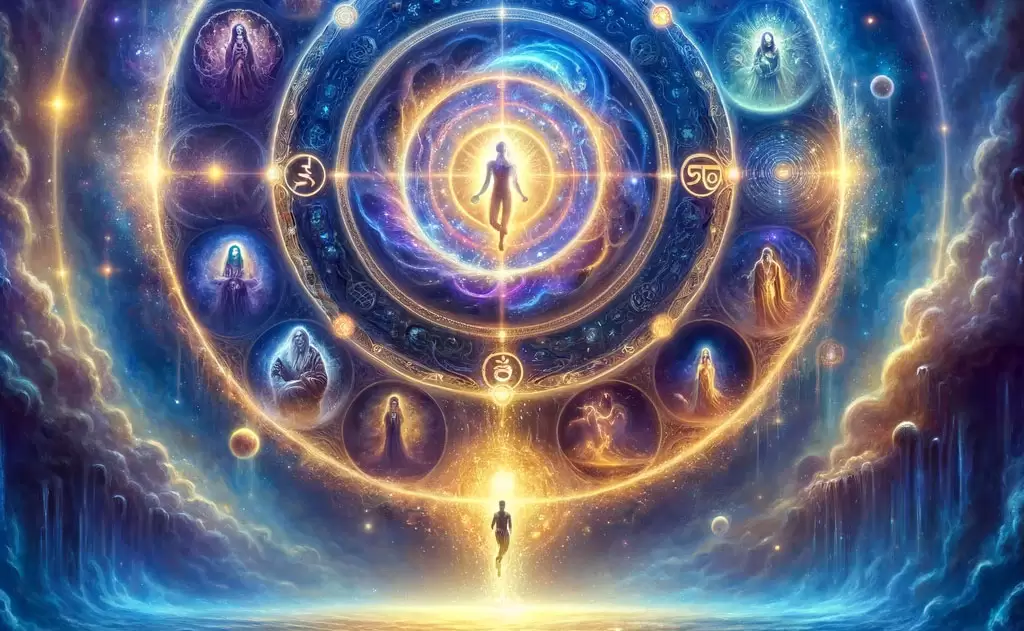
Karma and rebirth are shared by four religions born in India, yet each explains them differently: action and its fruits, intention without a permanent self, subtle matter binding the soul, and karma softened by divine grace. A respectful side-by-side guide with a comparison table.
Quick answer: All four religions that arose in India teach that actions have consequences and that beings are reborn until liberated, but they explain the mechanism differently. Hinduism: karma is action and its fruits, carried by an eternal self (atman); the Gita teaches acting without attachment to results. Buddhism: karma is intentional action (cetana), and rebirth happens without a permanent self (anatta). Jainism: karma is subtle matter that binds the soul (jiva) and must be shed. Sikhism: karma shapes our births, but liberation comes through God's grace (nadar), living within the divine order (hukam) and remembering the Name.
Shared roots, different explanations
The ideas of karma (action), samsara (the cycle of birth and death) and liberation from that cycle are shared across the religions of Indian origin. Scholars trace their early development in the Upanishads and in the renunciant movements of the mid-first millennium BCE, the period of the Buddha and Mahavira, though Hindu, Jain and Buddhist traditions each have their own accounts of how old these teachings are. Sikhism, founded by Guru Nanak in the fifteenth and sixteenth centuries CE, inherited the vocabulary and gave it a distinctive, God-centred meaning. This guide describes each view as its own followers and scholars describe it, without ranking them.
Hinduism: action, its fruits, and karma yoga
In Hindu thought, karma literally means action, and by extension the law that every action produces results (karmaphala). The Brihadaranyaka Upanishad teaches, in substance, that as a person acts, so they become: good deeds make one good, harmful deeds make one harmful. The eternal self (atman) carries karmic impressions from life to life; the Bhagavad Gita compares rebirth to a person discarding old clothes and putting on new ones.
Hindu teachers often distinguish three kinds of karma: sanchita (the accumulated store), prarabdha (the portion now bearing fruit in this life) and kriyamana or agami (karma being created now). Rebirth may be in human, animal, heavenly or other realms, depending on karma.
The Gita's great contribution is karma yoga: Krishna tells Arjuna that he has a right to his work but not to its fruits, and should act from duty and devotion without selfish attachment. Action done this way, often as an offering to God, does not bind. Liberation (moksha) is reached through knowledge (jnana), devotion (bhakti), selfless action and meditation, and is understood differently by the Vedanta schools: as realising oneness with Brahman in Advaita, or as eternal loving communion with God in Vishishtadvaita and Dvaita. Shaiva and Shakta traditions likewise teach that divine grace frees the soul from karmic bonds.
Buddhism: intention, no-self, and rebirth
The Buddha redefined karma ethically. In a well-known teaching from the Pali Canon he says, in substance, that intention (cetana) is karma: having intended, one acts by body, speech and mind. What matters is the volition behind an act. Wholesome intentions rooted in generosity, kindness and wisdom lead to happy results; unwholesome ones rooted in greed, hatred and delusion lead to suffering.
Buddhism teaches anatta (no permanent self): a person is a changing process of five aggregates (form, feeling, perception, mental formations and consciousness). Rebirth is therefore not the transmigration of a soul but the continuation of a causal stream, often compared to one candle lighting another. Beings are reborn in various realms, often listed as six: gods, demigods, humans, animals, hungry ghosts and hell beings, none of which is permanent.
The goal is nirvana (nibbana), the extinguishing of greed, hatred and delusion, which ends the production of new karma and therefore rebirth. In Theravada Buddhism the ideal is the arahant who has realised nirvana; Mahayana traditions emphasise the bodhisattva who seeks awakening for the sake of all beings, and Vajrayana adds tantric methods. The Dhammapada, a popular collection of the Buddha's sayings, opens by teaching that mind precedes all things, and that suffering or happiness follows those who act with a corrupt or pure mind. For more, see Hinduism vs Buddhism.
Jainism: karma as subtle matter binding the soul
Jainism offers the most physical understanding of karma. Every living being has a jiva (soul) whose true nature is infinite knowledge, perception, bliss and energy. Karma is extremely subtle matter that flows into the soul (asrava) through activities of body, speech and mind, and binds to it (bandha), especially when actions are driven by passions (kashayas) such as anger, pride, deceit and greed.
The Tattvartha Sutra, a classical text accepted by both Digambara and Svetambara Jains, sets out the path: right faith, right knowledge and right conduct together form the path to liberation. Jains classify eight main types of karma, four of which obscure the soul's essential qualities (such as knowledge and perception) and four of which determine features of embodiment such as lifespan and body. Stopping the inflow of karma (samvara) through vows and restraint, and shedding existing karma (nirjara) through austerity and meditation, gradually frees the soul.
When all destructive karmas are removed, the soul attains kevala jnana (omniscience), as the Tirthankaras did. At death, freed from all karma, it rises to the top of the universe as a siddha, dwelling eternally in pure knowledge and bliss. This is why ahimsa is so central to Jain life: harming any being binds heavy karma. See also Hinduism vs Jainism.
Sikhism: karma, hukam and grace
Sikh teaching, preserved in the Guru Granth Sahib, accepts karma and rebirth: the soul has wandered through many lives, and the human birth is a rare opportunity to meet God. But karma is not the last word. Everything happens within hukam, the divine order or will, and liberation comes through God's nadar (grace or gracious glance). A line in Japji Sahib is commonly translated as saying that by karma one receives this body, but by grace one finds the gate of liberation.
The root obstacle is haumai, self-centred ego, which fuels the five "thieves" of lust, anger, greed, attachment and pride. The Sikh response is Naam simran (remembering God's Name), honest work (kirat karni), sharing with others (vand chhakna) and selfless service (seva), lived as a householder rather than as a renunciant. The goal, mukti, is liberation and union with Waheguru, which can be experienced while still alive (jivan mukti). See Hinduism vs Sikhism.
Comparison table
| Question | Hinduism | Buddhism | Jainism | Sikhism |
|---|---|---|---|---|
| What is karma? | Action and its fruits | Intentional action (cetana) | Subtle matter binding the soul | Action whose effects shape births, within hukam |
| What is reborn? | Eternal self (atman) | A causal stream; no permanent self | The soul (jiva) | The soul |
| Role of God | Central in most schools; grace in bhakti | No creator God; awakening by one's own practice | No creator God; Tirthankaras as exemplars | Central: grace (nadar) liberates |
| Goal | Moksha | Nirvana | Kevala jnana and moksha as a siddha | Mukti, union with Waheguru |
| Key method | Karma, bhakti, jnana, raja yoga | Noble Eightfold Path, meditation, wisdom | Three Jewels, vows, austerity | Naam simran, honest work, sharing, seva |
| Key texts | Upanishads, Bhagavad Gita | Tripitaka, Dhammapada | Agamas, Tattvartha Sutra | Guru Granth Sahib |
| Internal diversity | Vedanta schools; Vaishnava, Shaiva, Shakta | Theravada, Mahayana, Vajrayana | Digambara, Svetambara | Various Sikh traditions and sampradayas |
Ethics that follow
Because actions matter beyond this life, all four traditions place ethics at the heart of spiritual life. All four emphasise non-harm, truthfulness, generosity, self-control and compassion. Hindus speak of dharma and seva; Buddhists of the five precepts and loving-kindness (metta); Jains of the five great vows, including ahimsa and non-possessiveness; Sikhs of seva and the community kitchen (langar). The emphasis differs: Jain ethics extend detailed care to the smallest living beings, Buddhist ethics focus on intention, Sikh ethics on living truthfully as a householder, and Hindu ethics on fulfilling one's duty with devotion.
A shared caution, too: none of these traditions teaches that people who suffer "deserve it" in a way that excuses indifference. Each calls for compassion and practical help for those in need.
For families and friends
- Explaining karma to a friend: "Karma isn't fate or punishment; it's the idea that what we do shapes who we become and what we experience."
- Remember that Hindu, Buddhist, Jain and Sikh friends share many words but mean different things by them; let each explain their own tradition.
- When visiting a gurdwara, cover your head, remove shoes and accept langar respectfully. In a Jain temple, leave leather items outside and do not eat inside. In a Buddhist temple, remove shoes and do not point feet towards the Buddha image.
- Children often ask whether pets are reborn; all four traditions say all living beings are part of the cycle, which is a good starting point for talking about kindness to animals.
Also read: life after death in five religions and meditation and prayer compared.
Frequently asked questions
Is karma the same as fate?
Not in any of these traditions. Karma means action, and the doctrine teaches that intentional actions have consequences. Past karma shapes present circumstances, but present choices create new karma, so there is always room for effort, repentance and change. Sikhism adds that God's grace can overcome the weight of karma.
If Buddhism denies a permanent self, what is reborn?
Buddhists teach that there is no unchanging soul (anatta), yet there is a continuity of causes. The stream of mind and karmic tendencies conditions a new life, much as one flame lights another: the new flame is neither the same as nor wholly different from the old. Theravada and Mahayana schools explain the details in different ways.
Why do Jains describe karma as matter?
In Jain teaching, karma is extremely subtle physical matter that is drawn to the soul (jiva) by actions, especially those coloured by passions such as anger, pride, deceit and greed, and sticks to it, obscuring the soul's natural knowledge, perception and bliss. This is why Jain ethics place such weight on non-violence and self-restraint: they stop new karma and help shed old karma.
Do Sikhs believe in rebirth?
Yes. The Guru Granth Sahib speaks of the soul wandering through many births. Sikh teaching holds that a human birth is a precious opportunity, and that through remembering God's Name (Naam), living truthfully and receiving God's grace (nadar), a person can be freed from the cycle and merge with God, even while still alive.
Can karma be changed or erased?
Each tradition offers a way. Hindus speak of karma yoga, devotion and knowledge that burn up karma; Buddhists of cultivating wholesome intentions and wisdom that ends craving; Jains of austerity and restraint that shed karmic matter; Sikhs of grace, Naam and humble service. None teaches that karma is an unchangeable sentence.
Is 'instant karma' a real teaching?
Popular culture uses "instant karma" for quick consequences, but the classical teachings describe karma ripening over time, sometimes within a life and sometimes across lives. See our guide to instant and long-term karma for more.
Editor's note (9 October 2026)
This page is an introductory comparison for general readers. It simplifies teachings that each tradition has developed in great depth over many centuries, describes them as their mainstream followers and scholars do, and paraphrases scripture rather than quoting it. Views vary within every tradition. For guidance, please consult qualified teachers: a Hindu acharya, a Buddhist monastic or teacher, a Jain muni or scholar, or a Sikh granthi or scholar.
Related guides
- Instant karma vs long-term karma: a comparative analysis
- Moksha, nirvana, salvation: liberation compared
- Ahimsa: non-violence in Hinduism, Jainism and Buddhism
- Hinduism and Buddhism: shared roots and mutual influences
- Concept of God in Hinduism, Christianity and Islam compared
- Hinduism and Islam: beliefs and practices compared
You might also like
Ahimsa (Non-Violence) in Hinduism, Jainism and Buddhism: Meaning, Scriptures and Practice Compared
Life After Death in Hinduism, Buddhism, Jainism, Christianity and Islam

Avatar and Incarnation: Hindu and Christian Views Compared
