Rishab Shetty’s Transformation into Chhatrapati Shivaji Maharaj: A Monumental Tribute to India’s Warrior King
Rishab Shetty’s first look as Chhatrapati Shivaji Maharaj has taken the internet by storm.
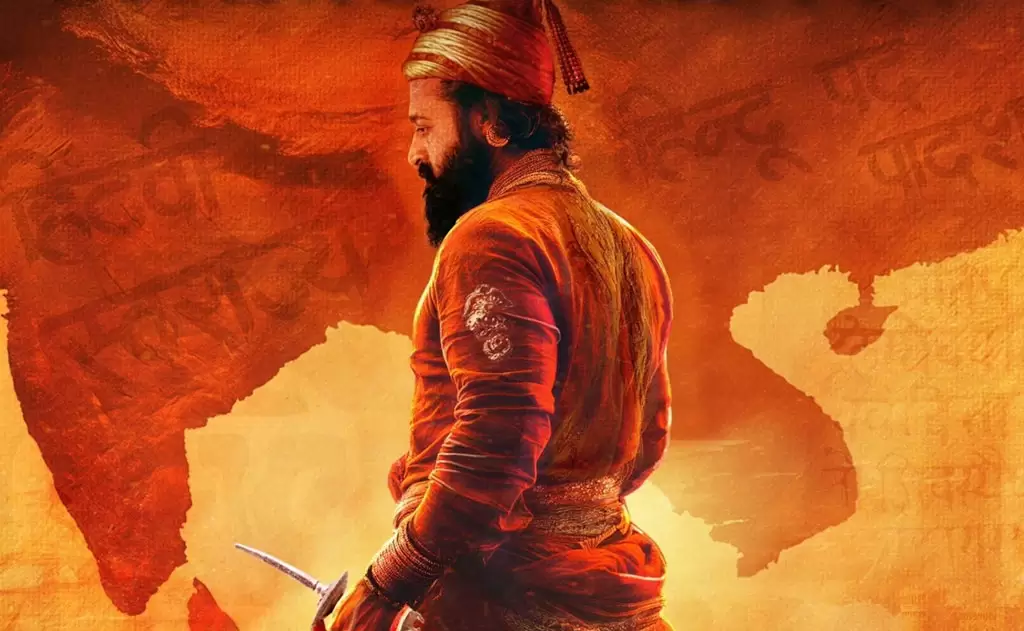
Rishab Shetty’s first look as Chhatrapati Shivaji Maharaj has taken the internet by storm.
Rishab Shetty’s first look as Chhatrapati Shivaji Maharaj has taken the internet by storm. The actor, known for his intense performances, has captured the essence of India’s greatest warrior king in the most authentic and fierce manner. This cinematic portrayal of the Maratha icon is not just a film; it’s a tribute to the spirit of Swarajya, bravery, and unwavering dedication that Chhatrapati Shivaji Maharaj embodied.
The Legacy of Shivaji Maharaj: A Symbol of Resistance Shivaji Maharaj’s life was a saga of battles fought with intellect, strategy, and courage. His relentless fight against the mighty Mughal empire and his establishment of a just and prosperous kingdom have made him a symbol of resistance and patriotism. The film, Chhatrapati Shivaji Maharaj, will explore these aspects in great detail, providing audiences with an opportunity to witness the exploits of the Maratha king who is revered as the pride of Bharat.
The grandeur and richness of Indian history are set to come alive on the silver screen, as Rishab Shetty takes on the role of the valiant ruler who forged alliances, built impregnable forts, and defended his kingdom with unmatched valor.
A Cinematic Experience Worth Waiting For With Chhatrapati Shivaji Maharaj, director Sandeep Singh promises to bring a gripping tale that will combine breathtaking visuals, stirring battle sequences, and compelling storytelling. The film is bound to resonate with audiences not just for its historical value, but also for the deeply emotional journey of a leader whose vision shaped the future of an entire nation.
Rishab Shetty’s portrayal of Shivaji Maharaj is expected to inspire viewers to reconnect with the roots of India's cultural and historical glory. This film, more than anything, will remind us of the strength of a leader who carved his path against the odds, leaving a legacy that still stands tall in the hearts of millions.
Stay tuned to Hindutone as we bring you more insights into this historical epic that will undoubtedly be a game-changer for Indian cinema.
The Dharmic Foundation of Shivaji Maharaj's Swarajya
Shivaji Maharaj did not conceive of his kingdom merely as a political entity but as a Dharma-rajya — a realm governed by righteousness. Deeply influenced by his mother Jijabai, who recited episodes from the Ramayana and Mahabharata to him from childhood, he understood kingship through the lens of Kshatriya dharma. The Bhagavad Gita's injunction to a warrior — to fight for righteousness without attachment to personal gain — was a living principle in his campaigns, not merely a philosophical ideal.
His coronation at Raigad Fort in 1674 CE was a landmark moment: it was the first formal Vedic rajyabhisheka performed for a Hindu king in the Deccan in generations. Pandit Gaga Bhatt of Varanasi conducted the ceremony according to full Vedic rites, signalling to the entire subcontinent that an indigenous Hindu sovereignty had been legitimately and ritually re-established. The ceremony affirmed his title 'Chhatrapati' — 'Lord under the Royal Umbrella' — connecting him to the ancient tradition of chakravartins described in Puranic texts.
Shivaji Maharaj's Reverence for Temples and Spiritual Tradition
Unlike many rulers of his era who treated temples as revenue assets, Shivaji Maharaj actively restored and protected sacred shrines across the Konkan and Deccan. He issued farmans (royal decrees) strictly prohibiting the desecration of mosques, churches, and temples alike — a policy rooted in the Dharmic concept of sarva-dharma-samabhava, but equally in his strategic wisdom of building broad popular loyalty. The Bhavani temple at Tuljapur, associated with Goddess Bhavani who is credited in tradition with gifting him the legendary sword Bhavani Talwar, held a place of supreme reverence in his personal devotion.
His tutor and spiritual guide, Saint Ramdas Swami, author of the Dasbodh, shaped his understanding of seva (selfless service) and shakti (divine power) in governance. The Dasbodh explicitly addresses the duties of a ruler who serves as a protector of the people and of dharma. This guru-shishya relationship between Ramdas and Shivaji remains one of the most celebrated examples of the intertwining of spiritual guidance and temporal leadership in Maratha history.
The Military Genius Behind the Maratha Guerrilla Warfare — Ganimi Kava
The tactical doctrine Shivaji Maharaj developed, known in Marathi as Ganimi Kava (guerrilla warfare), was a revolutionary adaptation to the terrain of the Sahyadri mountain ranges and the Konkan coast. Rather than confronting numerically superior Mughal and Adilshahi forces on open plains — where cavalry charges and artillery gave the enemy an overwhelming advantage — Shivaji used swift night raids, mountain passes, and dense forests to neutralise those advantages entirely.
His construction and capture of over 300 forts — including Rajgad, Torna, Sinhagad, and Raigad — was not mere territorial expansion but a deliberate strategic infrastructure. Each fort served as an autonomous supply depot, refuge, and administrative centre, making his kingdom extraordinarily resilient to siege and invasion. Naval power was another dimension often overlooked: Shivaji built a formidable fleet based at Sindhudurg and Vijaydurg on the Konkan coast, making him one of the very few indigenous rulers of medieval India to challenge European maritime dominance.
The capture of Sinhagad Fort in 1670 CE by Tanaji Malusare — whose sacrifice inspired the Maratha war cry 'Gad aala pan sinha gela' ('The fort is won but the lion is lost') — exemplifies the spirit of complete self-offering that defined the Maratha warrior ethos. Rishab Shetty's portrayal is anticipated to bring such moments to visceral life on screen.
Why Rishab Shetty is a Culturally Resonant Choice for This Role
Rishab Shetty rose to pan-India prominence with Kantara (2022), a film that drew deeply from the folk-religious traditions of coastal Karnataka — particularly the Daiva (deity) worship traditions of the Tulu-speaking people. His ability to embody characters rooted in indigenous spiritual and warrior traditions, rather than merely performing historical costume drama, makes him a uniquely prepared actor for the role of Chhatrapati Shivaji Maharaj.
In Kantara, Shetty's physical and emotional transformation into a vessel of divine power demonstrated a commitment to authenticity that went beyond conventional acting craft. Audiences and critics noted that he appeared to inhabit the cultural memory of the role rather than simply play it. This same quality — the capacity to carry the weight of a civilisational legacy — is precisely what the portrayal of Shivaji Maharaj demands from any actor who accepts the responsibility.
Director Sandeep Singh's decision to cast a Kannada actor in the role of a Maratha king also carries a symbolic resonance: Shivaji Maharaj's vision of Swarajya was never narrow or regional, but encompassed a broader Hindu civilisational identity that transcended linguistic and geographic boundaries. This casting choice, in that sense, mirrors the universality of Shivaji's own legacy.
The Enduring Legacy of Shivaji Maharaj in Living Tradition
Shivaji Maharaj's legacy is not preserved only in history books and monuments — it lives in annual festivals, oral traditions, and the Powada ballad tradition of Maharashtra, where bardic performers have sung of his exploits for over three centuries. The Powadas composed by court poet Agnidas and later by the legendary Shahir Ram Joshi established a continuous chain of cultural memory that kept his story alive for generations even without formal historical literacy.
Every year, Shiv Jayanti — celebrating his birth anniversary — is observed across Maharashtra and increasingly across India with processions, performances, and recitations of his life. The date itself has been the subject of scholarly and community discussion, with two dates (according to Tithi and the Gregorian calendar) both being observed by different communities, reflecting the living and sometimes debated nature of this tradition.
For millions of Hindus, Shivaji Maharaj represents not merely a historical figure but a living ideal of righteous resistance — the embodiment of what the Mahabharata calls 'kshatriya dharma in action.' A major cinematic tribute, especially one crafted with the authenticity and cultural seriousness that the Rishab Shetty project promises, carries the potential to renew this living tradition for the next generation of Indians.
Frequently Asked Questions
What is Rishab Shetty’s Transformation into Chhatrapati?
Rishab Shetty’s first look as Chhatrapati Shivaji Maharaj has taken the internet by storm. The actor, known for his intense performances, has captured the essence of India’s greatest warrior king in the most authentic and fierce manner.
What are the key points about Rishab Shetty’s Transformation into Chhatrapati?
This cinematic portrayal of the Maratha icon is not just a film; it’s a tribute to the spirit of Swarajya, bravery, and unwavering dedication that Chhatrapati Shivaji Maharaj embodied. The Legacy of Shivaji Maharaj: A Symbol of Resistance Shivaji Maharaj’s life was a saga of battles fought with intellect, strategy, and courage.
Why does Rishab Shetty’s Transformation into Chhatrapati matter in Hinduism?
It deepens a devotee's connection with Lord Shiva and with the values of Sanatana Dharma — clarity, devotion and dharmic living.
How can devotees apply Rishab Shetty’s Transformation into Chhatrapati in daily life?
By reflecting on its teaching, incorporating the related practices or observances into daily routine, and approaching it with sincere devotion and understanding.
You might also like
Mantra Recitation in a Diaspora Apartment: A Beginner's Guide for 2026
Lord Shiva: The Three Faces NRI Devotees Should Know in 2026
Shiva Vrats of June 2026: Kalashtami (June 8) & Masik Shivaratri (June 13)