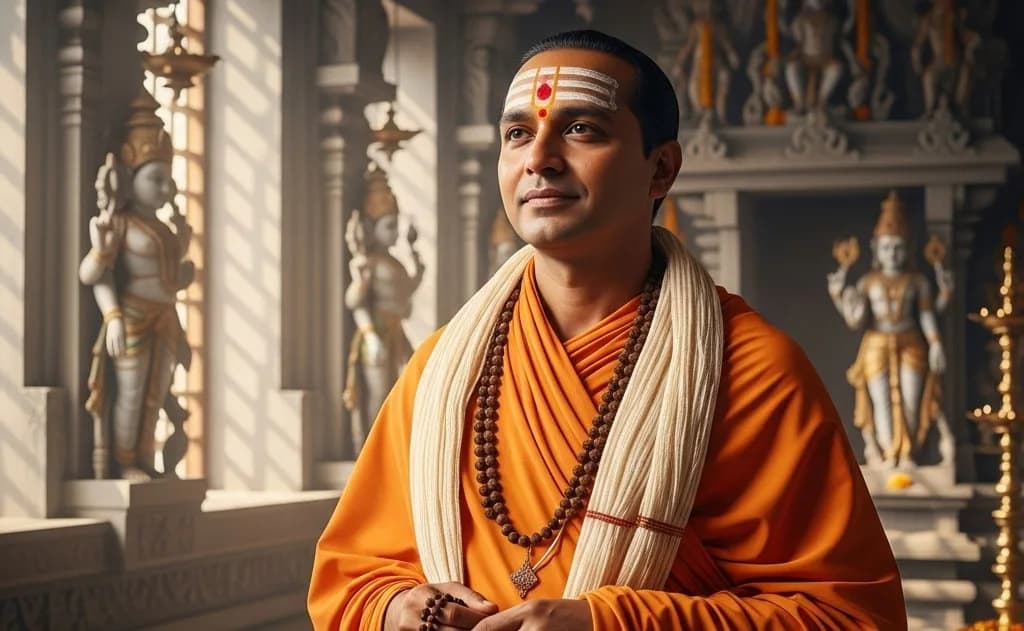
Top Quotes from Ancient Gurukul Texts: Timeless Wisdom for Modern Life
Ancient Indian texts like the Vedas, Upanishads, and epics such as the Mahabharata are rich sources of wisdom.
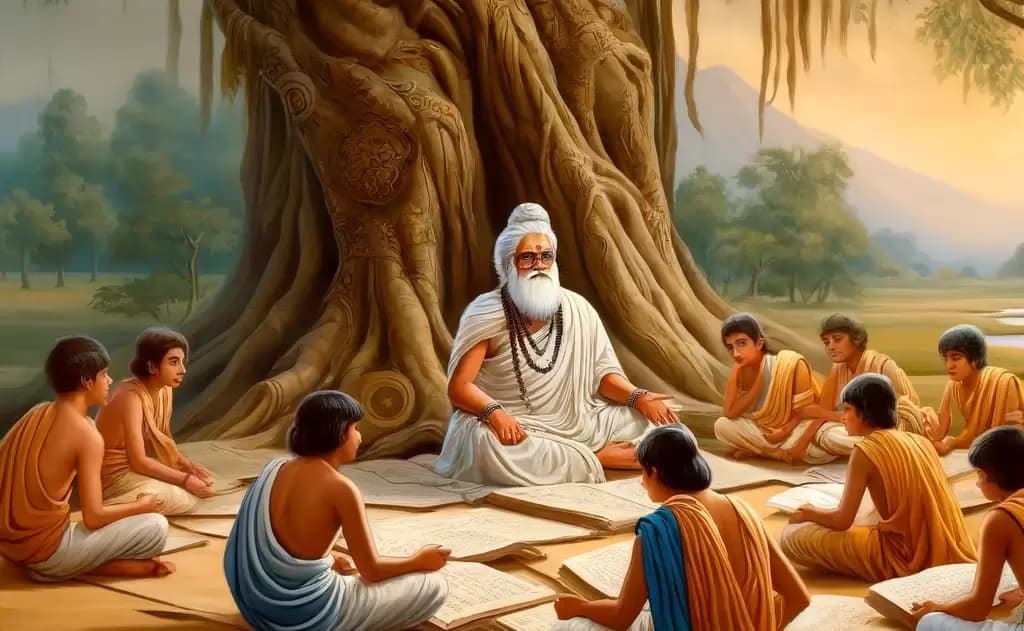
Ancient Indian texts like the Vedas, Upanishads, and epics such as the Mahabharata are rich sources of wisdom.
Ancient Indian texts like the Vedas, Upanishads, and epics such as the Mahabharata are rich sources of wisdom. They not only guided students in Gurukuls but continue to inspire people across the world. Below are some profound teachings and quotes that reflect the depth of Gurukul learning.
- Vedas: The Foundation of Knowledge “Satyam vada, dharmam chara” (Taittiriya Upanishad) “Speak the truth, and follow the path of righteousness.” This quote emphasizes the importance of truthfulness and ethical living, core values taught in Gurukuls.
“Aano bhadra krtavo yantu vishwatah” (Rig Veda 1.89.1) “Let noble thoughts come to us from all directions.” This highlights the openness to knowledge from all sources, fostering a spirit of learning and inclusivity. - Upanishads: Spiritual and Philosophical Insights “Tat tvam asi” (Chandogya Upanishad) “You are that.” A profound statement of self-realization, teaching students to recognize their divine essence and potential.
“Na jayate mriyate va kadachin” (Katha Upanishad) “The soul is never born, nor does it die.” This quote conveys the idea of the immortality of the soul, encouraging a fearless approach to life. - Mahabharata: Lessons in Duty and Dharma “Dharmo rakshati rakshitah” (Mahabharata) “Dharma protects those who protect it.” This stresses the importance of upholding duty and righteousness, a key teaching in Gurukuls.
“Udyogam purushasya lakshanam” (Mahabharata, Shanti Parva) “Effort is the mark of a person.” Hard work and perseverance were emphasized as essential qualities for success and character building. - Bhagavad Gita: The Essence of Gurukul Teachings “Karmanye vadhikaraste ma phaleshu kadachana” (Bhagavad Gita 2.47) “You have the right to perform your duty, but not to the fruits of your actions.” This quote encourages focus on actions without attachment to outcomes, a principle of selfless service.
“Yoga karmasu kaushalam” (Bhagavad Gita 2.50) “Yoga is excellence in action.” It reflects the idea that spiritual practice can be integrated with skillful and mindful action. - Panchatantra: Practical Wisdom “Vidya dadati vinayam” “Knowledge bestows humility.” This underscores the idea that true learning leads to humility and wisdom, a fundamental Gurukul value. Conclusion These ancient teachings offer timeless guidance on living a life rooted in truth, duty, and wisdom. In today’s fast-paced world, revisiting such principles can help nurture balanced, ethical, and enlightened individuals.
For more inspiring content on Indian philosophy and spirituality, visit Hindutone.
What did the Gurukul system actually teach beyond scripture recitation?
The Gurukul was never a passive institution of memorisation alone. The Taittiriya Upanishad's Shikshavalli lays out a complete pedagogical framework: phonetics (shiksha), metre (chandas), grammar (vyakarana), etymology (nirukta), astronomy (jyotisha), and ritual procedure (kalpa) formed the six Vedangas that every serious student was expected to master alongside the Vedic samhitas themselves.
Beyond formal subjects, the Gurukul cultivated character through daily discipline. Students rose before sunrise for brahma-muhurta study, observed strict brahmacharya, contributed to the household through wood-gathering and cattle-tending, and ate only after serving the guru's family. The Manusmriti (Chapter 2) records that this embodied service — called guru-seva — was itself regarded as a spiritual practice equal in merit to years of textual study.
The Aitareya Brahmana and the Chandogya Upanishad both describe debates and questioning (tarka) as a central method. The young Nachiketa's bold interrogation of Yama in the Katha Upanishad is held up precisely as a model: a student who refuses vague answers and presses for the deepest truth. Critical inquiry, not blind acceptance, was the Gurukul ideal.
Which Upanishadic prayers anchored daily life in the Gurukul?
Two Shanti Pathas framed every day of Gurukul learning. The Taittiriya Upanishad opens with 'Om sahana vavatu, sahanau bhunaktu' — 'May we be protected together; may we be nourished together; may we work together with great energy; may our study be illuminating and fruitful; may we not quarrel with each other.' This prayer was not ornamental: it encoded the relational contract between guru and shishya, committing both parties to mutual protection and honest effort.
The Brihadaranyaka Upanishad supplies another foundational invocation: 'Asato ma sadgamaya, tamaso ma jyotirgamaya, mrityor ma amritam gamaya' — 'Lead me from the unreal to the real, from darkness to light, from death to immortality.' Recited at dawn by students in Gurukuls stretching from Takshashila in the northwest to Kanchipuram in the south, these lines functioned as a daily reset of intention, reminding learners that education is ultimately a movement toward liberation, not merely toward livelihood.
How did Chanakya's Arthashastra extend Gurukul wisdom into statecraft and practical ethics?
Chanakya — also known as Kautilya or Vishnugupta — composed the Arthashastra at Takshashila, one of the oldest and most celebrated Gurukul cities in ancient Bharatavarsha. His text, rediscovered in 1905 from a palm-leaf manuscript, contains the famous dictum: 'Sukhasya moolam dharma, dharmasya moolam artha, arthasya moolam rajyam' — 'The root of happiness is righteousness; the root of righteousness is wealth rightly acquired; the root of wealth is a well-governed state.' This chain of dependencies shows how Gurukul moral education was meant to flow outward into public life.
The Arthashastra devotes its opening sections entirely to the education of the prince (kumara), insisting that he study under qualified acharyas from early childhood and that his day be divided into fixed periods of learning, exercise, reflection, and administration. Chanakya writes that a king who neglects learning becomes 'easily overcome by enemies' — framing intellectual discipline as a geopolitical necessity, not merely a private virtue.
Perhaps the most enduring practical aphorism from Chanakya's tradition is: 'Vidya dadati vinayam, vinayat yati patrata' — a verse also found in the Hitopadesa — 'Knowledge gives humility; from humility comes worthiness.' This progression — from study to character to social contribution — mirrors the Gurukul's own three-stage design: adhyayana (study), anushthana (practice), and loka-seva (service to the world).
What role did the guru-shishya parampara play in preserving and transmitting these teachings?
The Sanskrit word parampara means 'one after another in an unbroken chain.' In the Gurukul tradition, textual transmission was inseparable from personal transmission: a student absorbed not only the words of scripture but the teacher's living interpretation of them. The Mundaka Upanishad (1.2.12) specifies that the knowledge of Brahman must be sought from a teacher who is both shrotriya (learned in scripture) and brahmanishtha (established in Brahman) — without both qualities, the teaching remains incomplete.
Famous historical chains include the Vedanta lineage traced from Adi Shankaracharya (8th century CE) through his four principal disciples — Padmapadacharya, Hastamalaka, Totakacharya, and Sureshvaracharya — each of whom established a matha (monastic seat) at the four cardinal directions of Bharatavarsha: Sringeri in the south, Dwaraka in the west, Puri in the east, and Jyotirmath in the north. These mathas continue to function today as living Gurukul institutions.
The Bhagavata Purana (11.3.21) summarises the obligation of the shishya: 'Shushrushet tad-abhiprayan' — the student should discern and serve the inner intention of the guru, not merely the surface instruction. This cultivated a quality called shraddha — often translated as faith but more precisely meaning 'that which is held in the heart' — the receptive attention that makes genuine learning possible.
How are these ancient Gurukul principles being revived in contemporary India?
Several institutions across India have resumed structured Gurukul education in the 21st century. The Sandipani Vidyaniketan in Porbandar, Gujarat — located near the same coastal city associated with the legendary ashrama where Krishna and Sudama studied together as described in the Bhagavata Purana — runs a residential Vedic school where students learn Sanskrit, Vedic mathematics, and classical arts alongside a standard curriculum. Similarly, the Gurukula Kangri Vishwavidyalaya in Haridwar, Uttarakhand, founded in 1902 by Swami Shraddhananda, remains one of the oldest modern Gurukul universities in continuous operation.
The core Gurukul principles — residential learning, ethical formation, direct teacher access, and integration of the spiritual with the intellectual — are increasingly recognised by educators as antidotes to purely transactional schooling. The National Education Policy 2020 references 'value-based education' and the importance of the 'knowledge of India' as foundational goals, echoing the Taittiriya Upanishad's graduation address (Convocation Speech / Anuvaka 11), in which the acharya tells departing students: 'Speak the truth. Follow dharma. Do not neglect the study of the Vedas. Do not neglect your duties to the gods and ancestors. Treat your mother as a god. Treat your father as a god. Treat your teacher as a god. Treat your guest as a god.'
Frequently Asked Questions
What is Top Quotes from Ancient Gurukul Texts?
Ancient Indian texts like the Vedas, Upanishads, and epics such as the Mahabharata are rich sources of wisdom. They not only guided students in Gurukuls but continue to inspire people across the world.
What are the key points about Top Quotes from Ancient Gurukul Texts?
Below are some profound teachings and quotes that reflect the depth of Gurukul learning. Vedas : The Foundation of Knowledge “Satyam vada, dharmam chara” (Taittiriya Upanishad) “Speak the truth, and follow the path of righteousness.” This quote emphasizes the importance of truthfulness and ethical living, core values taught in Gurukuls.
Why does Top Quotes from Ancient Gurukul Texts matter in Hinduism?
It reflects core values of Sanatana Dharma and offers practical and spiritual guidance that remains relevant across generations.
How can devotees apply Top Quotes from Ancient Gurukul Texts in daily life?
By reflecting on its teaching, incorporating the related practices or observances into daily routine, and approaching it with sincere devotion and understanding.
You might also like

Purushottam Maas 2026: Lord Vishnu's Sacred Gift of Spiritual Multiplication & Divine Grace
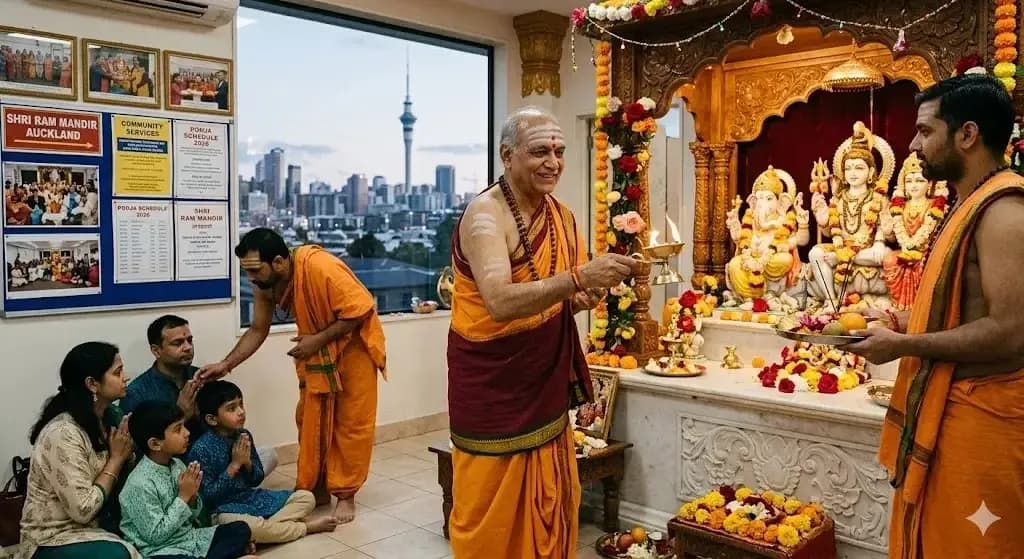
Hindu Priest Jobs New Zealand 2026 — Auckland, Wellington, Christchurch Vacancies & NZ Religious Worker Visa Guide

Hindu Priest Jobs Malaysia 2026 — Batu Caves, KL, Penang Vacancies & Tamil Hindu Career Guide