What Makes Sanatana Dharma Unique Among World Religions?
Sanatana Dharma, often referred to as Hinduism, is one of the oldest spiritual traditions in the world, with roots stretching back thousands of years.
Sanatana Dharma, often referred to as Hinduism, is one of the oldest spiritual traditions in the world, with roots stretching back thousands of years.
Sanatana Dharma, often referred to as Hinduism, is one of the oldest spiritual traditions in the world, with roots stretching back thousands of years. Unlike many modern religions, it is not tied to a single founder, sacred text, or rigid doctrine. Its uniqueness lies in its diversity, philosophical depth, and adaptability, making it a way of life as much as a religion. In this comprehensive exploration, we’ll delve into what sets Sanatana Dharma apart from other world religions, its core principles, and why it continues to resonate with millions globally.
The Eternal Nature of Sanatana Dharma
The term "Sanatana Dharma" translates to "eternal order" or "eternal way." Unlike religions that trace their origins to a specific historical figure or event, Sanatana Dharma is considered timeless. It is rooted in the Vedas, ancient texts composed over 3,000 years ago, yet its principles are seen as universal truths applicable across ages. This eternal perspective allows it to evolve while staying true to its essence, distinguishing it from religions with fixed historical timelines.
No Single Founder or Prophet
One of the most striking features of Sanatana Dharma is the absence of a single founder. While religions like Christianity, Islam, and Buddhism are associated with Jesus Christ, Prophet Muhammad, and Gautama Buddha, respectively, Sanatana Dharma has no central figure. Instead, it draws from the collective wisdom of countless sages, seers, and philosophers over millennia. This decentralized origin fosters a pluralistic approach, accommodating diverse beliefs and practices within its fold.
Philosophical Flexibility and Pluralism
Sanatana Dharma embraces a wide spectrum of philosophies, from monotheism and polytheism to atheism and agnosticism. It recognizes multiple paths to spiritual liberation (moksha), such as:
- Jnana Yoga: The path of knowledge and self-realization.
- Bhakti Yoga: The path of devotion and surrender to a divine being.
- Karma Yoga: The path of selfless action.
- Raja Yoga: The path of meditation and discipline.
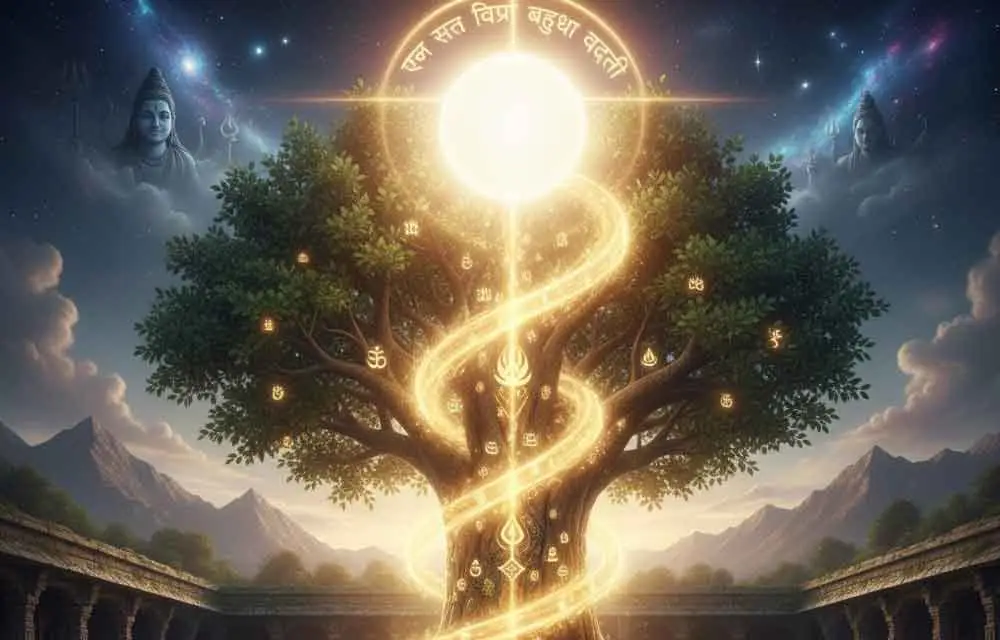
This inclusivity allows individuals to choose a spiritual practice that aligns with their temperament, making Sanatana Dharma uniquely adaptable. The famous Rig Vedic verse, “Ekam Sat Vipra Bahudha Vadanti” ("Truth is one, though the wise call it by many names"), encapsulates this pluralistic ethos, setting it apart from more dogmatic traditions.
Concept of Dharma: A Universal Moral Order
At the heart of Sanatana Dharma is the concept of dharma, often translated as duty, righteousness, or moral order. Unlike the concept of "religion" in many traditions, dharma is not confined to worship or rituals but extends to every aspect of life—personal conduct, social responsibilities, and cosmic harmony. Dharma varies based on one’s role, stage of life (ashrama), and circumstances, offering a dynamic framework for ethical living that is distinct from rigid commandments found in other faiths.
Cyclical Time and Reincarnation
Sanatana Dharma’s view of time is cyclical, not linear. The universe undergoes endless cycles of creation, preservation, and dissolution, as described in texts like the Bhagavad Gita and Puranas. This contrasts with the linear timelines of creation and judgment in Abrahamic religions. Closely tied to this is the belief in reincarnation, where the soul (atman) undergoes multiple births and deaths, shaped by karma (actions). This perspective encourages a long-term view of spiritual growth, unique among major world religions.
Rich Pantheon and Symbolism
Sanatana Dharma is renowned for its vast pantheon of deities, from Brahma, Vishnu, and Shiva to goddesses like Durga, Lakshmi, and Saraswati. These deities are not merely objects of worship but symbolize various aspects of the divine and the universe. For instance, Vishnu represents preservation, while Shiva embodies transformation. This symbolic richness allows practitioners to connect with the divine in ways that resonate personally, unlike the more singular divine figures in monotheistic faiths.
Sacred Texts and Their Diversity
Sanatana Dharma boasts a vast array of sacred texts, including the Vedas, Upanishads, Bhagavad Gita, Ramayana, Mahabharata, and Puranas. These texts cover philosophy, mythology, ethics, and rituals, offering guidance for both spiritual and worldly life. Unlike religions with a single authoritative scripture, Sanatana Dharma’s texts are complementary, allowing followers to draw from multiple sources. The Bhagavad Gita, for instance, is a practical guide to living dharmically, blending philosophy with actionable advice.
Emphasis on Personal Experience
Sanatana Dharma places immense value on personal spiritual experience over blind faith. Practices like meditation, yoga, and self-inquiry encourage direct communion with the divine or self-realization. The Upanishads emphasize Atman (the individual soul) and Brahman (the universal consciousness), teaching that realizing their unity is the ultimate goal. This experiential focus contrasts with faiths that prioritize adherence to doctrine or external salvation.
Integration of Science and Spirituality
Sanatana Dharma has historically embraced inquiry and exploration, often aligning with scientific thought. Ancient Indian texts discuss concepts like astronomy, mathematics, and medicine (Ayurveda), reflecting a holistic worldview. The philosophical schools of Nyaya and Vaisheshika, for example, emphasize logic and empirical observation. This openness to reason and science sets Sanatana Dharma apart from traditions where faith may override rational inquiry.
Rituals and Cultural Diversity
From vibrant festivals like Diwali and Holi to intricate rituals like puja (worship), Sanatana Dharma is deeply woven into the cultural fabric of India and beyond. Its rituals vary widely across regions, communities, and sects, reflecting its adaptability. Unlike standardized rituals in many religions, Sanatana Dharma allows for localized practices, making it a living, breathing tradition that evolves with its practitioners.
Global Influence and Modern Relevance
Sanatana Dharma’s principles, such as yoga, meditation, and mindfulness, have gained global popularity. Concepts like ahimsa (non-violence) influenced figures like Mahatma Gandhi and Martin Luther King Jr., while yoga is practiced worldwide for physical and mental well-being. Its emphasis on universal values—truth, compassion, and self-awareness—ensures its relevance in addressing modern challenges like stress, environmental crises, and social divides.
Challenges and Misconceptions
Despite its richness, Sanatana Dharma is often misunderstood. Some view it as a collection of superstitions or caste-bound practices, overlooking its philosophical depth and egalitarian teachings. The caste system, for instance, is a social construct, not a religious mandate, and many modern Hindu reformers advocate for its eradication. Understanding Sanatana Dharma requires looking beyond stereotypes to its core principles of unity, diversity, and spiritual freedom.
Why Sanatana Dharma Stands Out
Sanatana Dharma’s uniqueness lies in its ability to be both ancient and contemporary, structured yet flexible. It offers a spiritual framework that accommodates diverse beliefs, encourages personal growth, and fosters harmony with the universe. Its emphasis on dharma, pluralism, and self-realization provides a holistic approach to life that resonates across cultures and eras.
In a world seeking meaning and connection, Sanatana Dharma offers timeless wisdom that transcends religious boundaries. Whether through the practice of yoga, the pursuit of knowledge, or devotion to the divine, it invites individuals to discover their own path to truth. By embracing both the material and spiritual, Sanatana Dharma remains a beacon of inclusivity and wisdom among world religions.
Conclusion
Sanatana Dharma’s enduring appeal lies in its universal principles, adaptability, and profound philosophical insights. Its lack of a single founder, emphasis on personal experience, and integration of diverse practices make it a unique spiritual tradition. As humanity navigates an increasingly complex world, the eternal teachings of Sanatana Dharma offer guidance, fostering peace, self-awareness, and harmony.
Explore the timeless wisdom of Sanatana Dharma and discover how its principles can enrich your spiritual journey today.
Also read: the concept of God in Hinduism, Christianity and Islam, Hinduism and Islam compared and karma and rebirth across the Dharmic religions.
Also read: the Trimurti explained, what 33 crore gods really means and the meaning of Om.
Frequently Asked Questions
Does Sanatana Dharma have a founder or a single holy book?
No. It has no single founder or prophet and draws on the collective wisdom of countless sages over millennia. Its many texts, including the Vedas, Upanishads, Bhagavad Gita, Ramayana, Mahabharata, and Puranas, are complementary.
What does the term Sanatana Dharma mean?
It translates to "eternal order" or "eternal way". It is considered timeless and is rooted in the Vedas, ancient texts composed over 3,000 years ago.
What are the different paths to moksha in Sanatana Dharma?
Four paths are recognized: Jnana Yoga (knowledge), Bhakti Yoga (devotion), Karma Yoga (selfless action), and Raja Yoga (meditation and discipline). Individuals choose the one that suits their temperament.
How does Sanatana Dharma view time and rebirth?
Time is cyclical, with endless cycles of creation, preservation, and dissolution. The soul (atman) undergoes multiple births and deaths shaped by karma, unlike the linear timelines of Abrahamic religions.
Is the caste system a religious mandate in Sanatana Dharma?
No. The caste system is described as a social construct, not a religious mandate, and many modern Hindu reformers advocate its eradication.
Why has Sanatana Dharma gained popularity worldwide?
Yoga, meditation, and mindfulness have gained global popularity, and ahimsa influenced figures like Mahatma Gandhi and Martin Luther King Jr. Its values of truth, compassion, and self-awareness address modern stress and social divides.
You might also like
What Makes Sanatana Dharma Unique Among World Religions
Naishtika Brahmacharya: Lord Ayyappa’s Eternal Vow Explained — Manu Smriti, Bhagavata, Yoga Sutra and the 41-Day Vratham
Sri Medha Dakshinamurthy Swami Dhyanam | Meditation Sloka for Intelligence, Eloquence & Self-Realization